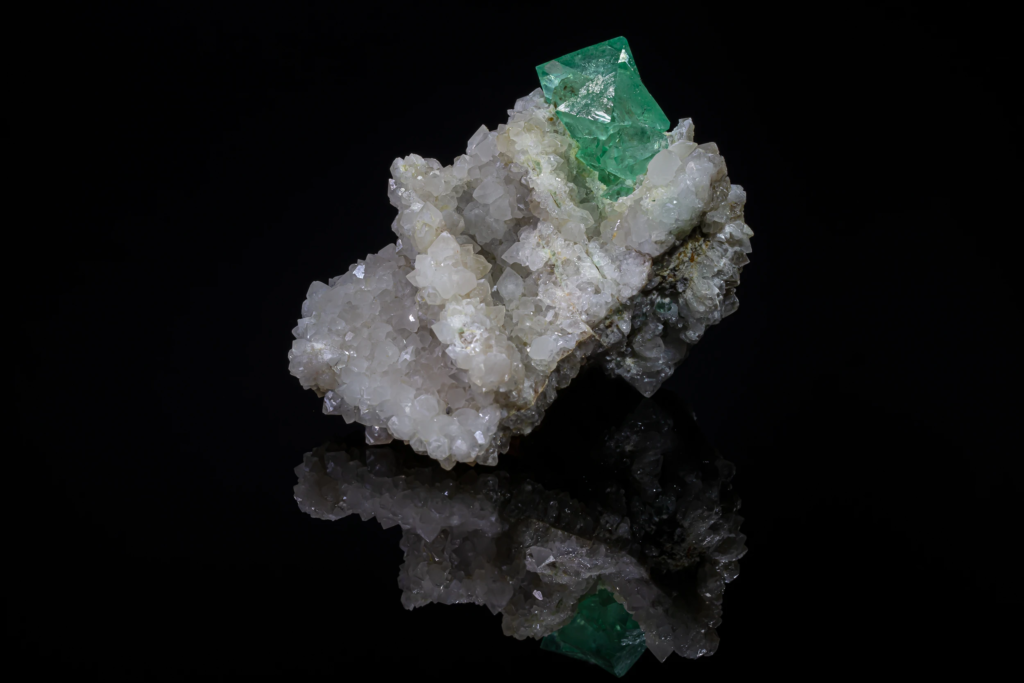
Fluorite (Botryoidal)

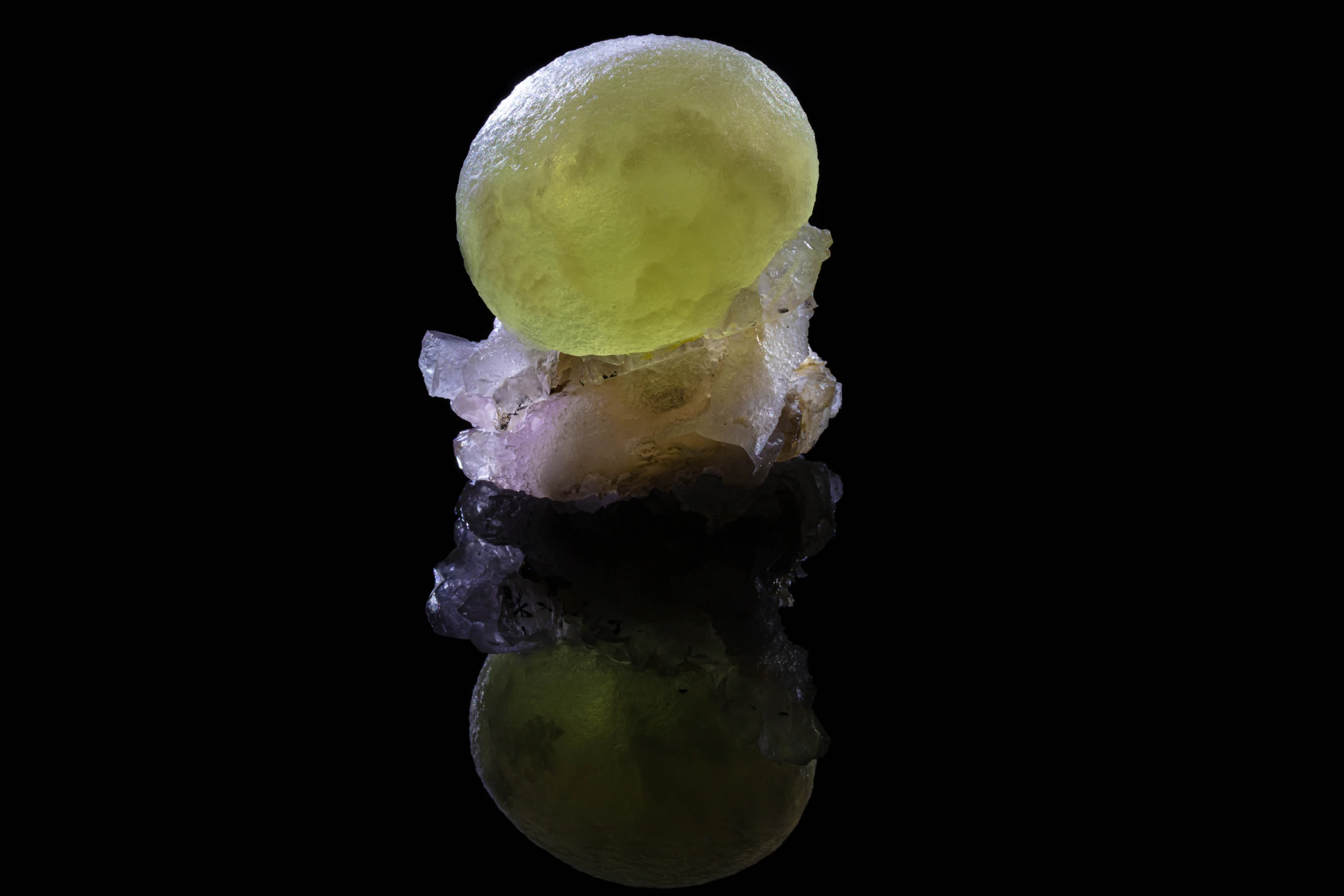
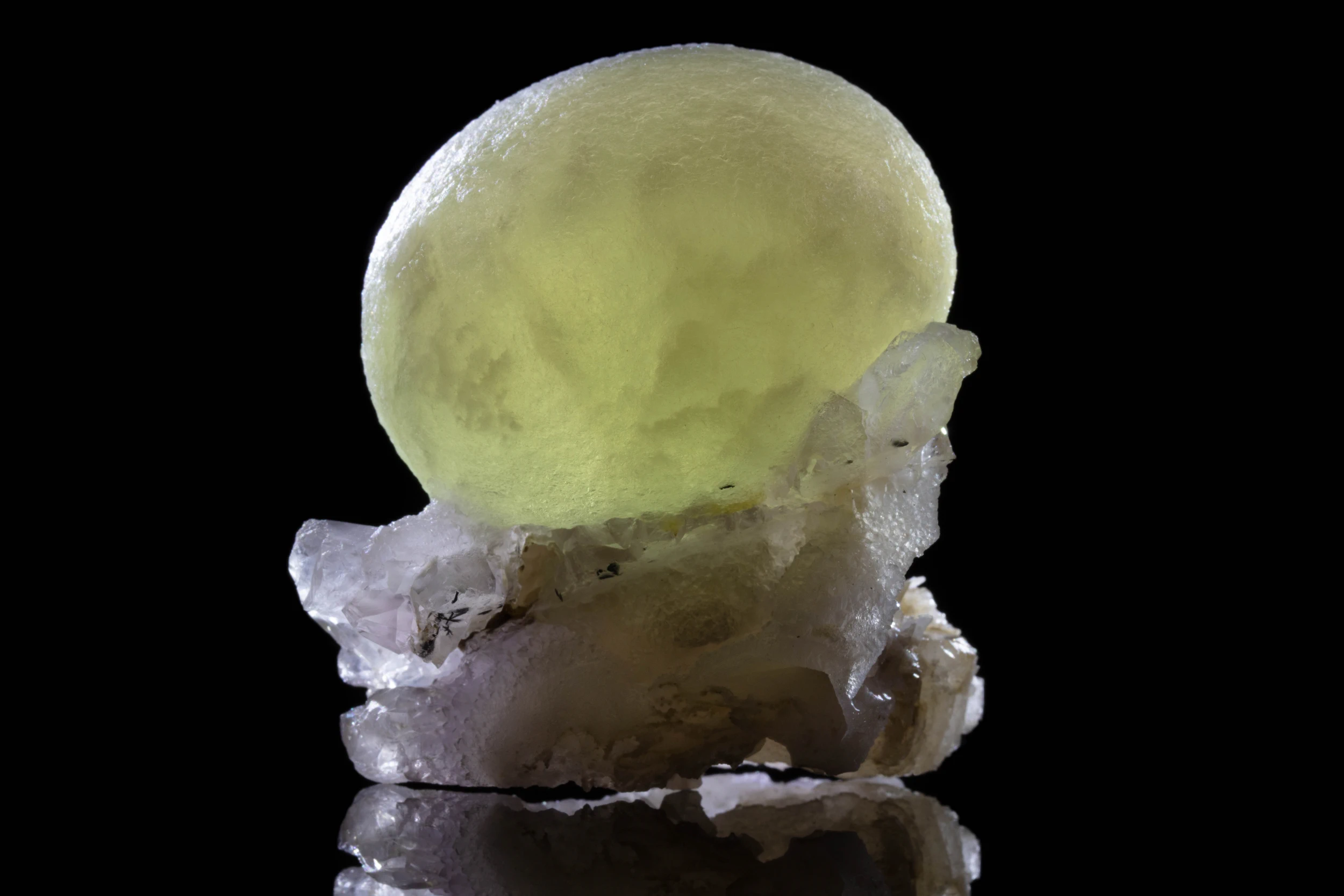
The Specimen

Cabinet: Small Cabinet (4.5 - 7 cm) – Size: 6.3 x 6.1 x 5.0 cm Origin: Mahodari Quarry, Sinnar, Nashik District, Maharashtra – India

Notes

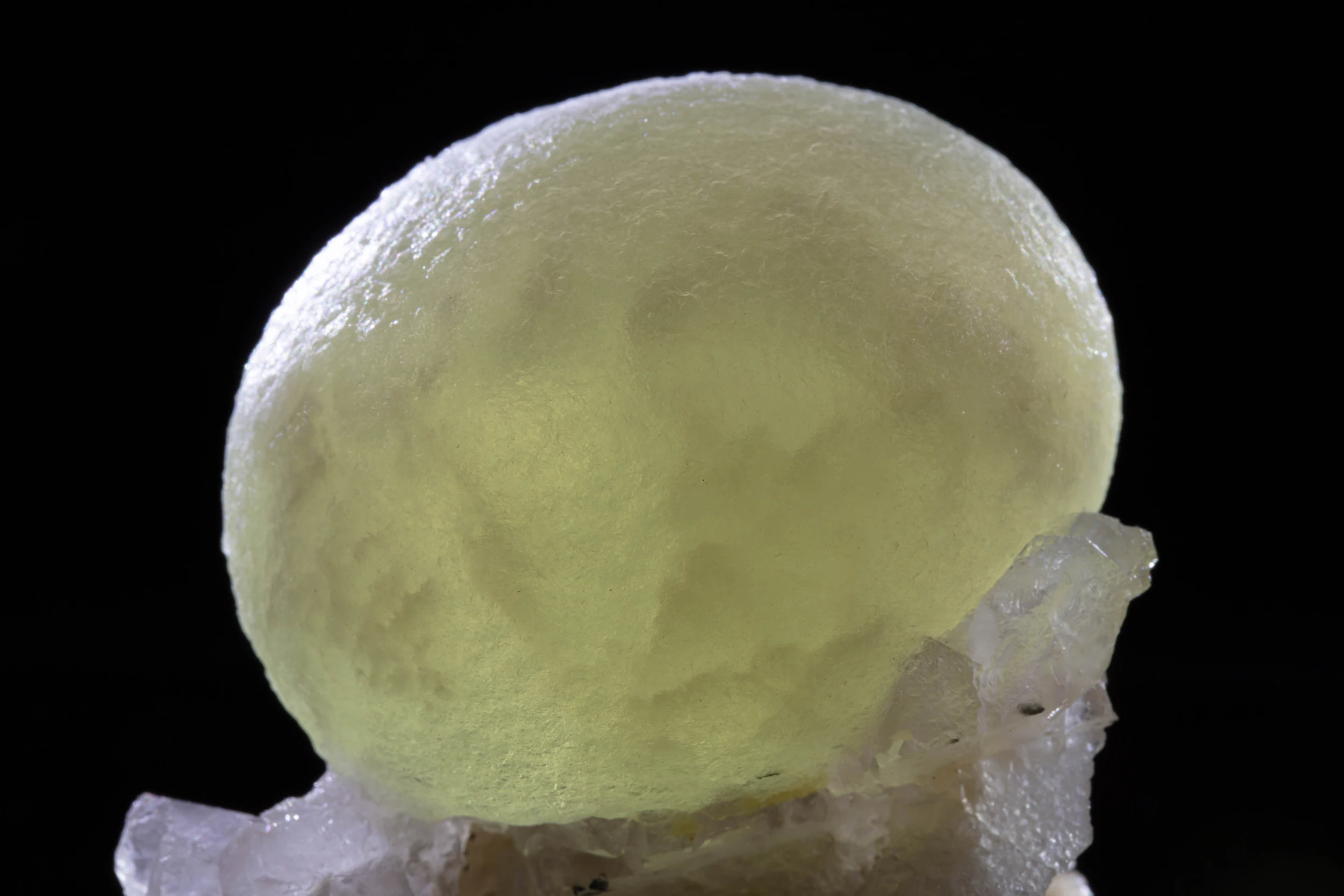
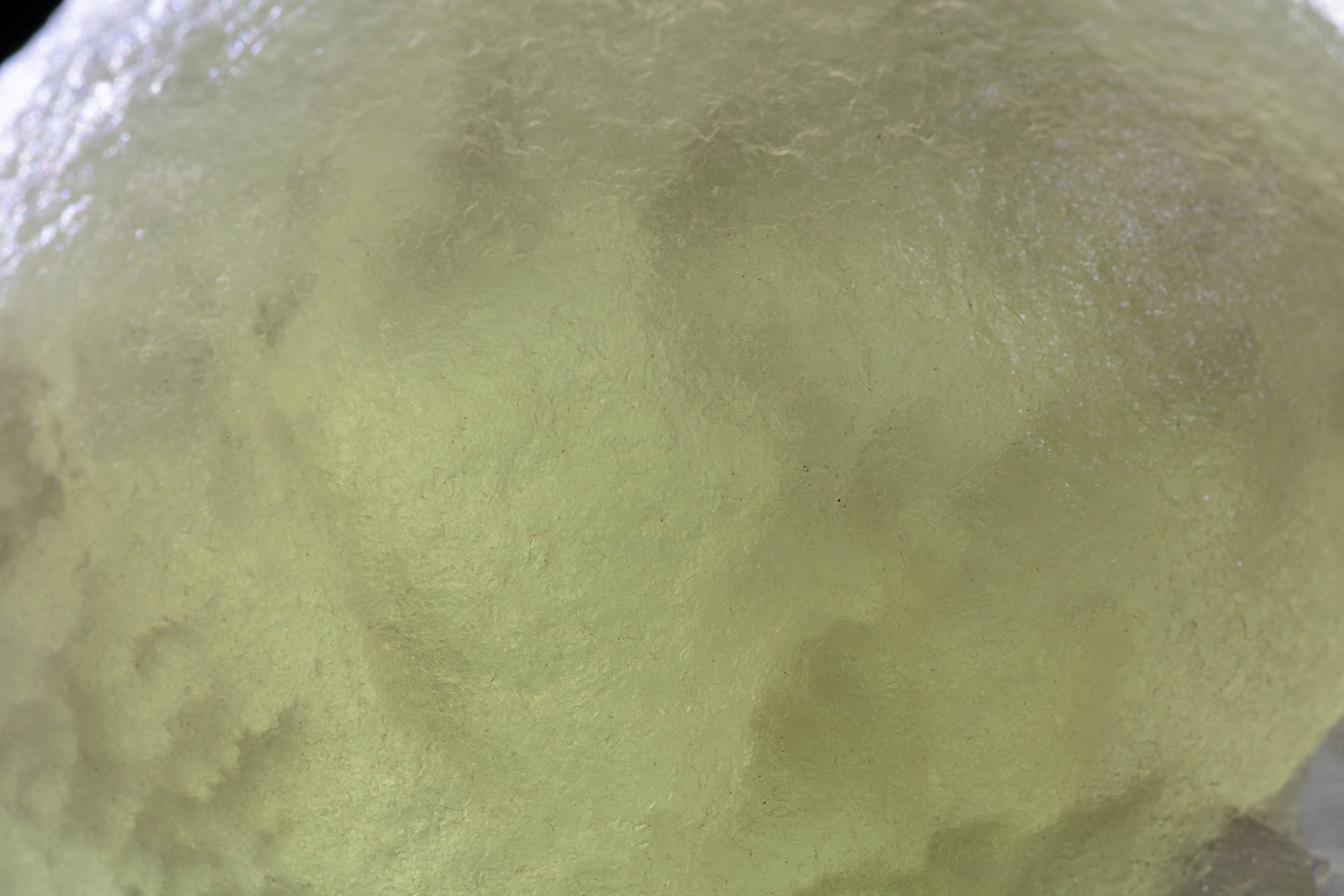
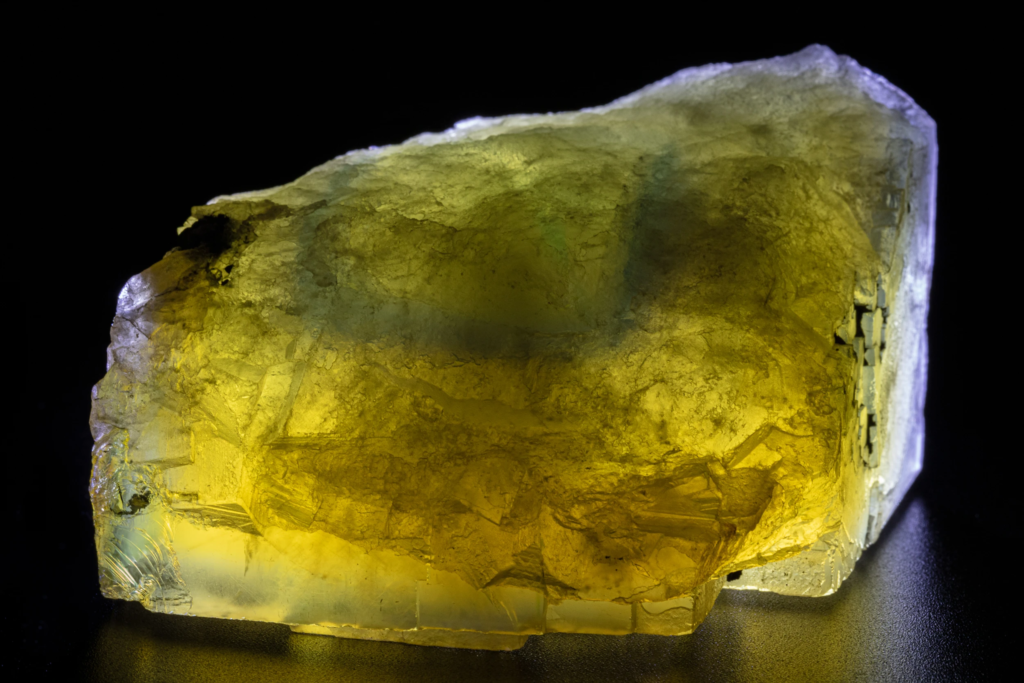
This specimen comes from the Mahodari Quarry near Sinnar, in the Nashik District of Maharashtra, India. The quarry cuts into the Deccan Traps, enormous lava flows that covered western India about 66 million years ago, and minerals later grew inside the gas bubbles and cavities of the cooled basalt. Fluorite usually forms cubes, but here it grew as a smooth, rounded ball made of countless tiny crystals, a habit called botryoidal. Very few places in the world produce fluorite like this, and Mahodari is the best known. The yellow green ball sits on pale amethyst, and according to the dealer it glows warmly when lit from behind.

Mineral Species

SiO2
Elements: Silicon, Oxygen
Class: Oxides – Tectosilicates
Crystal System: Trigonal
Hardness: 7
Quartz
Talc (1)Diamond (10)
Very hard. Scratches glass and steel.

Did you know?

FluoriteFluorite gave fluorescence its name. In 1852 the physicist George Stokes, studying the mineral's glow under invisible light, coined the word for the whole phenomenon after the stone itself.

AmethystThe ancient Greeks believed amethyst guarded against drunkenness. Its name means not intoxicated, and drinking cups were sometimes carved from it.