Notes
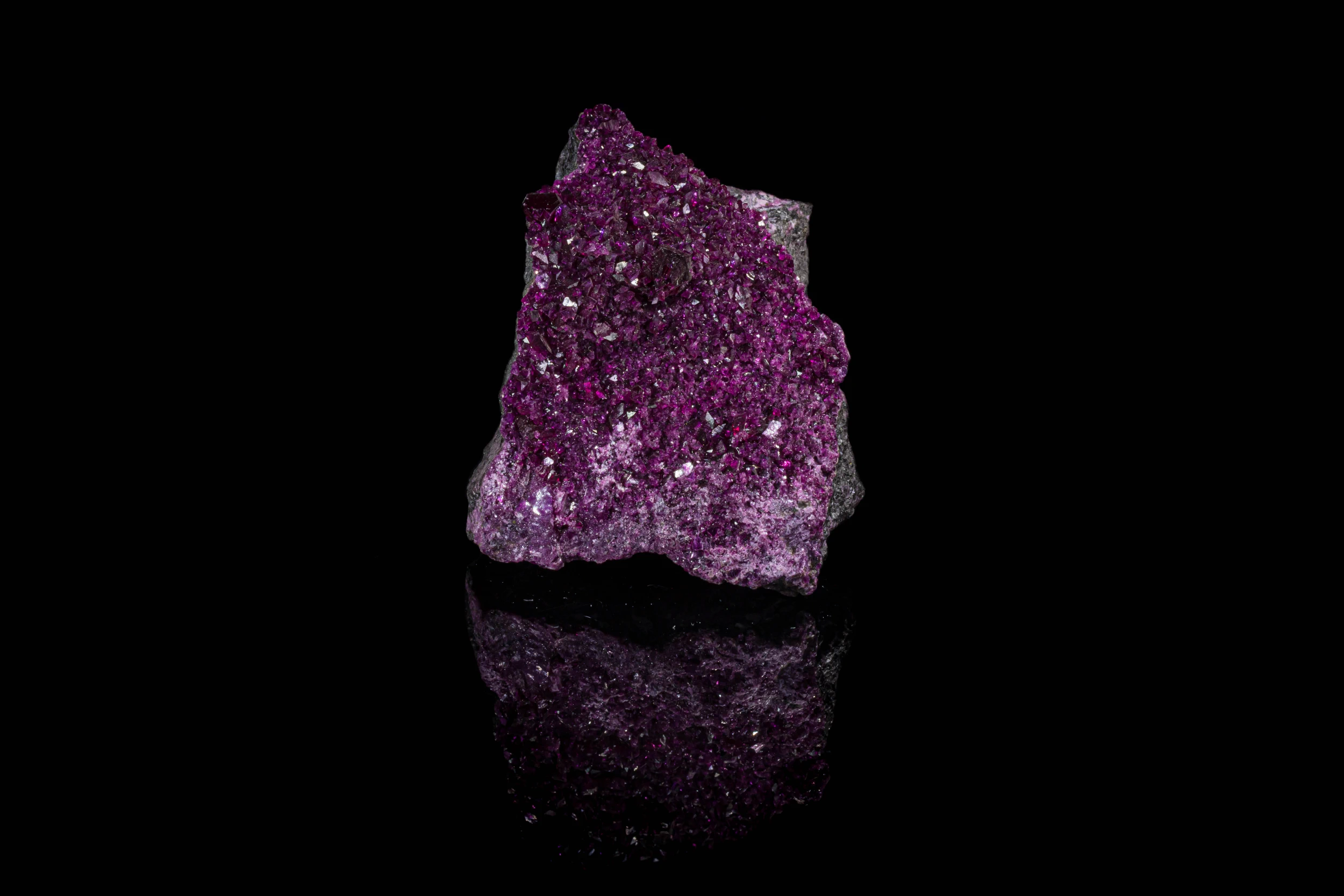
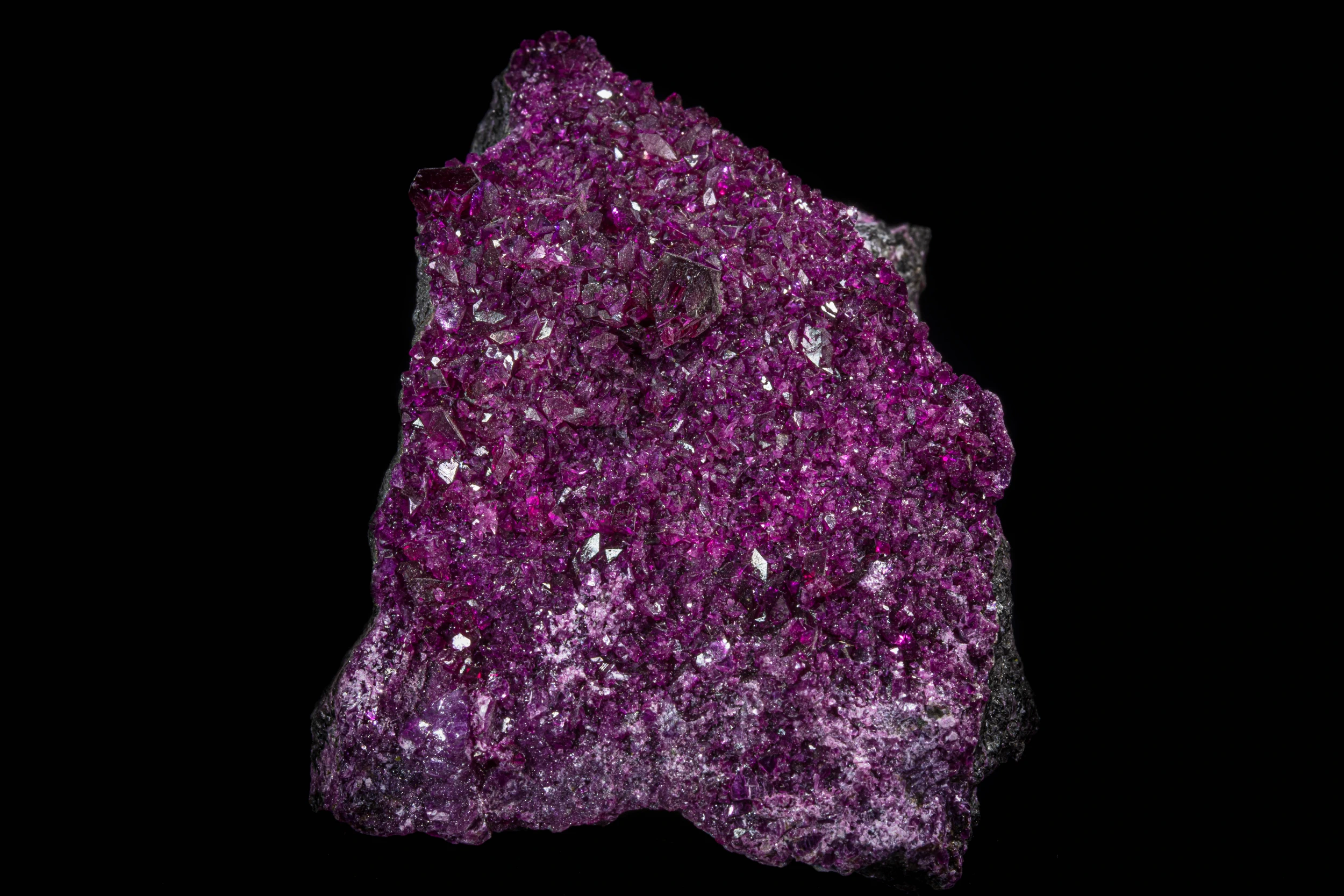
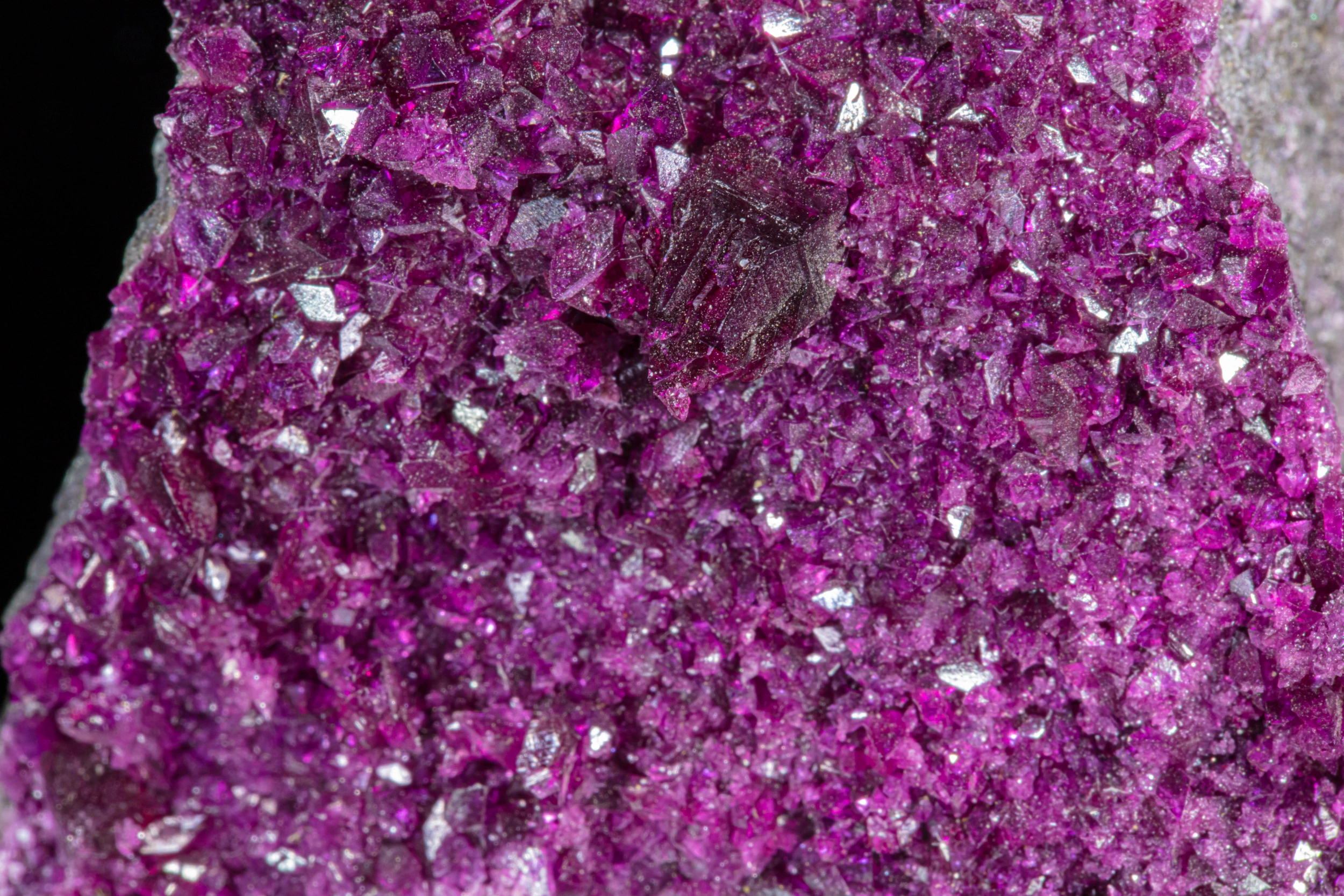
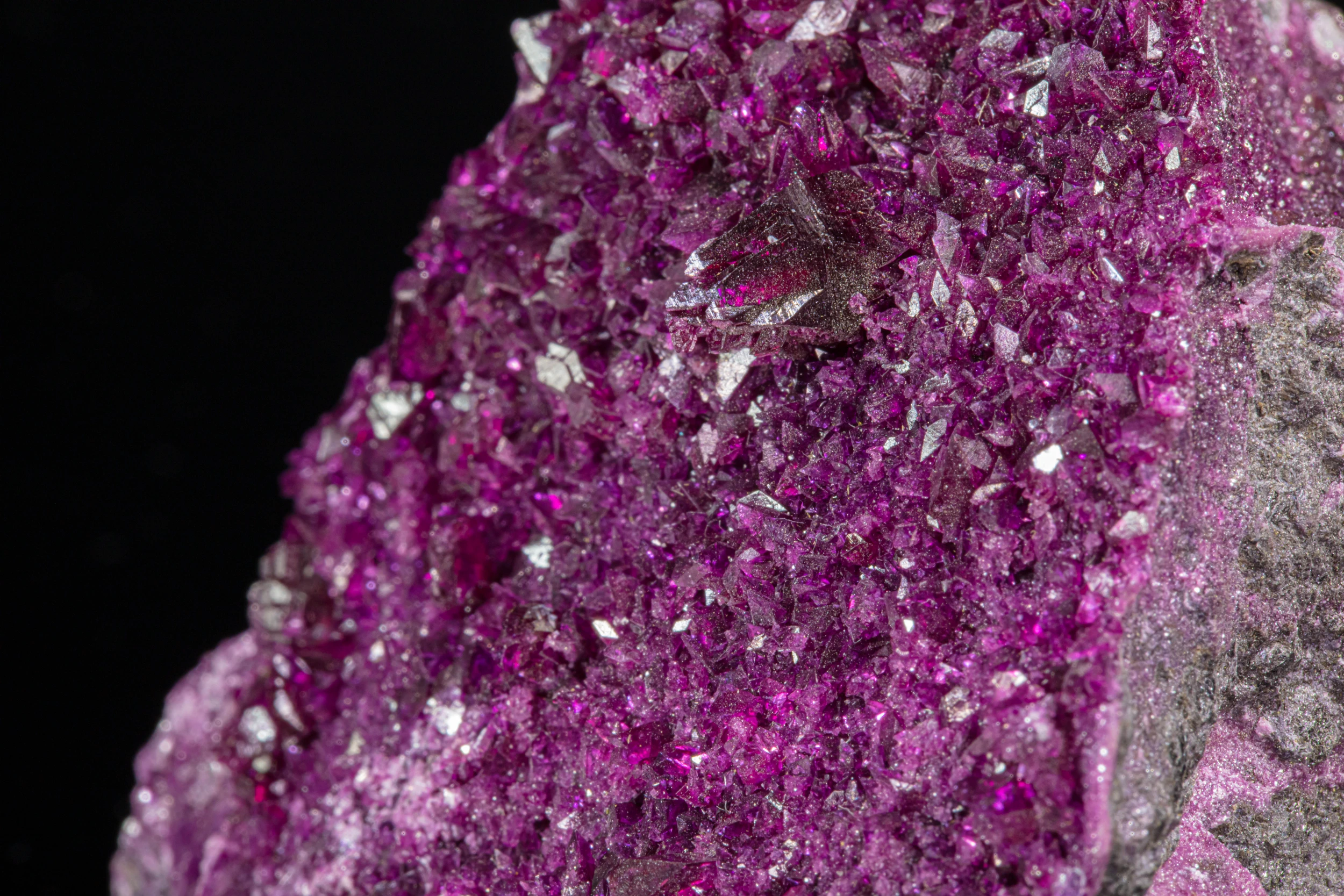
This specimen comes from the Kop Krom Mine, a chromite mine in the Kop Mountains (Kop Daglari) of Erzurum Province, in eastern Turkey. It is the best-known source in the world for kammererite, the purple to magenta, chromium-bearing form of clinochlore, a mineral of the chlorite group that is usually green. Mineralogists now call it chromium-bearing clinochlore, but collectors still use the old name, given in 1841 by Nils Gustaf Nordenskiöld in honor of August Alexander Kämmerer, a chemist in the Russian mining department. Kammererite from Kop Krom was described in a 1978 article by Roland Dietrich, and according to the dealer, the finest crystals came from a series of pockets found more than twenty years before this piece was sold. Here, a carpet of small, glassy magenta crystals covers the whole front of the specimen. Two larger crystals of a second generation, with a tapering six-sided outline, sit near the center. According to the dealer, the gray rock along the right edge is chromium-rich ore. Collector pieces from Kop Krom often sit on massive chromite, so the matrix is most likely chromite, though it has not been tested. This piece comes from the collection of Chet Lemanski of Browns Mills, New Jersey, a collector since the 1950s and a former president of the Franklin-Ogdensburg Mineralogical Society, who is honored by the mineral lemanskiite.