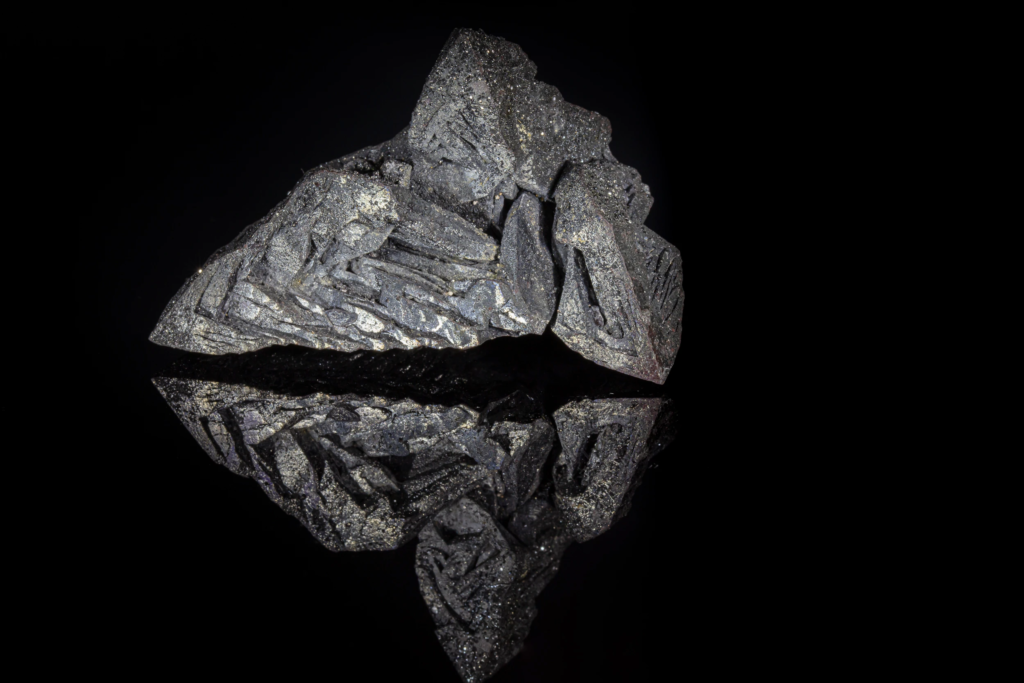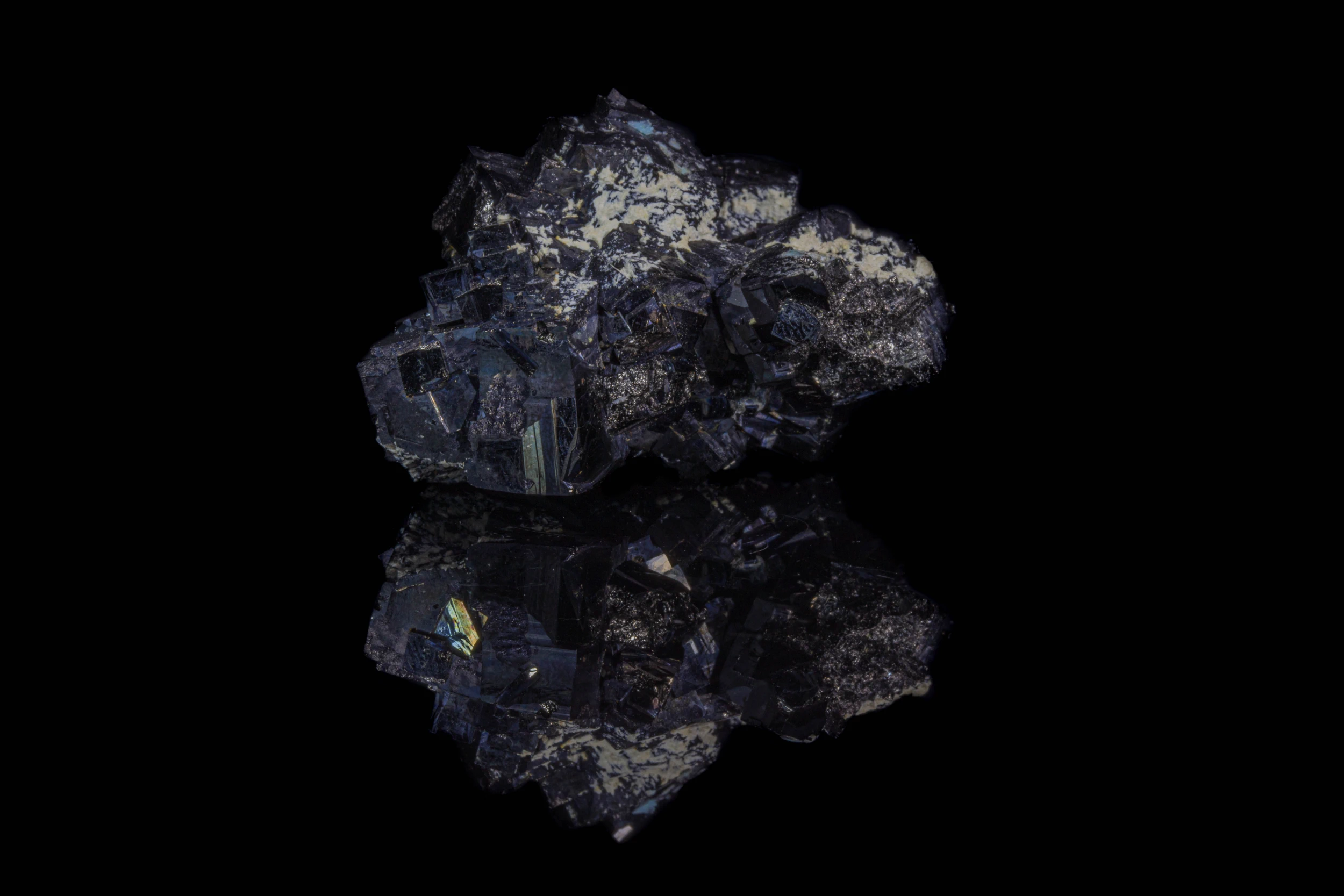
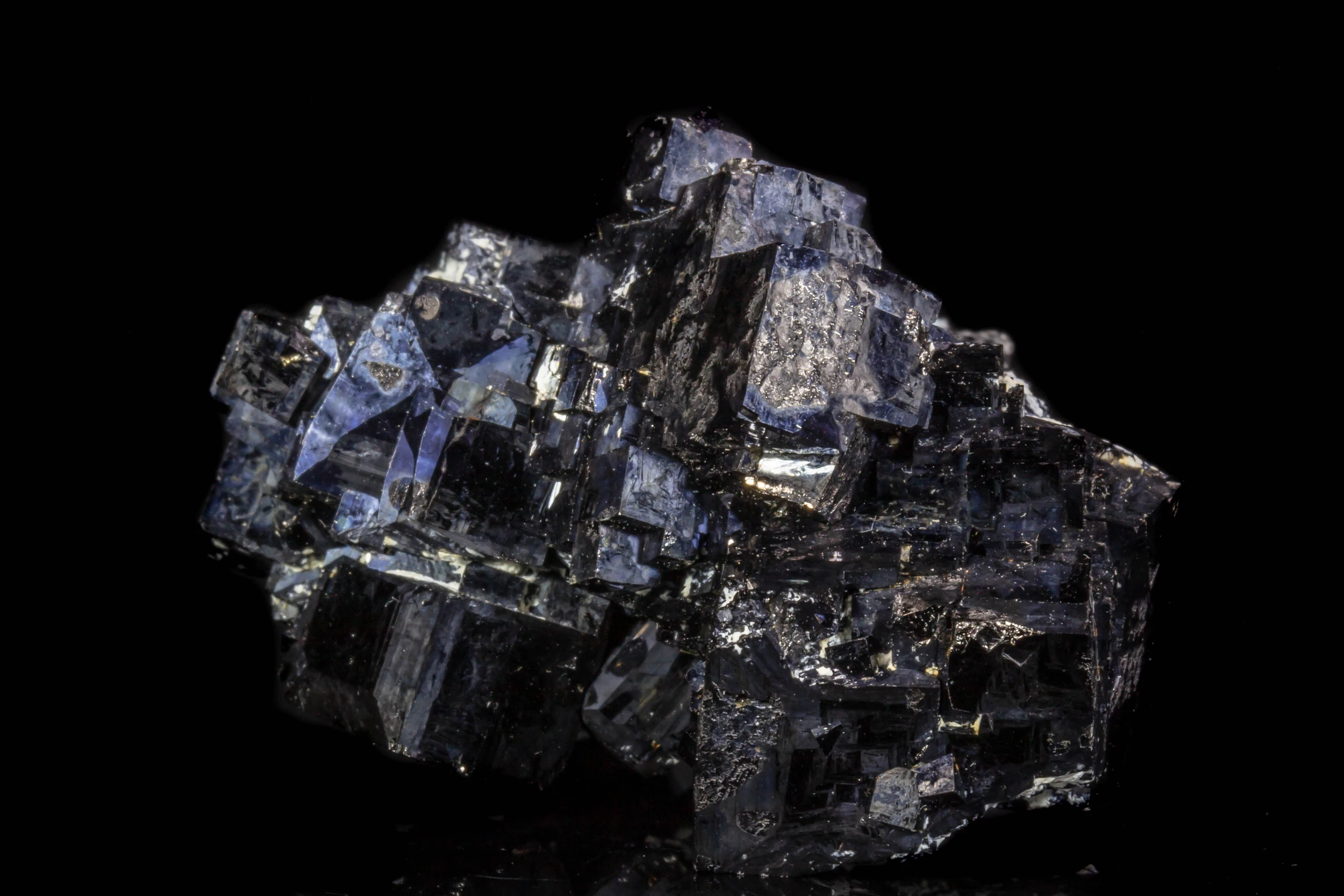
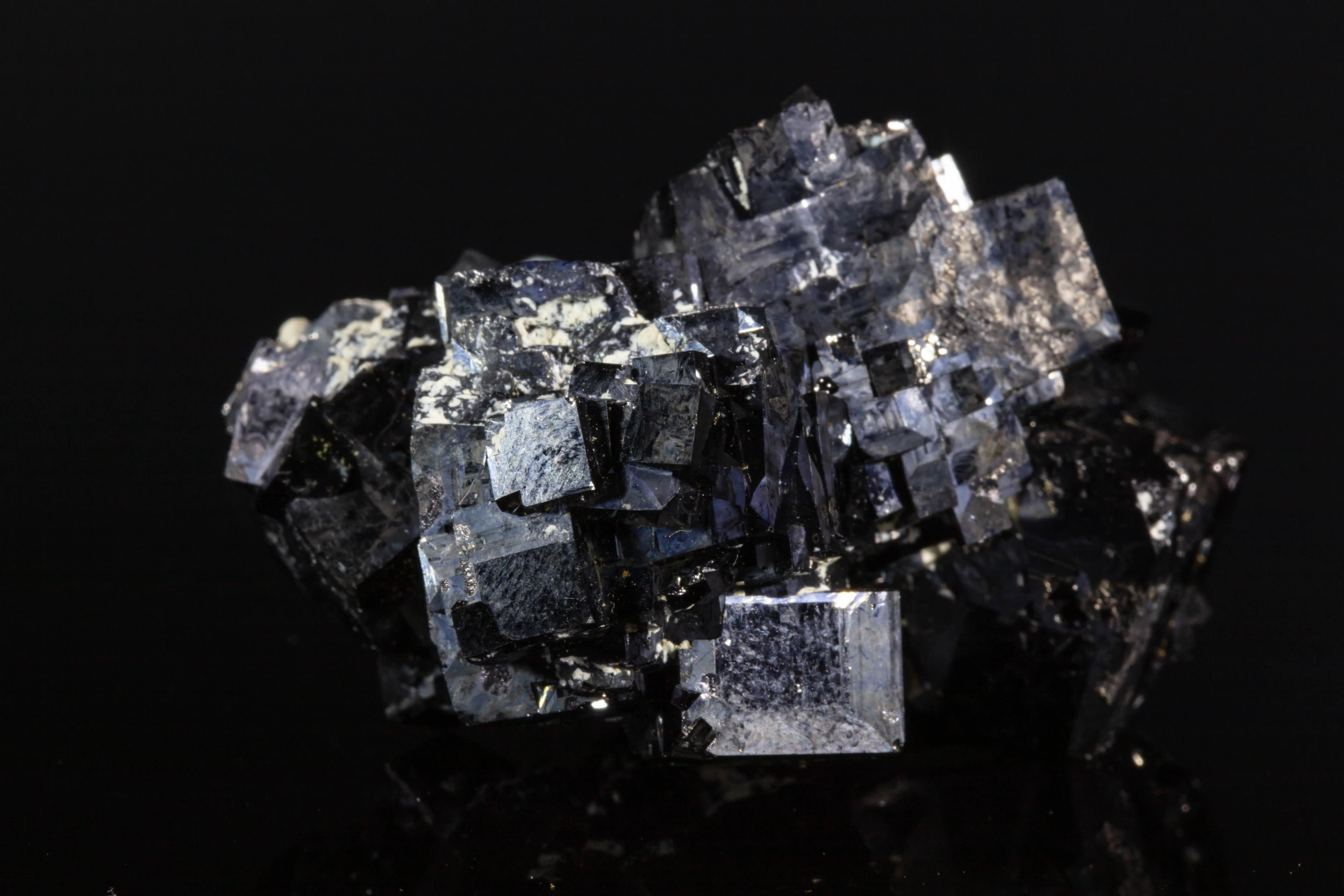
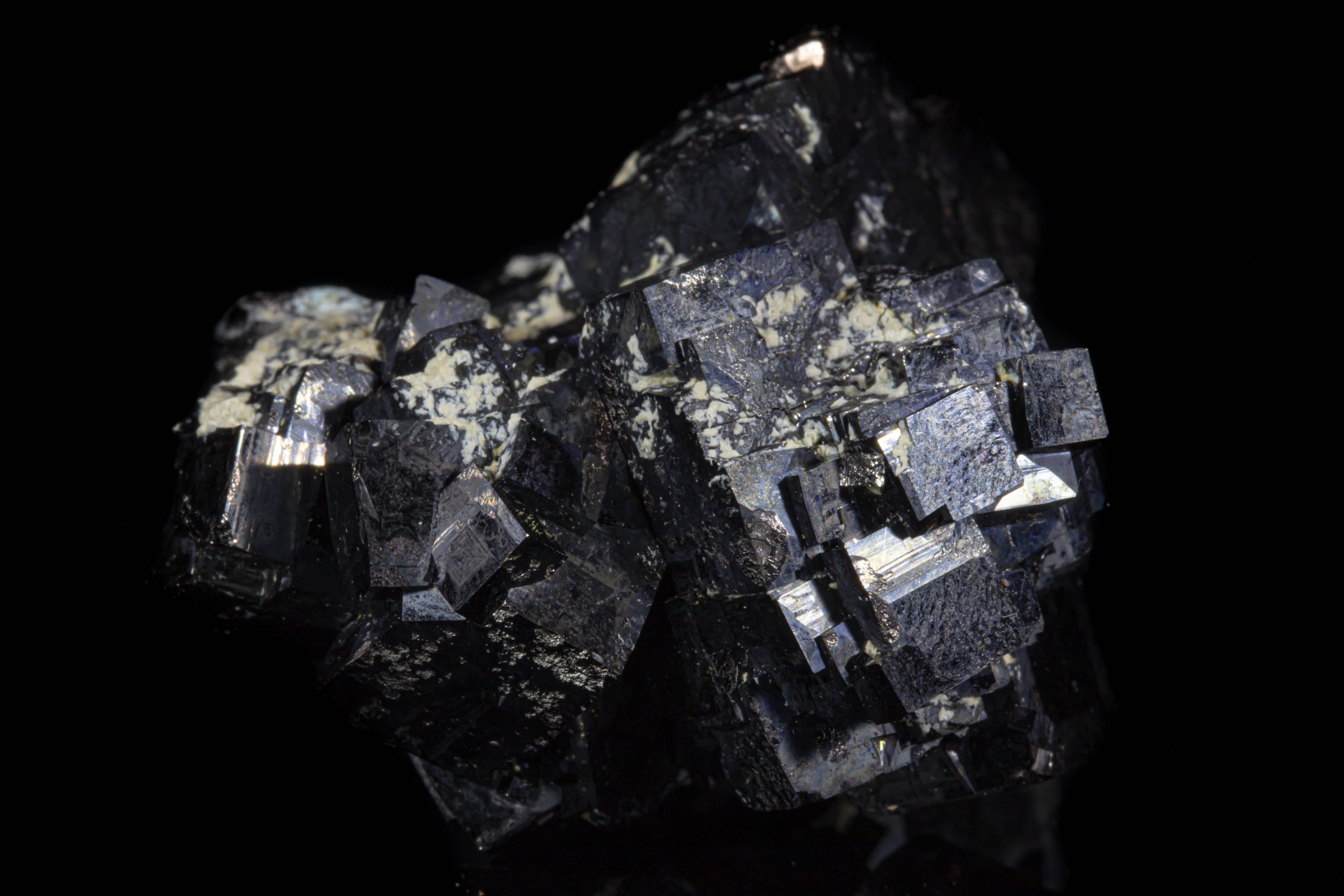
Magnetite (Cubic)

The Specimen

Cabinet: Miniature (2.5 - 4.5 cm) – Size: 4.7 x 3.4 x 2.8 cm Origin: No. 4 Mine, 2500' Level, Fowler Orebody, Balmat, Balmat-Edwards Zinc District, St. Lawrence County, New York – USA

Notes

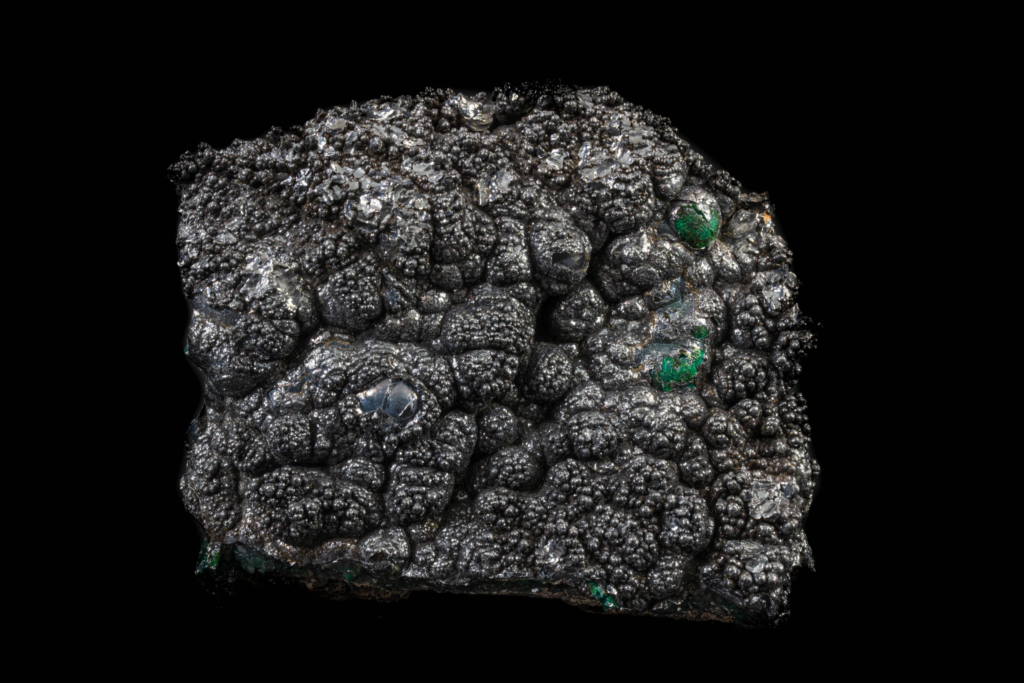
This specimen comes from the No. 4 Mine at Balmat, in the Balmat-Edwards zinc district of St. Lawrence County, in northern New York. In the early 1990s, miners working the Fowler orebody on the 2,500-foot level broke into an unexpected zone of cube-shaped magnetite crystals, many of them embedded in rock salt. It was a one-time find, and it became famous among collectors: magnetite is one of the most common iron minerals, but it almost always grows as eight-sided octahedra, and good cubes are very rare anywhere. The Balmat cubes are considered the finest of their kind. Magnetite is an iron oxide that holds iron in two different charge states. Here, a group of sharp, jet-black cubes with a bright, mirror-like luster are grown into one another at many angles. According to the dealer, some crystals show tetrahexahedral faces, rare small extra faces that bevel the cube, and the largest crystal measures 1.3 cm on an edge. Small patches of white matrix cling between the crystals. Other pieces from this find sit on white dolomite or anhydrite, so the matrix here is likely one of those, though it has not been tested.

Mineral Species

Fe2+Fe3+2O4
Elements: Iron, Oxygen
Class: Oxides
Crystal System: Cubic
Hardness: 5.5-6.5
Orthoclase
Talc (1)Diamond (10)
Scratches glass. Harder than a steel knife.

Did you know?

Ordinary magnetite is merely drawn to magnets, but a rare form, lodestone, is a natural magnet of its own. The leading idea is that lightning striking iron-rich rock delivers the jolt that magnetizes it.