Pentagonite

The Specimen

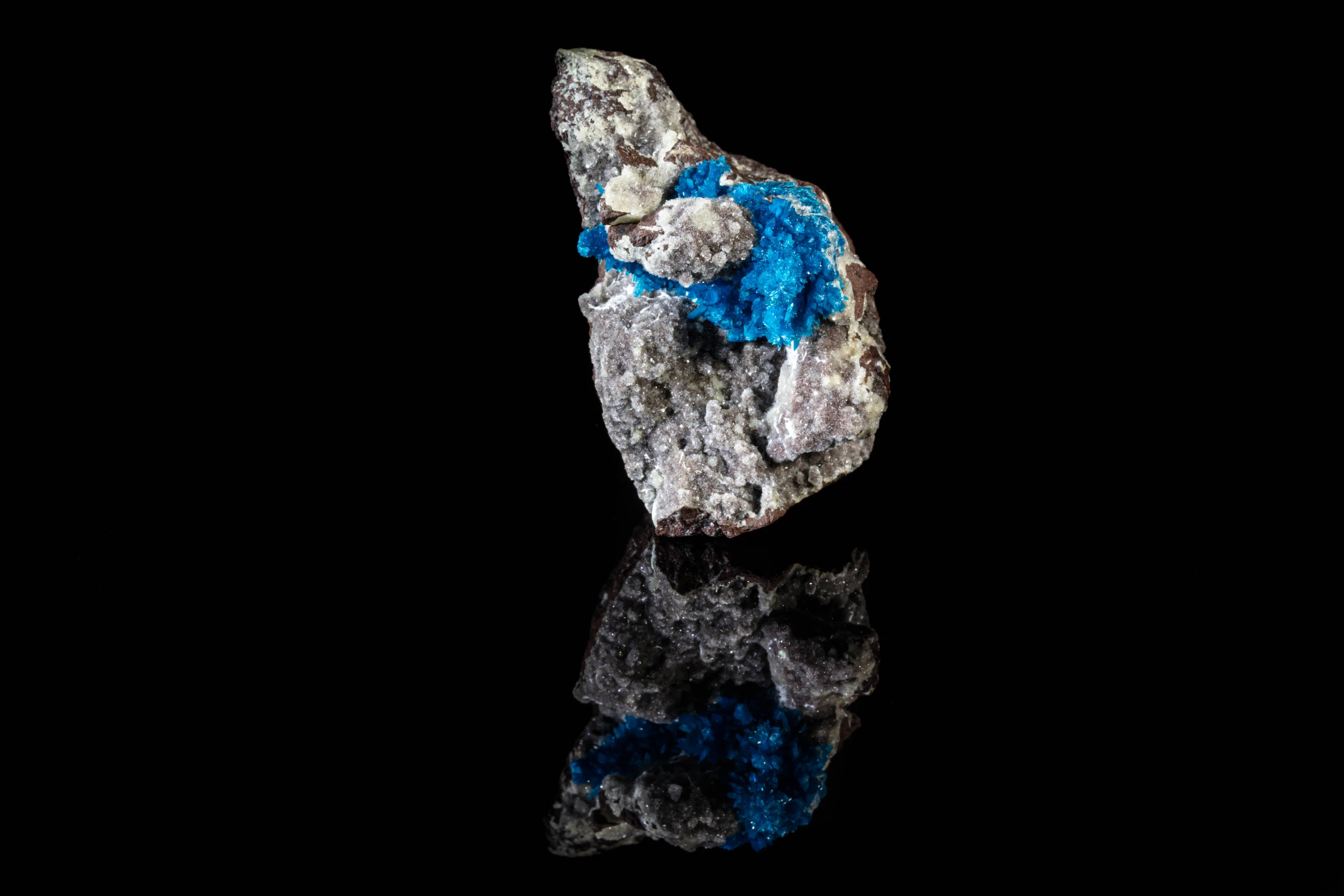
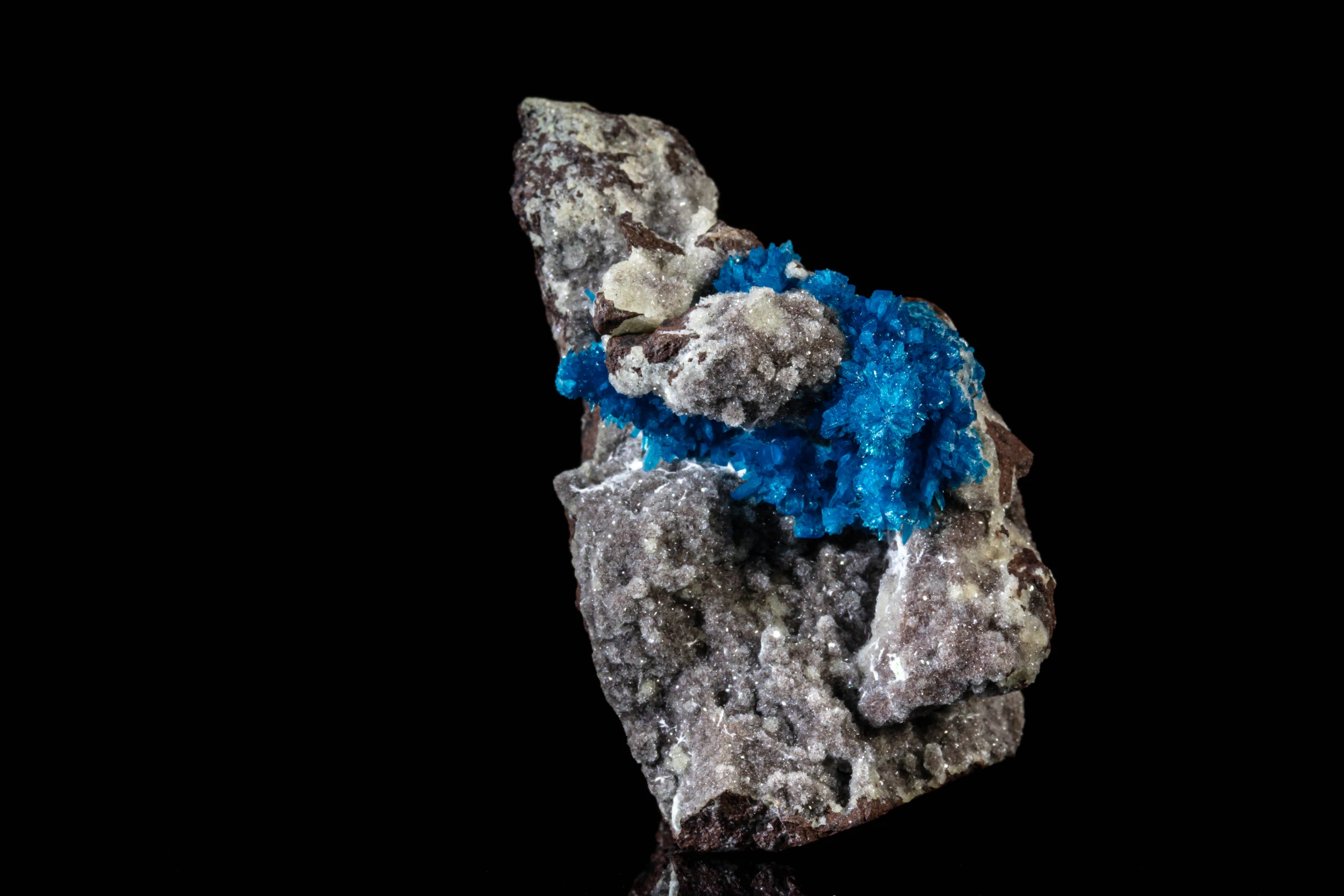
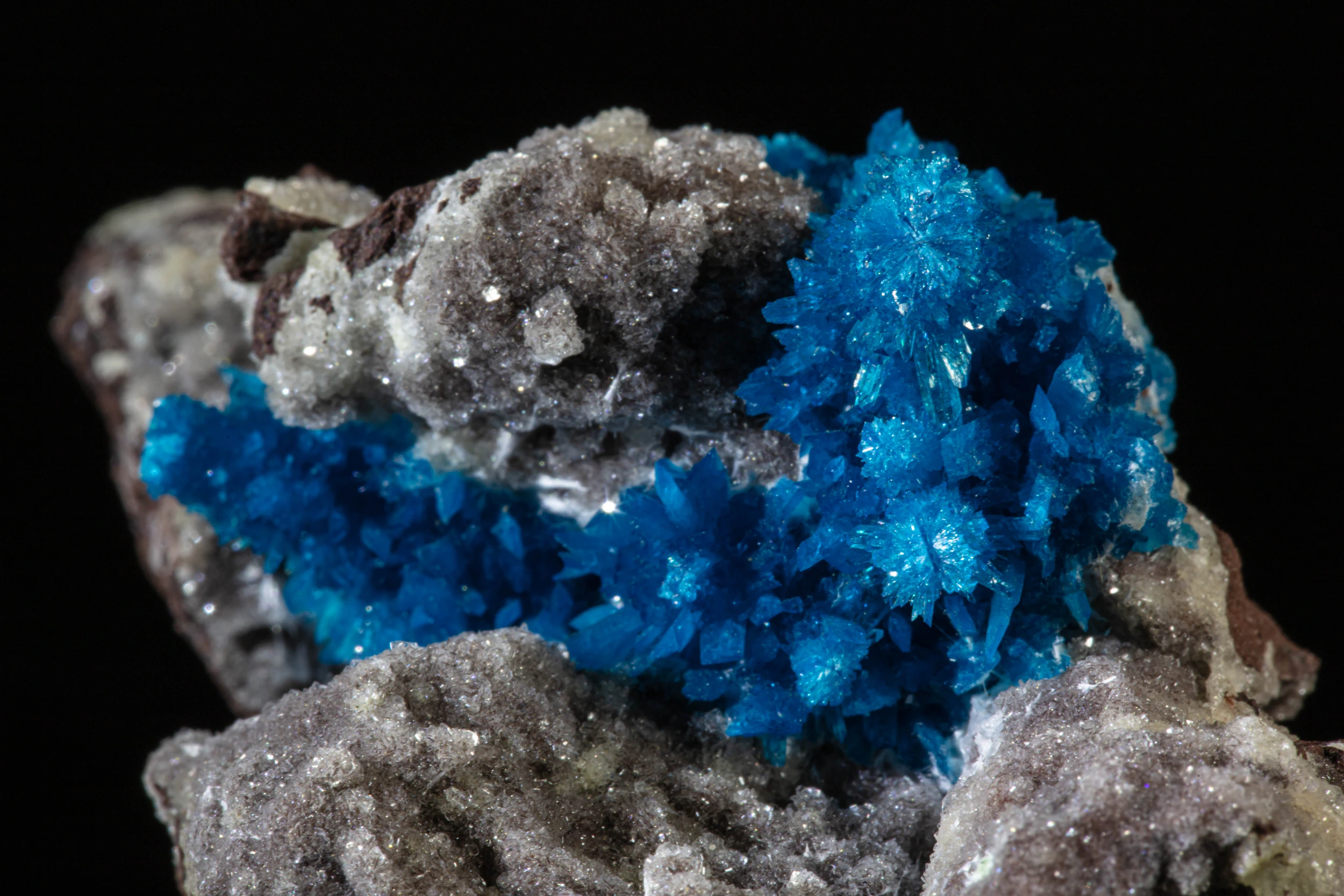
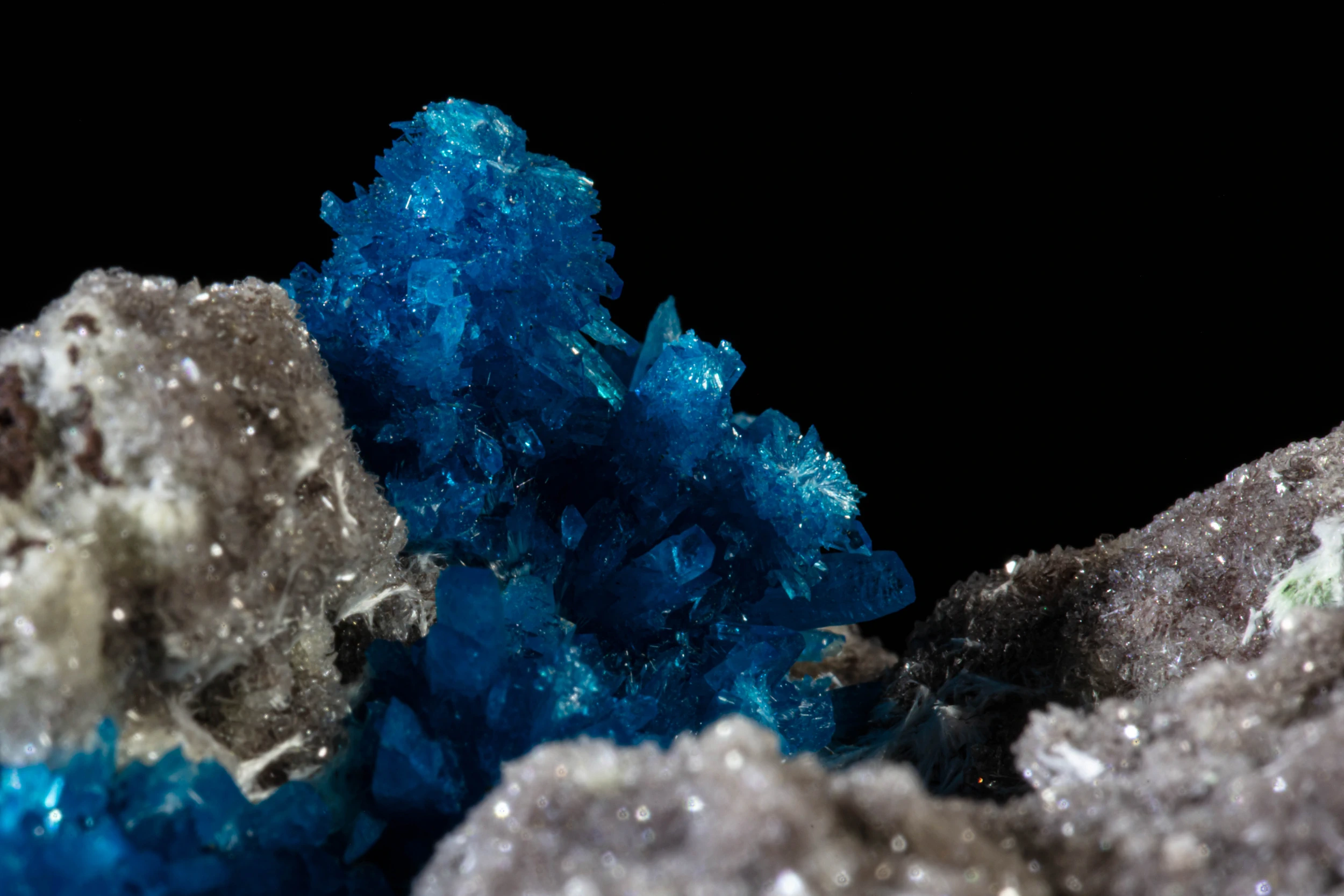
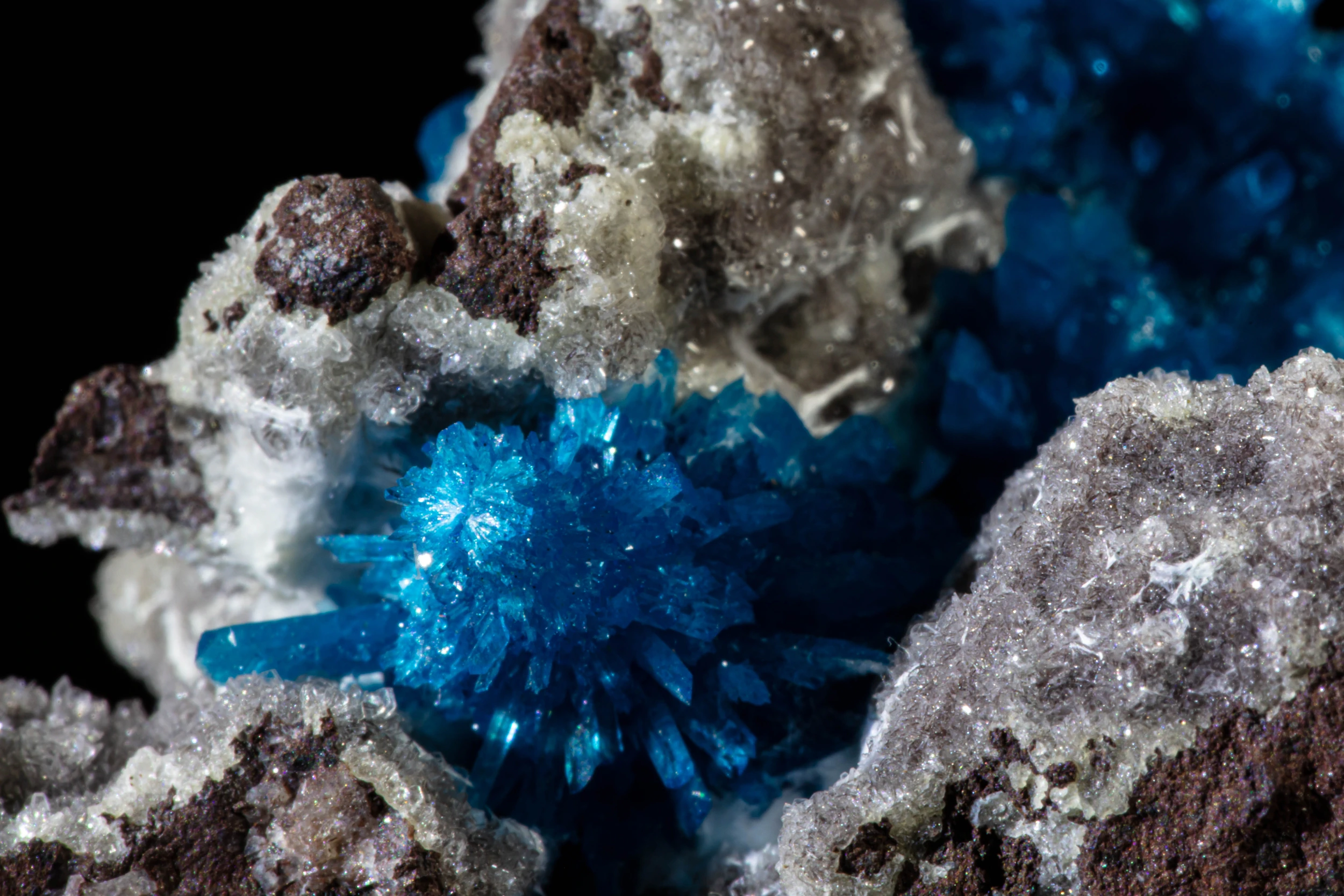
Cabinet: Small Cabinet (4.5 - 7 cm) – Size: 5.7 x 4.6 x 3.2 cm Origin: Wagholi Quarries, Wagholi, Pune District, Maharashtra – India

Notes

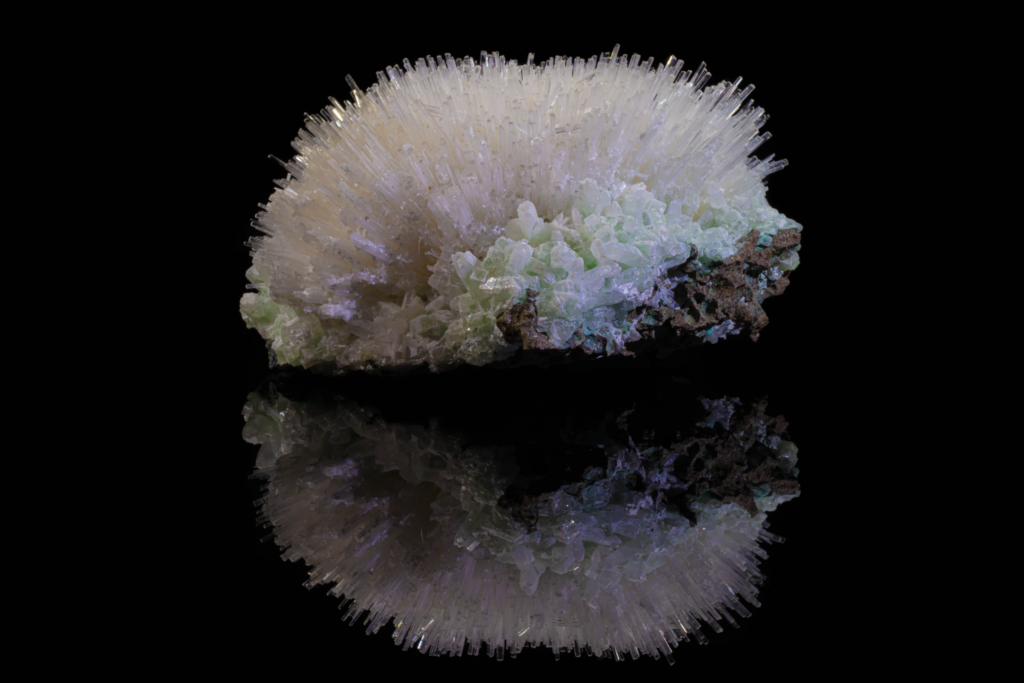
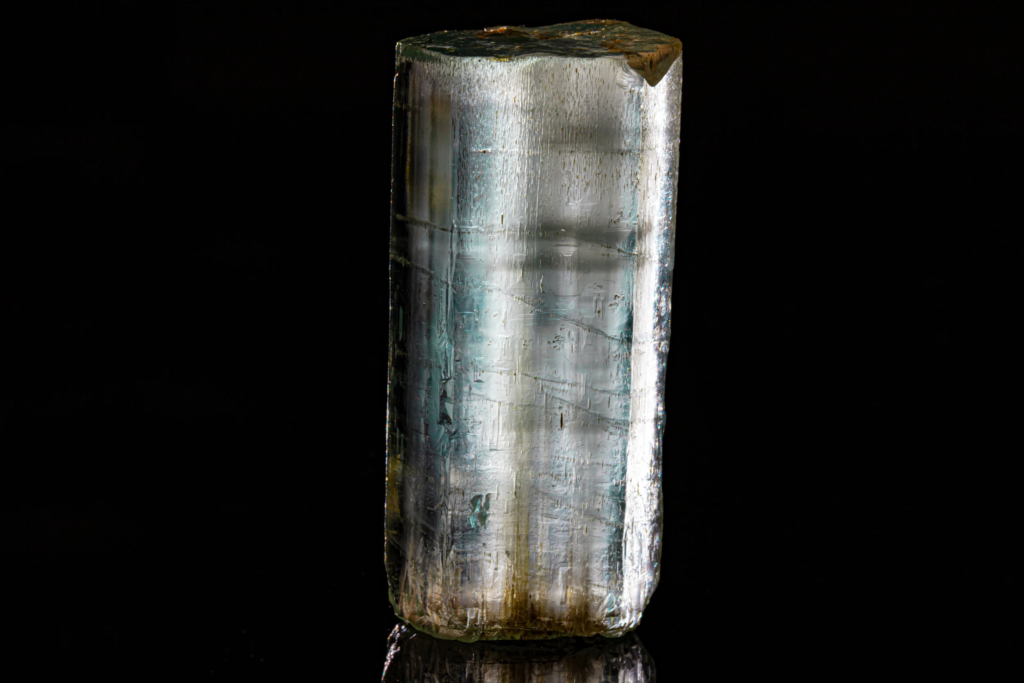
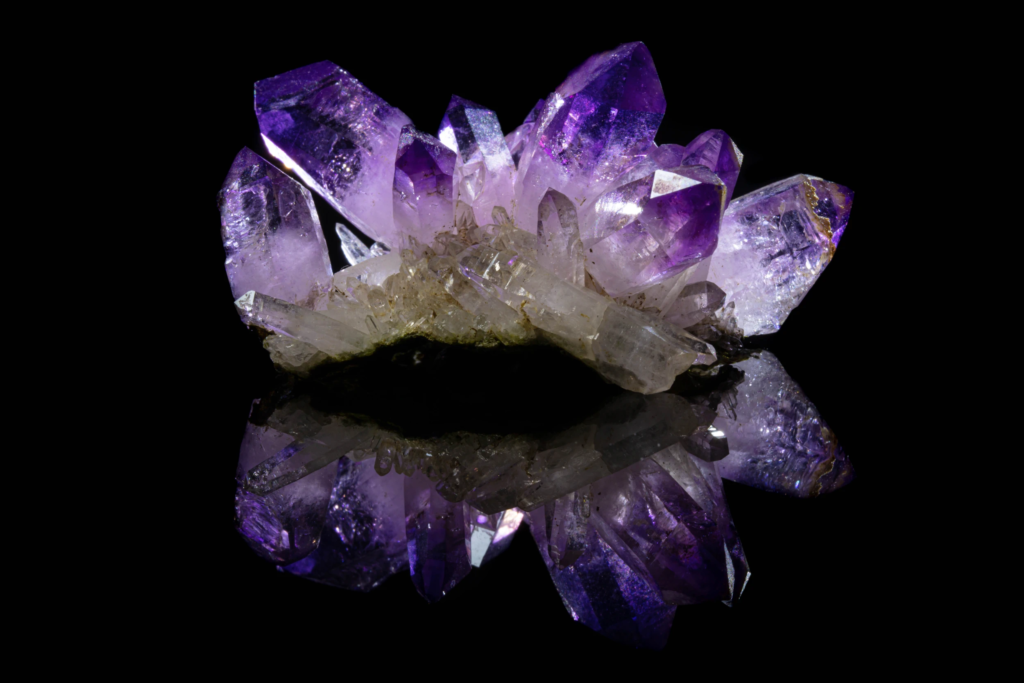
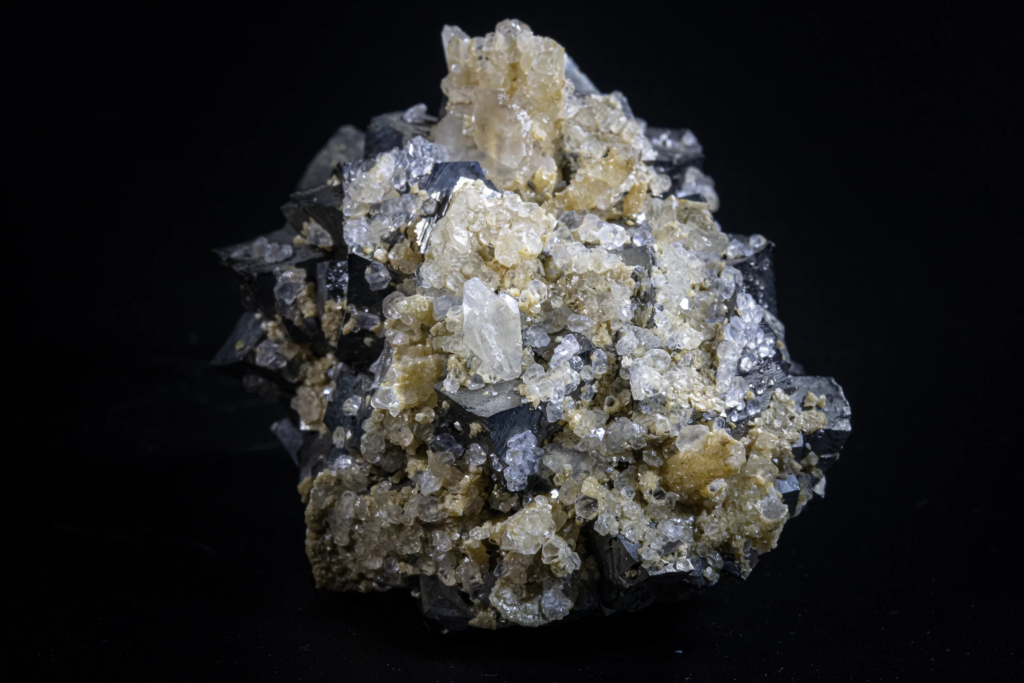
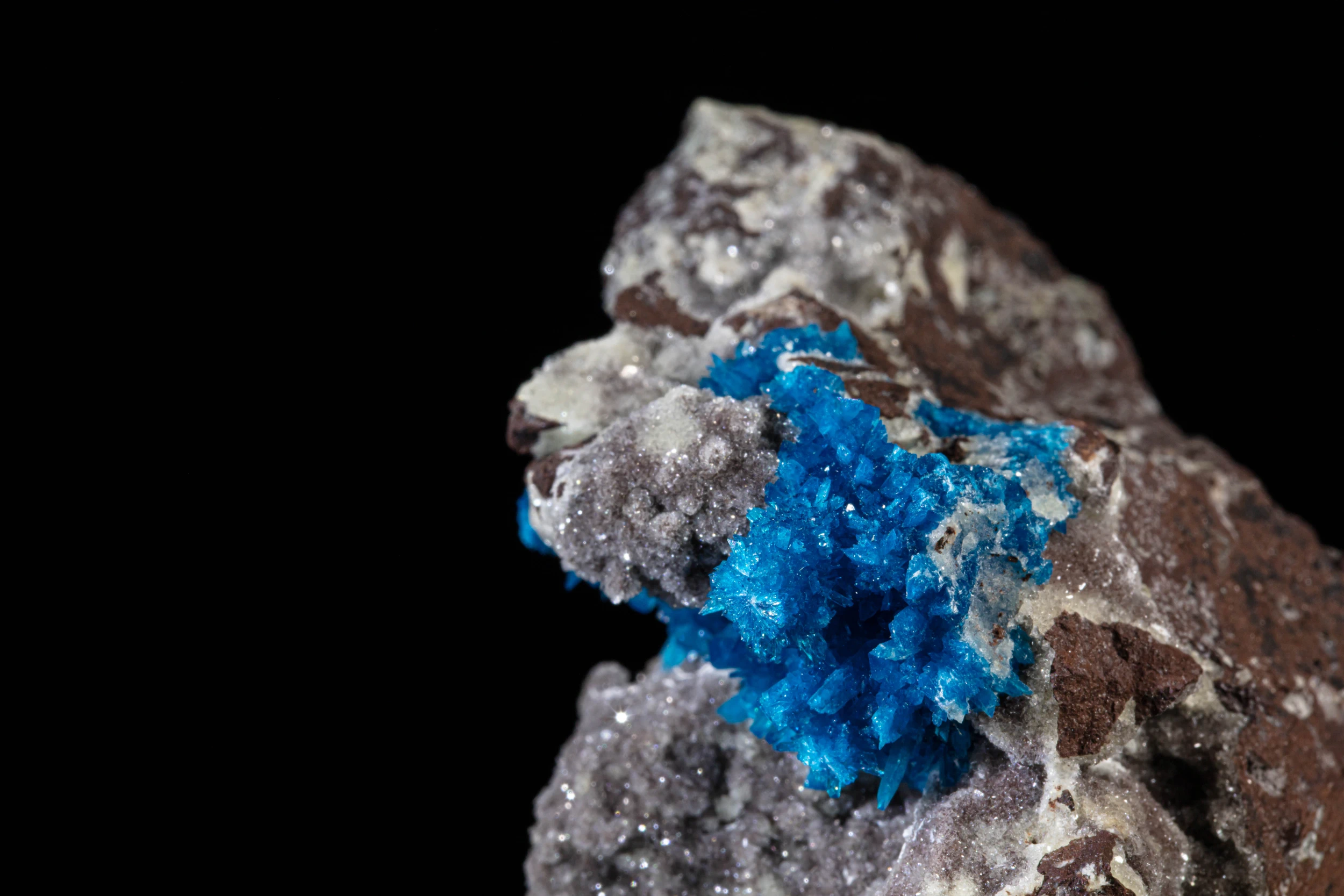
This specimen comes from the Wagholi quarries, near the village of Wagholi outside Pune in Maharashtra, western India. The quarries cut into the basalt of the Deccan Traps, and their cavities hold a famous blue pair of minerals: cavansite and pentagonite. Both were first described in 1973 from small crystals found in Oregon. Cavansite turned up at Wagholi in 1974, and pentagonite was found there later, in far better specimens. The two minerals share the same chemistry, a calcium vanadium silicate with water, but they are dimorphs: their silicate layers link together in a different way. Pentagonite takes its name from its twins, five crystals grown together in a ring that gives a five-pointed star in cross section. Here, branching tendrils of sharp, intense neon blue pentagonite crystals, the whole group about 2.8 cm across, sit on gray-brown basalt with a sparkling crust of small pale crystals.

Mineral Species

Did you know?

Pentagonite is named for a shape crystals are not supposed to make. Its crystals twin into a star with an apparent five-fold symmetry, a symmetry forbidden to any single crystal. Close study in 2025 showed the star is really built from six individuals, not five, an illusion of fives made from sixes.