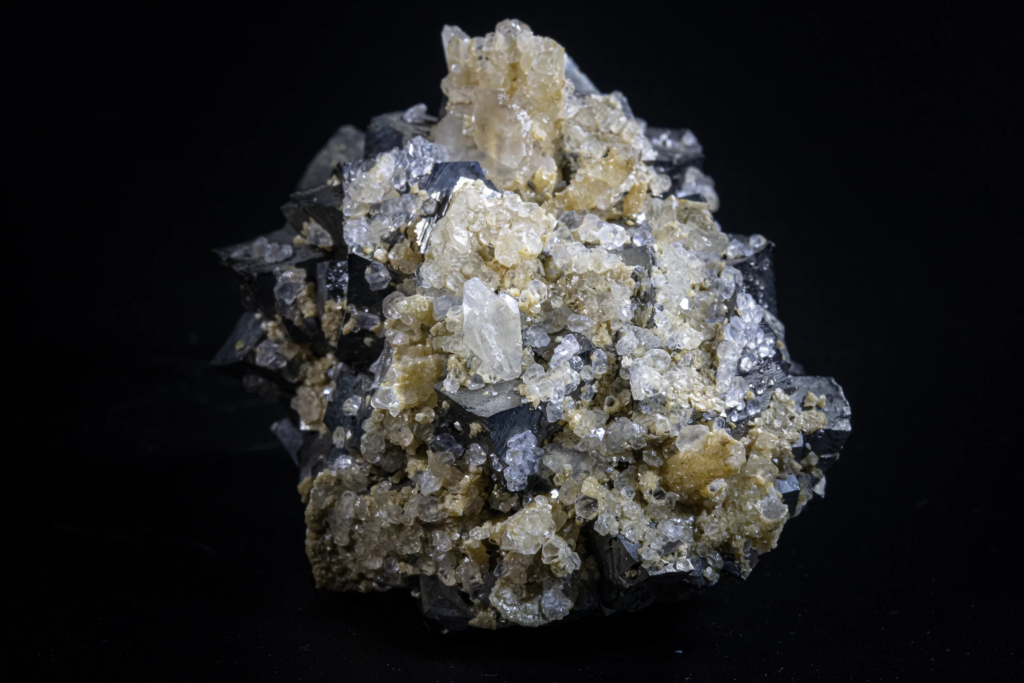
Prehnite on Epidote
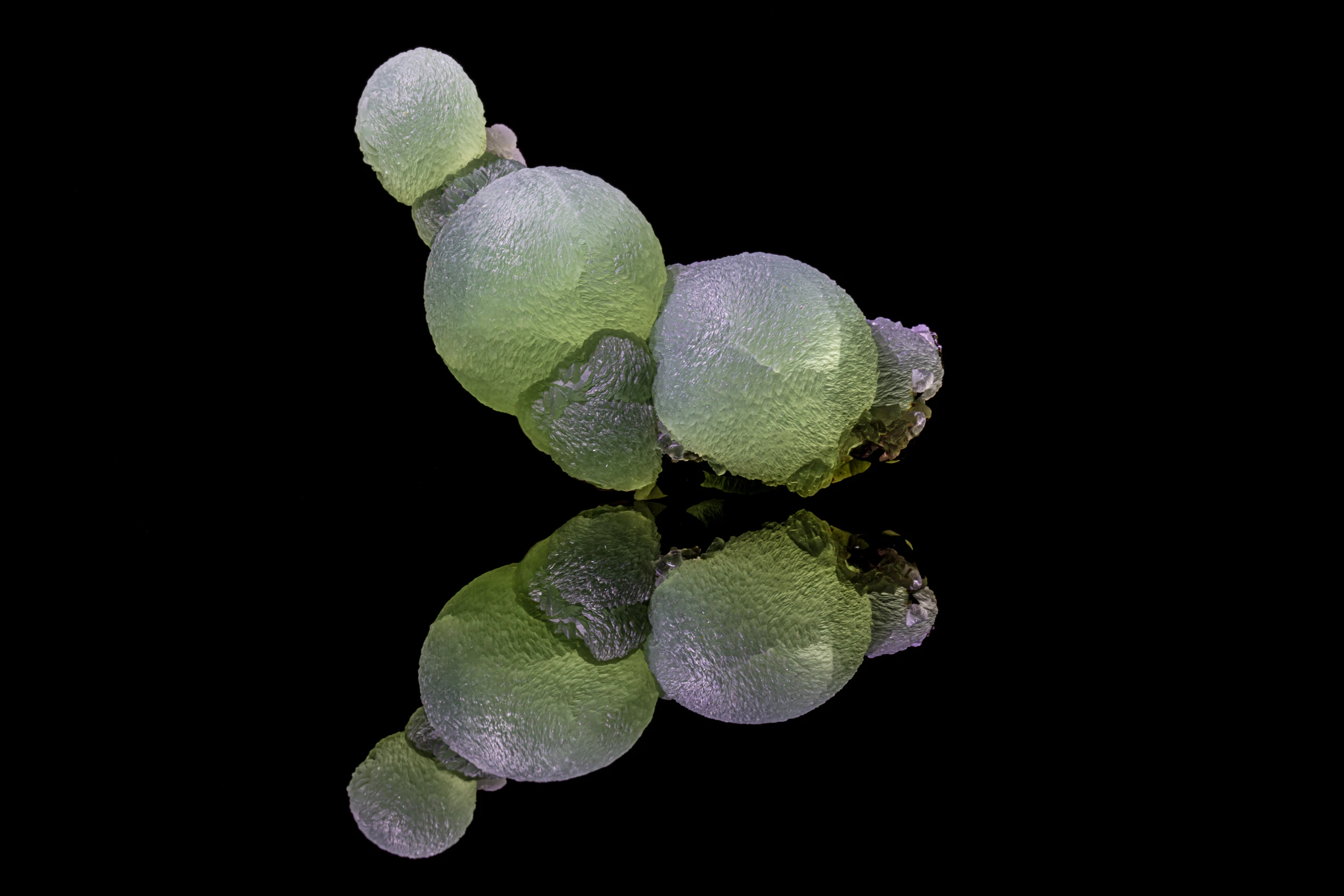
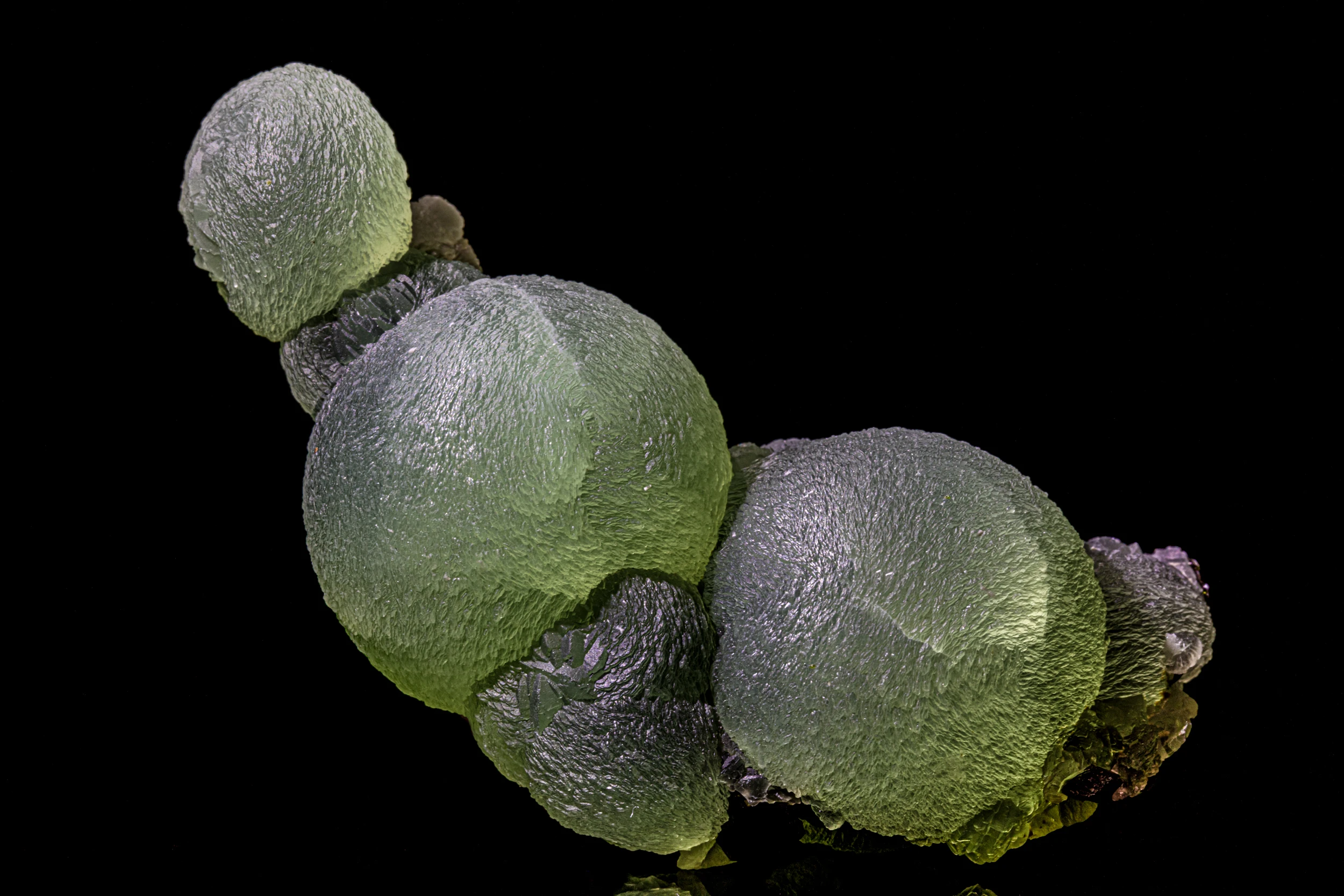
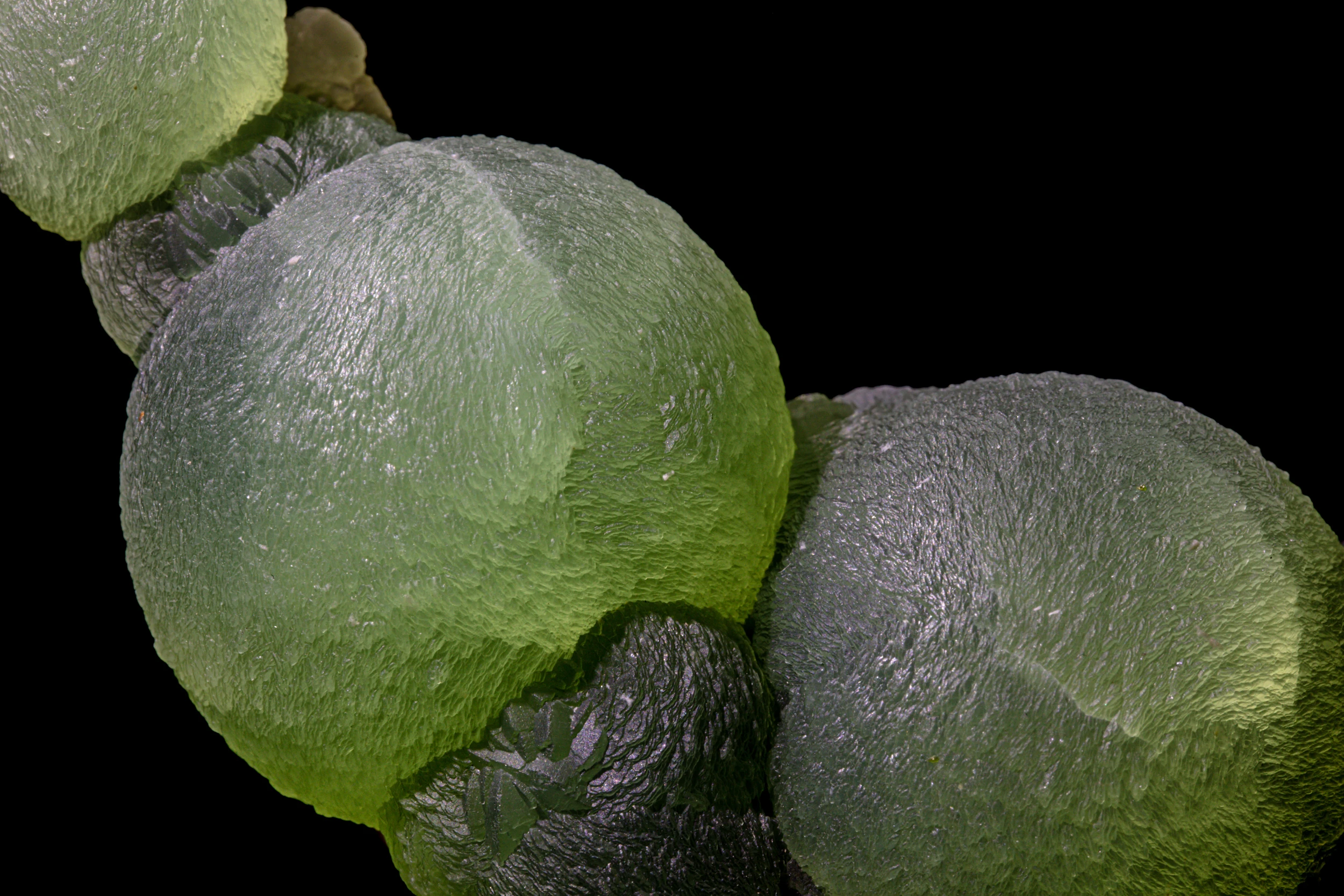
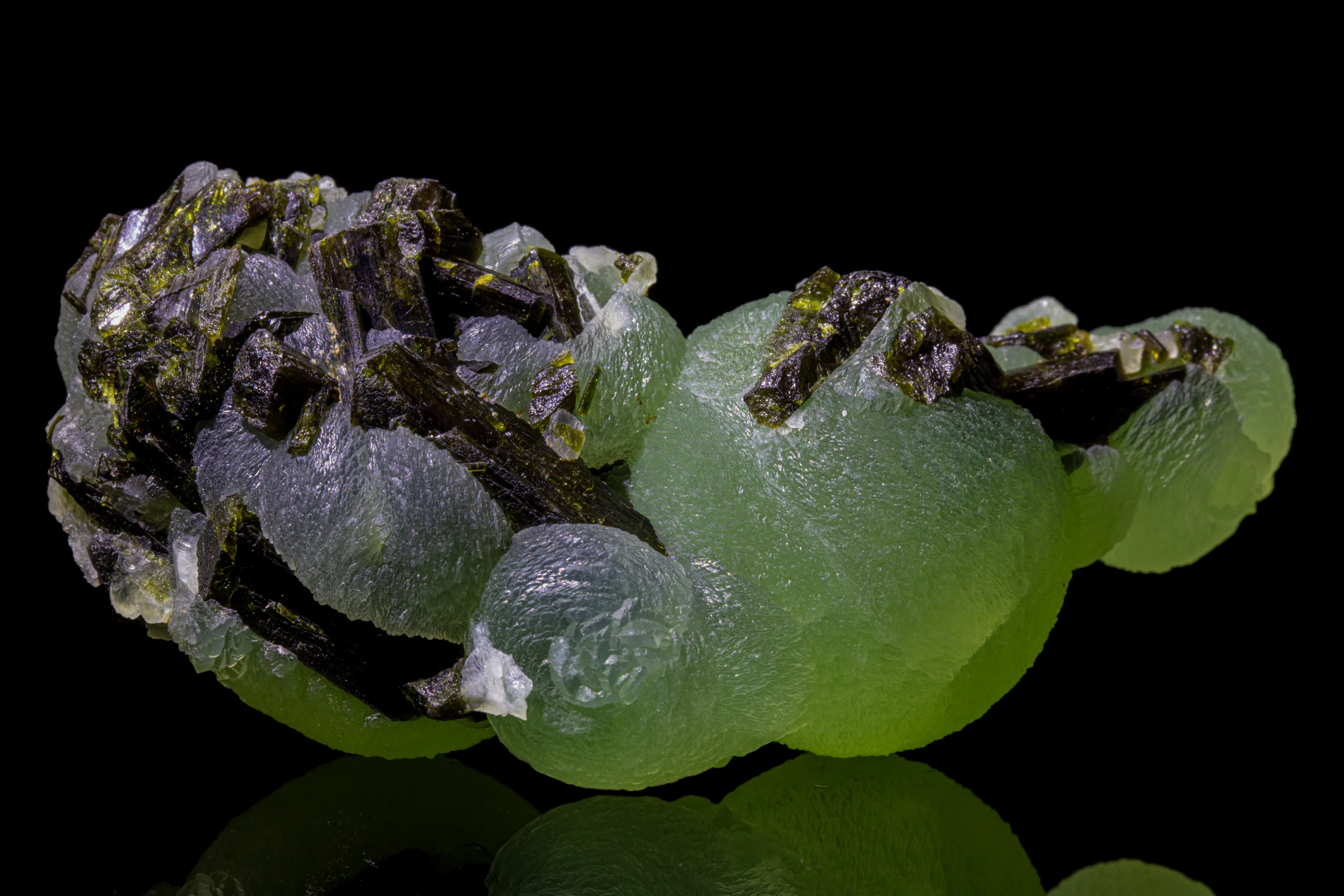
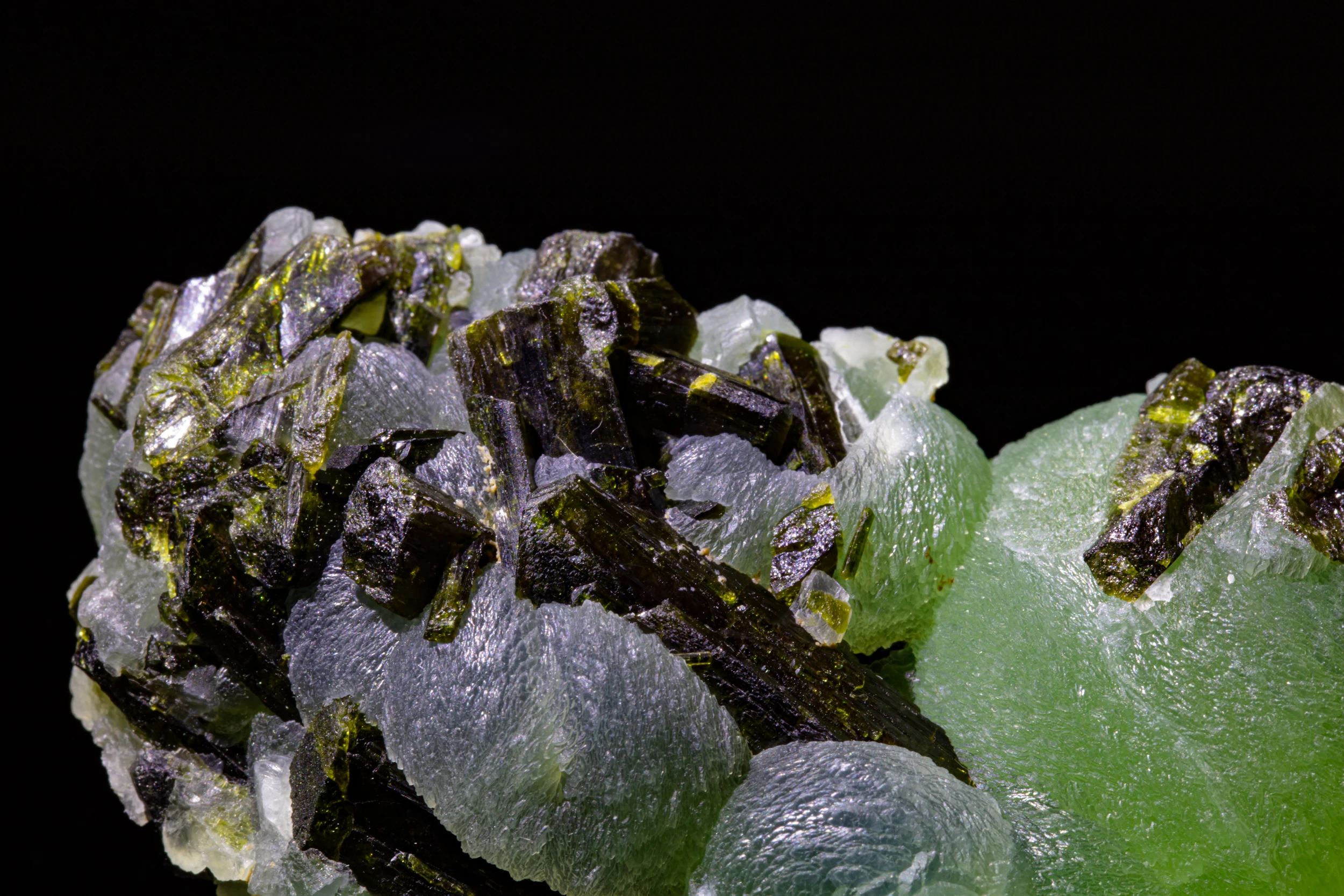
The Specimen
Notes
Mineral Species
Ca2Al2Si3O10(OH)2
Orthoclase
Talc (1)Diamond (10)
Scratches glass. Harder than a steel knife.
Ca2Al2(Fe3+,Al)(SiO4)(Si2O7)O(OH)
Quartz
Talc (1)Diamond (10)
Scratches glass. Harder than a steel knife.
Did you know?
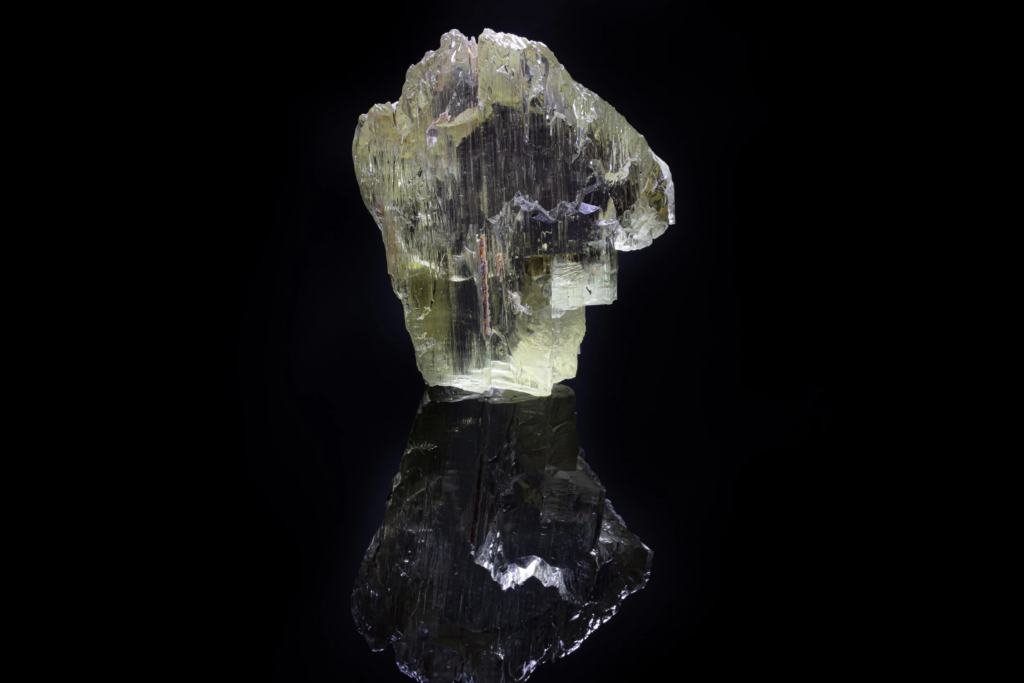
PrehnitePrehnite was the first mineral ever named after a person. In 1788 it was named for the Dutch colonel Hendrik von Prehn, who had brought the green stone back from the Cape of Good Hope, and it started a convention that now covers hundreds of mineral species.
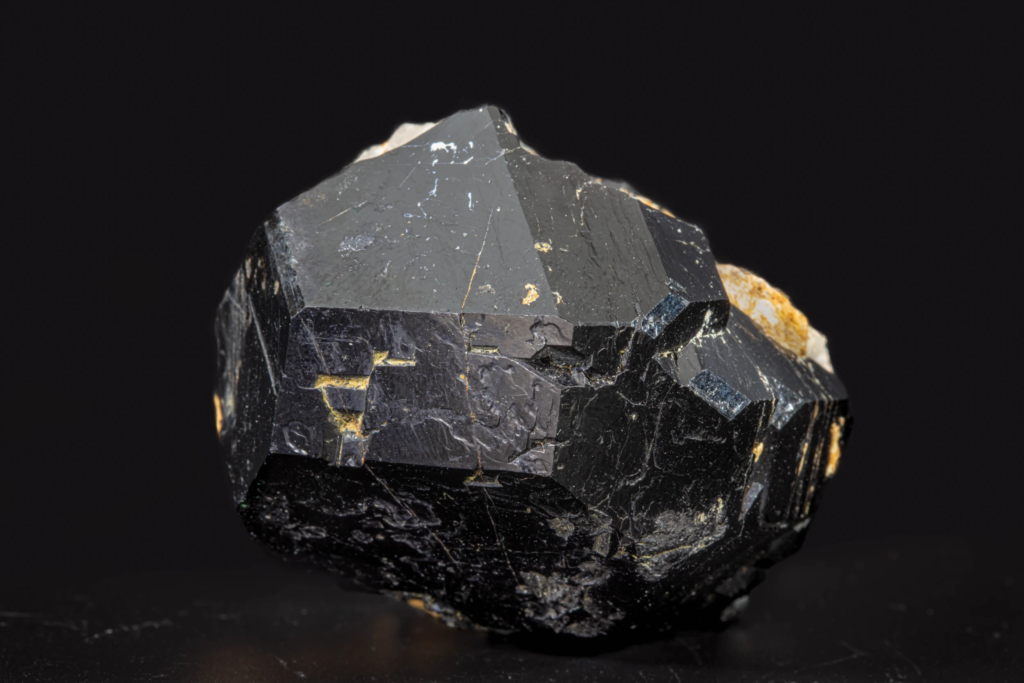
EpidoteTurn a clear epidote crystal in your fingers and its color shifts on its own, from pistachio green to yellow to deep brown, depending only on the angle you view it from. The effect, called pleochroism, comes from the crystal absorbing light differently along each of its axes.