Smithsonite (Cuprian)

The Specimen

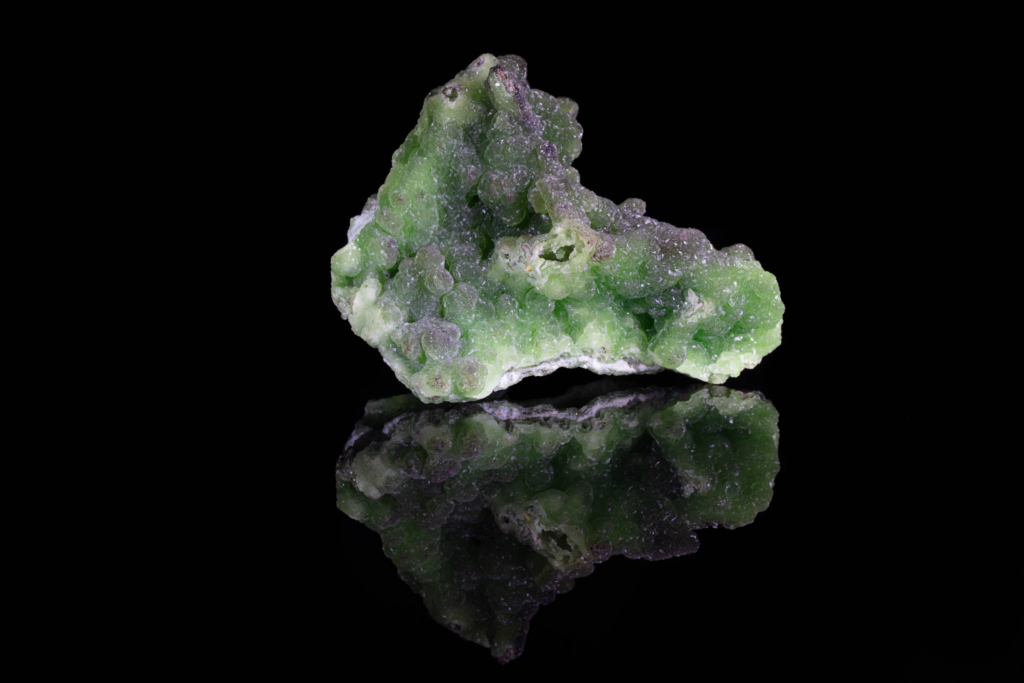
Cabinet: Large Cabinet (10 cm+) – Size: 10.3 x 7.4 x 4.7 cm Origin: Tsumeb Mine, Tsumeb, Oshikoto Region – Namibia

Notes

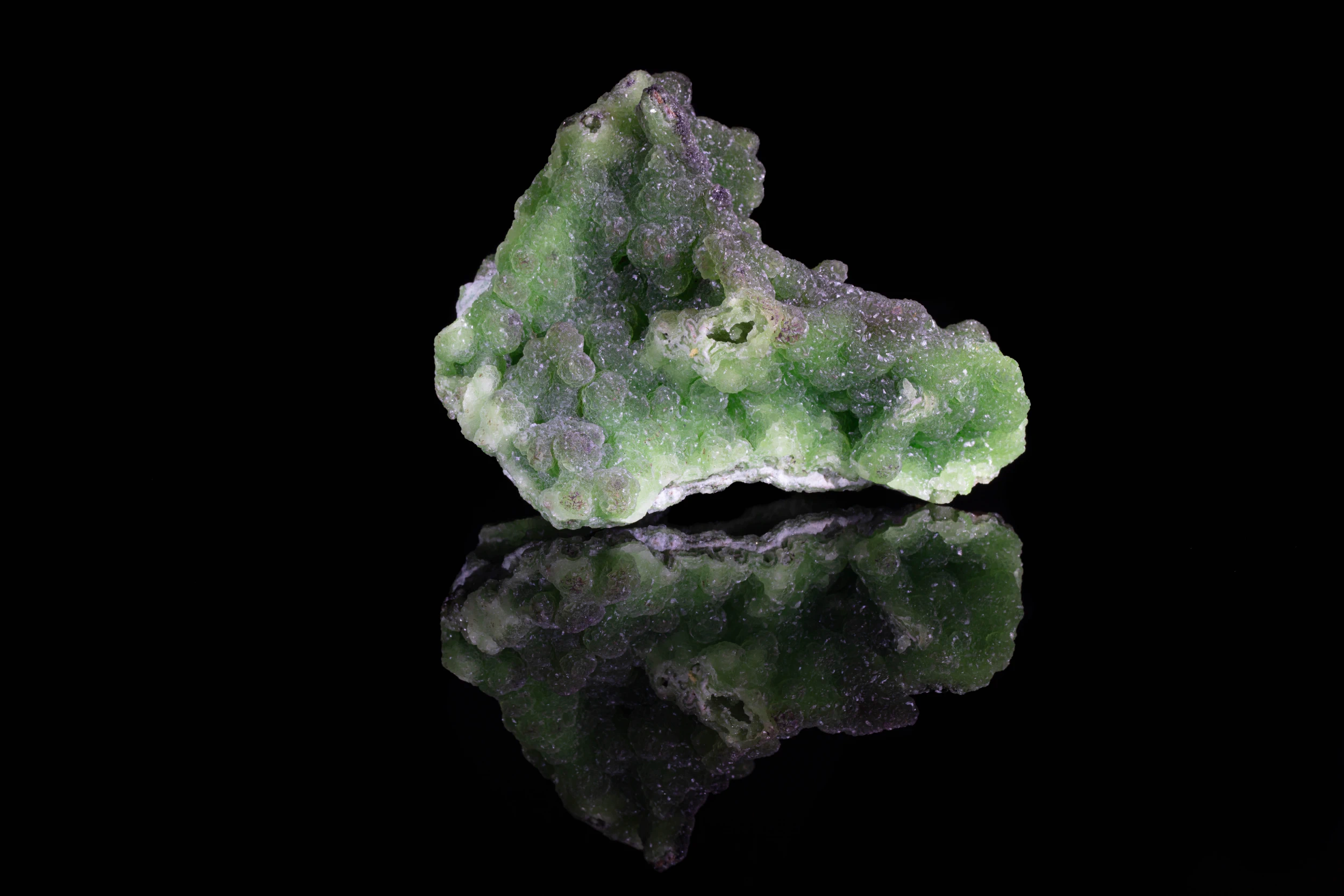
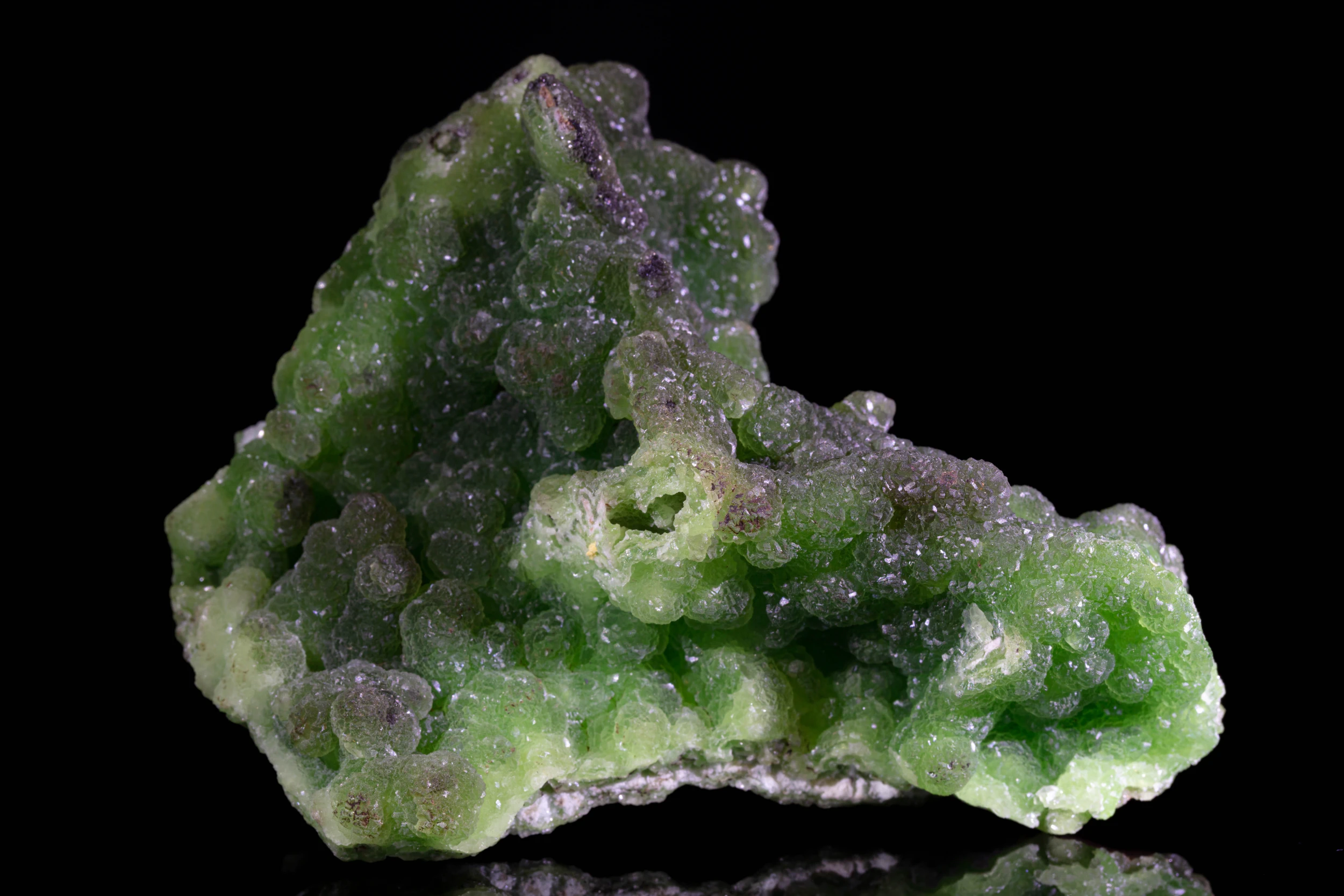
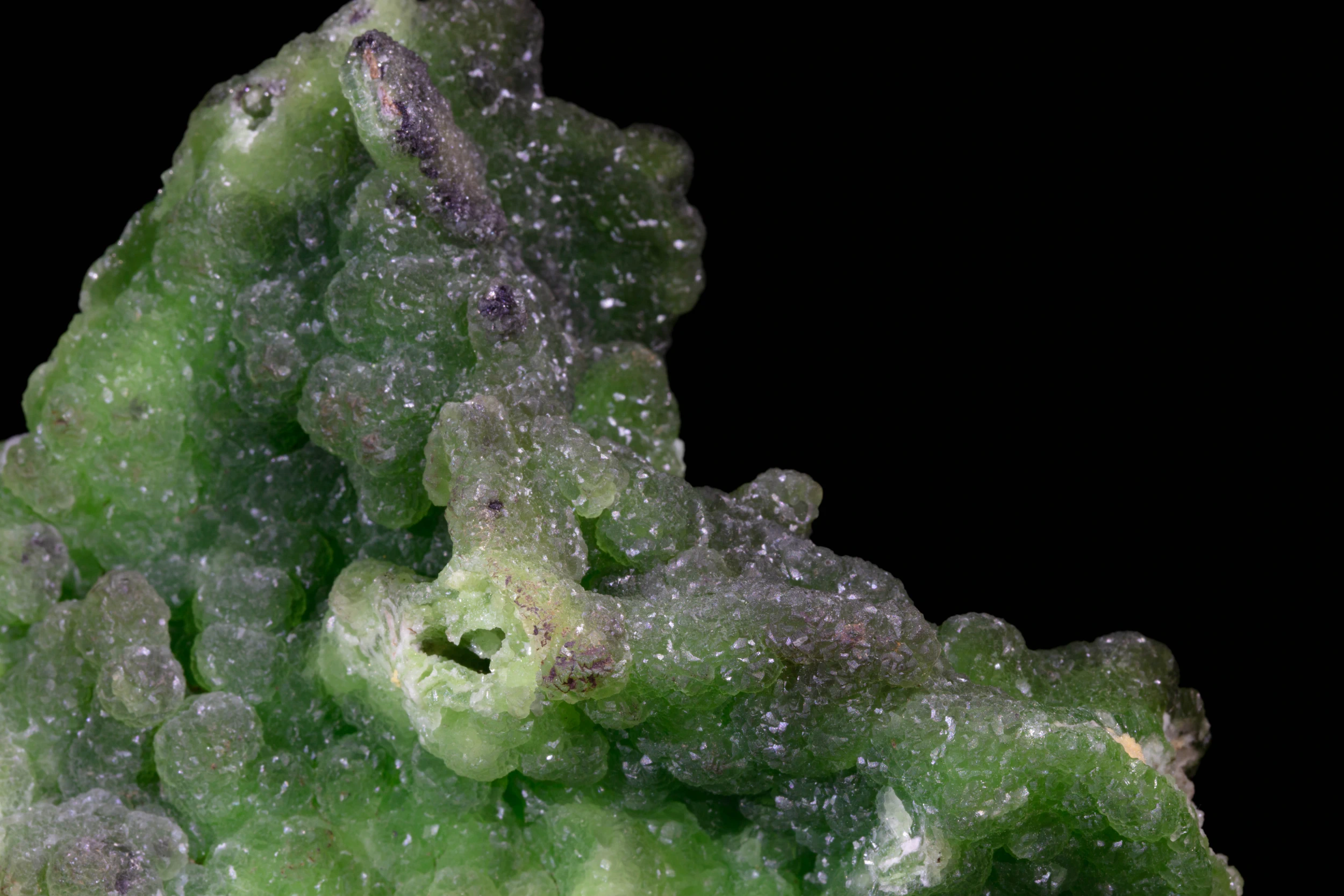
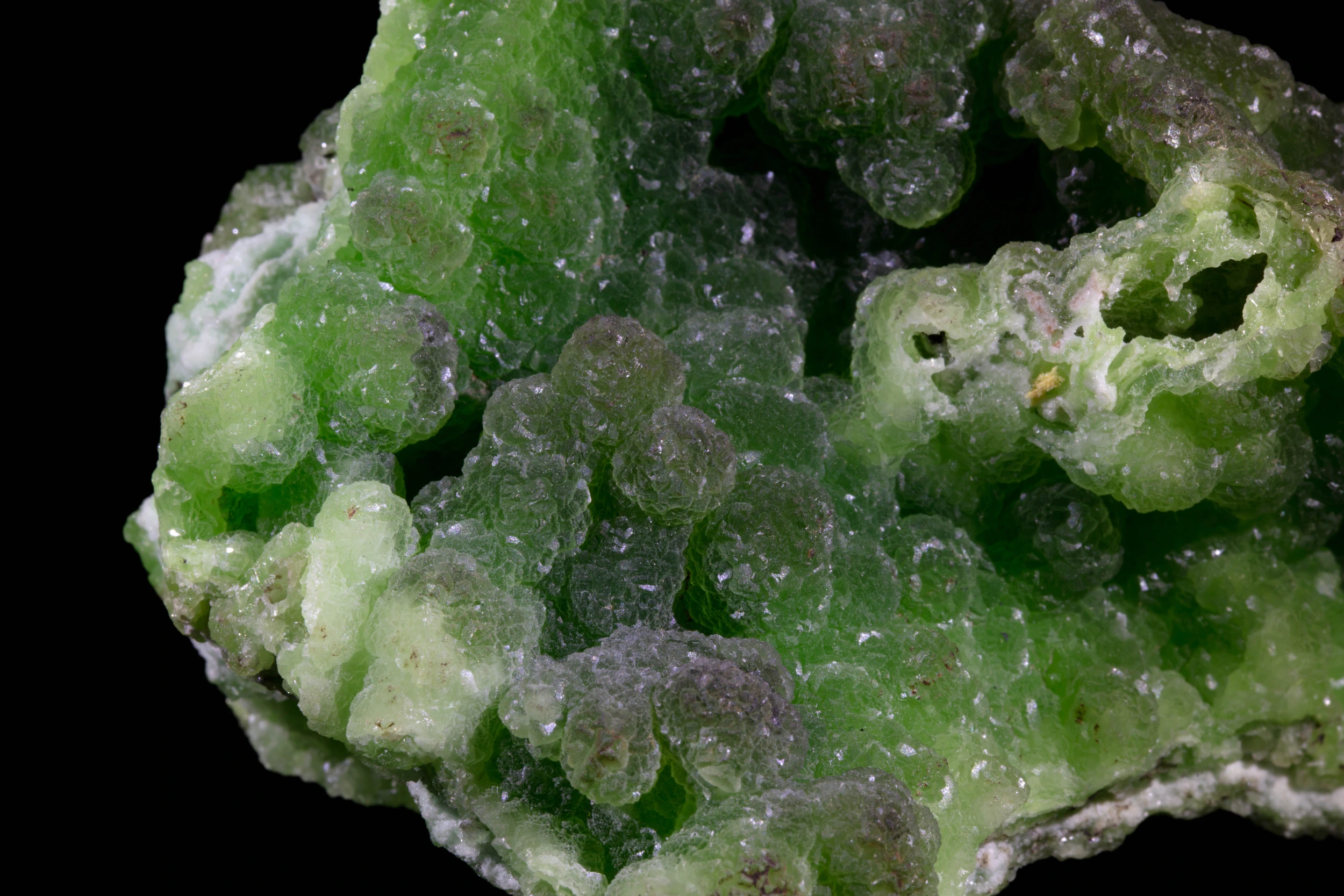
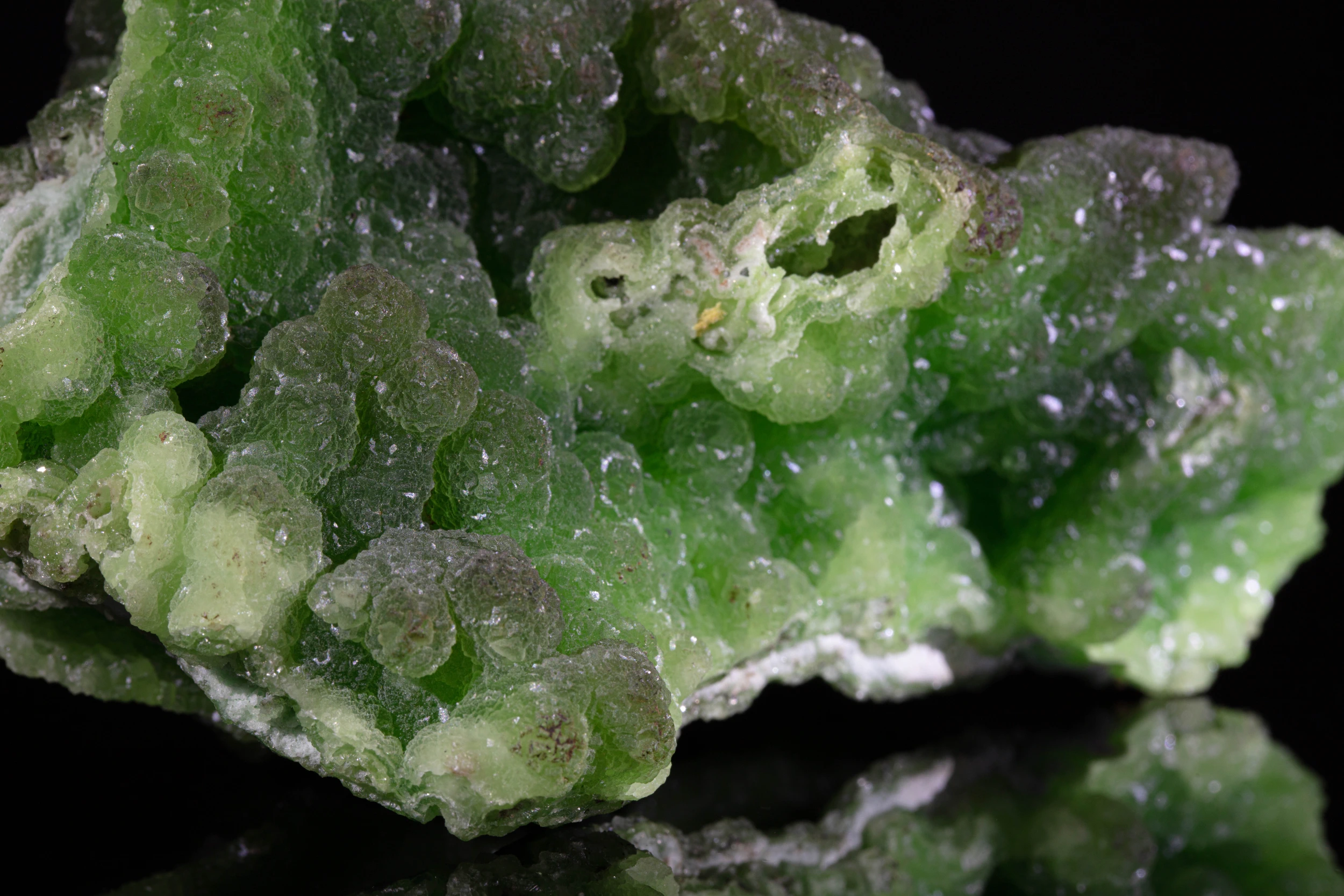
A thick, rounded mass of green smithsonite forms this specimen, on a thin pale crust at its base. The bulging forms are not smooth: hundreds of tiny rhombohedral crystal faces cover them and sparkle as the light moves. Toward the top, the green turns grayish purple, and a few of the rounded forms open into small hollows. Smithsonite is a zinc carbonate that forms when zinc ores break down near the surface.
This green form is known to collectors as cuprian smithsonite, a name for smithsonite thought to hold a little copper. Studies of the mine name copper as one of several metals that may color Tsumeb smithsonite.
Mined from 1906 to 1996, Tsumeb is one of the richest mineral localities known. Green smithsonite came mostly from its upper levels in the early years of mining, often as rounded, grape-like masses.

Mineral Species

Did you know?

For centuries smithsonite and a different zinc mineral, hemimorphite, were sold under one name, calamine. They looked alike and were mined together, and no one told them apart until chemistry did, in the 1800s. The old name lives on in calamine lotion, the pink cream once made from zinc ore.