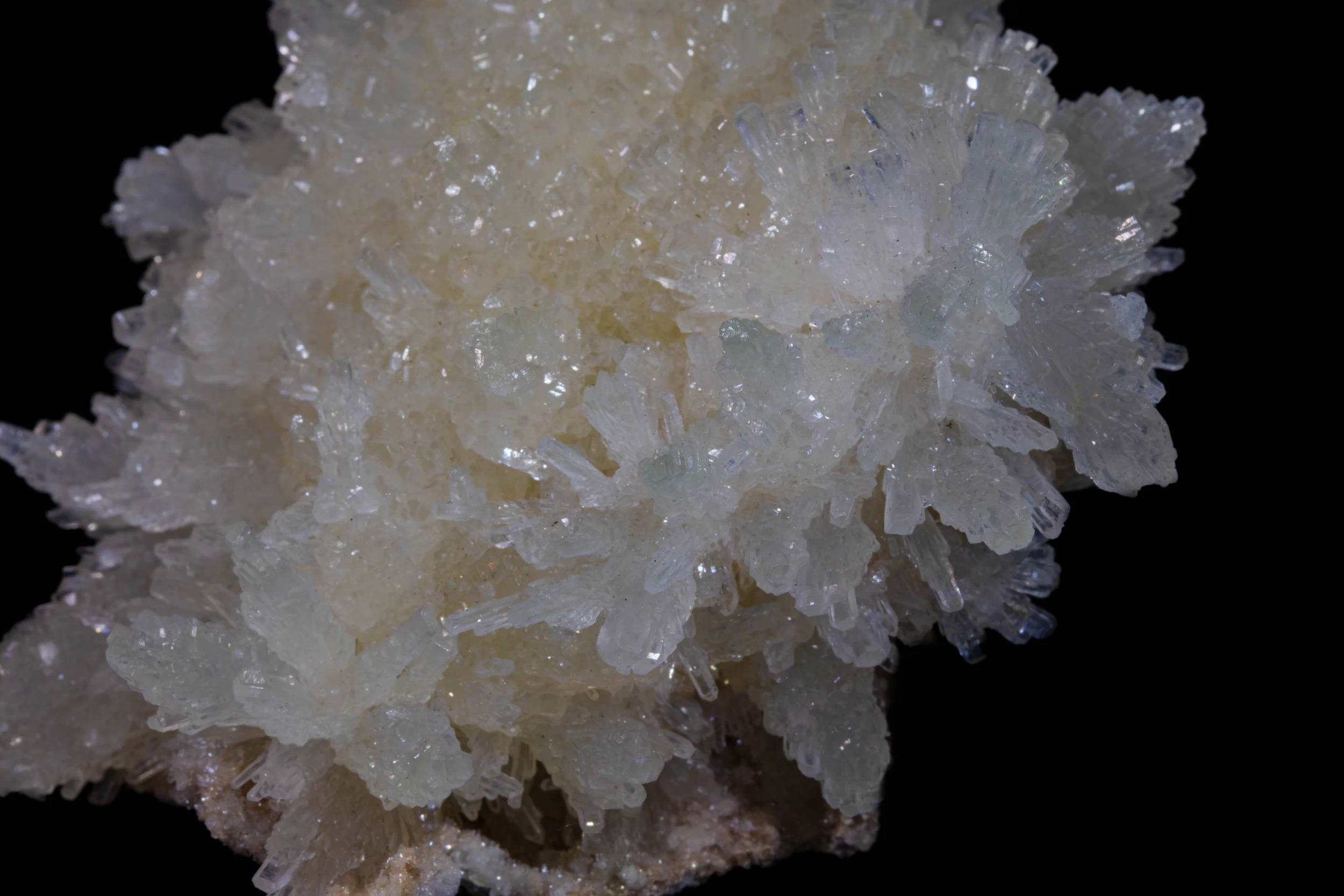
Strontianite

The Specimen

Cabinet: Cabinet (7 - 10 cm) – Size: 8.3 x 8.3 x 5.3 cm Origin: Oberdorf magnesite deposit, Oberdorf an der Laming, Tragöß-Sankt Katharein, Bruck-Mürzzuschlag District, Styria – Austria History: Ex Edward E. David Jr Collection

Notes

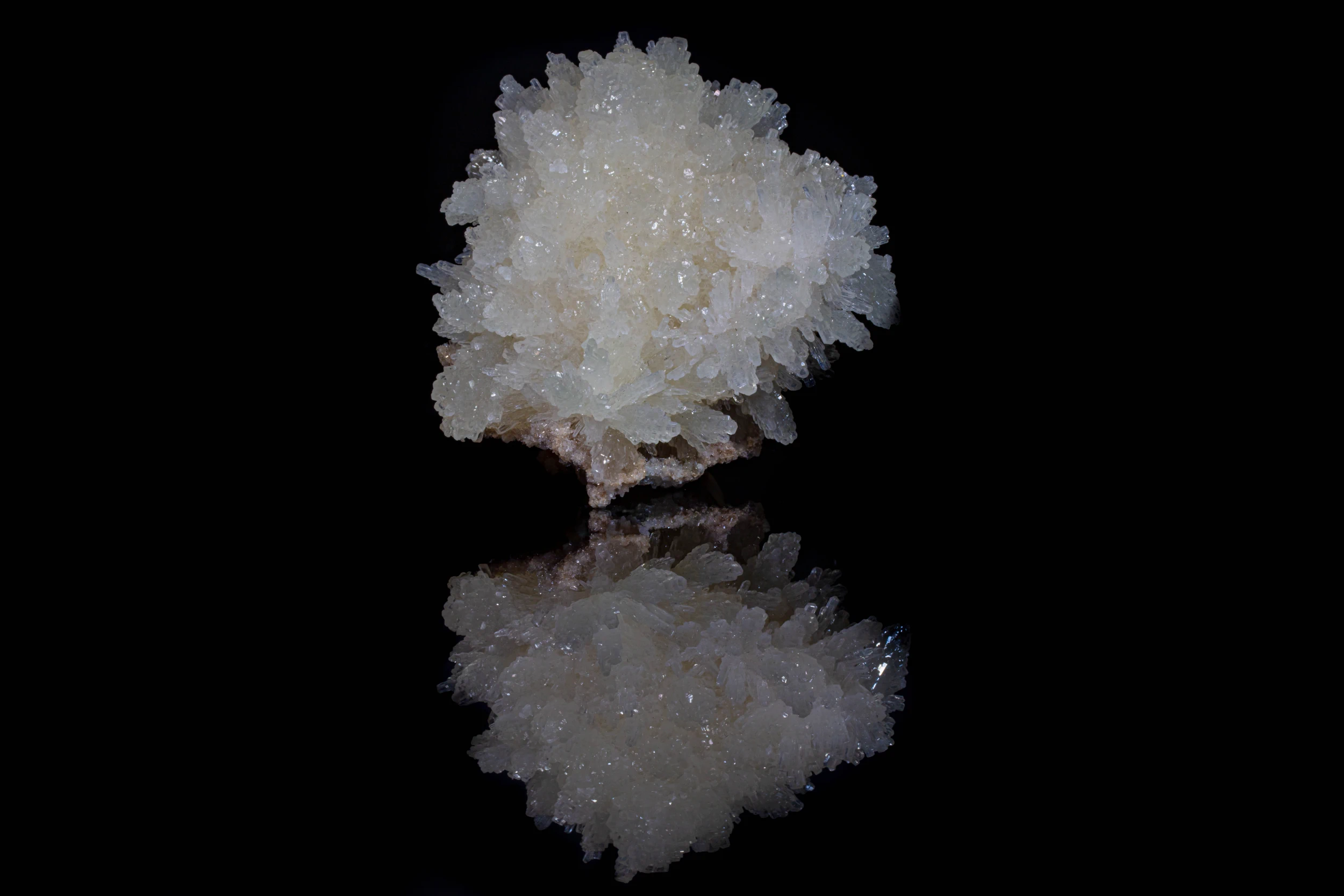
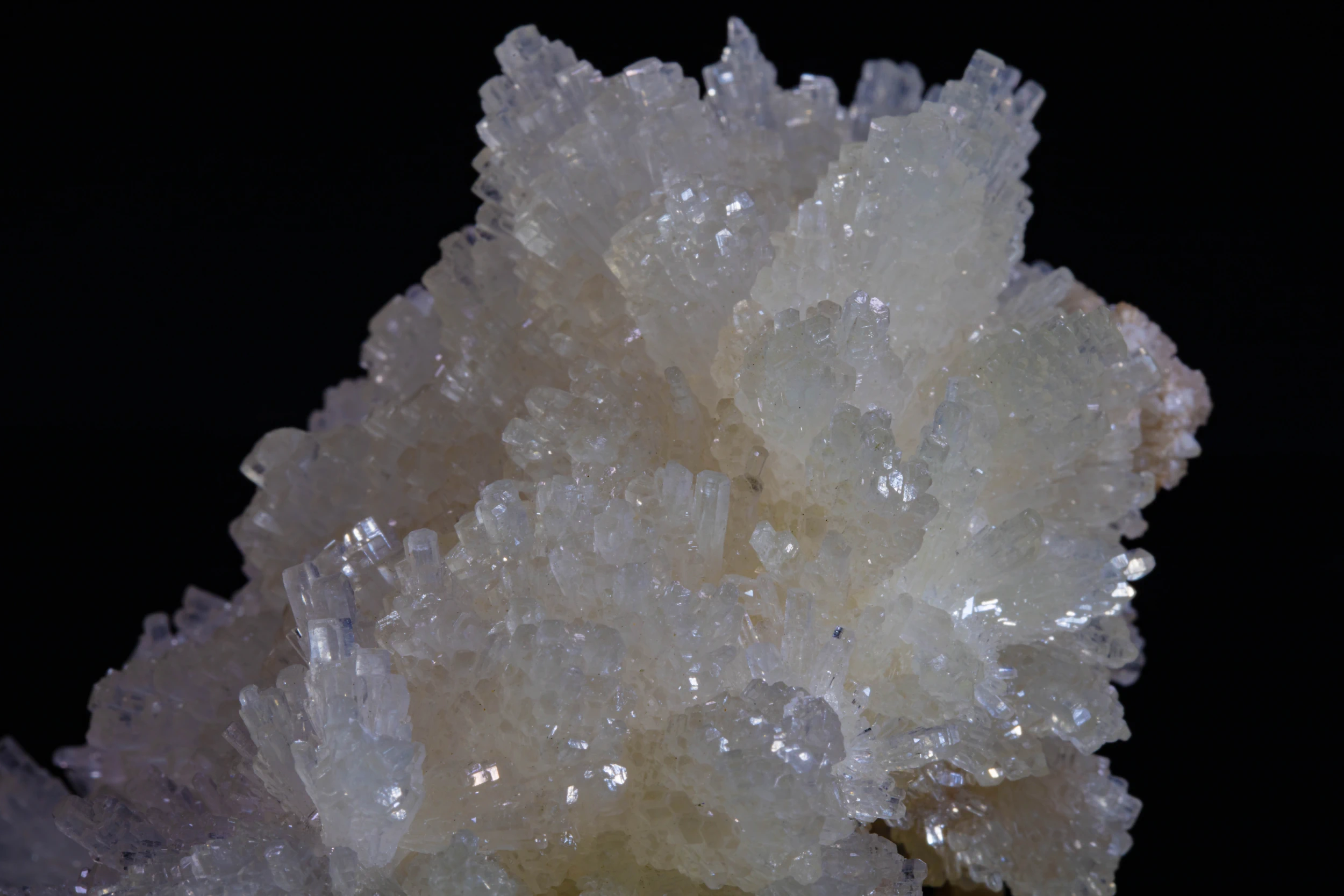
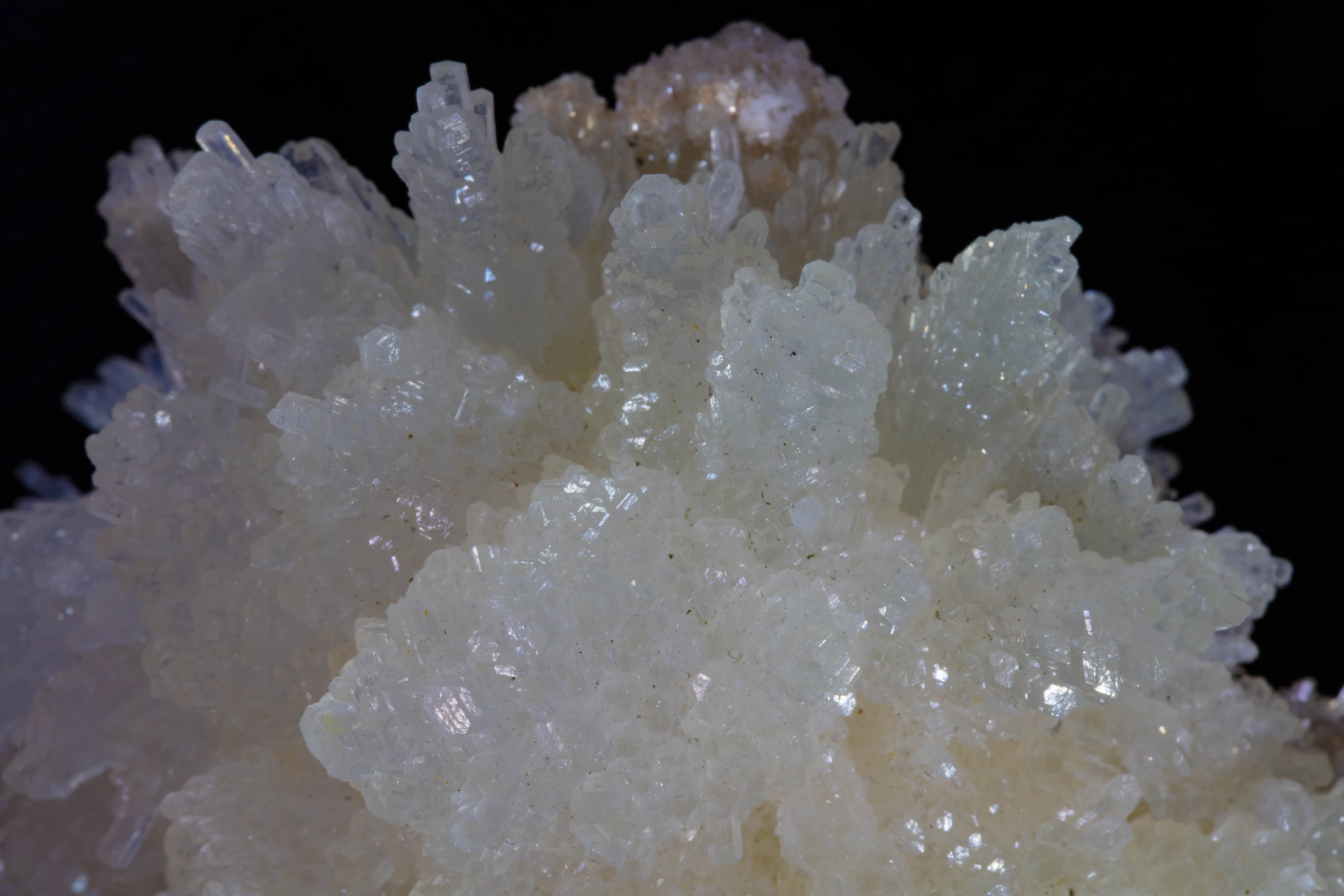
A two-sided rosette of glassy, cream-white strontianite, built from columns of six-sided prisms stacked in parallel growth and pointing out in every direction, on a small pinkish base. Strontianite is orthorhombic, but repeated twinning makes the Oberdorf crystals look like hexagonal prisms. It is a strontium carbonate. The piece was mined around 1900 and comes with an old German label.
Oberdorf an der Laming, in the Laming valley of Styria, is a magnesite deposit that has produced some of the finest strontianite crystals ever found.
The piece comes from the collection of Edward E. David Jr., science adviser to President Richard Nixon from 1970 to 1973, who collected minerals from the age of six.

Mineral Species

Did you know?

The red in fireworks comes from strontium, the metal first found in this mineral. Strontium salts burn a deep, pure crimson, so every red starburst overhead and every red emergency flare owes its color to the element named for a small Scottish village.