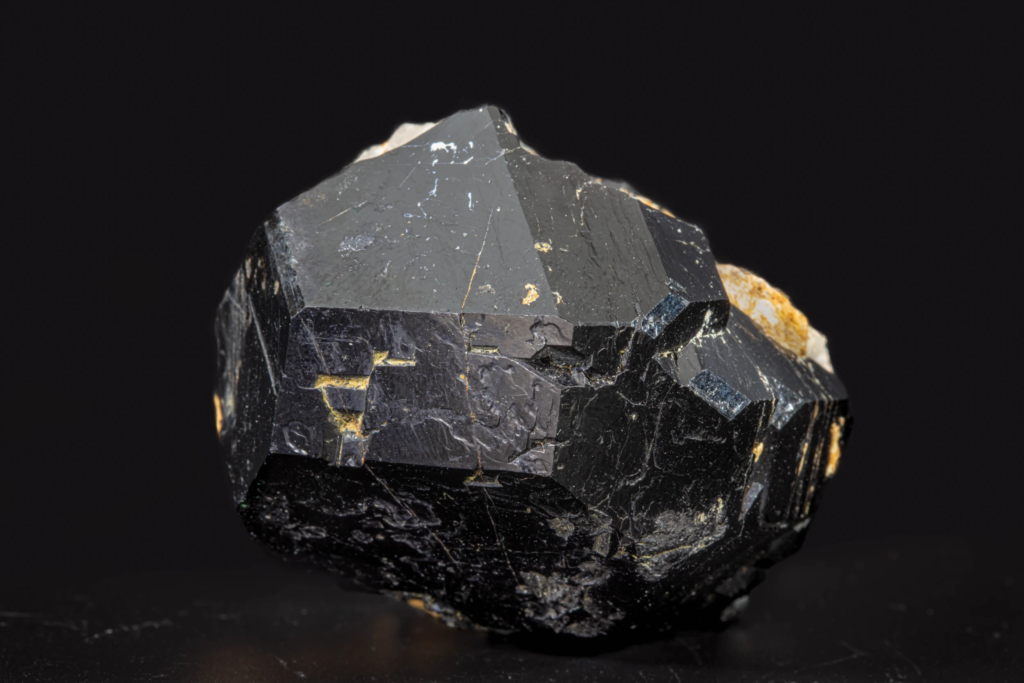
Tourmaline with Cleavelandite (double-terminated, bi-colored)
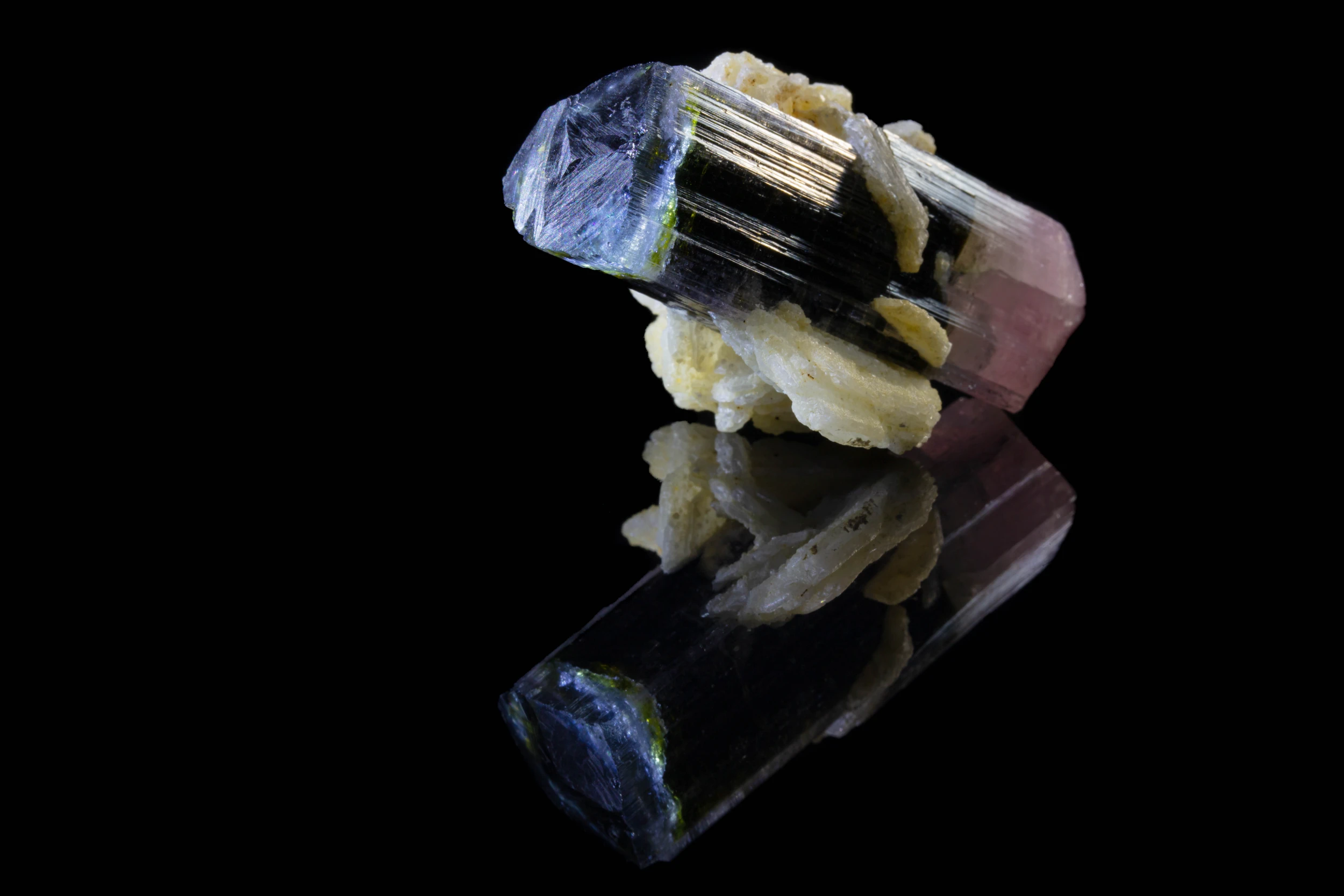
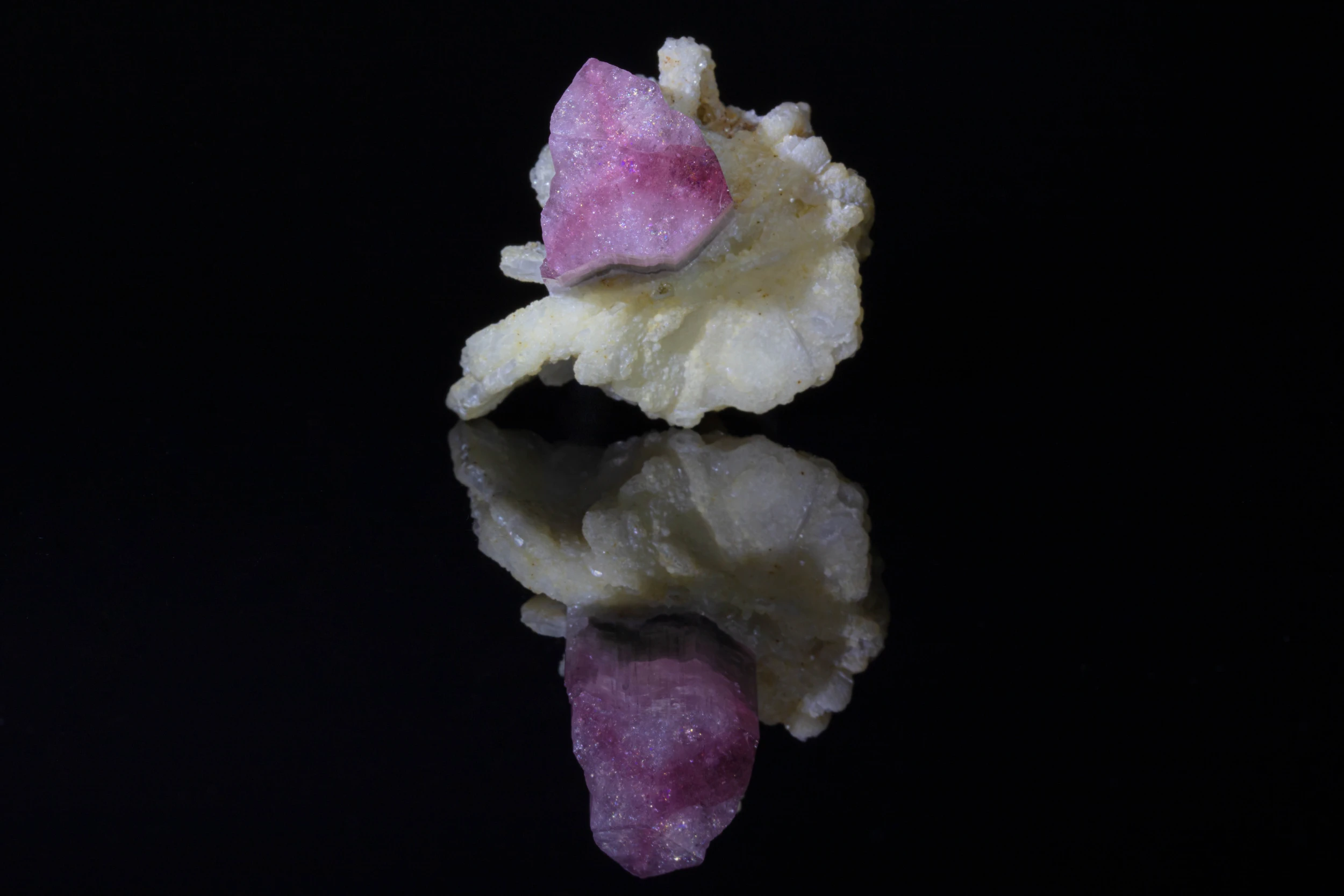
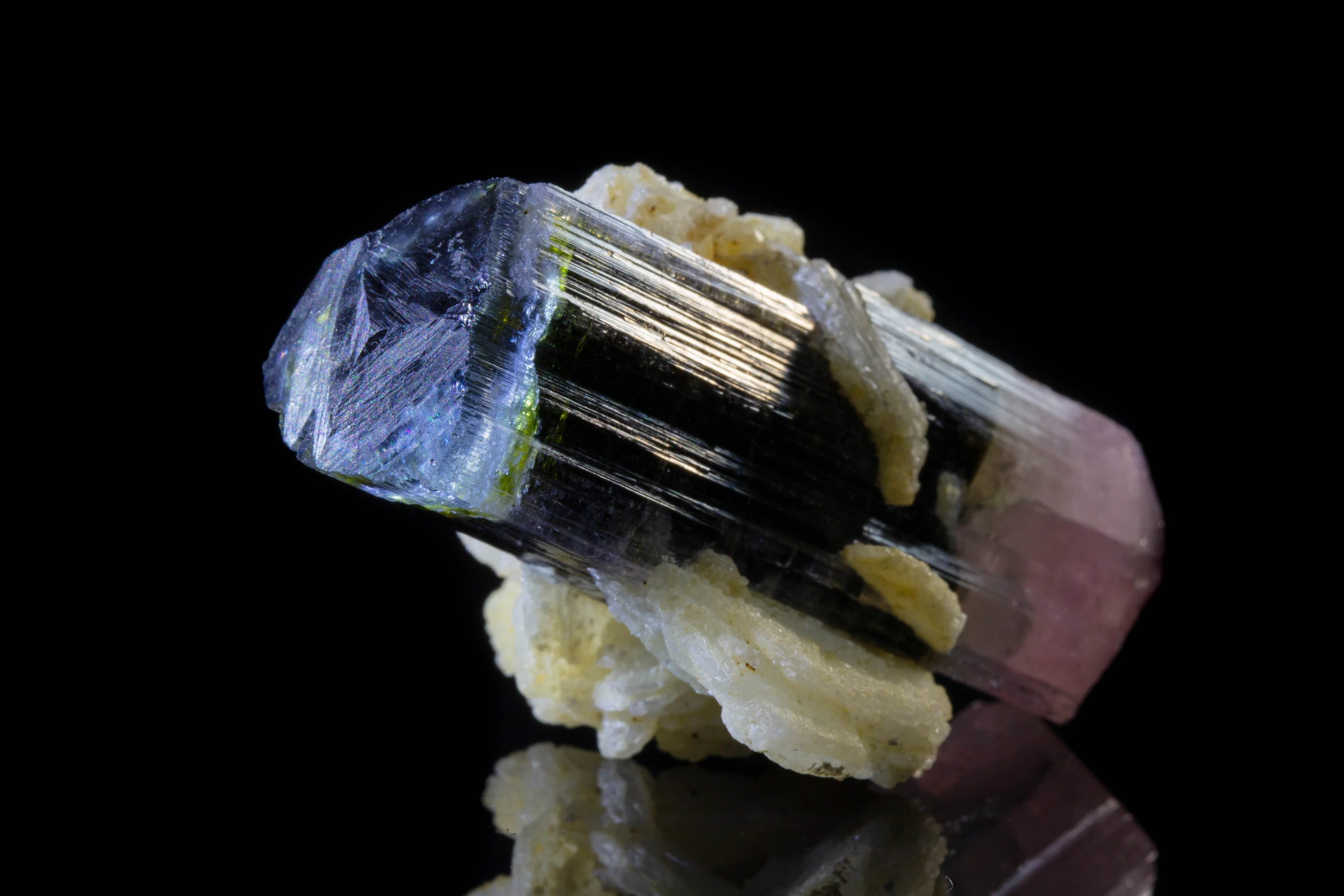
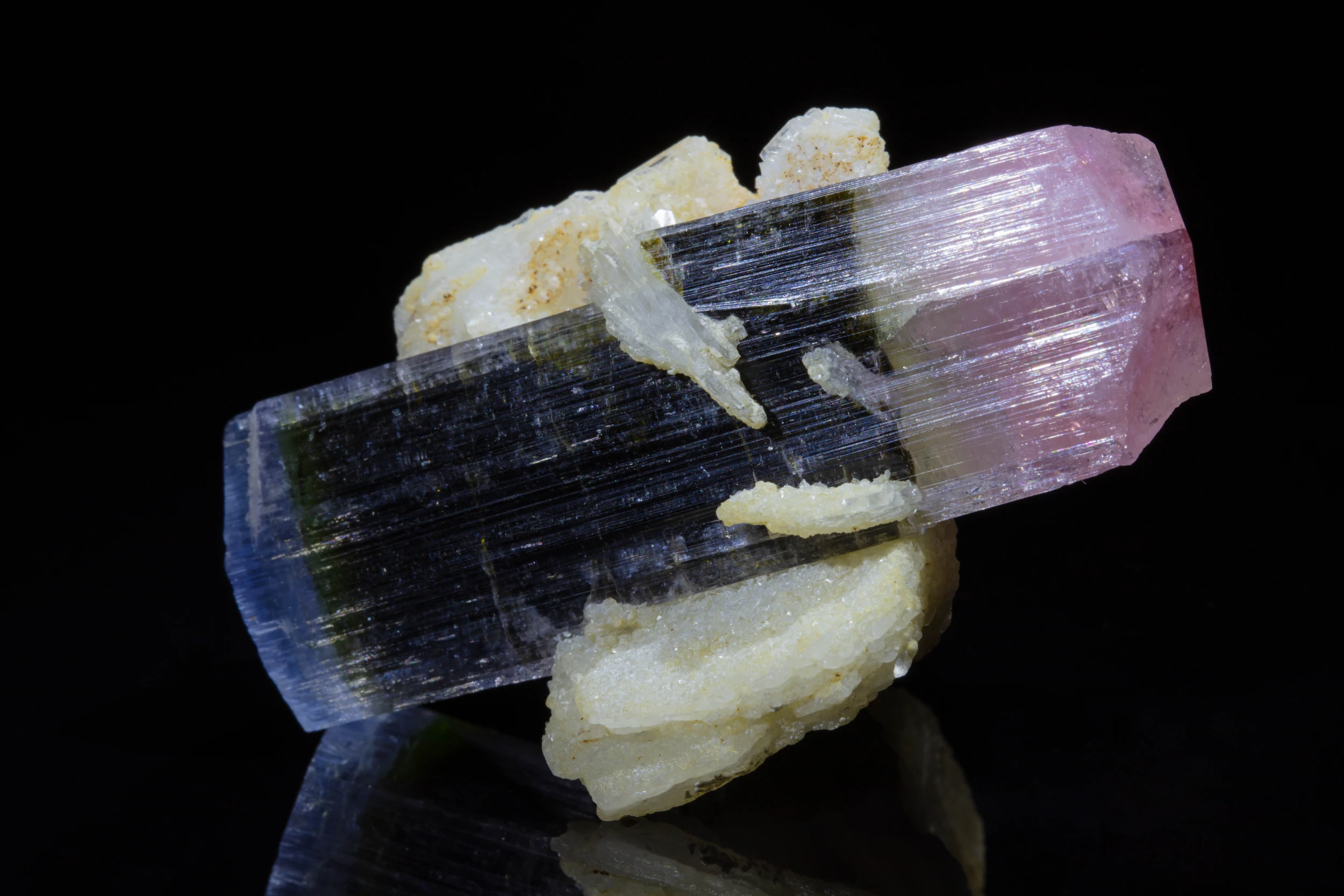
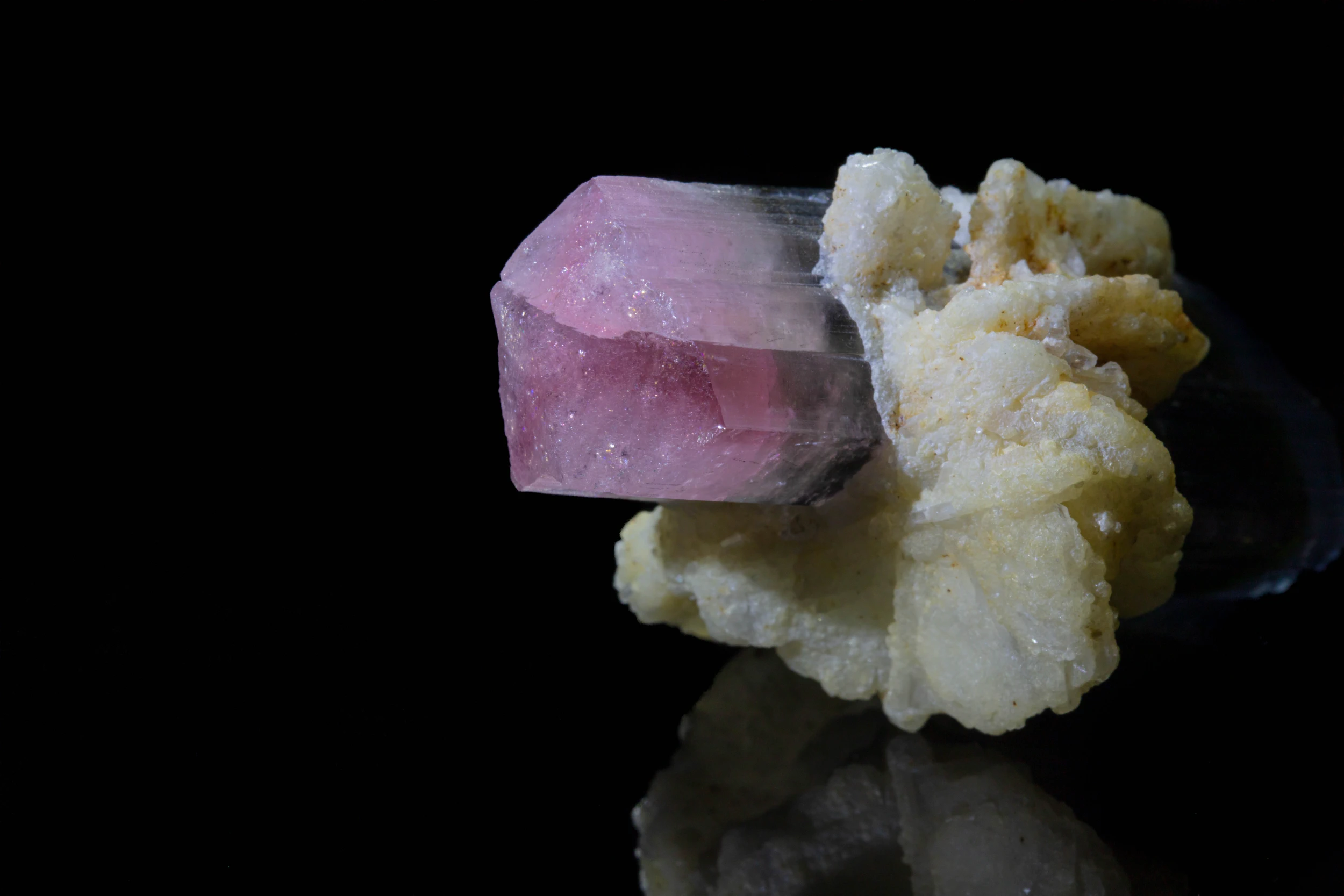
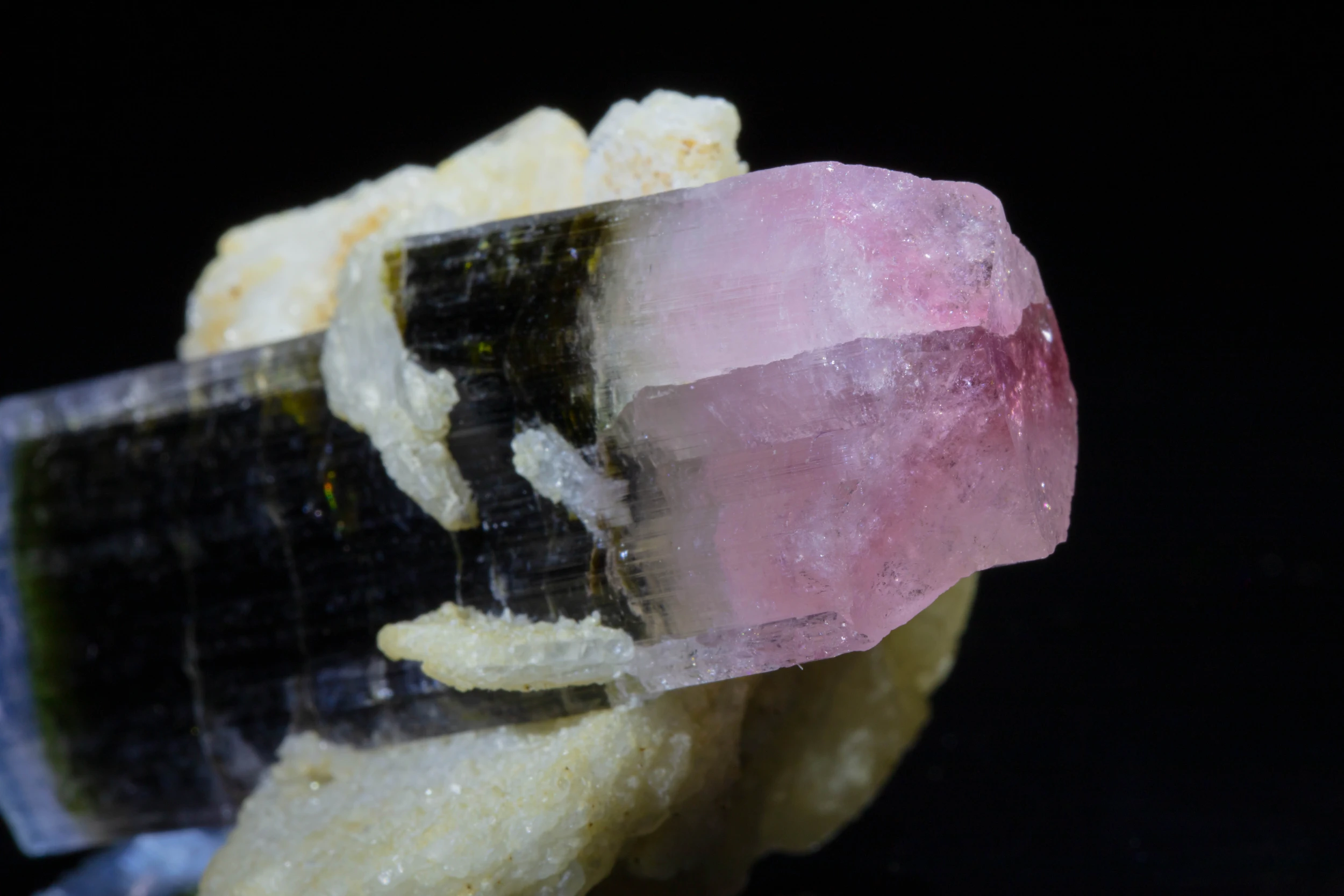
The Specimen
Notes
Mineral Species
(Na,Ca)(Li,Mg,Al,Fe)3Al6(BO3)3Si6O18(OH,F)4
Quartz
Talc (1)Diamond (10)
Very hard. Scratches glass and steel.
NaAlSi3O8
Orthoclase
Talc (1)Diamond (10)
Scratches glass. Harder than a steel knife.
Did you know?
TourmalineFor a few years, San Diego County mined pink stones mostly for one customer on the other side of the world. Between 1902 and 1910 the mines shipped some 120 tons of gem rubellite to imperial China to feed the Empress Dowager Cixi's love of the color, and when she died and the Qing dynasty fell soon after, the market collapsed and the California boom went with it.
CleavelanditeCleavelandite carries a quiet American first. This albite variety was named in 1823 for Parker Cleaveland, who in 1816 had written the very first mineralogy textbook by an American, and the name was coined partly because the mineralogist Brooke thought albite, Latin for white, was a poor name for a stone that is not always white.