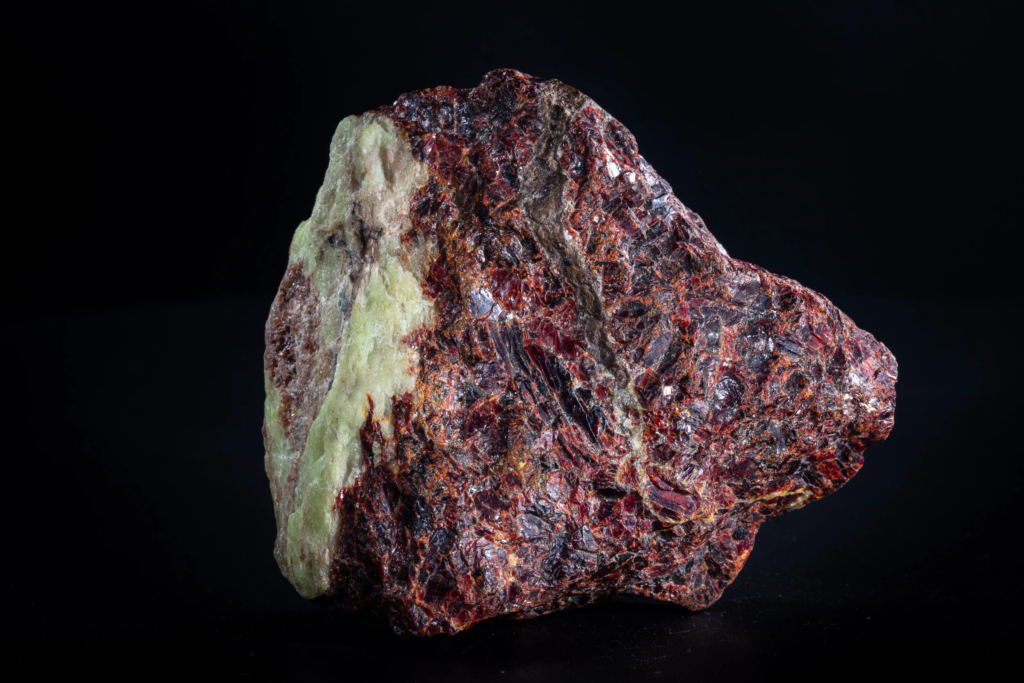
Zincite & Willemite

The Specimen

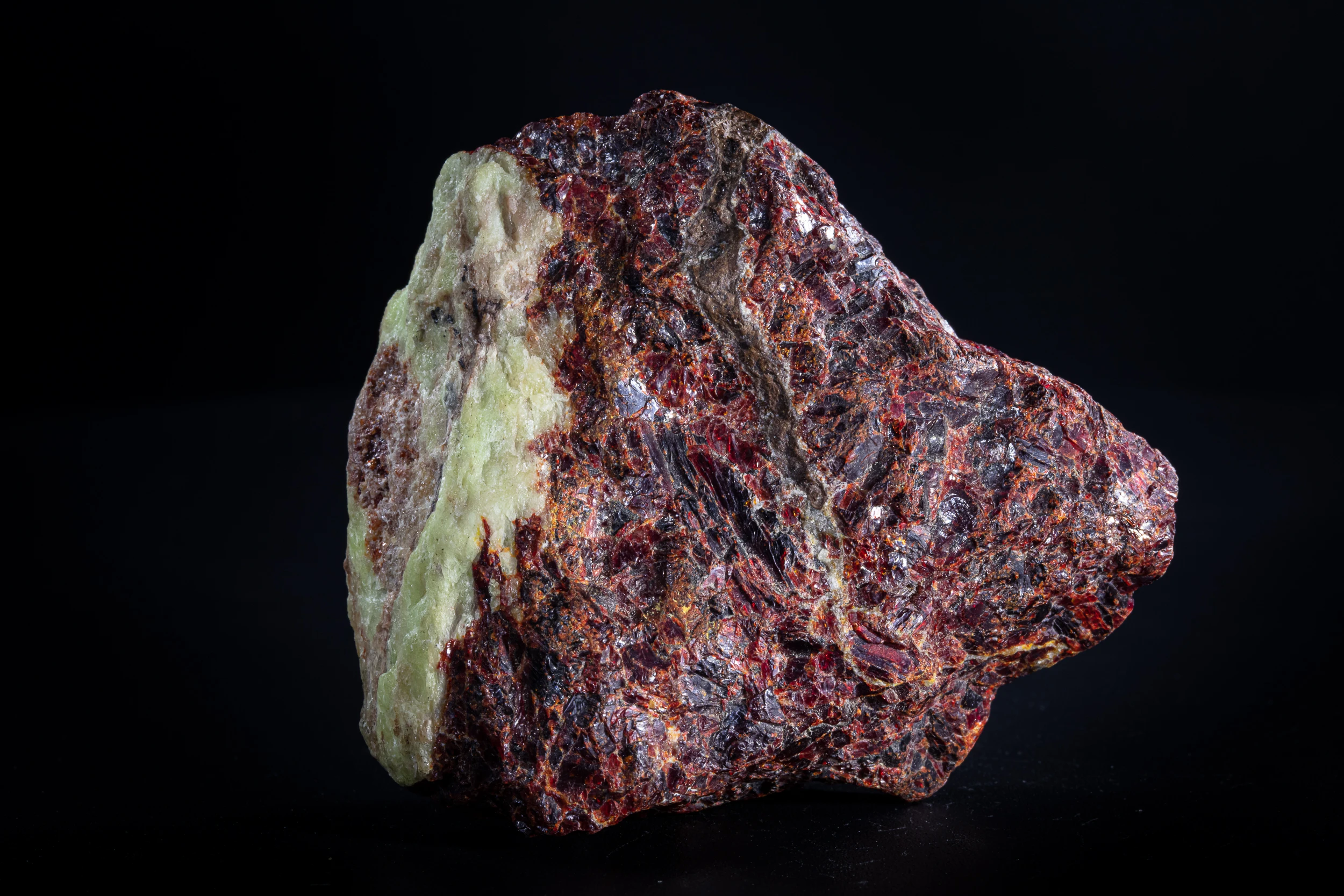
Cabinet: Small Cabinet (4.5 - 7 cm) – Size: 5.7 x 5.1 x 1.6 cm Origin: Franklin Mine, Franklin, Sussex County, New Jersey – USA

Notes

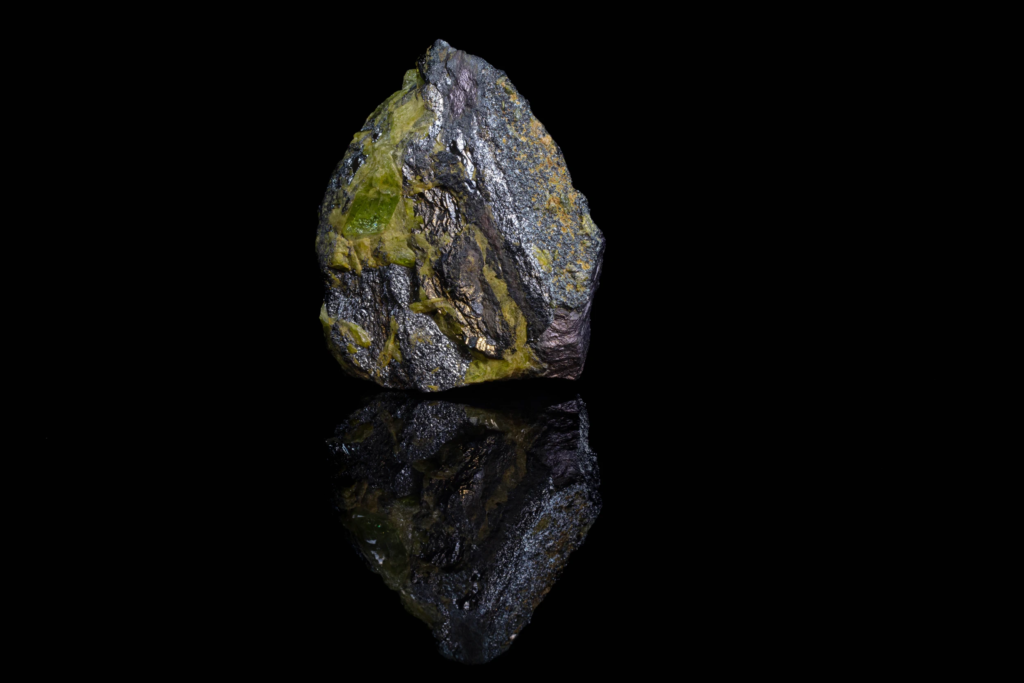
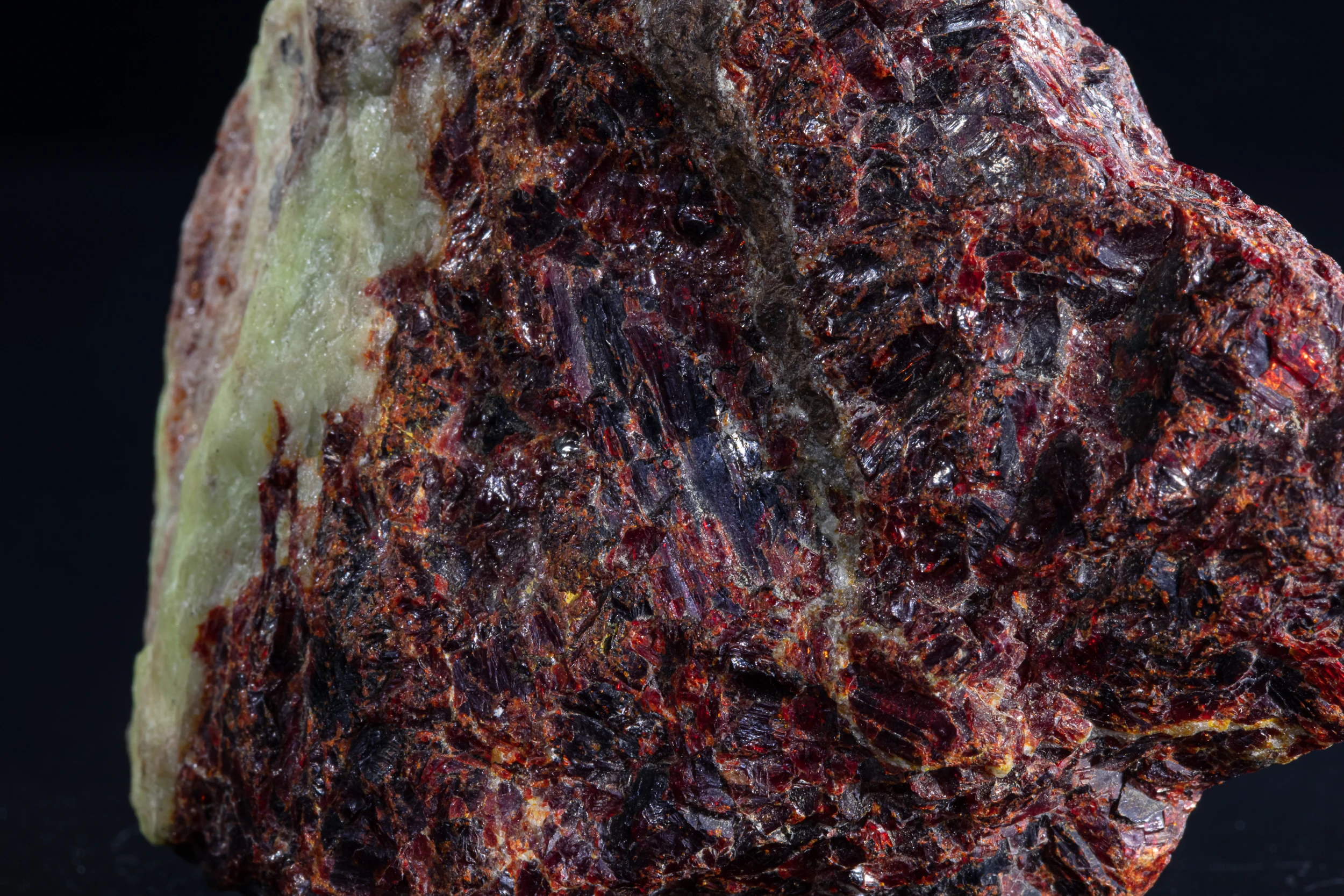
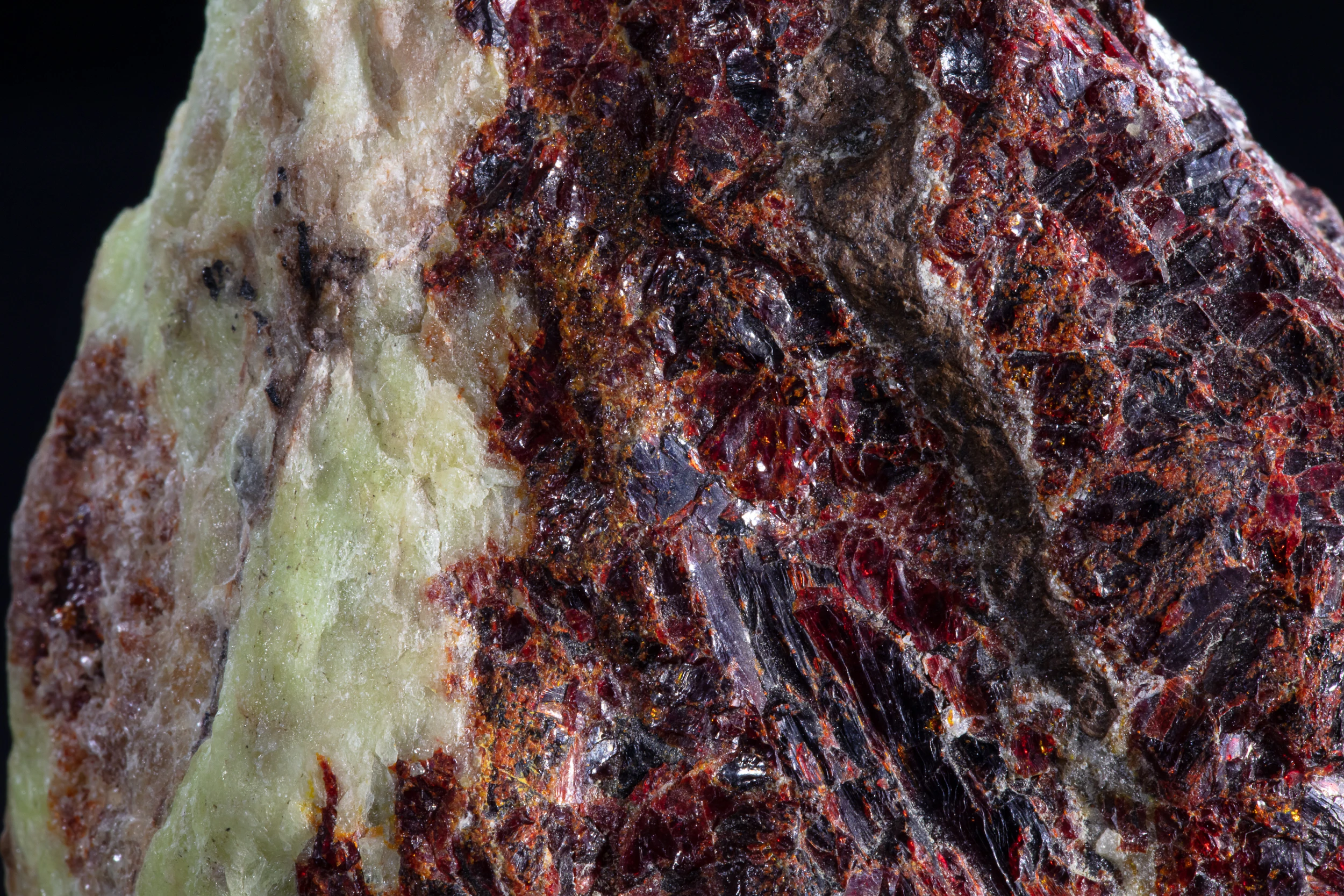
Deep blood-red zincite makes up most of this flat piece, with many smooth, glassy crystal faces on both sides. A band of pale yellowish green willemite runs along one edge. Under ultraviolet light, the willemite glows bright green, while the zincite stays dark. Zincite is zinc oxide, and willemite is a zinc silicate.
The Franklin deposit is the only place where zincite occurred in real quantity, mined as a zinc ore with willemite and franklinite. The Franklin Mine closed in 1954, when its ore ran out. With nearby Sterling Hill, the district has given more than 340 mineral species, a world record for a single locality, and New Jersey has named Franklin the Fluorescent Mineral Capital of the World.

Mineral Species

ZnO
Elements: Zinc, Oxygen
Class: Oxides
Crystal System: Hexagonal
Hardness: 4-4.5
Fluorite
Talc (1)Diamond (10)
Softer than glass. A steel knife scratches it.

Did you know?

ZinciteAlmost every bright, well-formed zincite crystal you see in a collection was never meant to exist. Natural zincite is mostly dull red masses, so the vivid orange and red crystals nearly all came as an accident, condensing inside the flues of zinc smelters in Silesia, Poland, decades ago.

WillemiteCollectors prize willemite for the way it glows green under ultraviolet light, and that very glow sent it into early electronics. The natural Franklin mineral fluoresces green because of traces of manganese, and a synthetic copy of it, zinc silicate doped with manganese, became one of the first green phosphors that lit up the screens of cathode ray tubes and oscilloscopes.