Identity
Technical notes (click to open)(click to close)
Name & Human History
Etymology
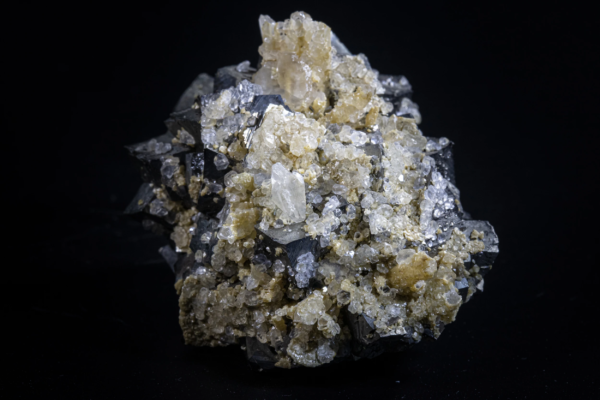
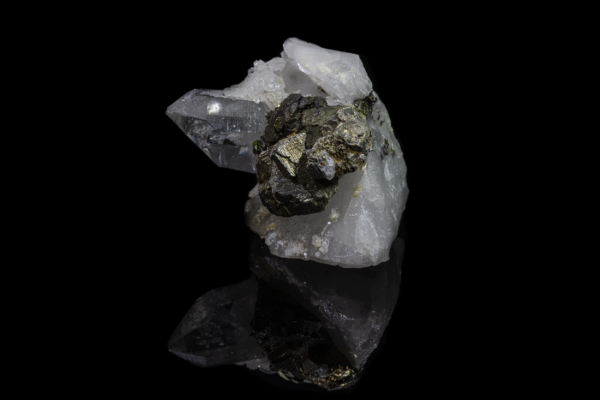
Arsenopyrite is the most common arsenic mineral on Earth and the main source of the element. Its name is a simple contraction of arsenical pyrite, since it looks much like pyrite but carries arsenic. Miners had an older name for it, mispickel. Fresh crystals shine a bright silver white to steel gray, with a hard metallic luster that tarnishes over time.
Today
For a long time, arsenopyrite was mined and roasted to make arsenic for everything from pesticides to alloys. That trade has faded as the dangers of arsenic became clear. Today the mineral matters most as a clue. Gold often hides in the same rocks as arsenopyrite, so prospectors treat a vein of it as a promising sign that gold may be near.
Geology & Occurrence
Formation
Arsenopyrite forms in hot mineral veins and in rocks baked by deep heat. It grows as sharp prismatic crystals, often striated and sometimes twinned into little crosses and stars. It keeps company with quartz, pyrite, and the gold it so often signals. Left in the open air, it slowly breaks down and releases its arsenic into soil and water.
Notable Localities
Good arsenopyrite crystals come from mines around the world. Panasqueira in Portugal and Freiberg in Germany are classic European sources. Fine sharp crystals also come from China, Japan, Bolivia, and the old tin and copper mines of Cornwall in England. Well formed pieces are prized for their clean shape and bright metallic shine.
Arsenopyrite gives itself away with a startling trick. Strike it with a steel hammer and it throws off sparks along with a sharp burst of garlic smell. That garlic odor is the arsenic, and it is a clear warning to handle the mineral with care. There is a strange irony too. The very rock that hides deadly arsenic also tends to hide flecks of gold, far too small to see.