Identity
Technical notes (click to open)(click to close)
Name & Human History
Etymology
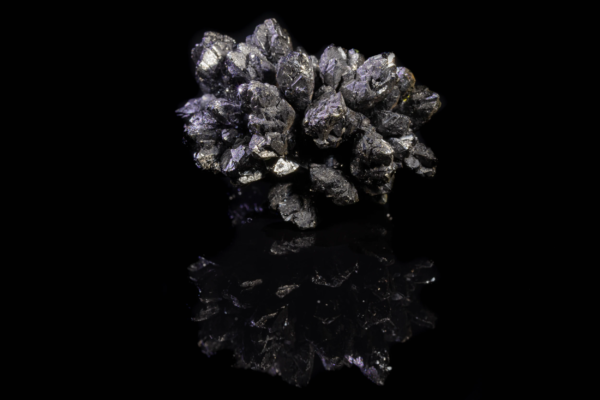
Descloizite is a heavy, dark mineral, a vanadate of lead and zinc. It grows as sharp crystals shaped like spear points, and also as crusts and rounded masses on rock. Its shine is greasy, and its color runs from reddish brown through orange brown to near black. It was named in 1854 for Alfred Des Cloizeaux, a French mineralogist, and first came from the Sierra de Cordoba in Argentina.
Today
Descloizite is mostly a collector's mineral today. Its glossy spear-point crystals stand out against pale rock, and the best of them show a rich brown to red brown that catches the light. It once served as an ore of vanadium, the metal used to toughen steel, but those mines are now closed, so it is valued more for display than for metal.
Geology & Occurrence
Formation
Descloizite forms at the surface, in the weathered upper zone of lead and zinc deposits. As these metals are freed by weathering and meet vanadium near the surface, they build descloizite as crystals and crusts. It grows there beside other bright secondary minerals such as vanadinite, wulfenite, mottramite, and cerussite.
Notable Localities
Descloizite was first found in the Sierra de Cordoba in Argentina, still its type locality. By far the finest crystals came from the Berg Aukas mine in Namibia, part of the Otavi region that once held some of the world's richest vanadium ores. Good descloizite also turns up in Mexico, at Los Lamentos and Santa Eulalia, and in the American Southwest, in Arizona and New Mexico.
The Berg Aukas mine in Namibia, the finest source of descloizite the world has known, closed in 1978. No new crystals have come from it since. Every sharp brown spear point from Berg Aukas seen at a show or in a museum case was taken from the ground before then, from a supply that can only shrink, which is why fine pieces have climbed steadily in value ever since.