Identity
Technical notes (click to open)(click to close)
Name & Human History
Etymology
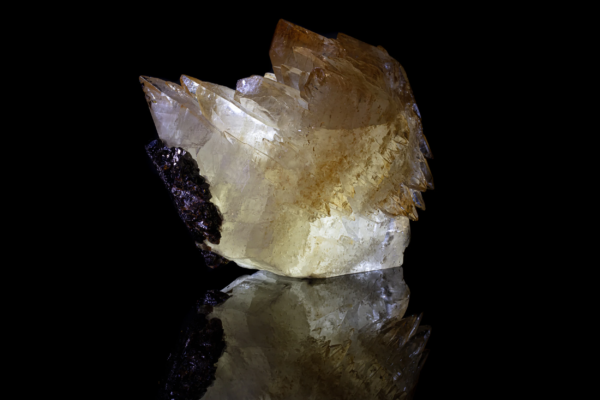
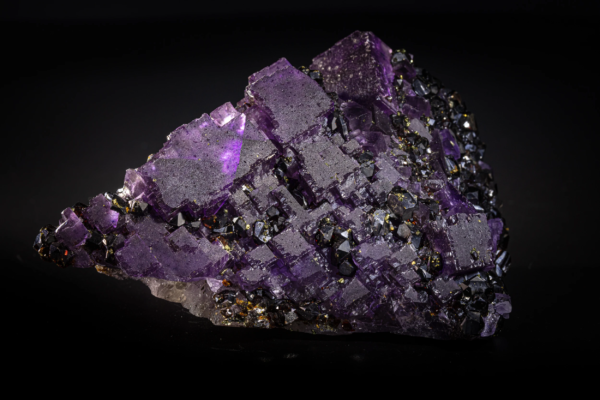
Sphalerite is the most important ore of zinc, a sulfide of zinc and iron. Its color is wildly variable, from honey yellow and red to brown and near black, and it has a bright, resinous shine, a little like hard candy. Its name comes from a Greek word for treacherous, a hint at the trouble it once caused. It often grows as sharp, glassy crystals in veins and cavities.
Today
Sphalerite is mined the world over for zinc, the metal used to coat steel against rust and to make brass. It also carries valuable trace metals, freed as a bonus when the zinc is won. For collectors, gem clear crystals are a prize, since fine sphalerite can show more fire than diamond, though it is far too soft to wear.
Geology & Occurrence
Formation
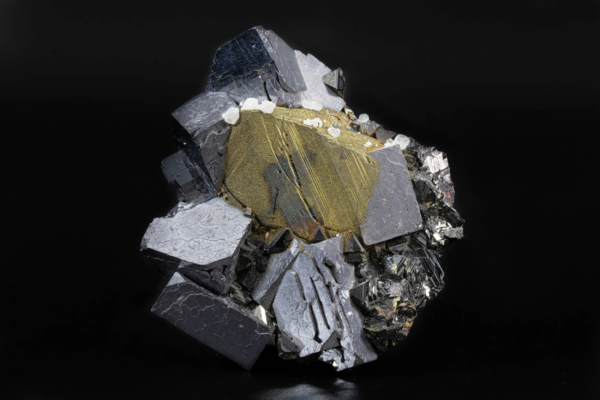
Sphalerite forms mostly from hot, mineral rich waters. It lines veins and fills cavities, and it builds great beds in certain limestones. Almost everywhere it grows beside galena, the chief lead ore, and the two are the classic partners of lead and zinc mining. Pyrite and chalcopyrite often join them.
Notable Localities
Sphalerite is found in lead and zinc deposits across the globe. Fine amber crystals come from the mines of Tennessee, and superb specimens from Spain, Bulgaria, and Peru. The Tri State district of the central United States was once a vast source of it. Few ore minerals are so widespread.
Sphalerite owes its name to the grief it gave old miners. Its dark, heavy crystals looked just like galena, the valuable lead ore, and the two often grew side by side. But when smelted, sphalerite yielded no lead at all, only frustration. So miners named it from a Greek word for treacherous, and long called it blende, from a word meaning to deceive. Galena, the ore it mimics, is also held in this collection.