Identity
Technical notes (click to open)(click to close)
Name & Human History
Etymology
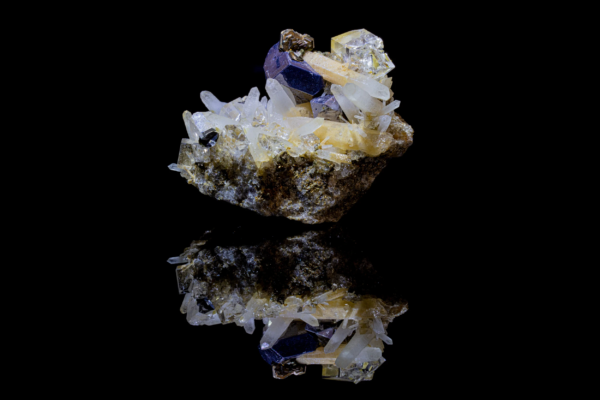
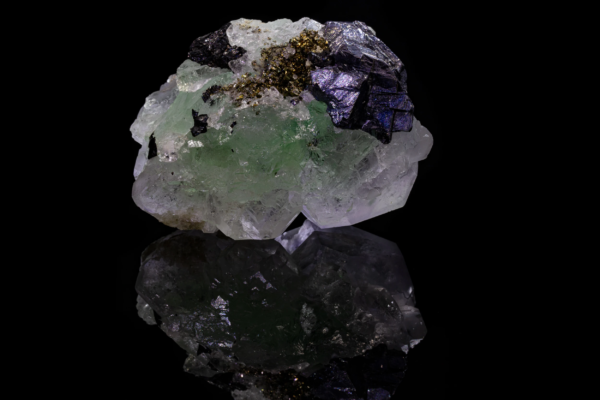
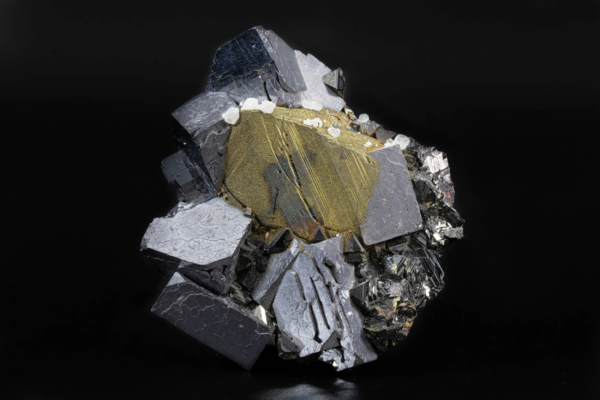
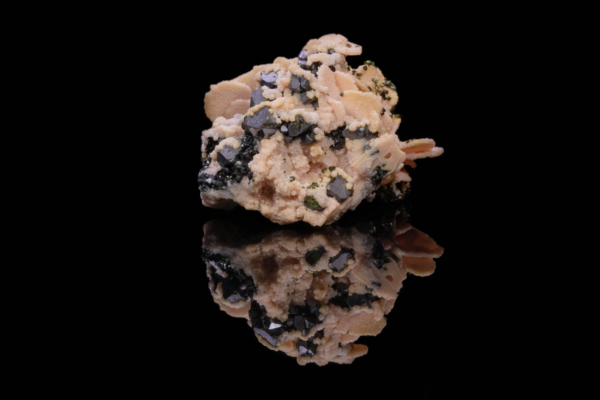
Galena is a heavy, silvery mineral made of lead and sulfur, and it is the most important ore of lead. It is easy to know. It is soft, strikingly heavy for its size, and it breaks into neat little cubes along perfect cleavage planes. Its bright metallic crystals are often perfect cubes or eight sided shapes. The name is an old Latin word for lead ore, used since Roman times.
Through the Ages
Galena has been mined since the dawn of history. Many galena deposits also carry silver, so the same ore that gave the ancient world its lead also gave it much of its silver. Today galena remains the main source of lead, used in batteries, shielding, and many alloys. For collectors, a bright cube of galena on white crystals is a classic and satisfying specimen.
Geology & Occurrence
Formation
Galena forms mostly in veins, deposited by hot fluids moving through rock. It very often grows alongside sphalerite, the main zinc ore, plus pyrite, fluorite, and calcite. It also forms in certain limestones, filling cavities and replacing the rock. As galena weathers at the surface, it slowly turns into pale crusts of other lead minerals.
Notable Localities
Galena comes from mine districts all over the world. The Tri State district of the central United States produced huge, bright cubes. Fine crystals come from England, Germany, and Bulgaria, often perched on sparkling quartz. The famous Sweetwater mine in Missouri has yielded some of the world's sharpest galena cubes.
There is one thing every collector should keep in mind. Galena is a lead mineral, and lead is toxic. Handling a solid specimen is fine, but it is wise to wash your hands afterward, and never to grind, heat, or lick it. The ancients did not know this. They used powdered galena as black eye paint and lined their water pipes with lead, with slow harm they never understood.