Babingtonite and Prehnite

The Specimen

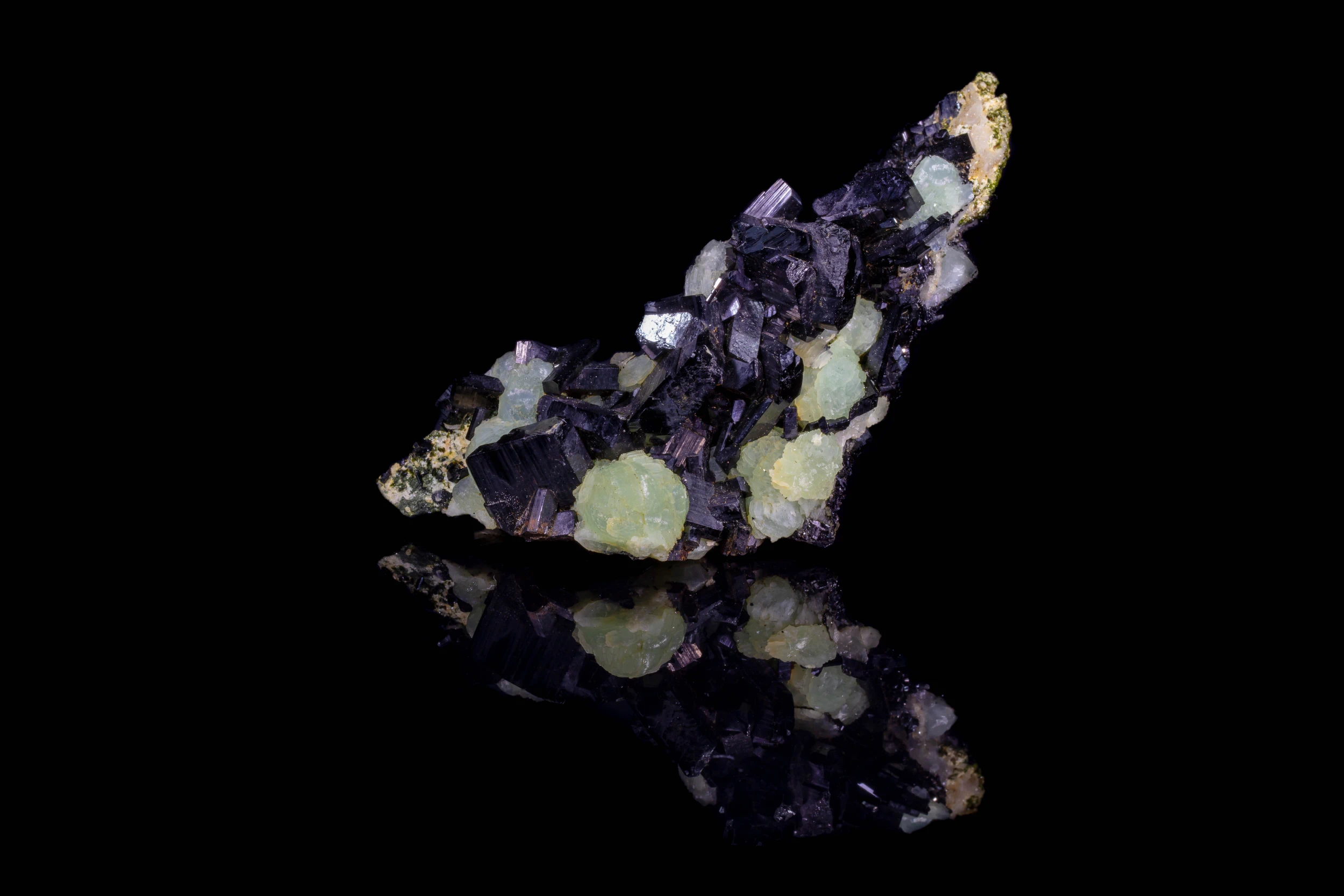
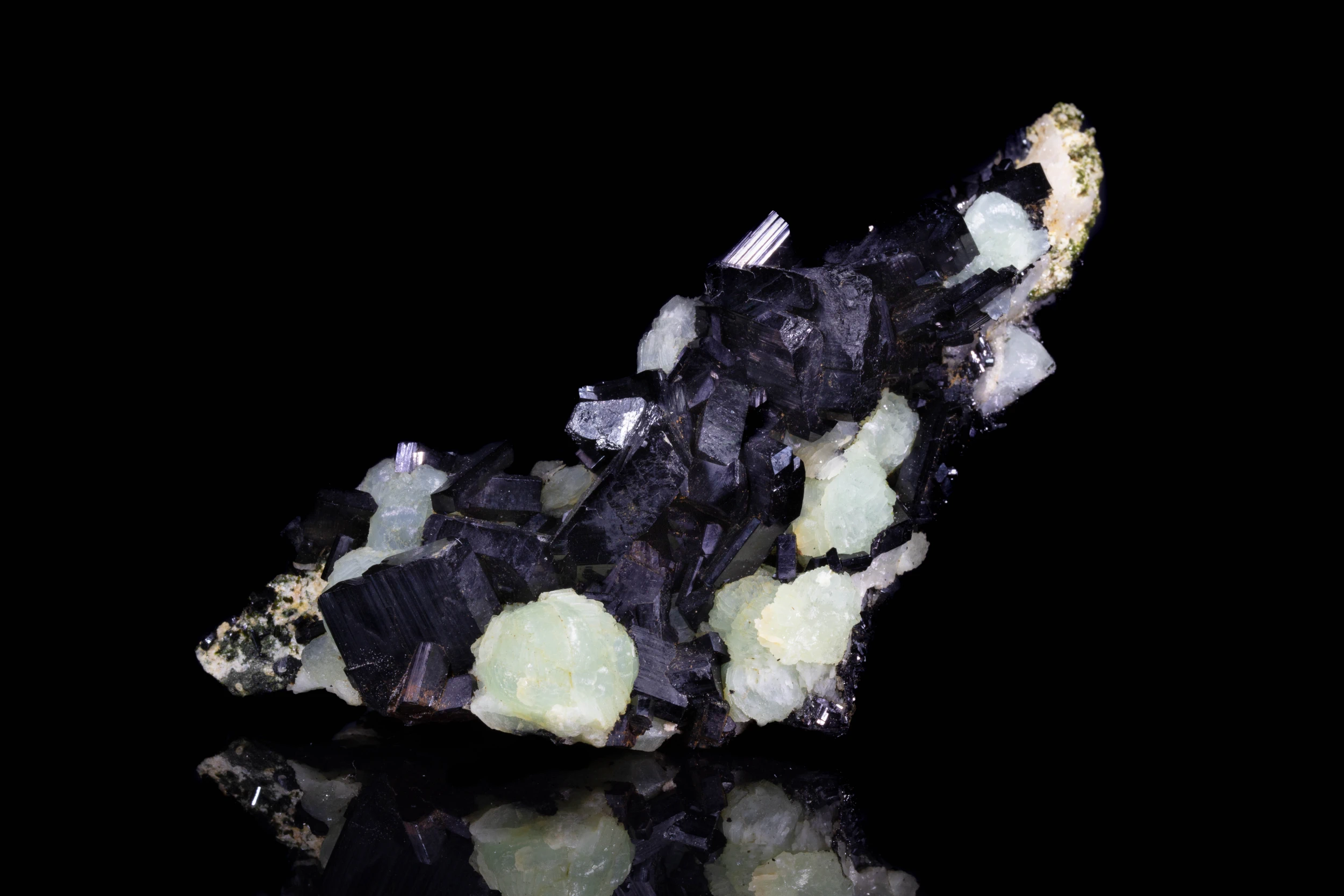
Cabinet: Large Cabinet (10 cm+) – Size: 12.1 x 5.1 x 5.0 cm Origin: Qiaojia County, Zhaotong, Yunnan – China History: Ex Richard Rossi Collection

Notes

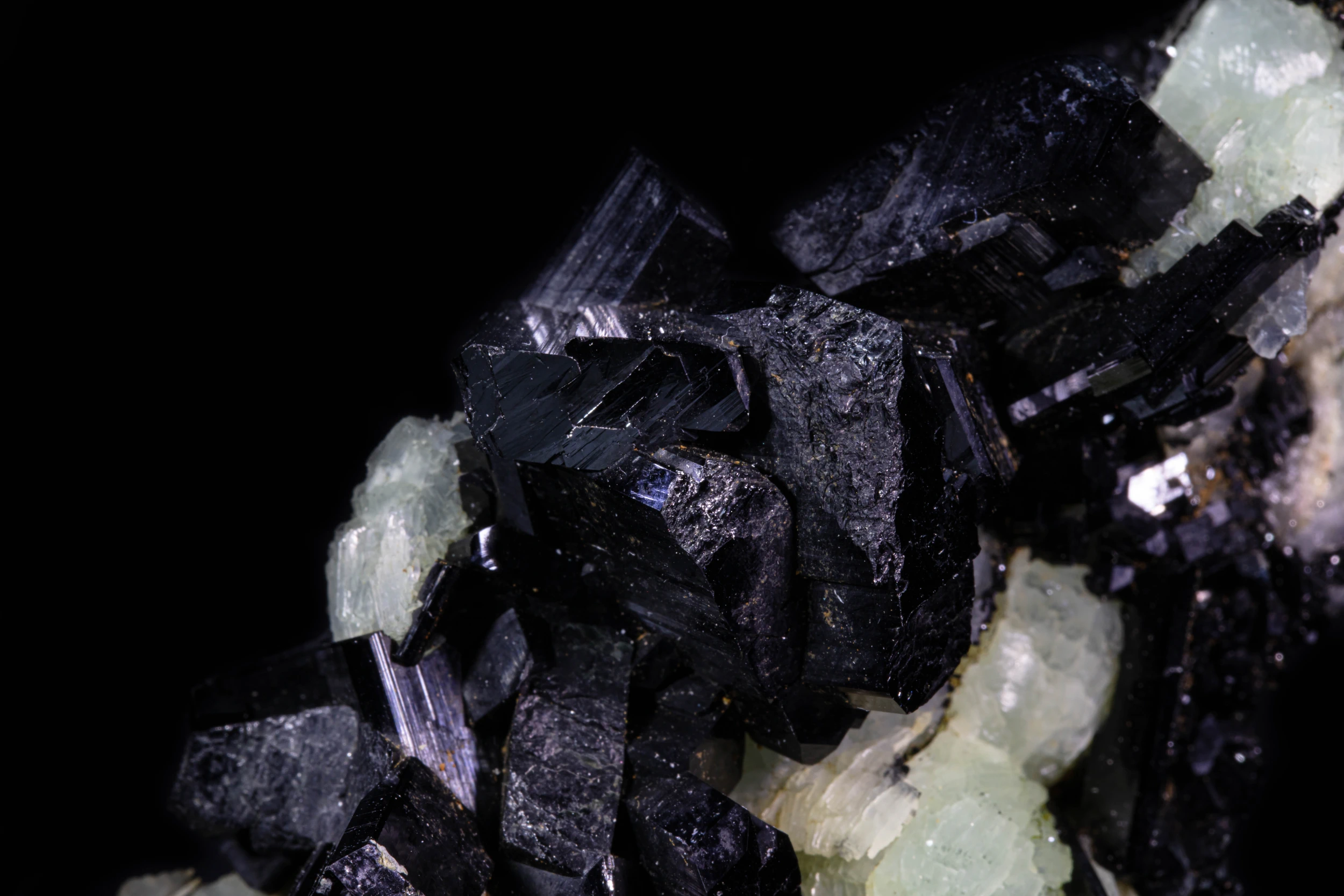
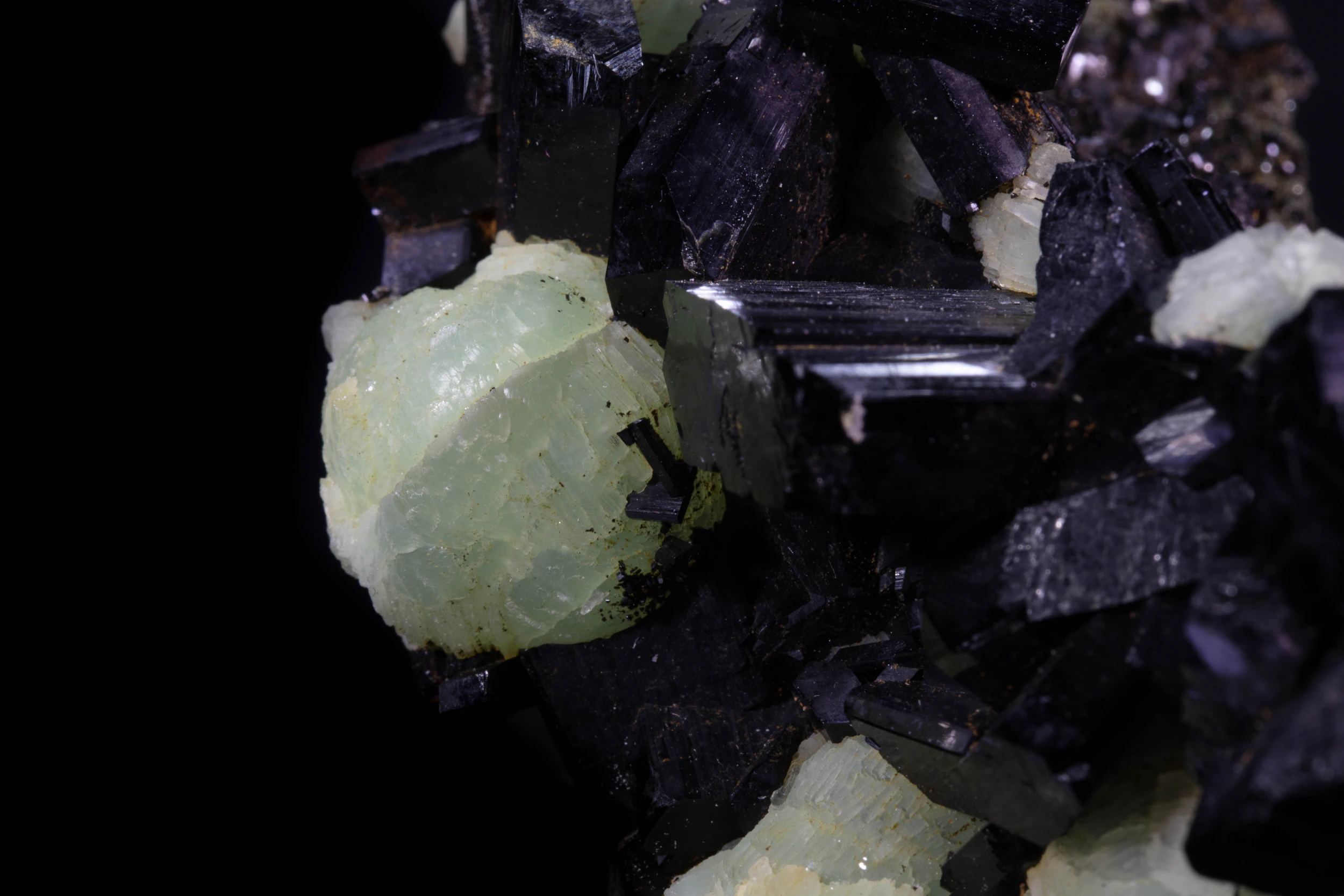
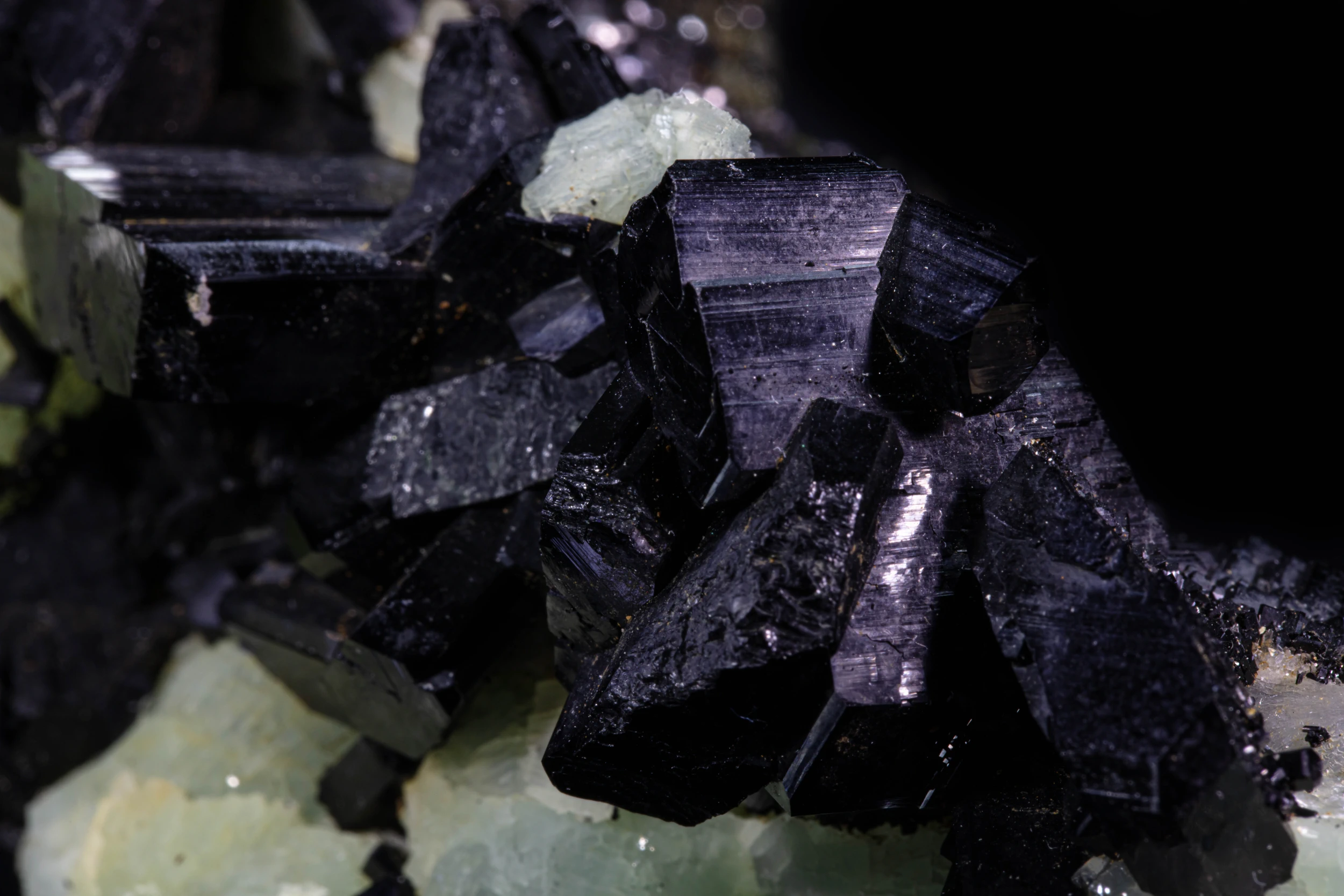
Jet-black babingtonite crystals with striated, mirror-bright faces stand over pastel green prehnite, the classic pairing from the basalt cavities of this part of the Yangtze valley. According to the dealer, the best of this material came out between about 2004 and 2010, and babingtonite from Qiaojia ranks among the finest known for the species. Two generations are visible: the matrix is built from smaller, earlier crystals with a little quartz, and the larger, later crystals sit on top. The botryoidal prehnite is translucent with a glossy surface. Older labels often give the locality as Sichuan, since the same flood basalts stretch across both provinces. The piece comes from the collection of Richard Rossi, an East Coast collector and Mineralogical Record Fellow.

Mineral Species

Did you know?

BabingtoniteBabingtonite honors William Babington, a London physician who looked after the vast mineral collection of the Earl of Bute, bought it when the earl died in 1792, and in 1807 helped found the Geological Society of London. A statue of him stands in St Paul's Cathedral.

PrehnitePrehnite was the first mineral ever named after a person. In 1788 it was named for the Dutch colonel Hendrik von Prehn, who had brought the green stone back from the Cape of Good Hope, and it started a convention that now covers hundreds of mineral species.

QuartzPressing a quartz crystal makes it give off a precise electric beat, which is why it keeps time in nearly every watch and once tuned the radios of World War II, when good crystals were a strategic resource.