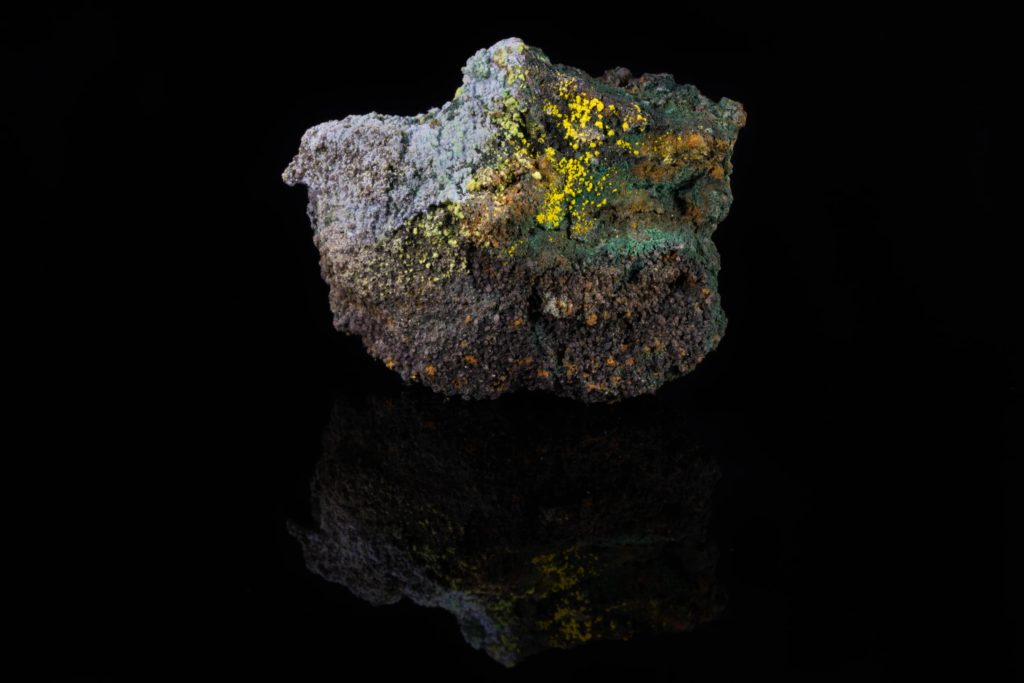
Celestine

The Specimen

Cabinet: Small Cabinet (4.5 - 7 cm) – Size: 6.1 x 5.1 x 2.1 cm Origin: Machów Mine, Tarnobrzeg, Subcarpathian Voivodeship – Poland History: Ex Bob Reynolds Collection

Notes

Machów was an open-pit native sulfur mine near Tarnobrzeg, in southeastern Poland, worked from 1964 into the early 1990s and later flooded to form Lake Tarnobrzeg. Besides sulfur, it is known worldwide for its celestine, which grew in the sulfur-bearing limestones of the deposit. This piece is a starburst of tapered, translucent honey-amber celestine prisms with transparent, nearly colorless tips. According to the dealer, the largest crystal reaches 4.9 cm and traces of powdery yellow sulfur are present. The mine was the subject of an article in the Mineralogical Record (vol. 23, no. 1, 1992). Bob Reynolds, longtime curator of earth sciences at the San Bernardino County Museum, collected both minerals and fossils.

Mineral Species

Did you know?

Most celestine fits in the palm of your hand. The largest known geode, beneath Put-in-Bay in Ohio, is the rare exception: a hollow pocket big enough to walk inside, its walls lined with pale blue crystals.