Chalcanthite

The Specimen

Cabinet: Small Cabinet (4.5 - 7 cm) – Size: 5.7 x 4.7 x 1.3 cm Origin: Posey Mine, Red Canyon, San Juan County, Utah – USA History: Ex Gary Weaver Collection

Notes

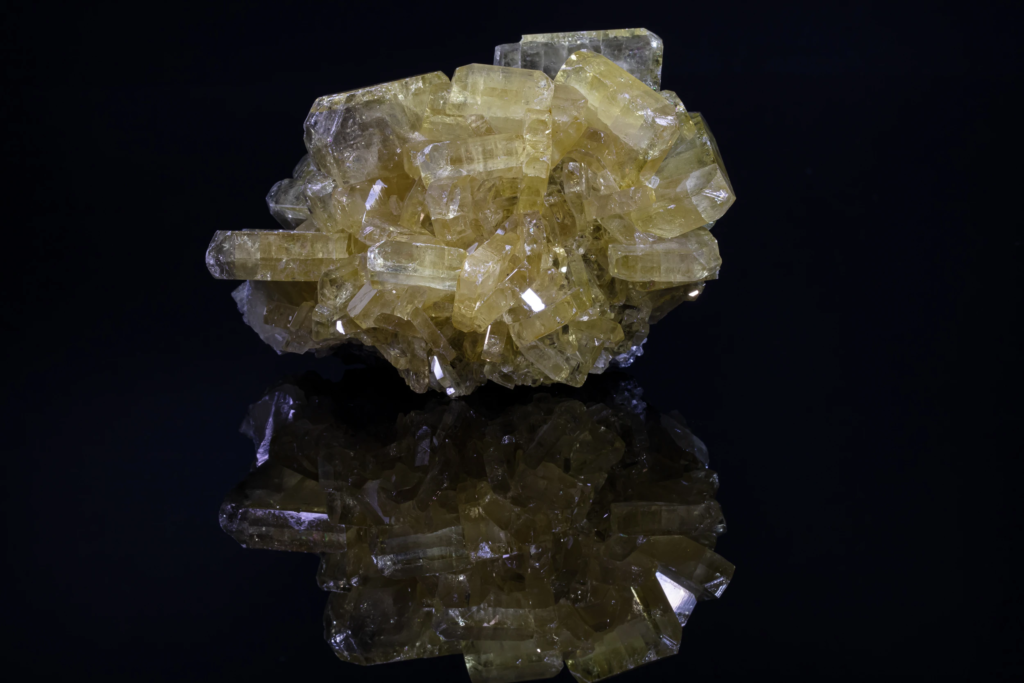
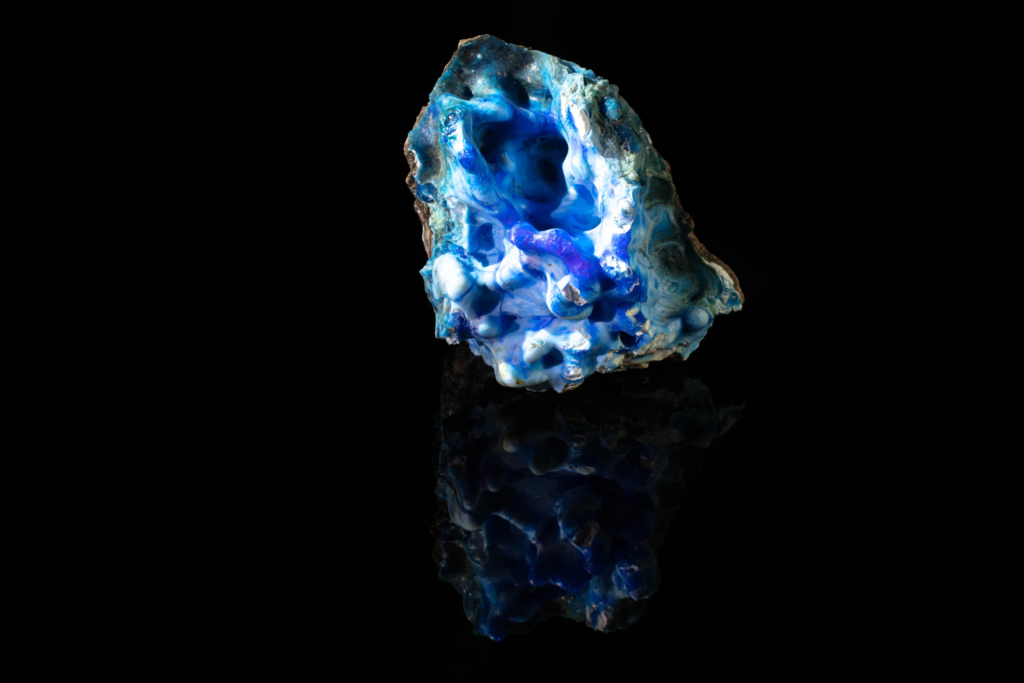
This chalcanthite forms a crust of fine, fibrous blue crystals on a tan rock matrix, the most common habit for the species. Chalcanthite is copper sulfate with water built into its structure. It grows where copper sulfide minerals break down in contact with air and water, and it often forms on mine walls after a mine has been opened. The Posey Mine was worked for uranium and copper. Its ore fills an ancient channel buried in the rock, and a 1952 U.S. Geological Survey report listed it among the few deposits in the area where uranium occurs as uraninite. The mine is also known to collectors for phurcalite, a rare yellow calcium uranyl phosphate. According to the dealer, the original label lists phurcalite with this piece, but none could be found on it. According to the dealer, Gary Weaver (1944-2019) was an electrical engineer who retired to Prescott, Arizona, and built a collection of about 2,000 specimens from Mexico, Peru and the western United States.

Mineral Species

Did you know?

Chalcanthite has the same chemistry as the blue copper sulfate that French winegrowers mixed with lime to make Bordeaux mixture. In 1885, botanist Alexis Millardet announced it as a cure for downy mildew, after noticing that roadside vines painted with it to scare off grape thieves stayed healthy.