Clinoatacamite on Quartz

The Specimen

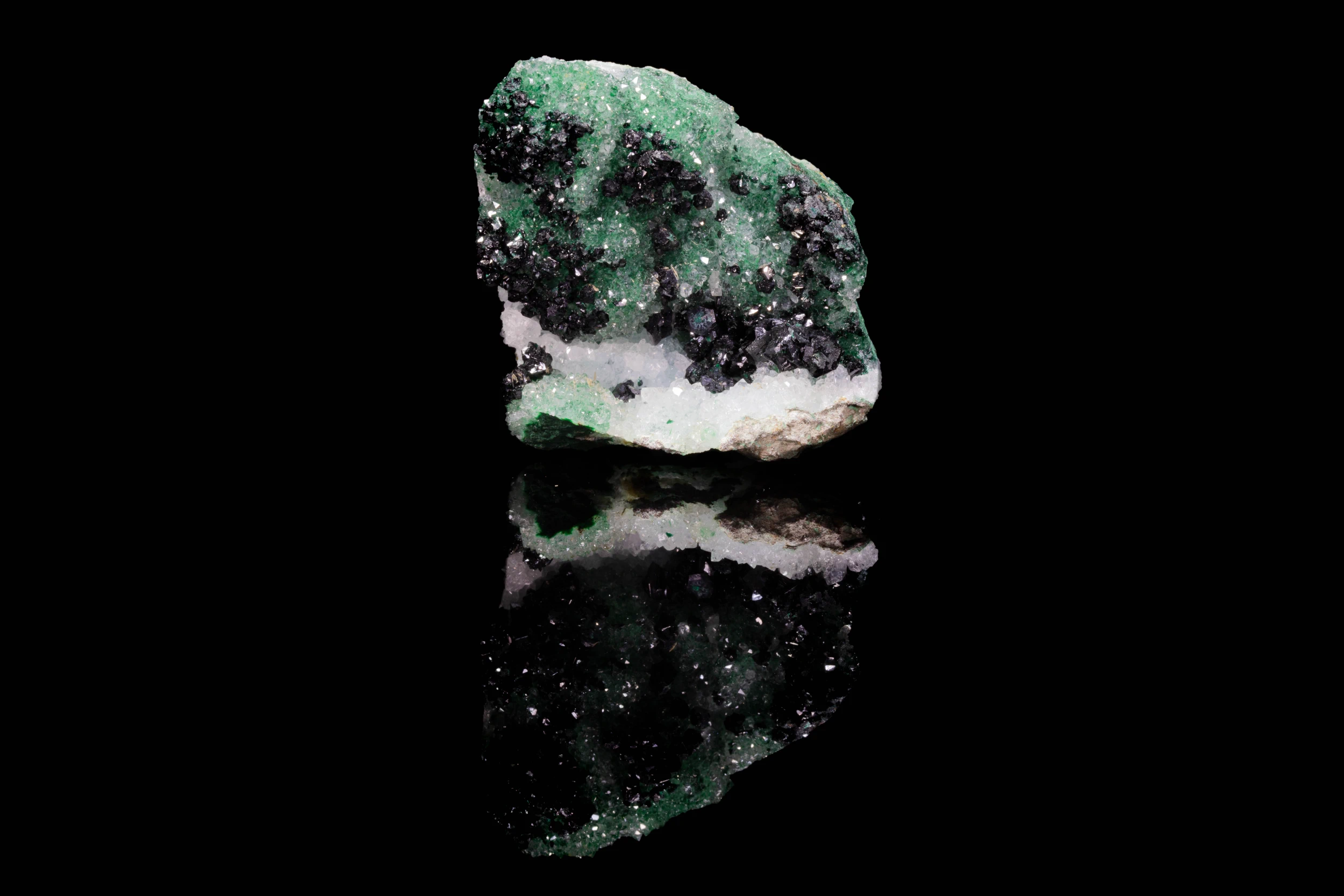
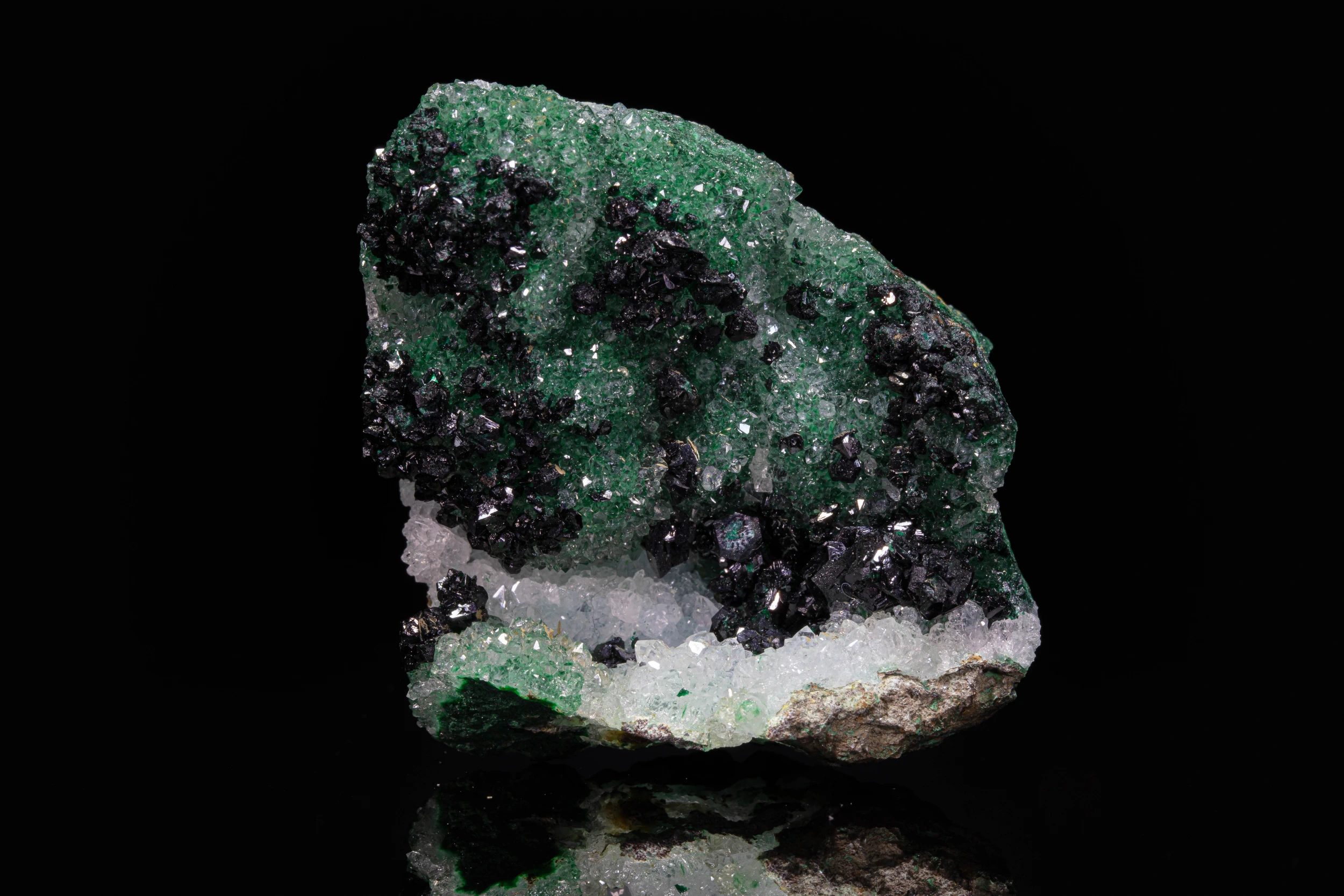
Cabinet: Small Cabinet (4.5 - 7 cm) – Size: 5.8 x 4.6 x 3.3 cm Origin: Lily Mine, Pisco Umay, Humay District, Pisco Province, Ica – Peru

Notes

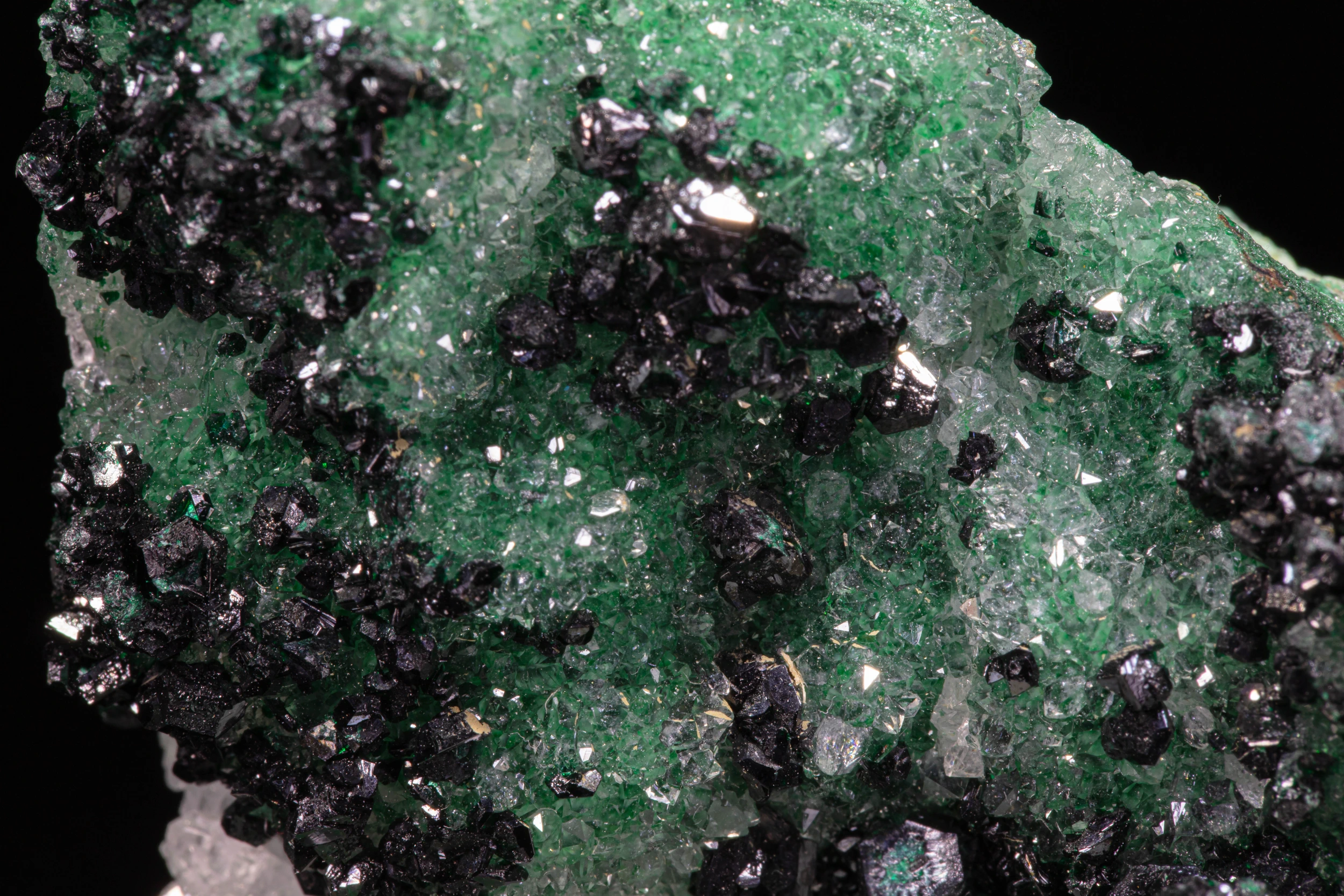
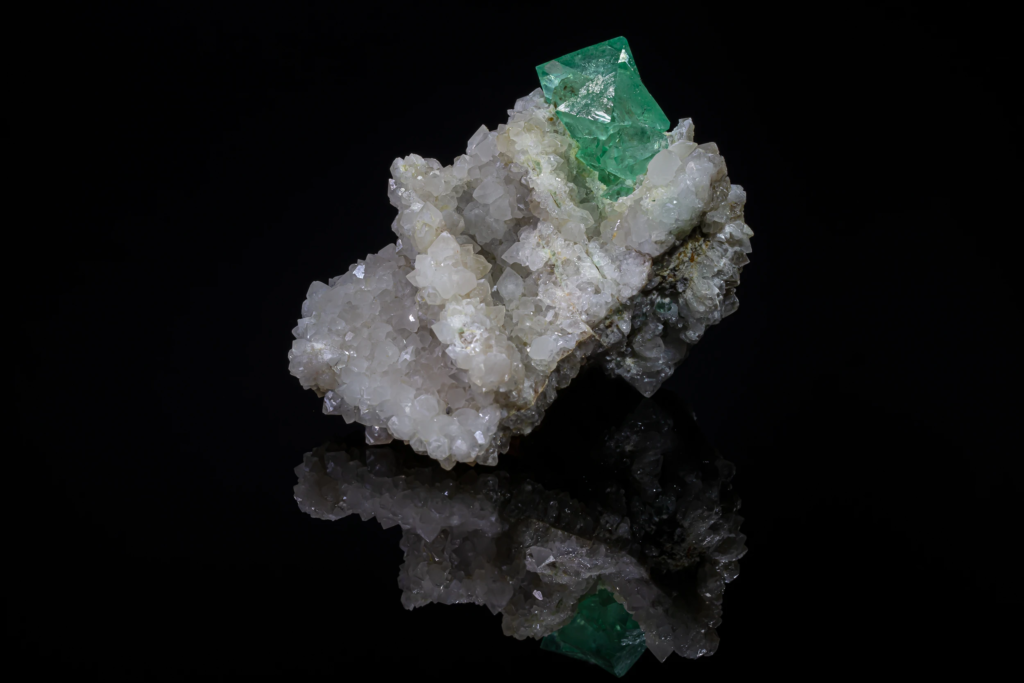
Lustrous, dark green clinoatacamite crystals are scattered over a druse of tiny quartz crystals. The quartz itself is colored green by a copper mineral trapped inside it, malachite or atacamite according to the dealer, and a band of white quartz runs along the lower edge. Clinoatacamite was only recognized as a separate species in 1996. It has the same chemistry as atacamite and paratacamite, a copper chloride hydroxide, but a different crystal structure, and the minerals are hard to tell apart without optical or X-ray tests. The Lily Mine, about 40 km east of Pisco, is a well-known source of copper minerals for collectors. Its very dry climate lets chlorine-rich copper minerals like these survive. According to the dealer, this piece comes from a small series of finds made around 2015-2016.

Mineral Species

Did you know?

ClinoatacamiteFor years a related mineral took the blame for bronze disease, the creeping green corrosion that eats ancient bronzes. Closer analysis pinned much of it on clinoatacamite, the mineral quietly turning museum bronzes to powder.

QuartzPressing a quartz crystal makes it give off a precise electric beat, which is why it keeps time in nearly every watch and once tuned the radios of World War II, when good crystals were a strategic resource.