Chalcopyrite

The Specimen

Origin: Huanzala Mine, Huanzala, Huallanca District, Bolognesi Province, Ancash – Peru

Notes

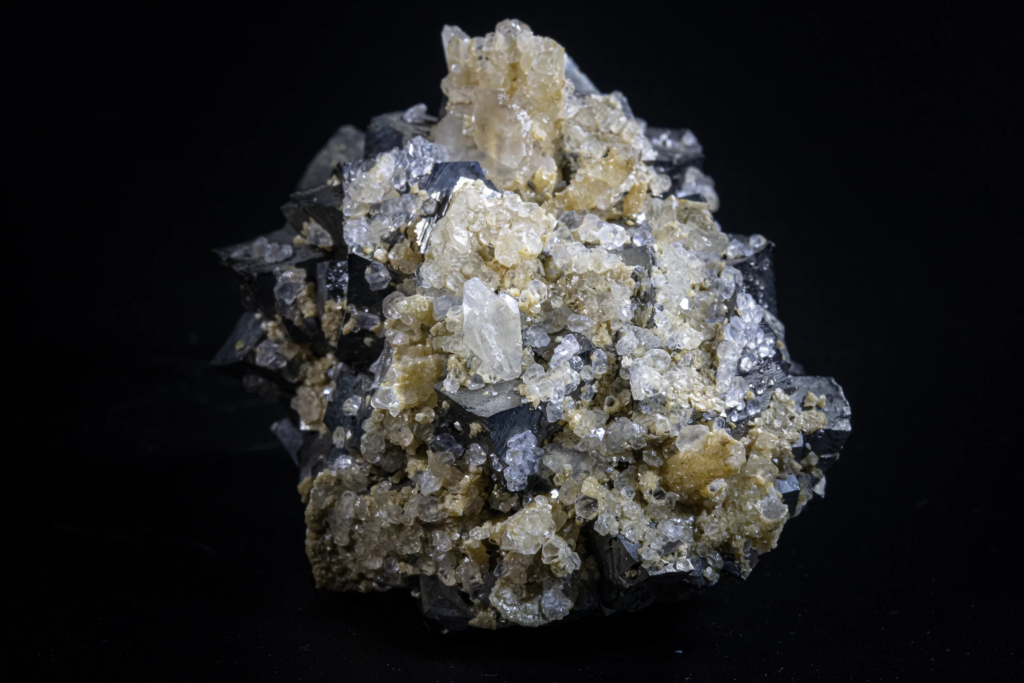
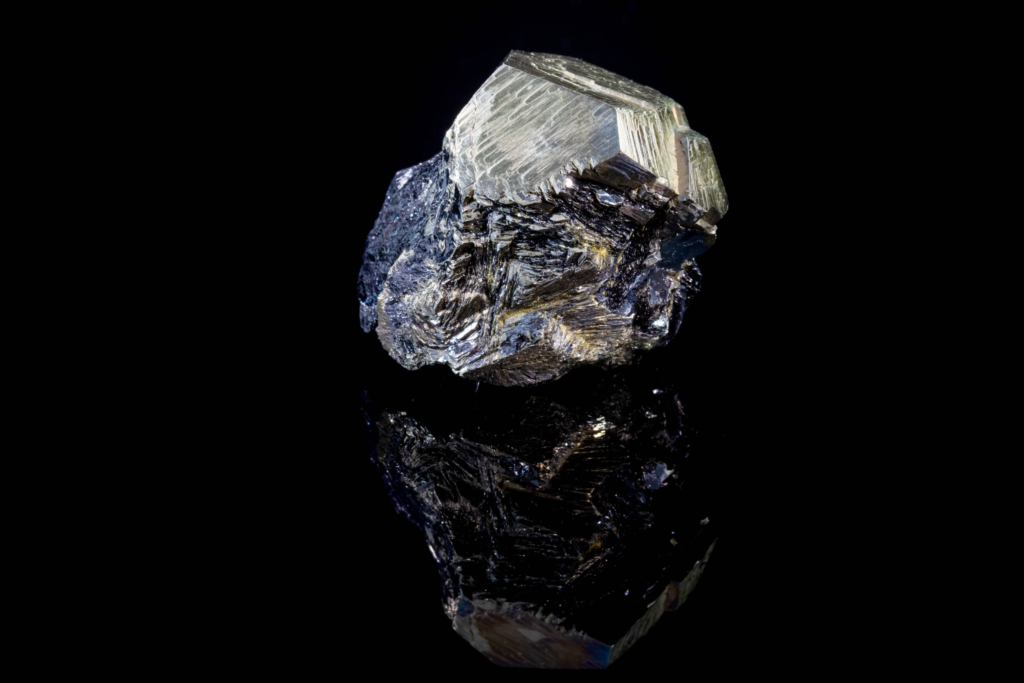
This specimen is a cluster of sharp chalcopyrite crystals, with no host rock visible. The crystals look like tetrahedra, but chalcopyrite belongs to the tetragonal system, and these wedge shapes are called disphenoids. Fine striations cross many faces, and a thin tarnish tints them purple, blue and pink. A sprinkling of tiny dark metallic crystals covers parts of the surface. The Huanzala Mine lies high in the Peruvian Andes. Its ore bodies formed by replacing a limestone of Cretaceous age, and they yield zinc, lead and copper. The Japanese company Mitsui began exploring the deposit in 1964, and the mine is still in production. Huanzala is also the type locality of huanzalaite, a magnesium tungstate named after the mine in 2010.

Mineral Species

Did you know?

Chalcopyrite is built almost exactly like sphalerite, the main ore of zinc. Copper and iron take turns in the places where zinc sits, and that alternation makes its basic building block twice as tall.