Cassiterite & Muscovite

The Specimen

Cabinet: Small Cabinet (4.5 - 7 cm) – Size: 4.9 x 4.7 x 3.5 cm Origin: Mount Little Xuebaoding, Huya, Pingwu County, Mianyang, Sichuan – China

Notes

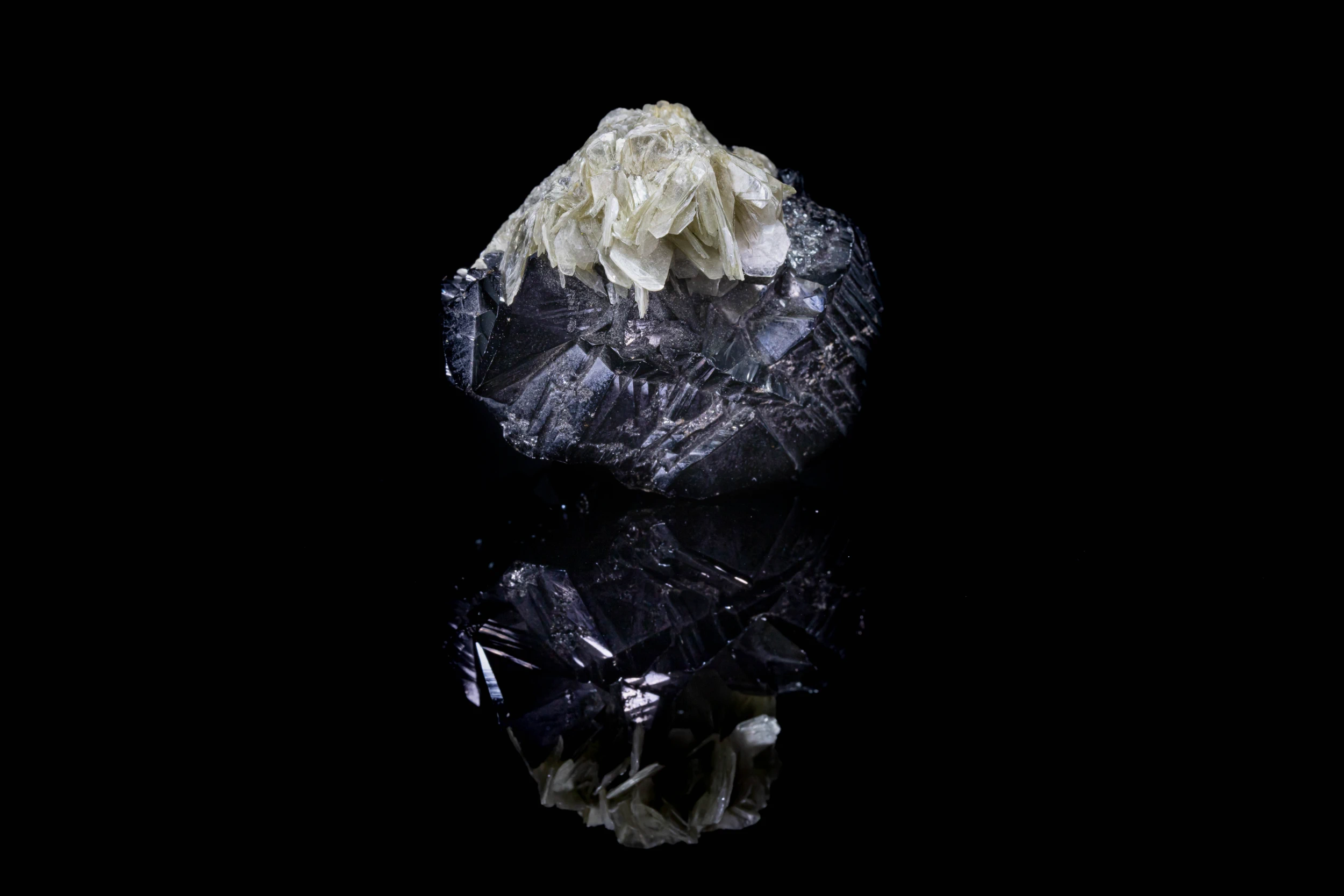
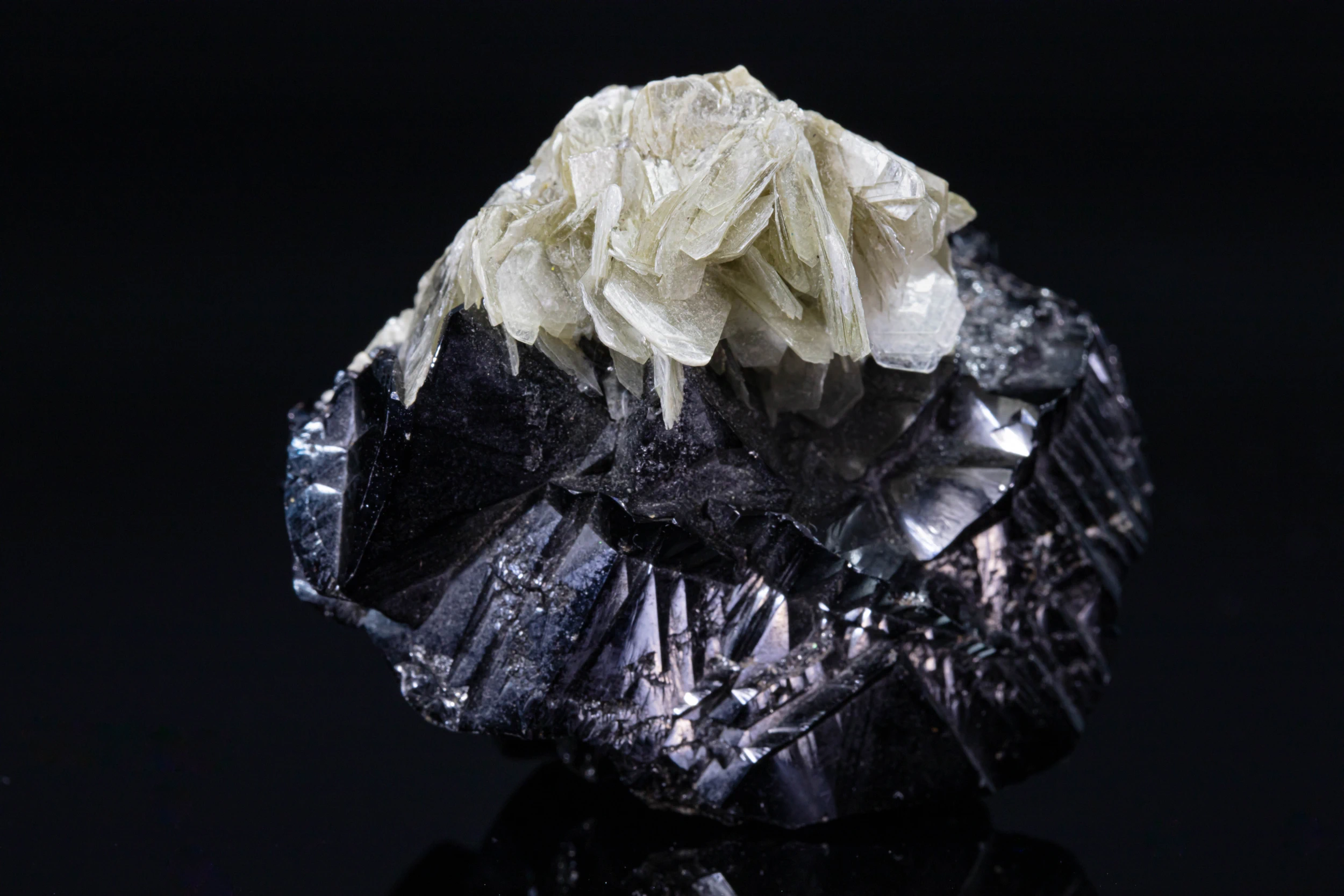
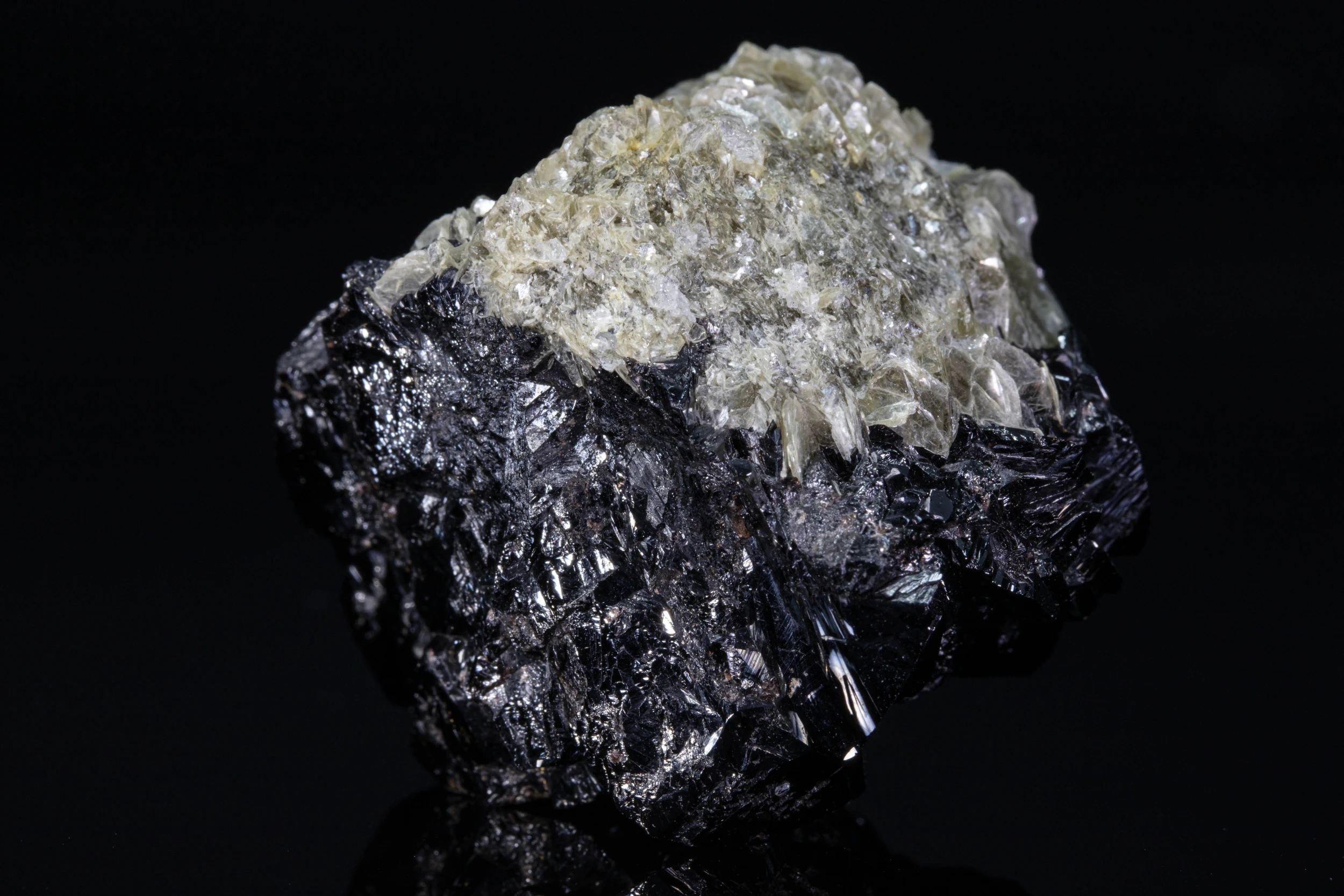
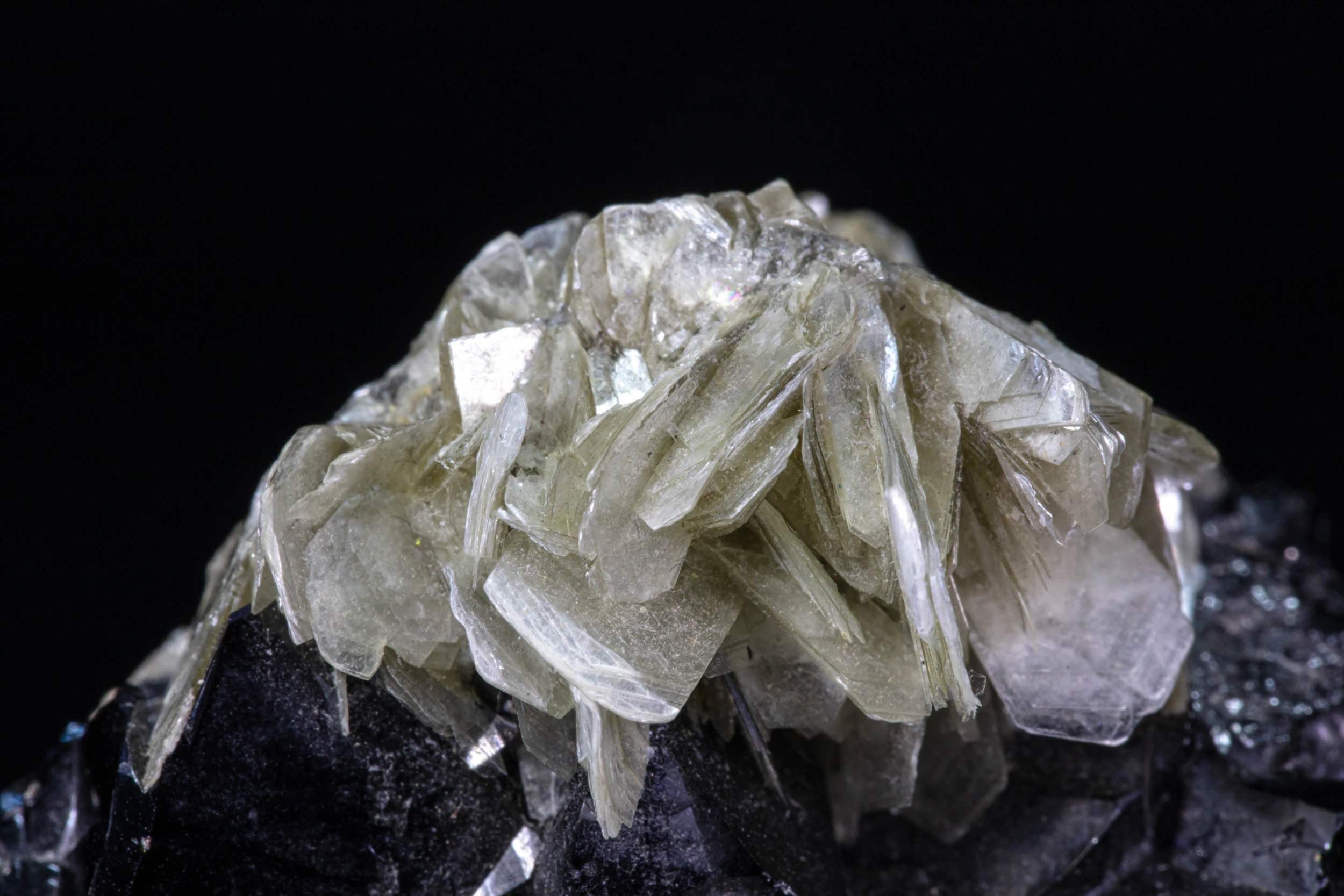
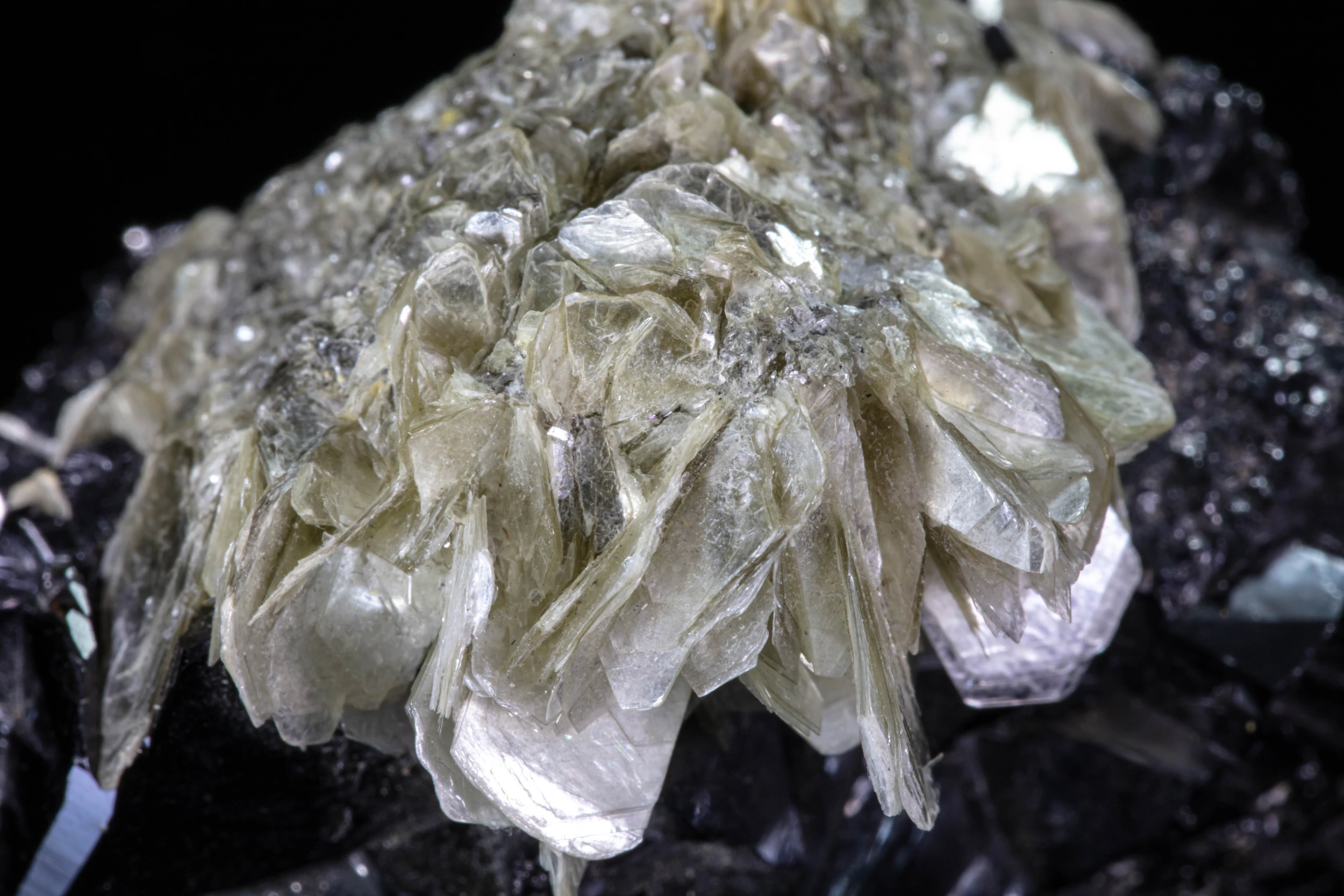
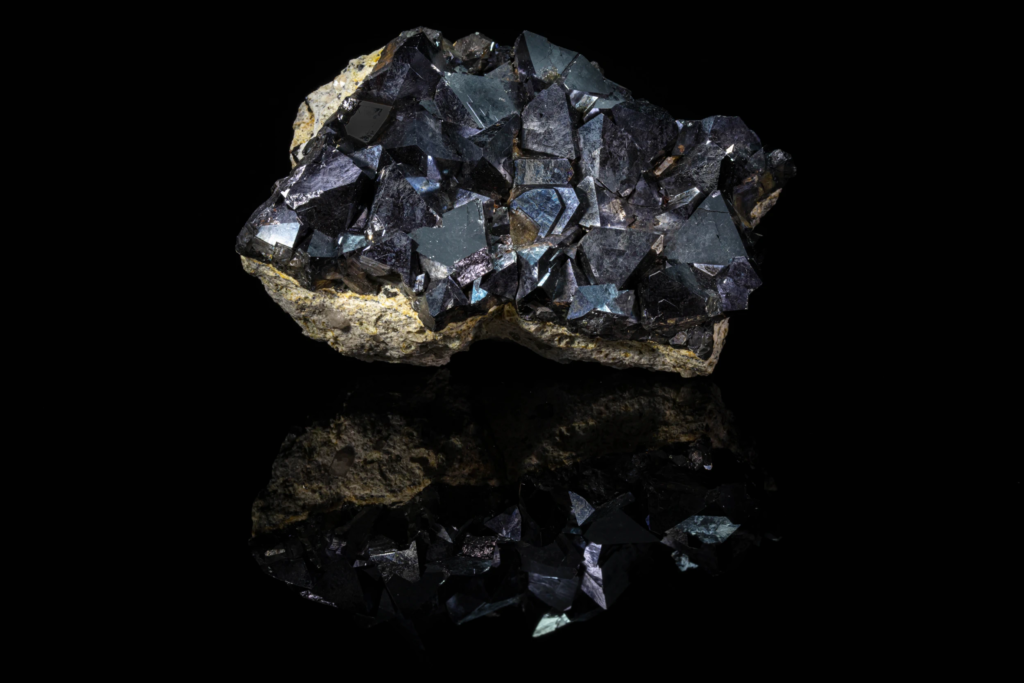
Sharp, splendent black cassiterite crystals, up to 3.4 cm according to the dealer, form a cluster beside a group of bladed muscovite. Most of the cassiterite crystals are twinned, both as contact twins and as knee-shaped penetration twins, which the dealer notes is uncommon in such abundance. Cassiterite, a tin oxide, takes its name from the Greek word for tin. Specimens labeled Xuebaoding come from veins at around 4,000 meters on the northeastern edge of the Tibetan Plateau, most of them on Mount Little Xuebaoding in Pingwu County. Since its discovery in the 1950s, this tin, tungsten and beryllium deposit has become a world-class source of cassiterite, scheelite and beryl crystals.

Mineral Species

Did you know?

CassiteriteCassiterite is the main ore of tin, the metal that turned the Stone Age into the Bronze Age. Securing it pushed early peoples to build trade routes thousands of miles long, among the first long-distance supply lines in history.

MuscoviteMuscovite splits into thin, clear, heat-resistant sheets, and old Russia exported them as window panes known as Muscovy glass, the source of the mineral's name.