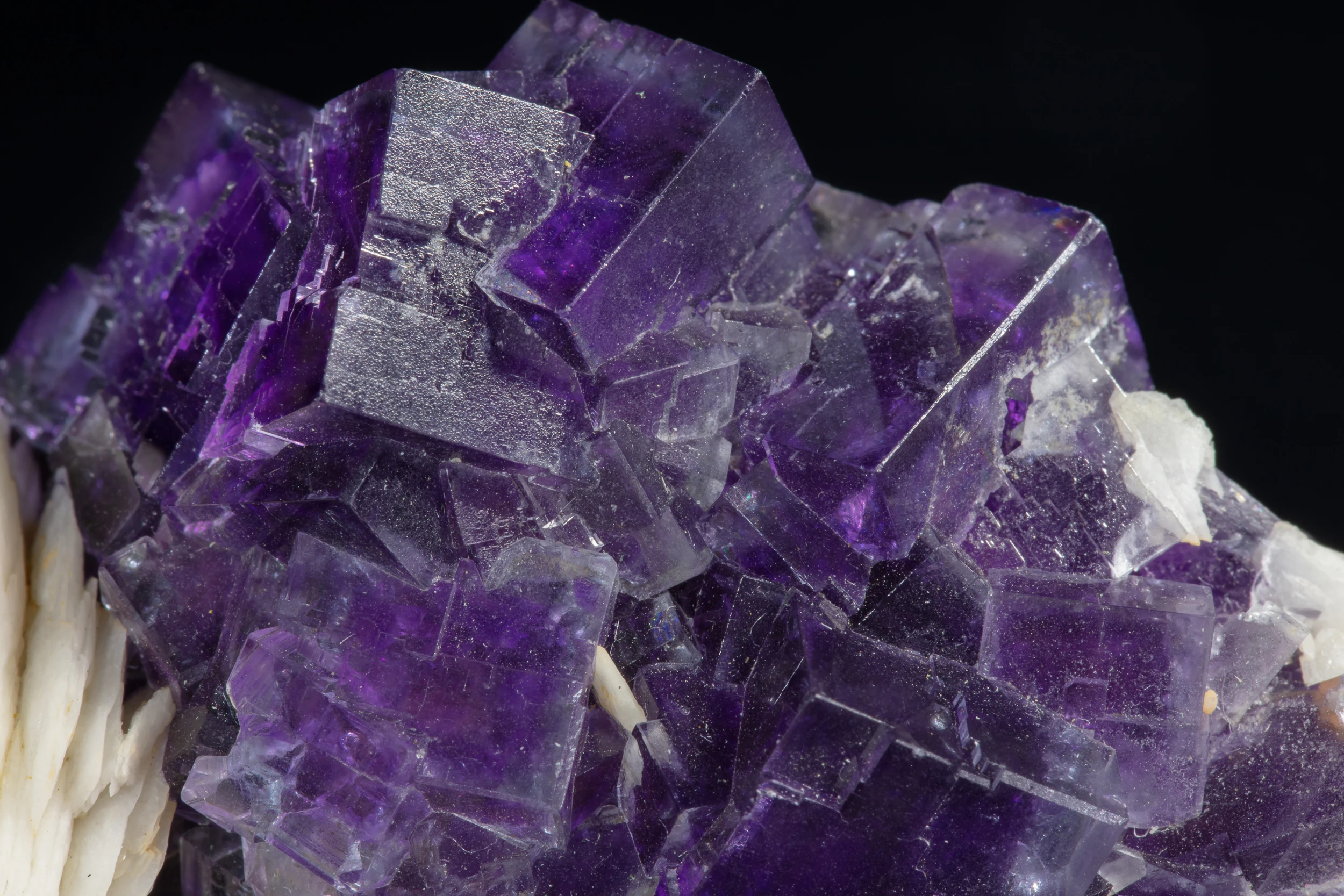
Fluorite & Barite

The Specimen

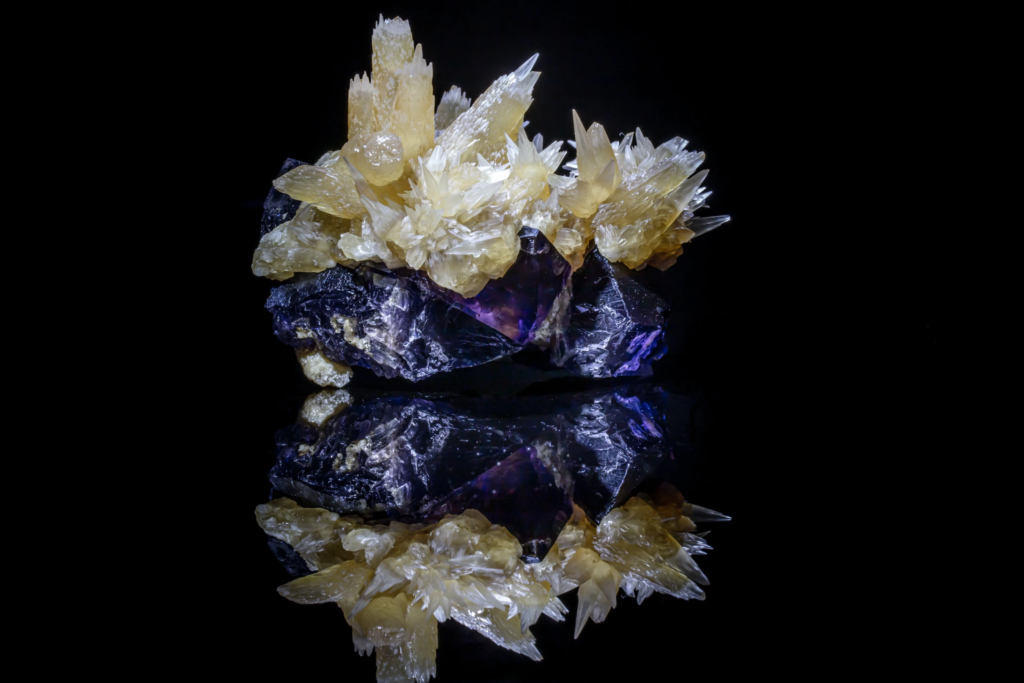
Cabinet: Small Cabinet (4.5 - 7 cm) – Size: 5.4 x 4.8 x 2.0 cm Origin: Berbes mining area, Ribadesella, Asturias – Spain

Notes

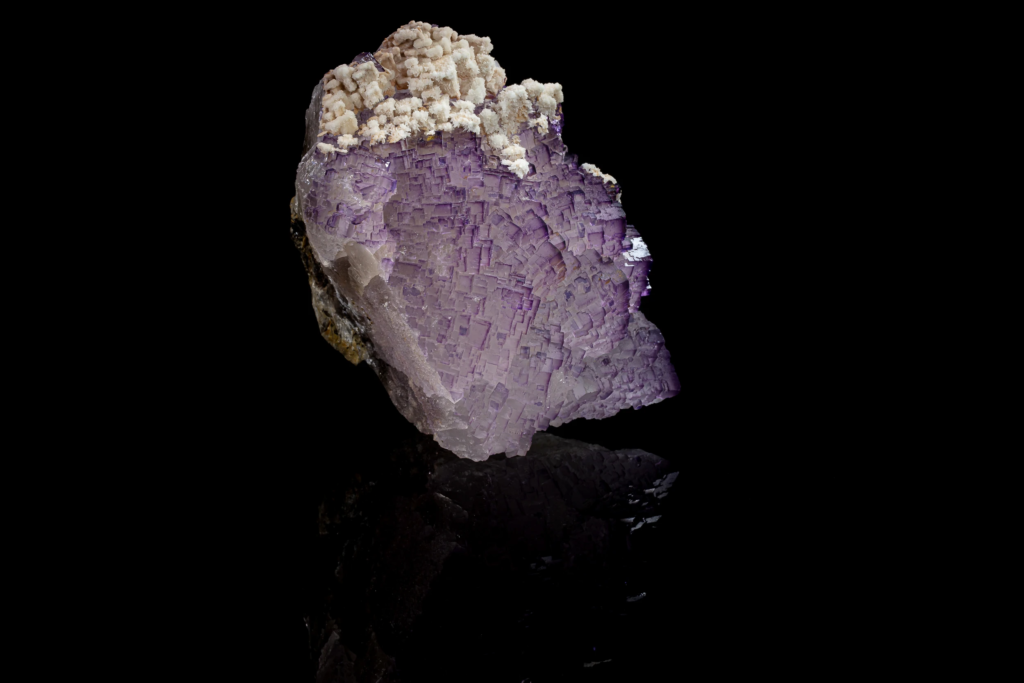
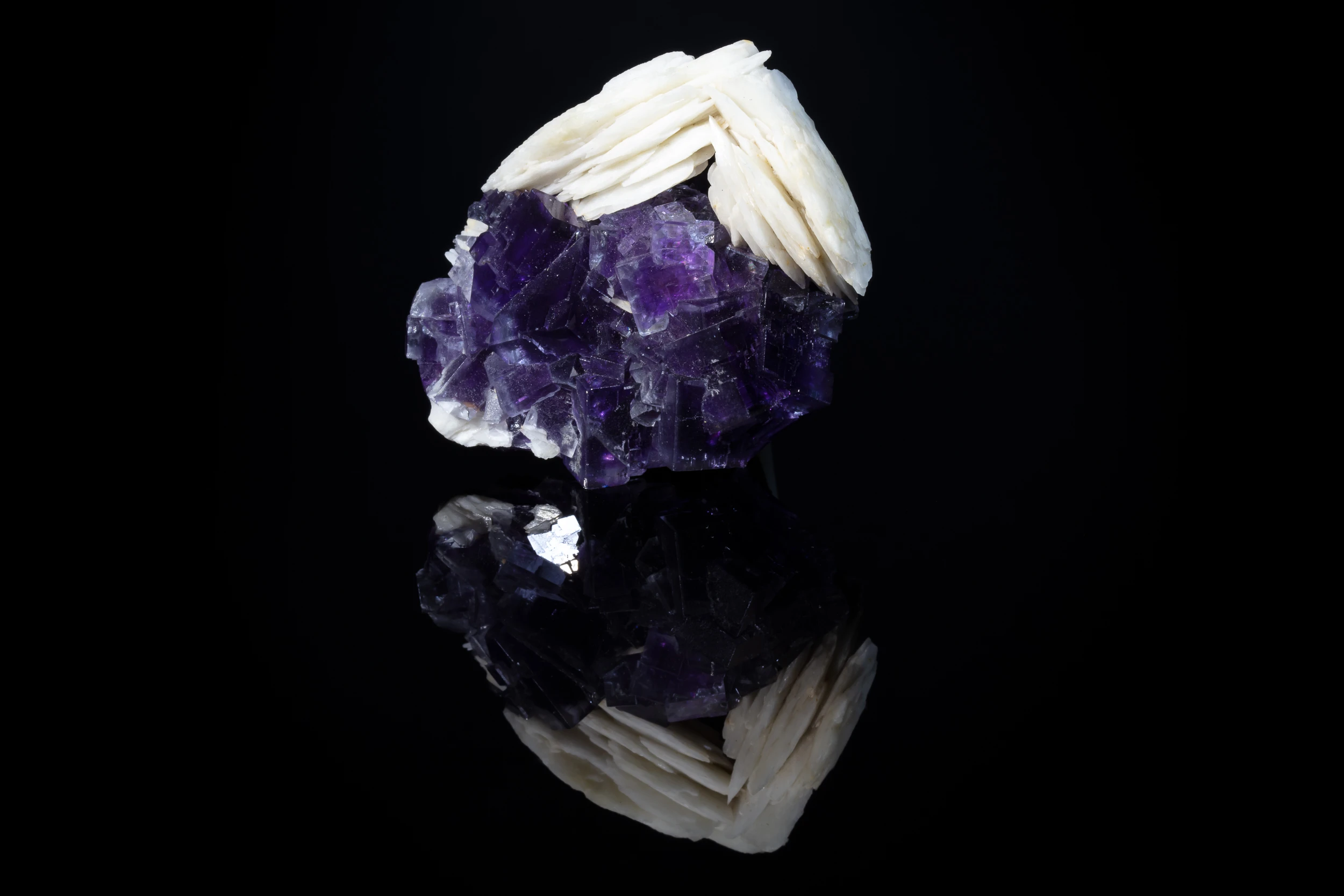
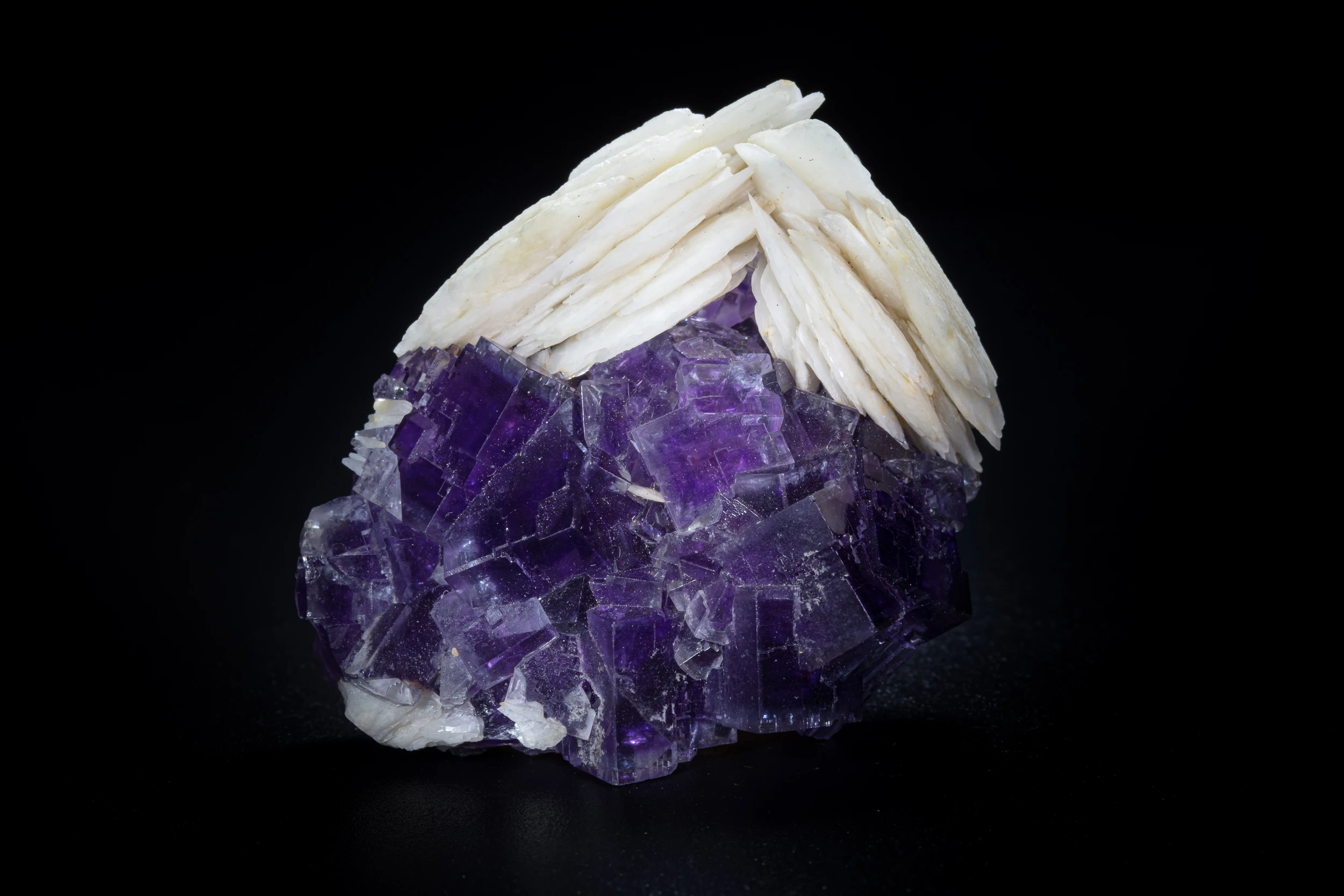
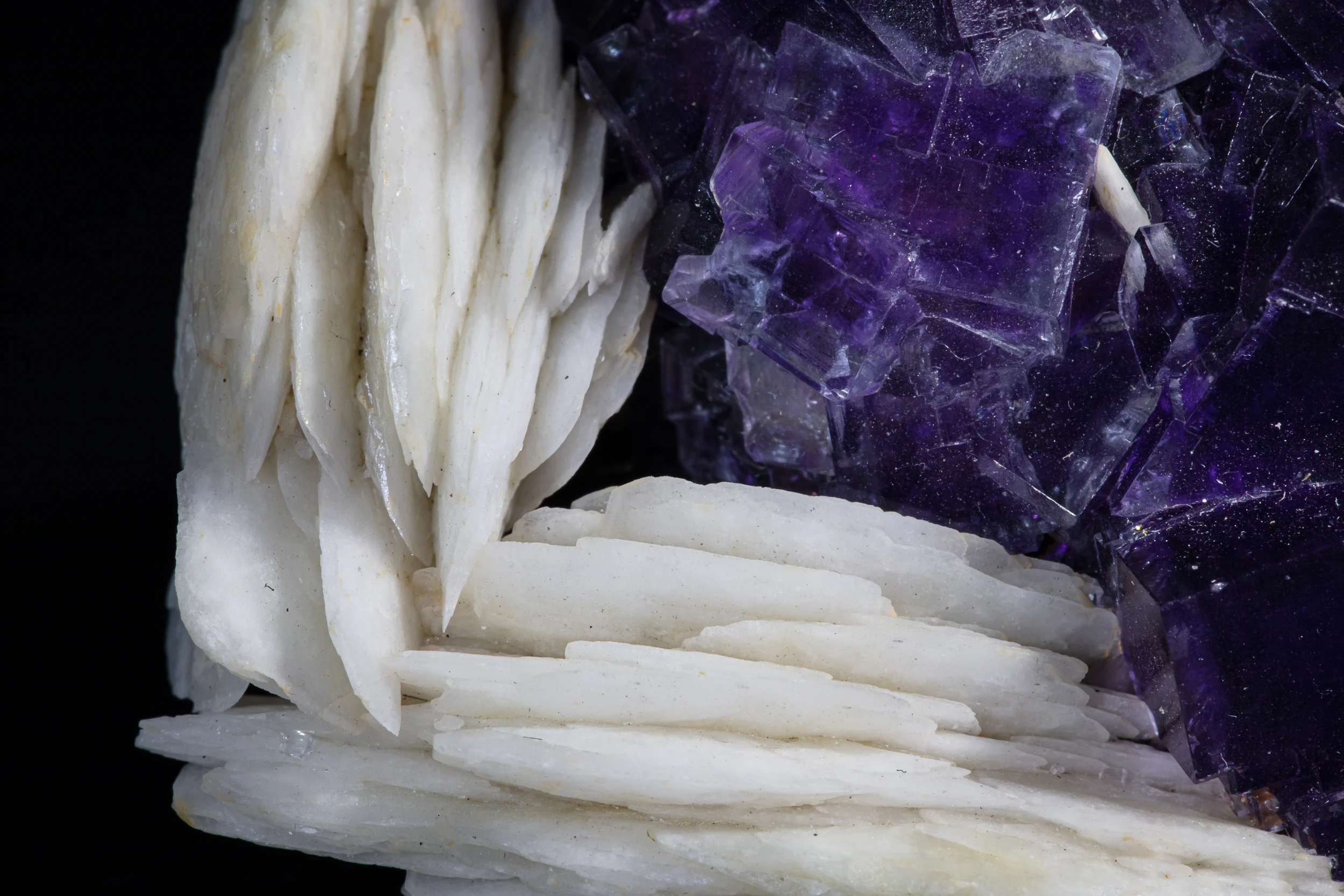
This specimen comes from the Berbes mining area near Ribadesella, on the coast of Asturias in northern Spain, a fluorite district important enough for collectors that the Mineralogical Record devoted a full article to it in 2024. Berbes is famous for transparent, deep purple cubes of fluorite, sometimes with white, platy crystals of barite, exactly the combination seen here. Compared with the nearby Caravia area, where fluorite often takes more complex shapes, Berbes fluorite mostly forms simple cubes. Here, a cluster of purple cubes is capped by two fans of white barite blades that lean together like the roof of a house. As is usual at Berbes, the barite formed after the fluorite, near the end of the mineralizing process.

Mineral Species

Did you know?

FluoriteFluorite gave fluorescence its name. In 1852 the physicist George Stokes, studying the mineral's glow under invisible light, coined the word for the whole phenomenon after the stone itself.

BariteBarite feels surprisingly heavy for a pale crystal, the weight of its barium. Around 1603 a Bologna shoemaker roasted some and found it glowed in the dark, the Bologna stone, the first artificial phosphor ever made.