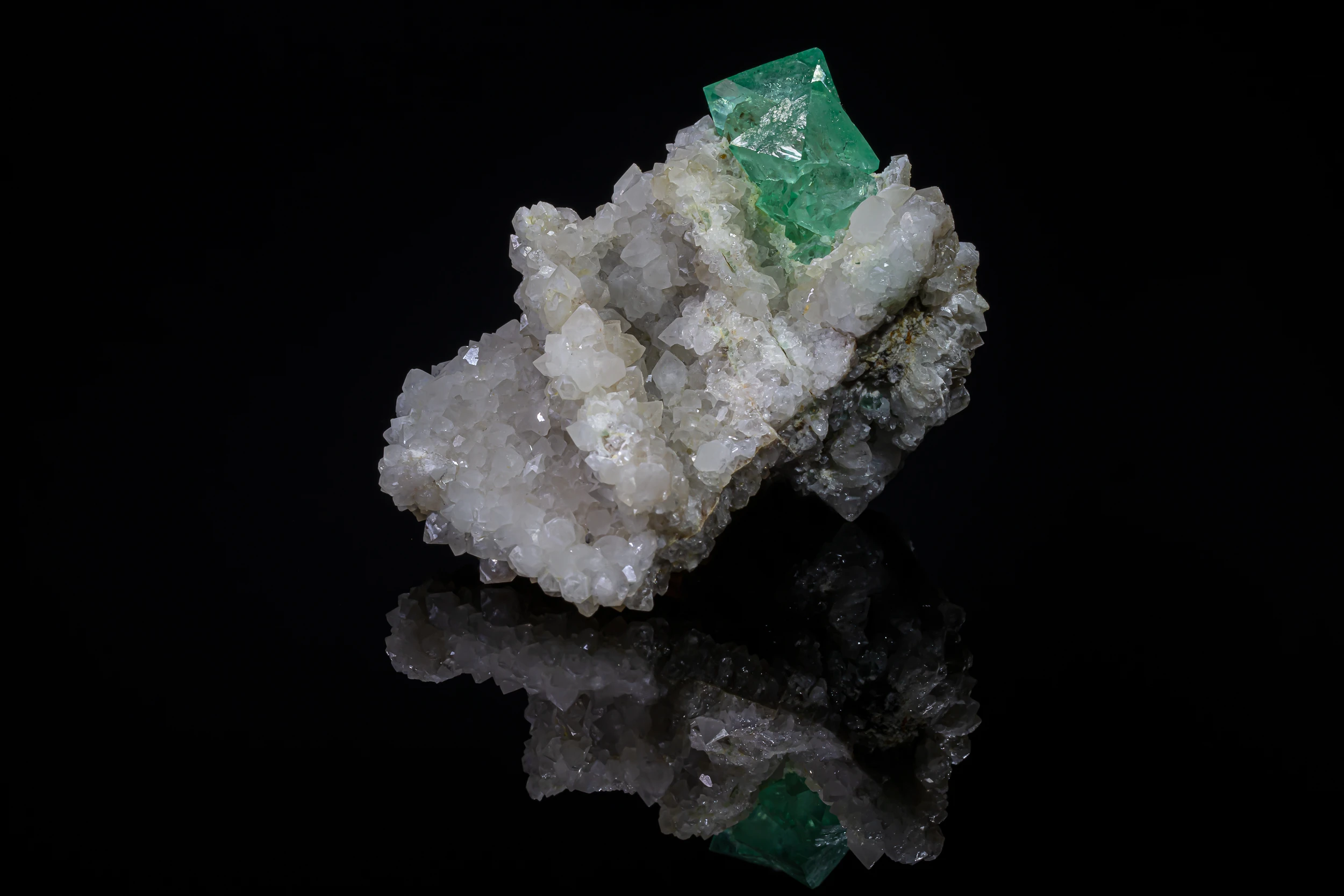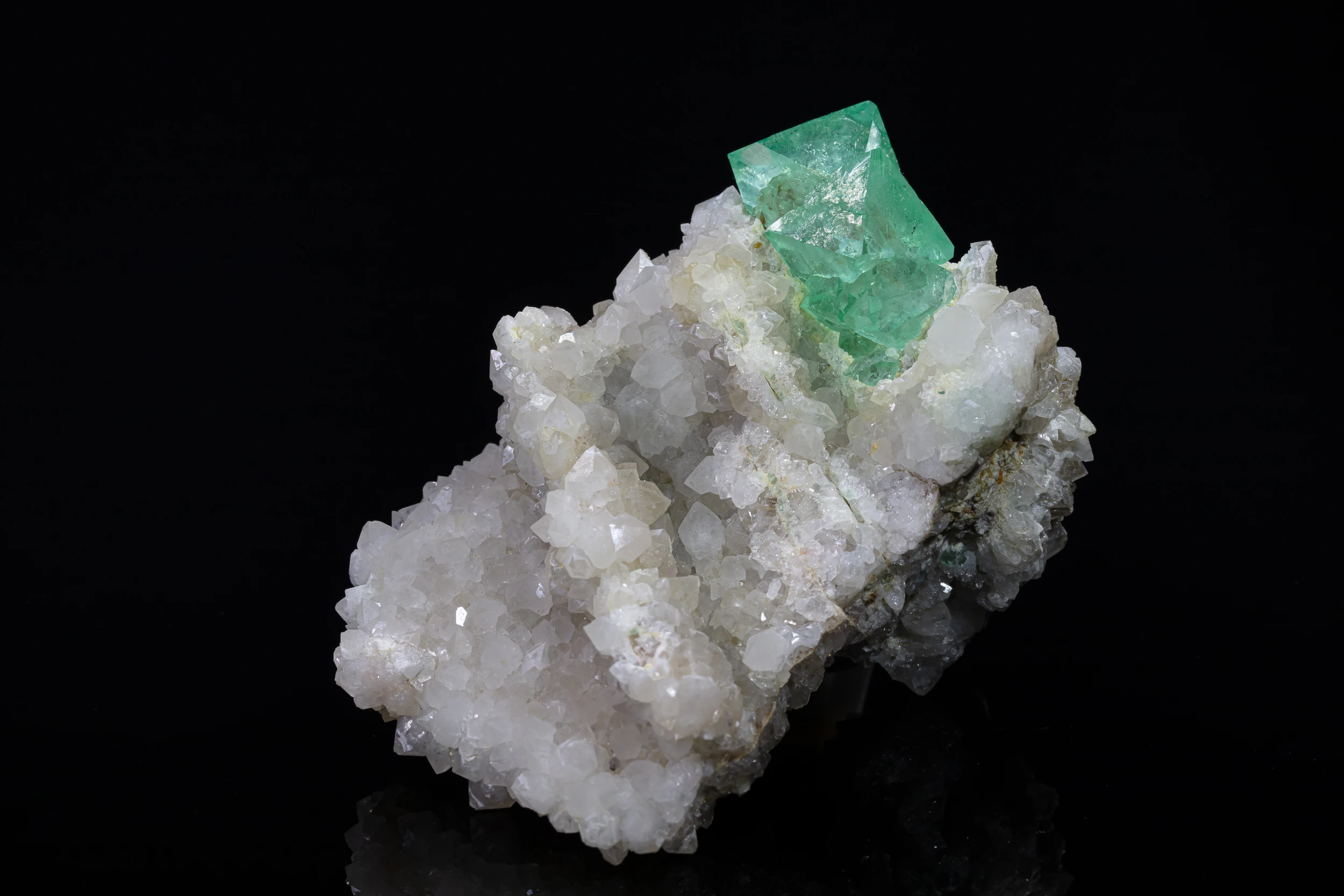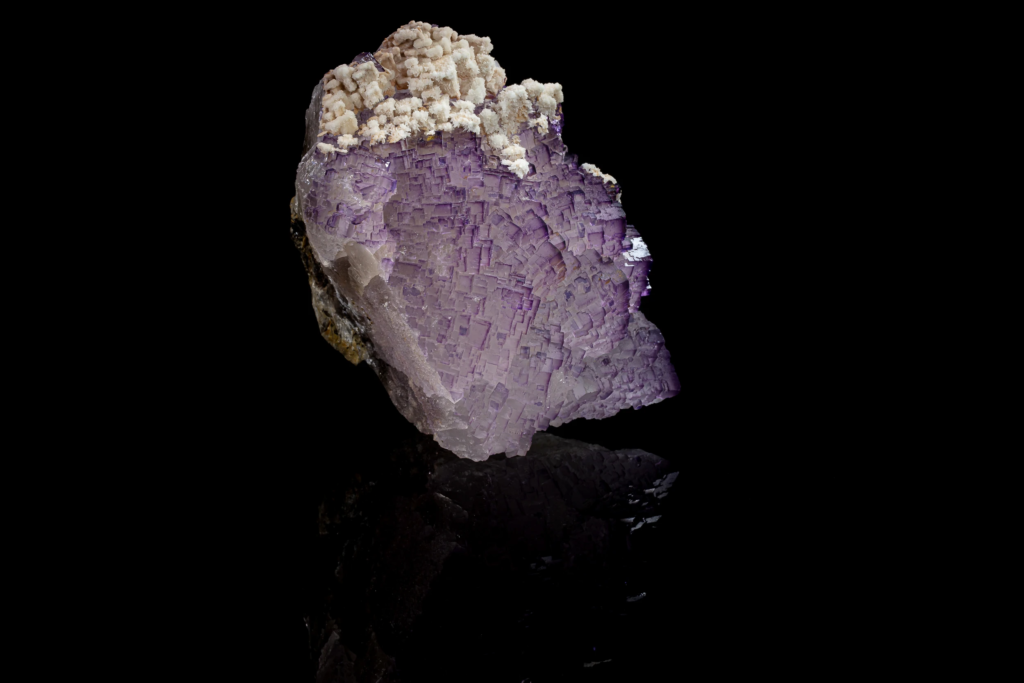
Fluorite Octahedron on Quartz

The Specimen

Cabinet: Miniature (2.5 - 4.5 cm) Origin: Riemvasmaak, Kakamas, Northern Cape – South Africa

Notes

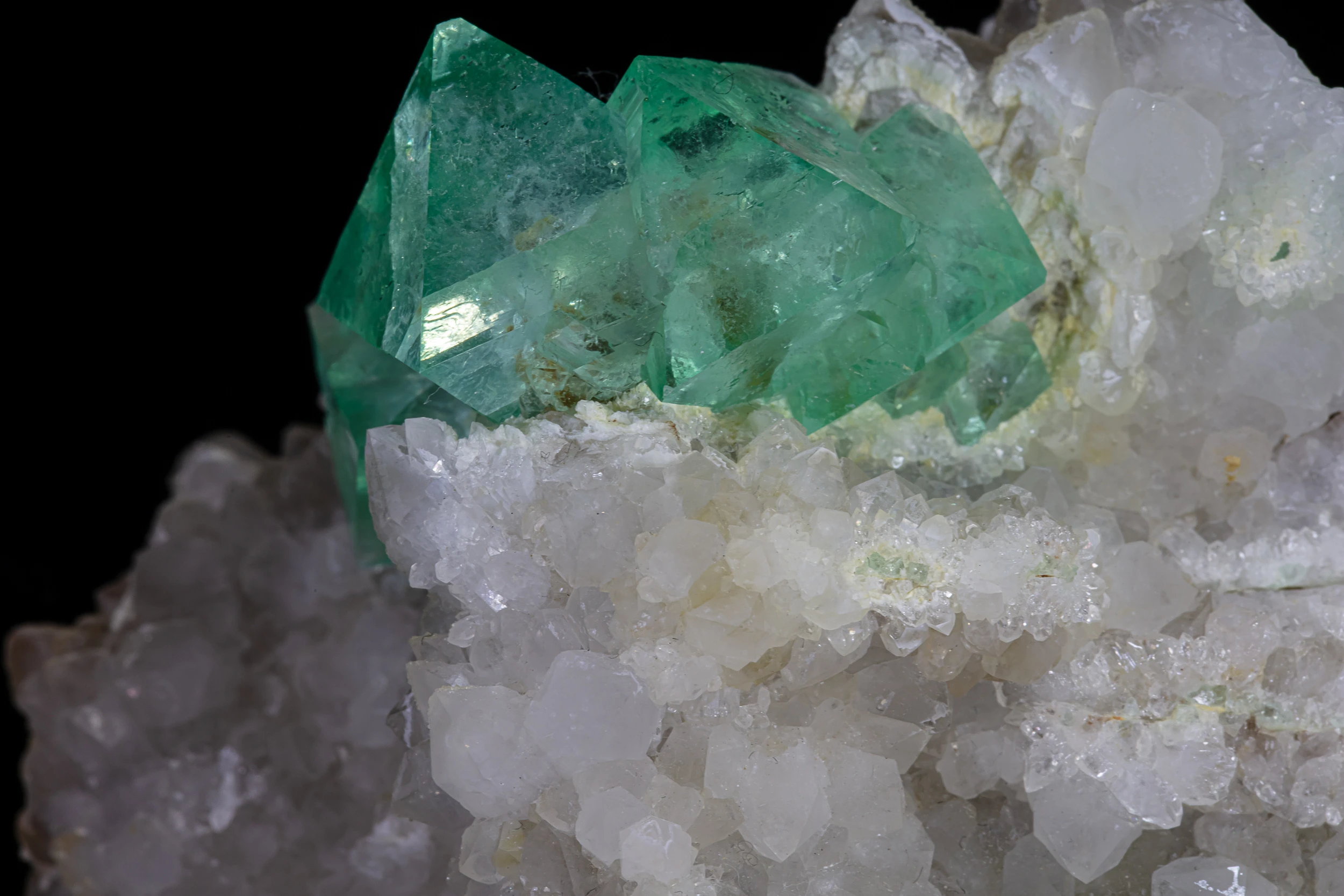
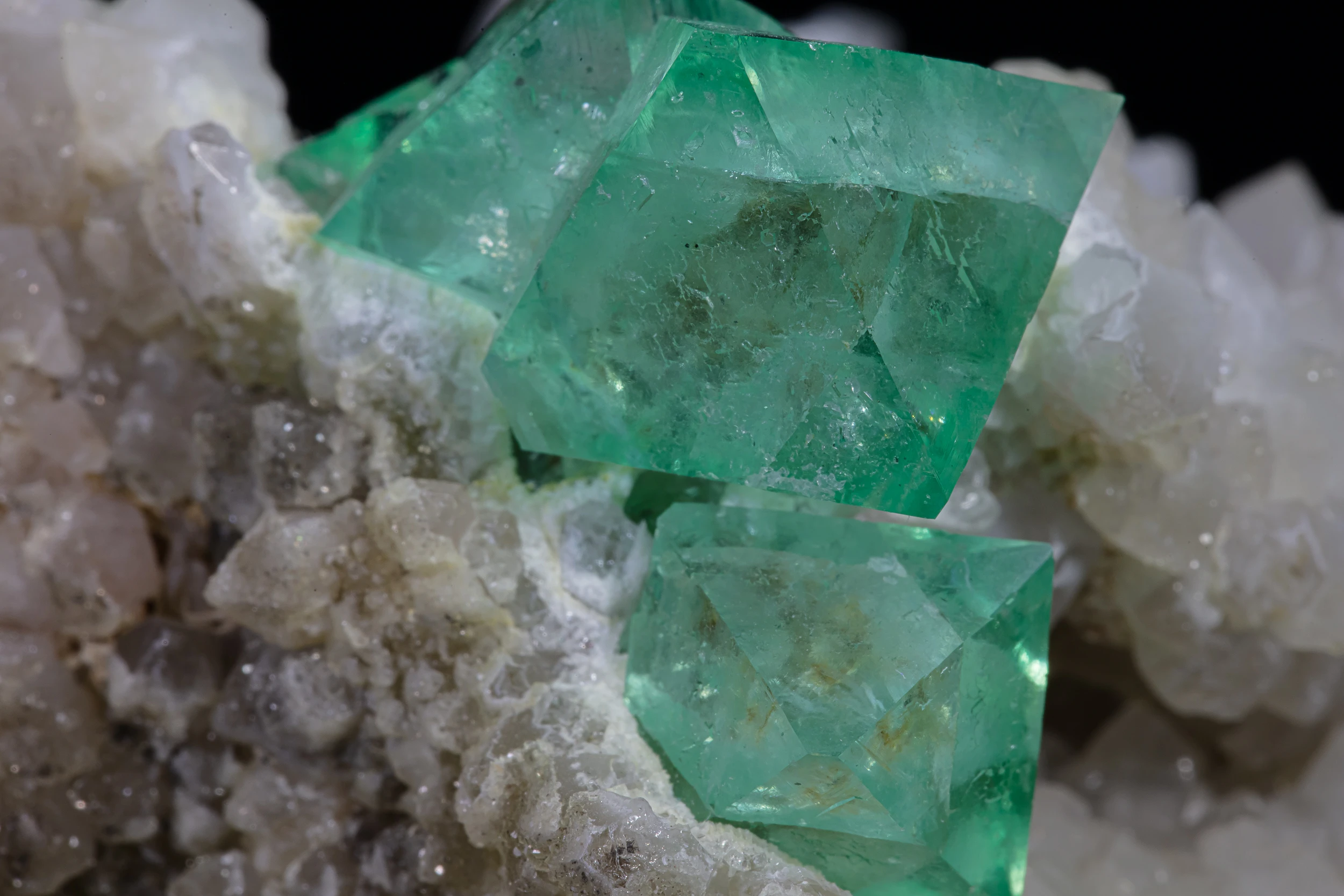
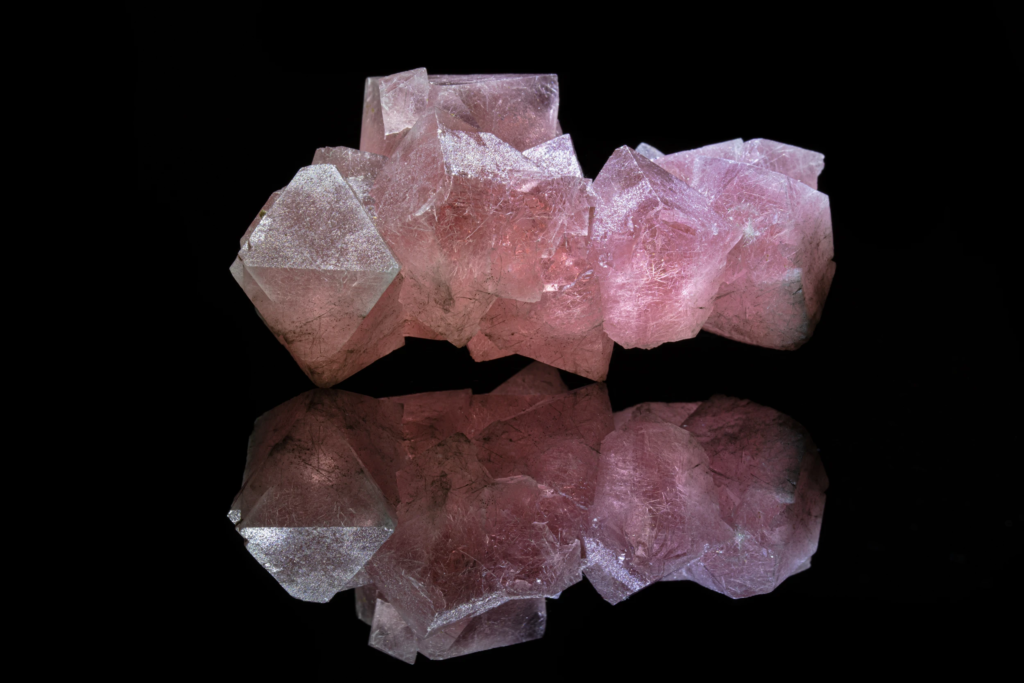
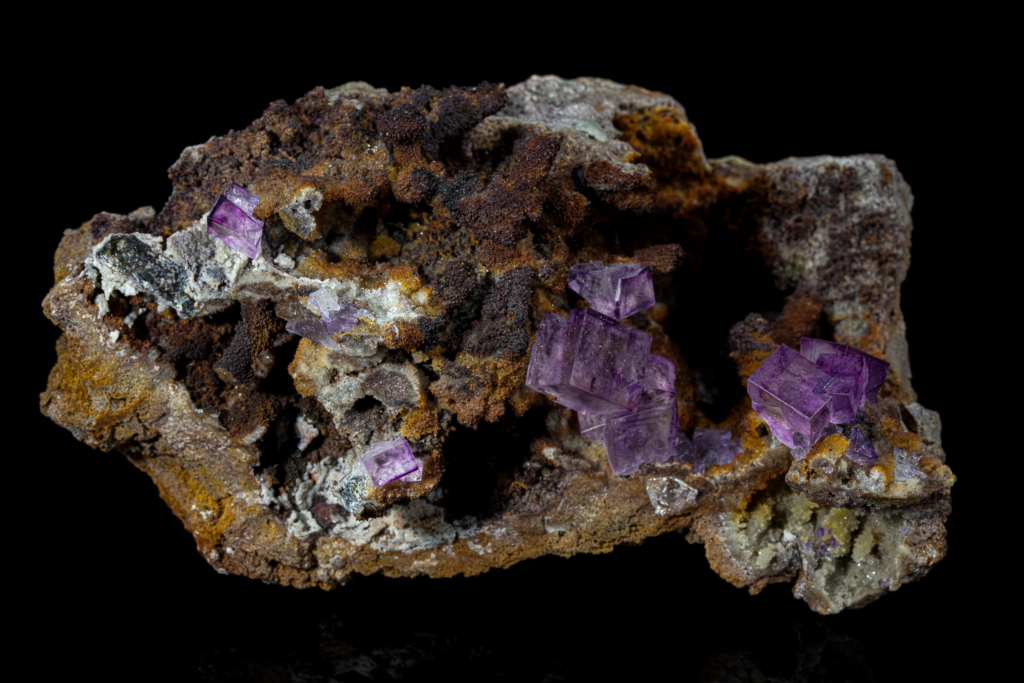
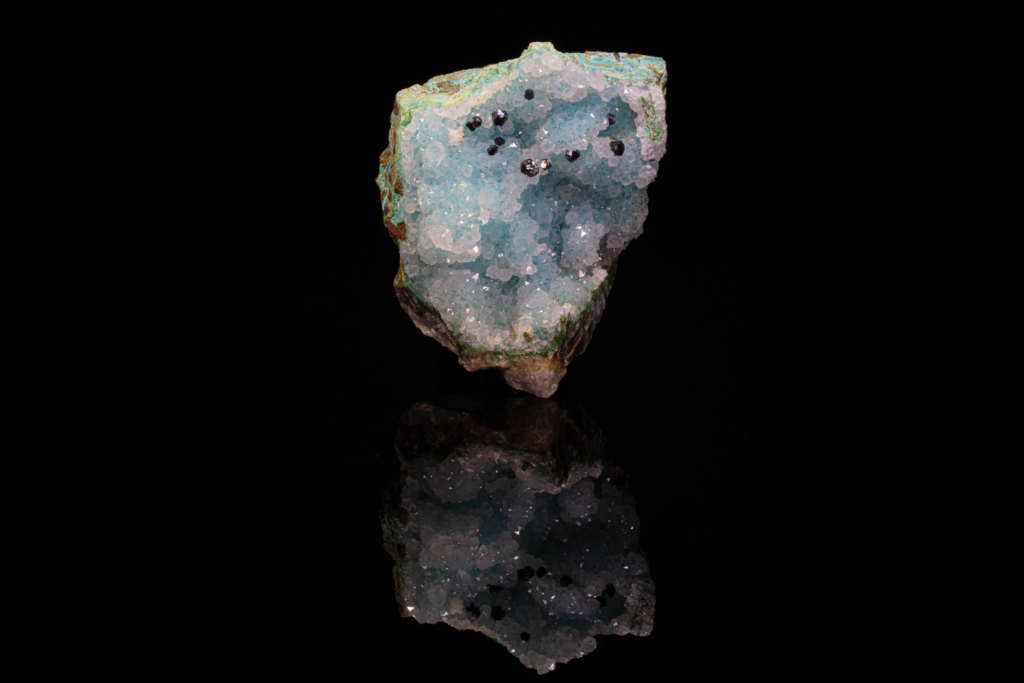
This specimen comes from Riemvasmaak, near Kakamas in the Northern Cape of South Africa, an area known among collectors for its deep green fluorite. Fluorite is usually seen as cubes, but here it grew as an octahedron, a crystal with eight triangular faces shaped like two pyramids joined at their base. This shape also matches the way fluorite breaks: it splits cleanly in four directions, so a broken piece can be shaped into an octahedron by hand. Here, a sharp green octahedron, with a smaller one beside it, sits on a block covered with tiny, sparkling white quartz crystals.

Mineral Species

Did you know?

FluoriteFluorite gave fluorescence its name. In 1852 the physicist George Stokes, studying the mineral's glow under invisible light, coined the word for the whole phenomenon after the stone itself.

QuartzPressing a quartz crystal makes it give off a precise electric beat, which is why it keeps time in nearly every watch and once tuned the radios of World War II, when good crystals were a strategic resource.