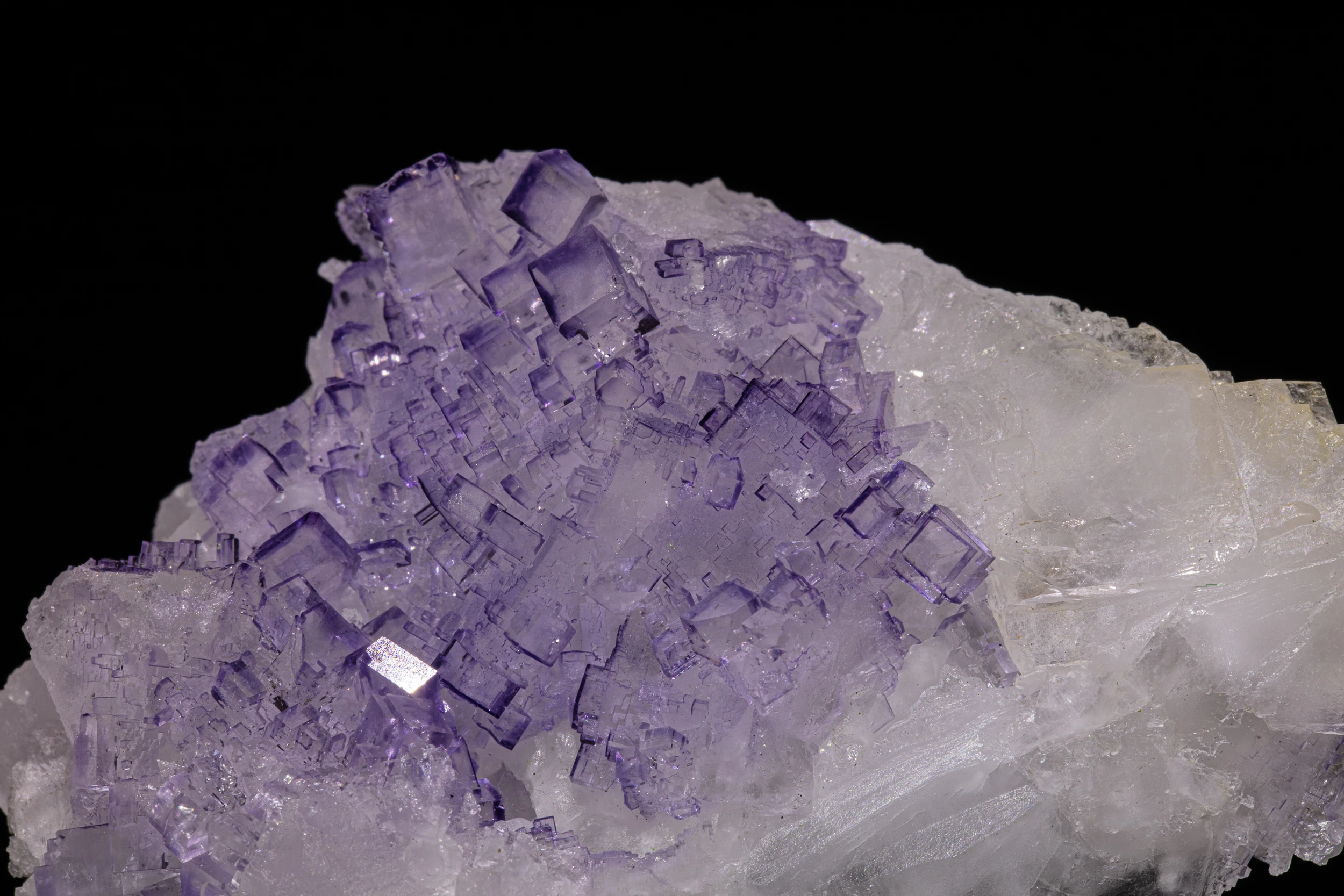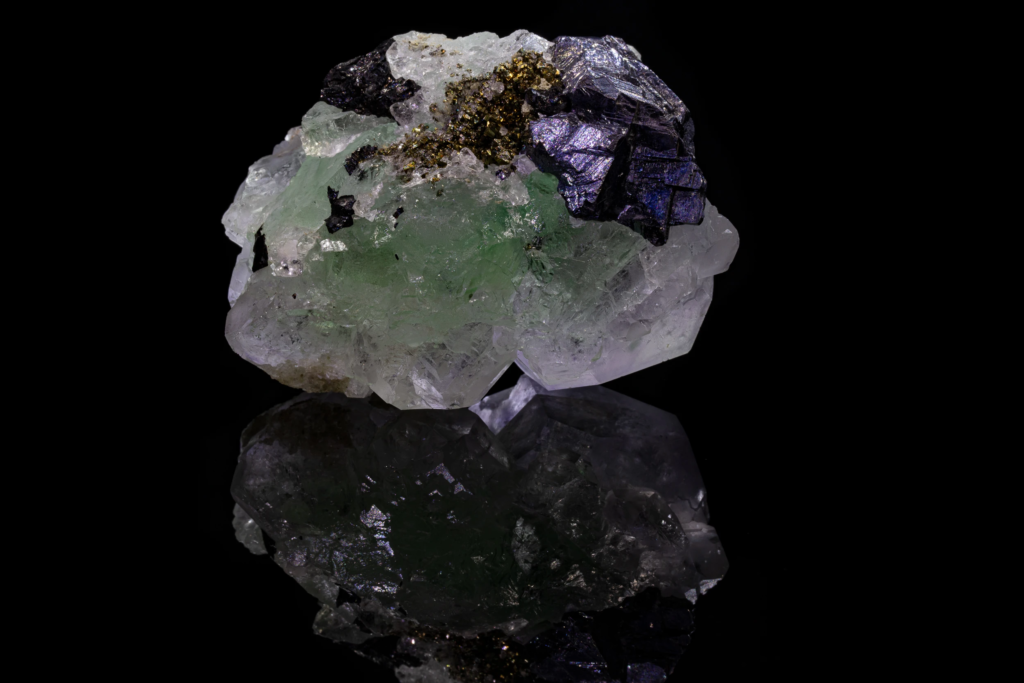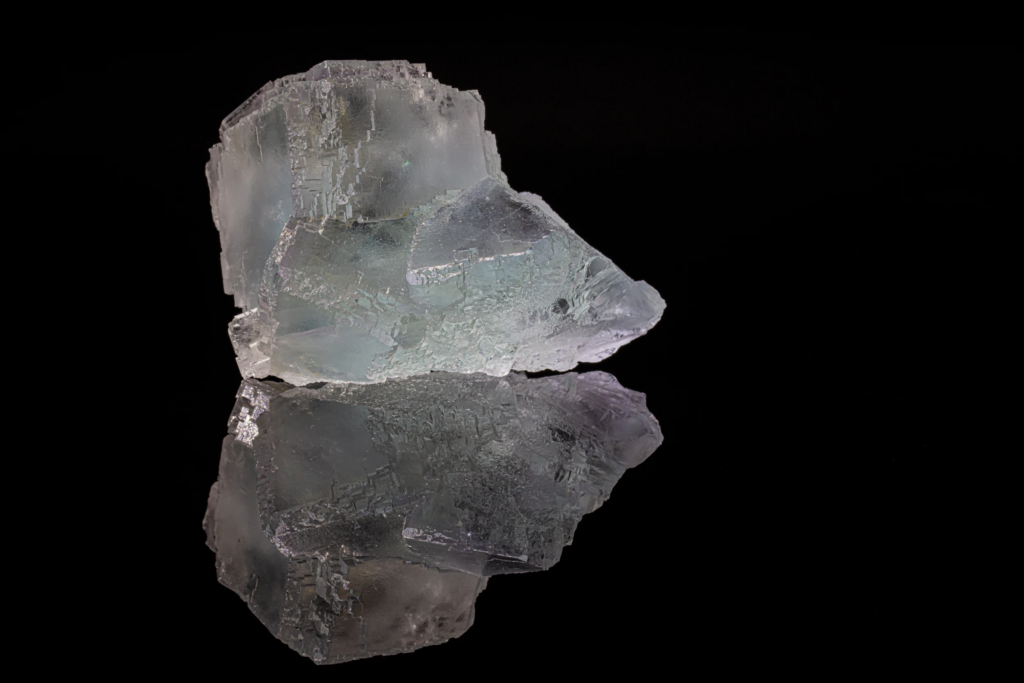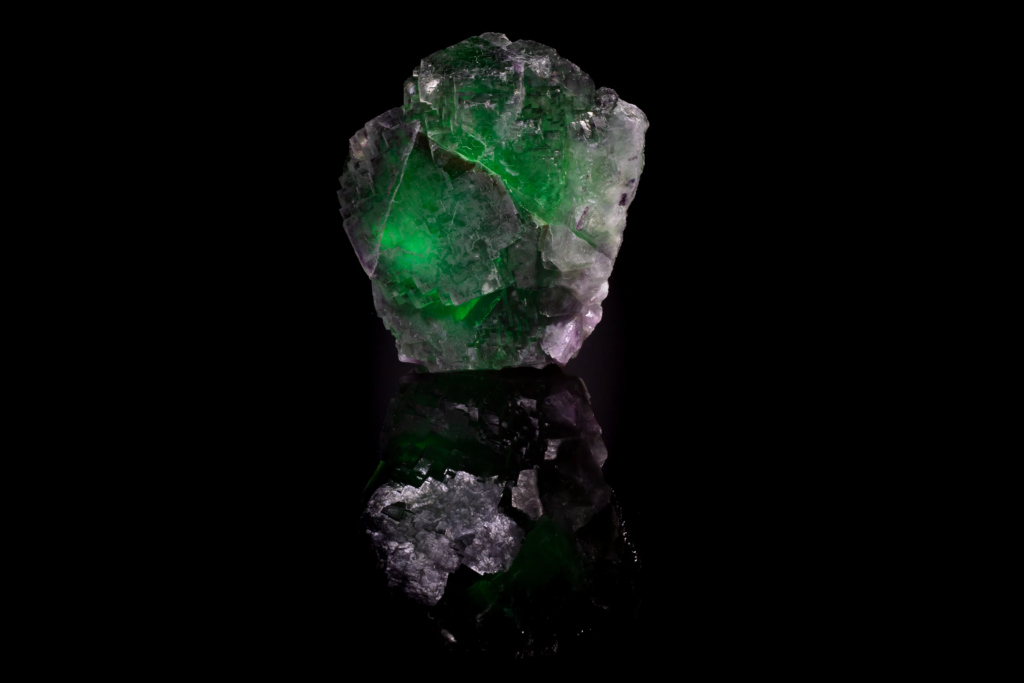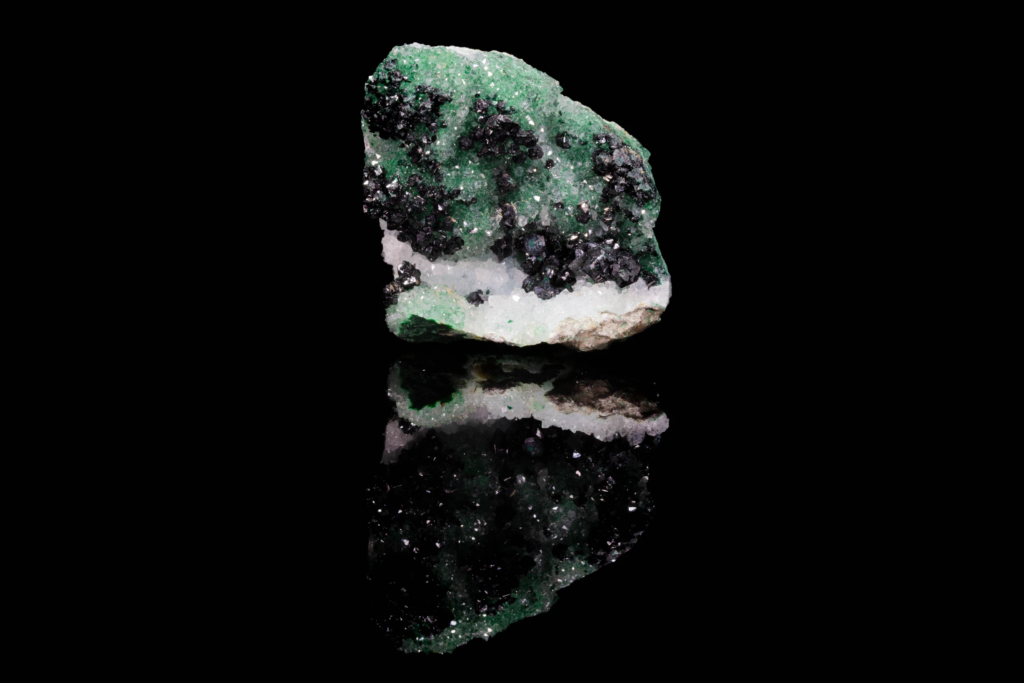
Fluorite on Celestine

The Specimen

Cabinet: Small Cabinet (4.5 - 7 cm) Origin: Tule Mine, Melchor Múzquiz, Múzquiz Municipality, Coahuila – Mexico

Notes

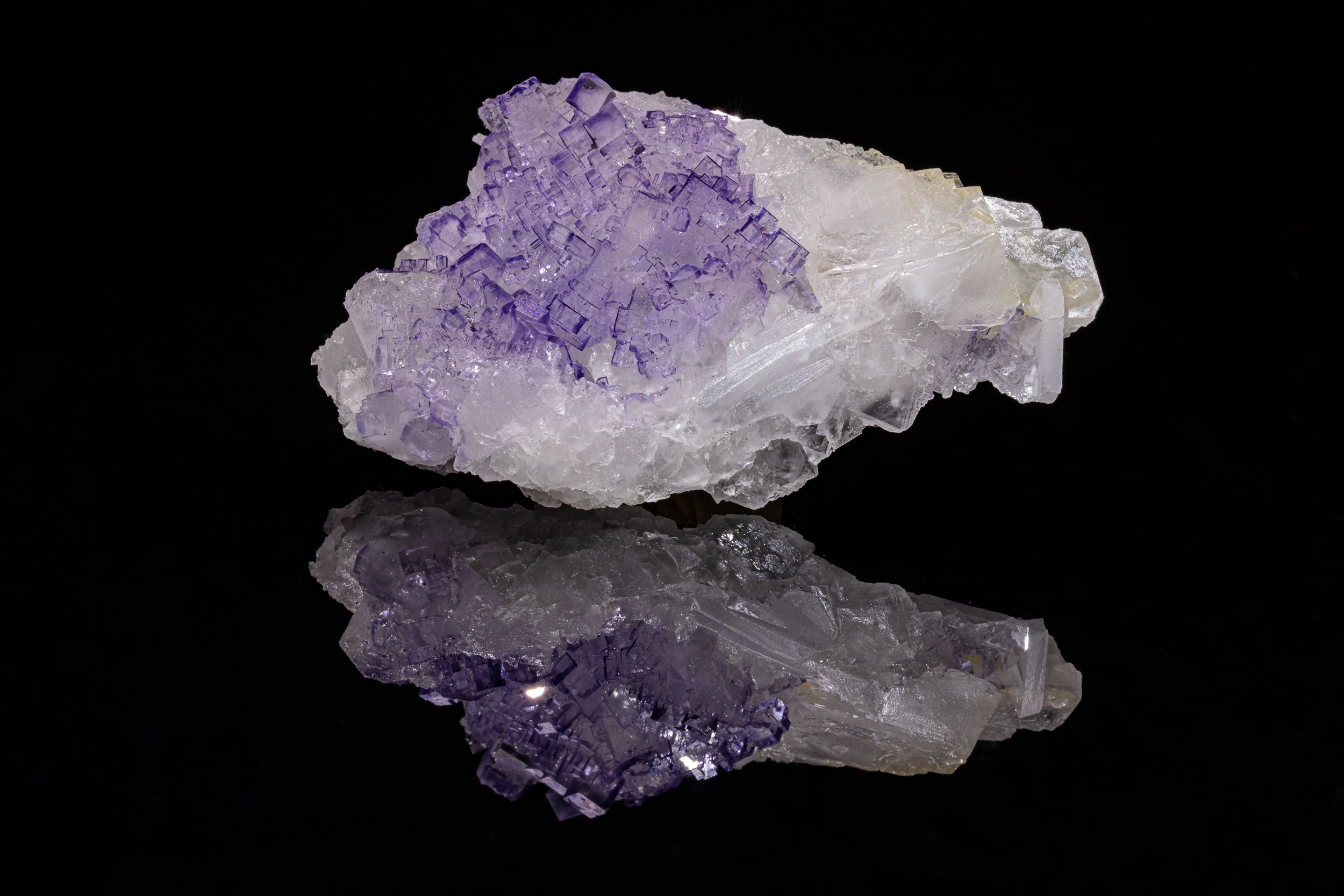
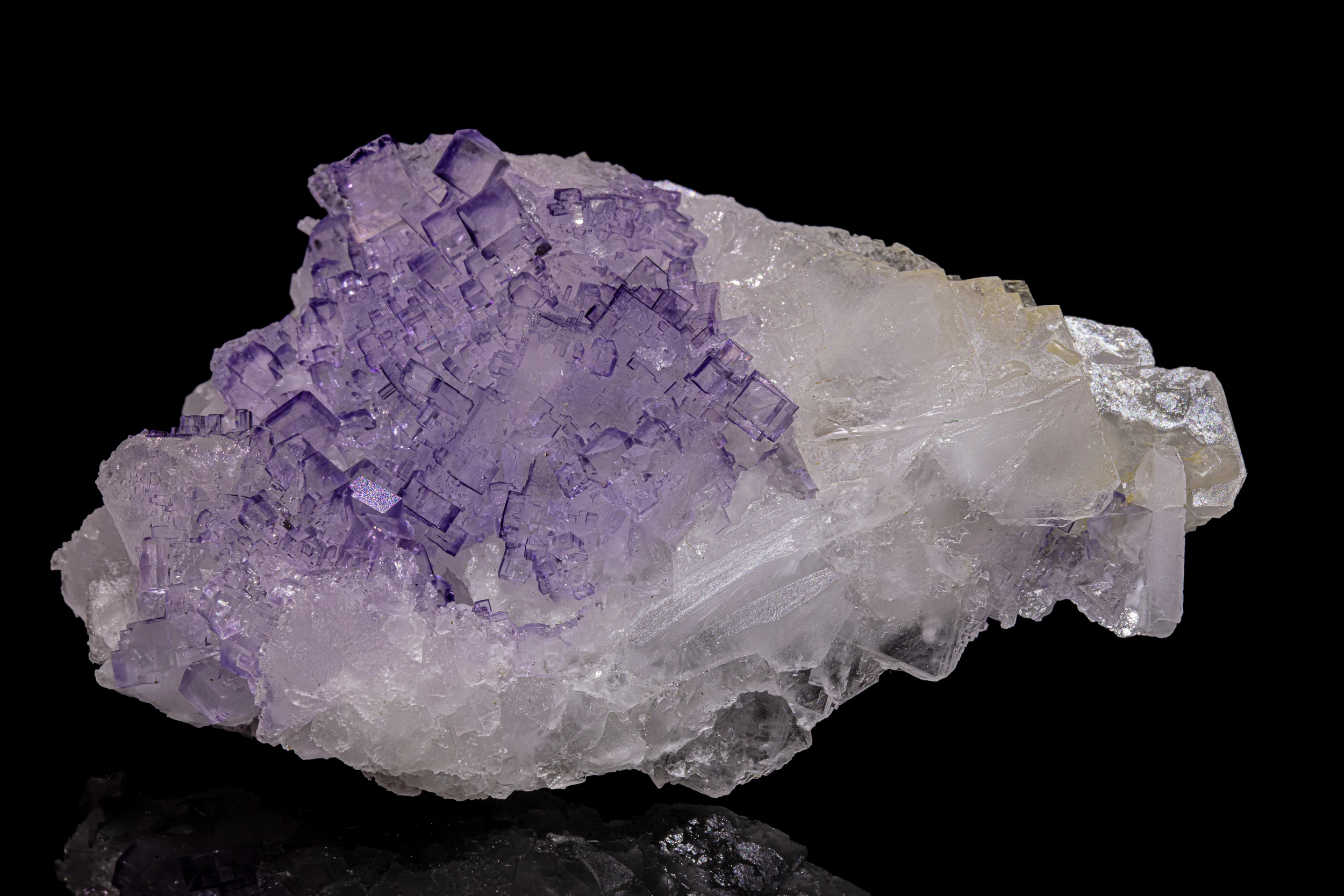
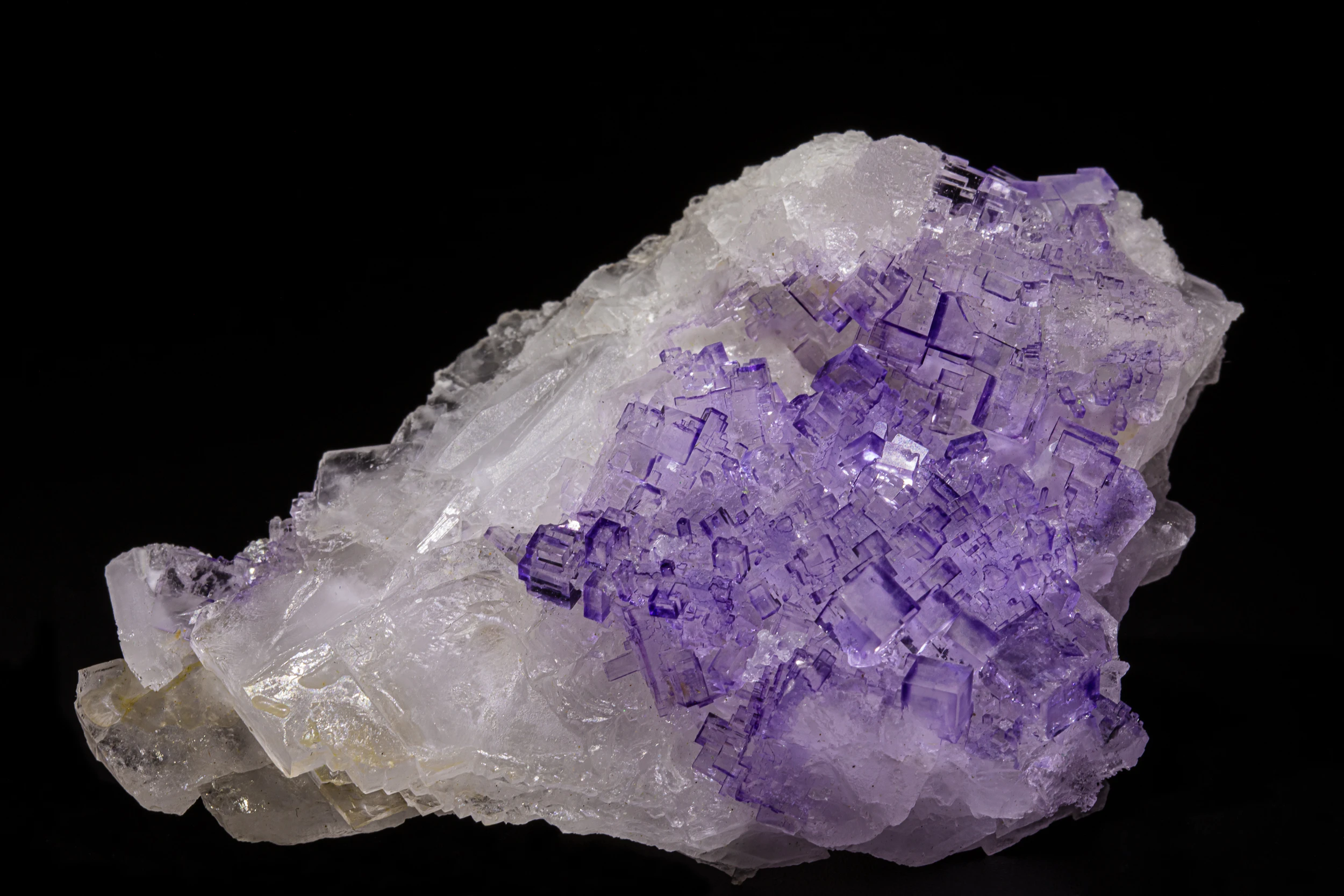
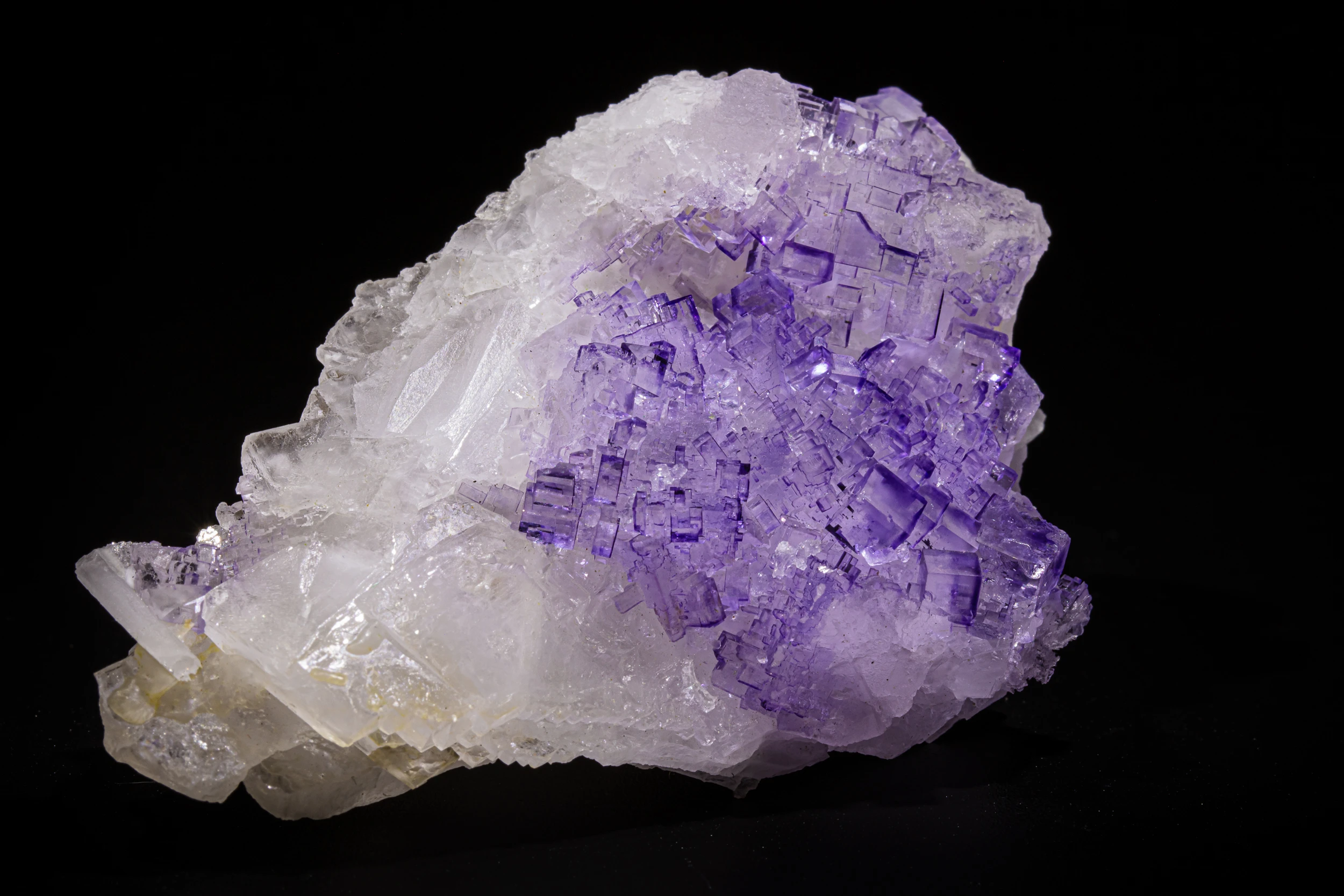
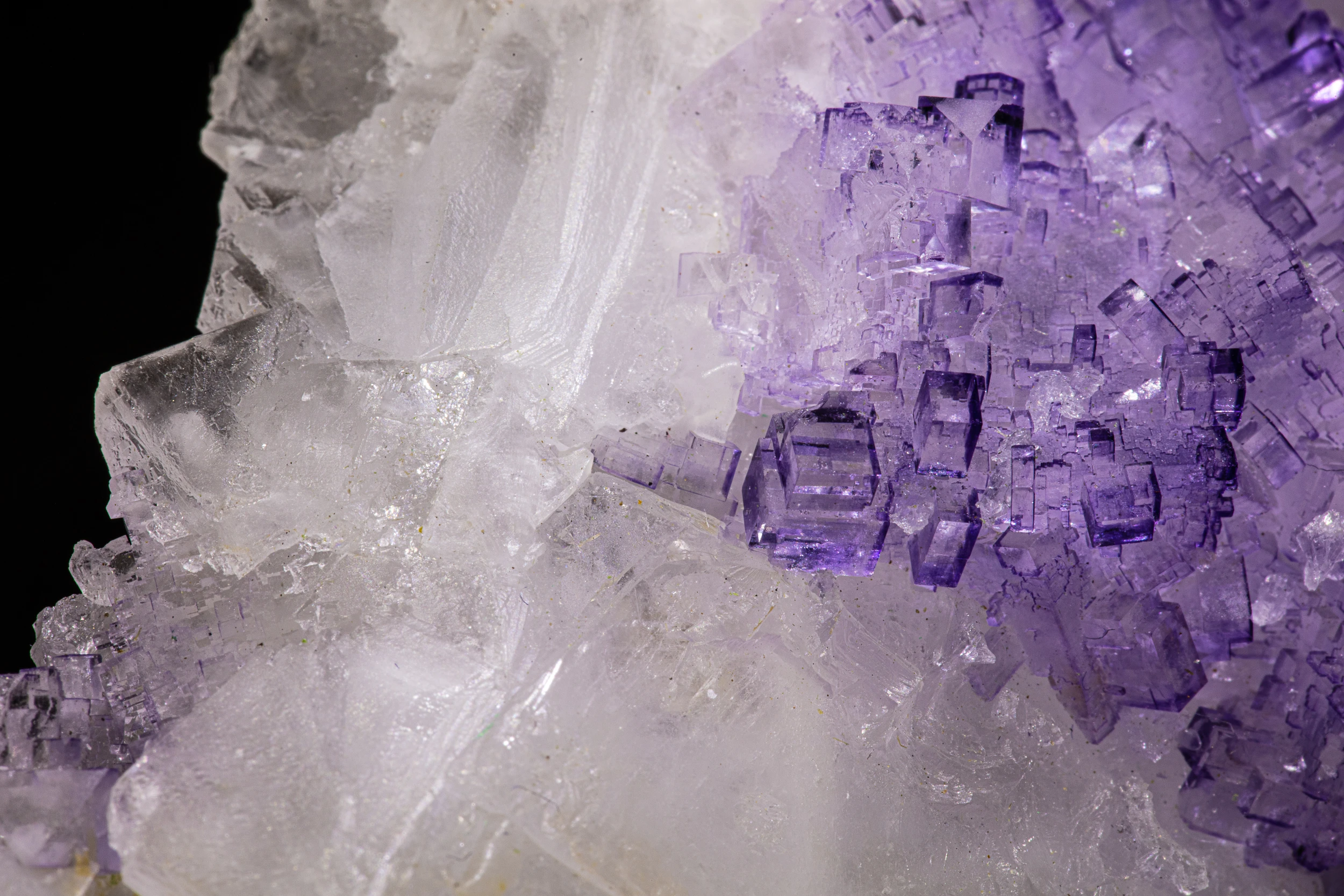
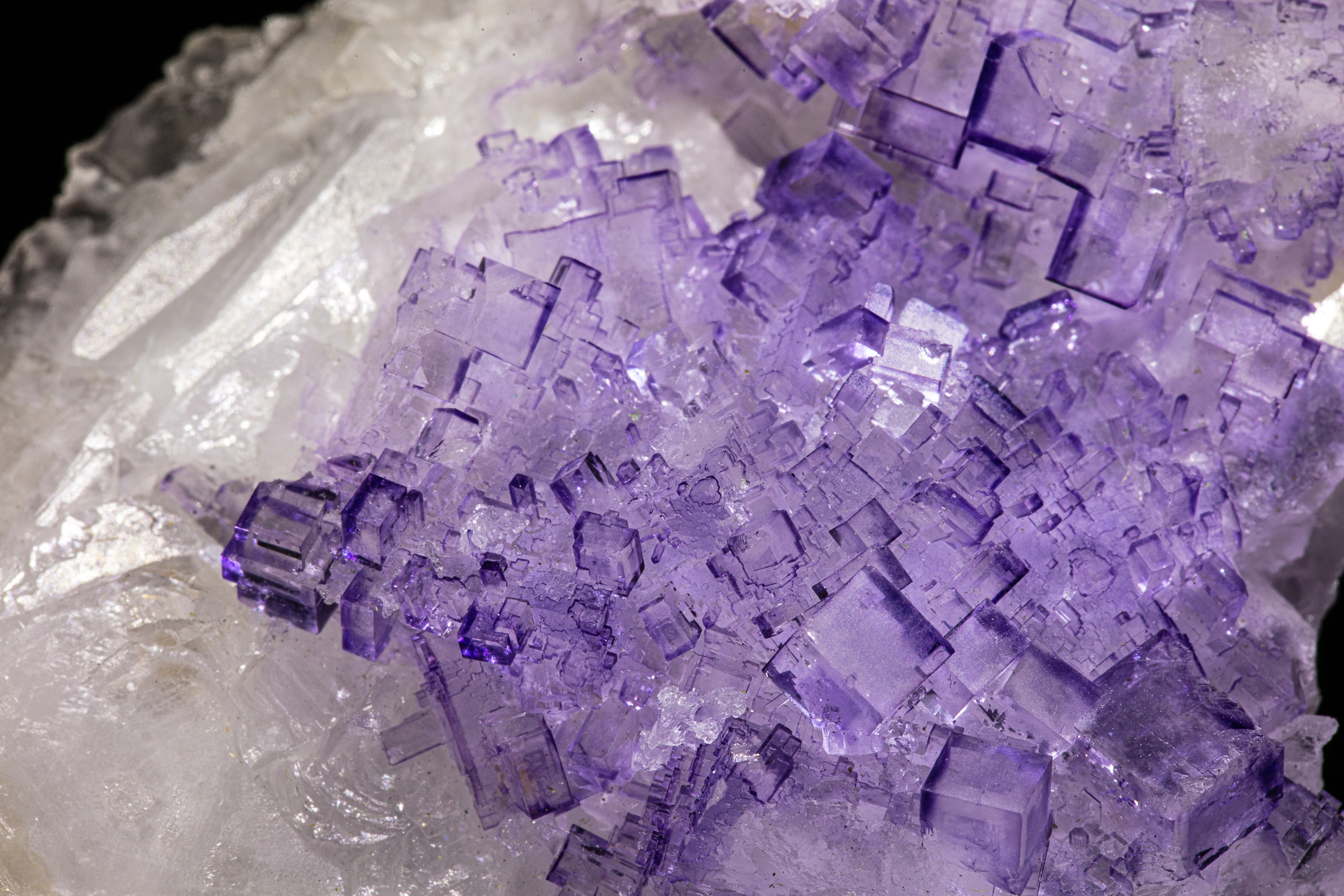
This specimen comes from the Tule Mine near Melchor Múzquiz, in the desert of Coahuila, northern Mexico, about 100 kilometers south of Big Bend National Park in Texas. El Tule is one of the larger of the hundreds of small celestine mines around the town. Celestine is a strontium sulfate that often forms long, flat blades, and at El Tule purple fluorite cubes grew on top of it, a combination that has made the mine a classic. Here, a patch of small, sharp purple cubes covers part of the white, translucent celestine.

Mineral Species

Did you know?

FluoriteFluorite gave fluorescence its name. In 1852 the physicist George Stokes, studying the mineral's glow under invisible light, coined the word for the whole phenomenon after the stone itself.

CelestineMost celestine fits in the palm of your hand. The largest known geode, beneath Put-in-Bay in Ohio, is the rare exception: a hollow pocket big enough to walk inside, its walls lined with pale blue crystals.