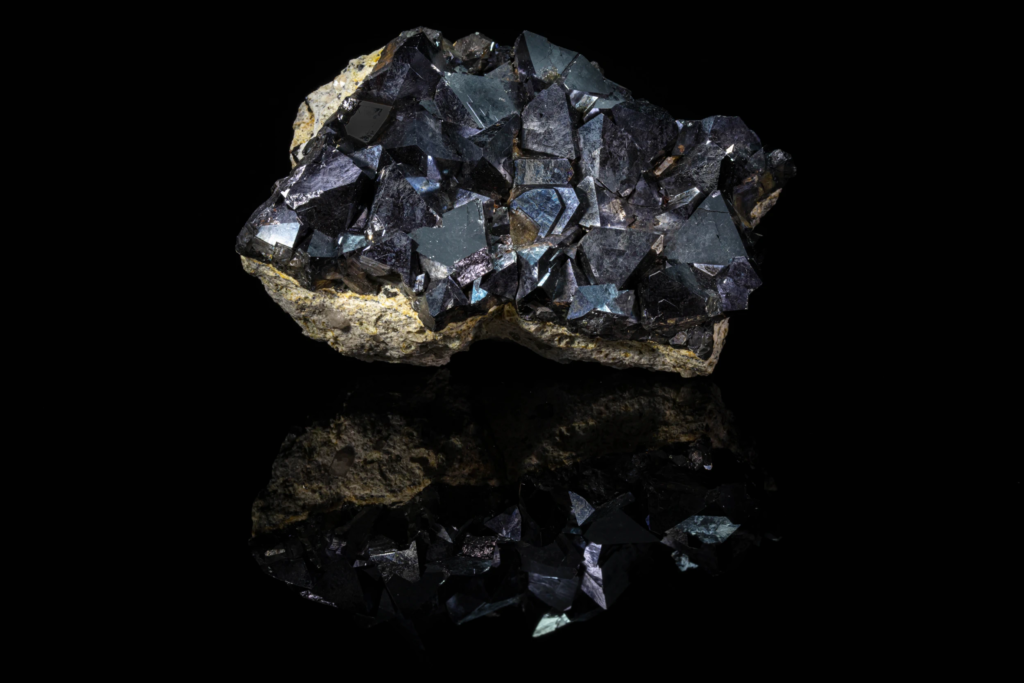
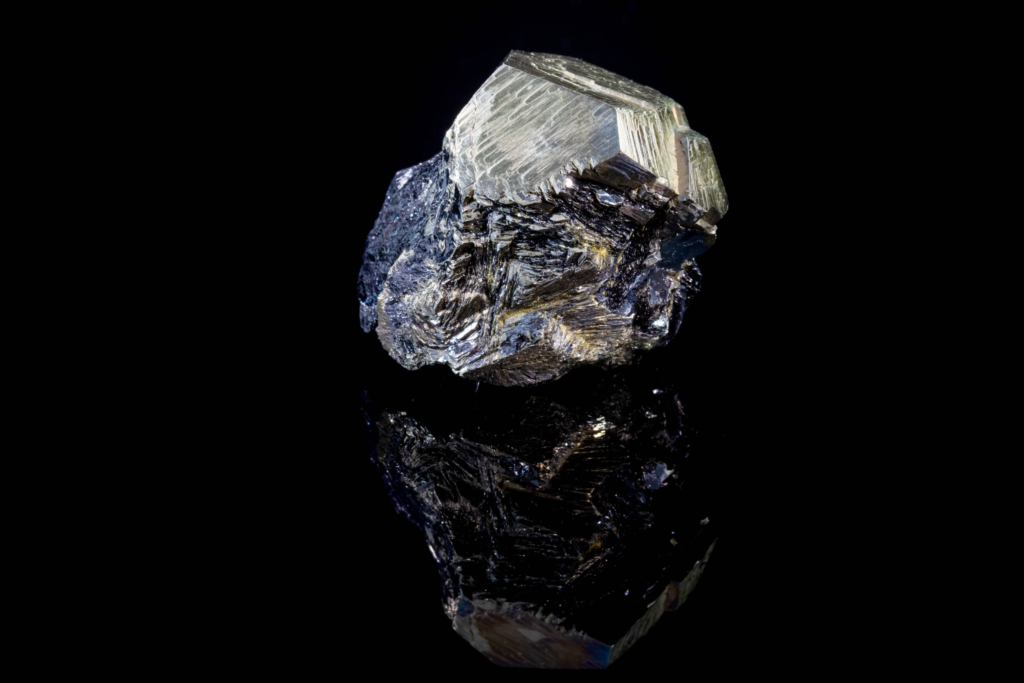
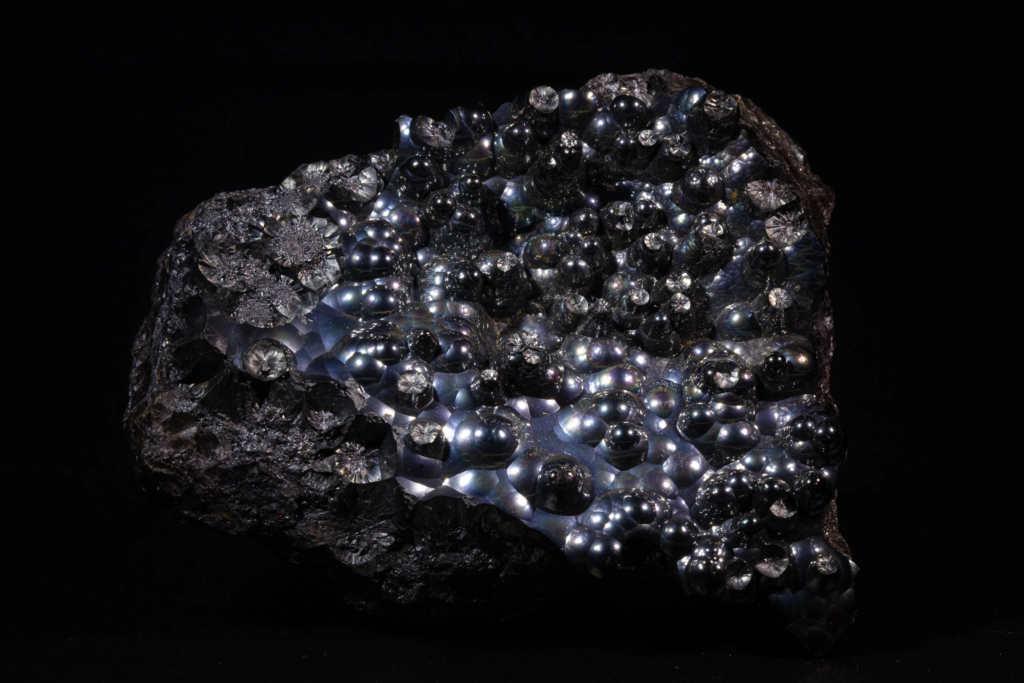
Hematite var. Specularite

The Specimen

Cabinet: Small Cabinet (4.5 - 7 cm) – Size: 5.5 x 4.0 x 2.4 cm Origin: Mount Vesuvius, Somma-Vesuvius, Naples, Campania – Italy

Notes

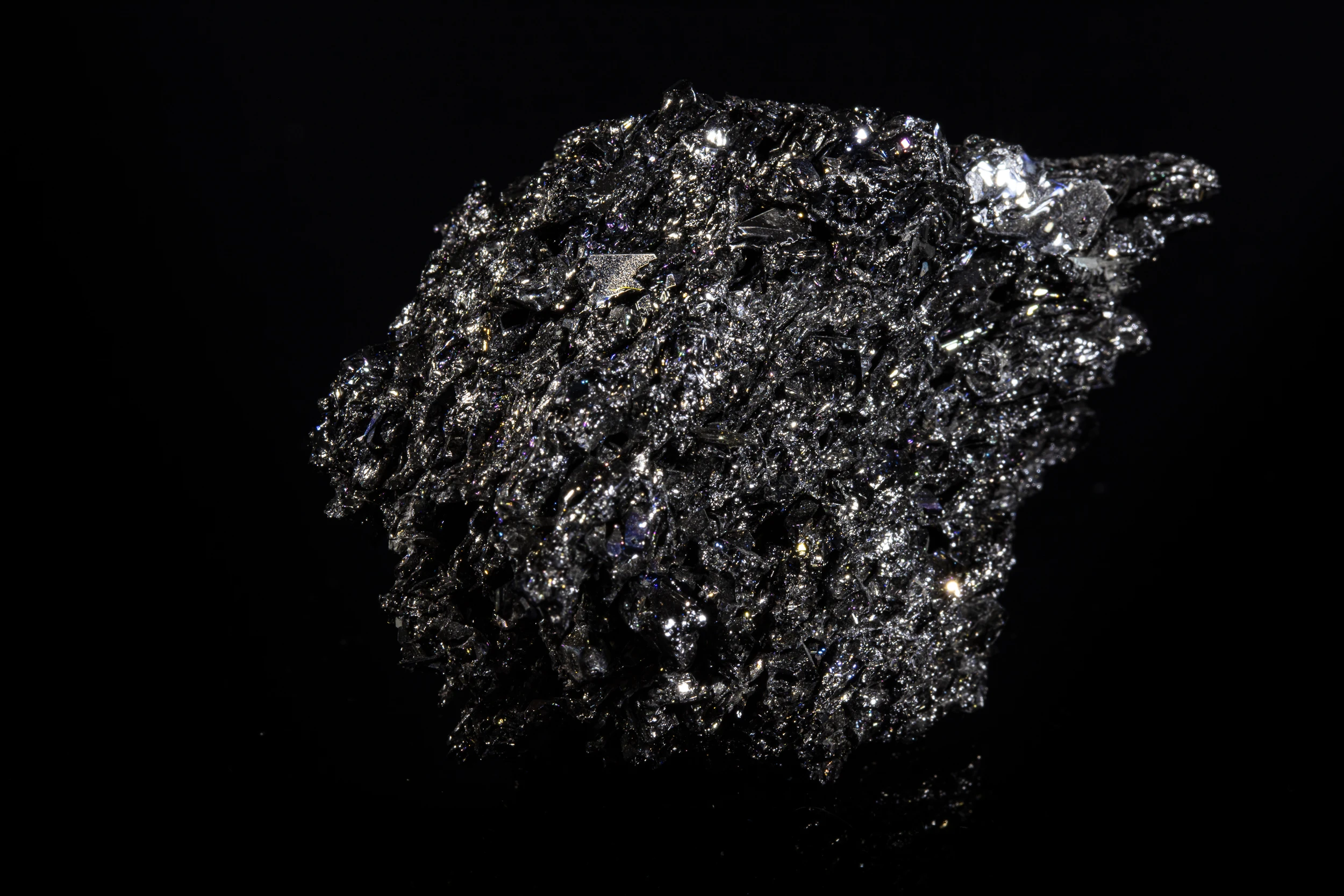
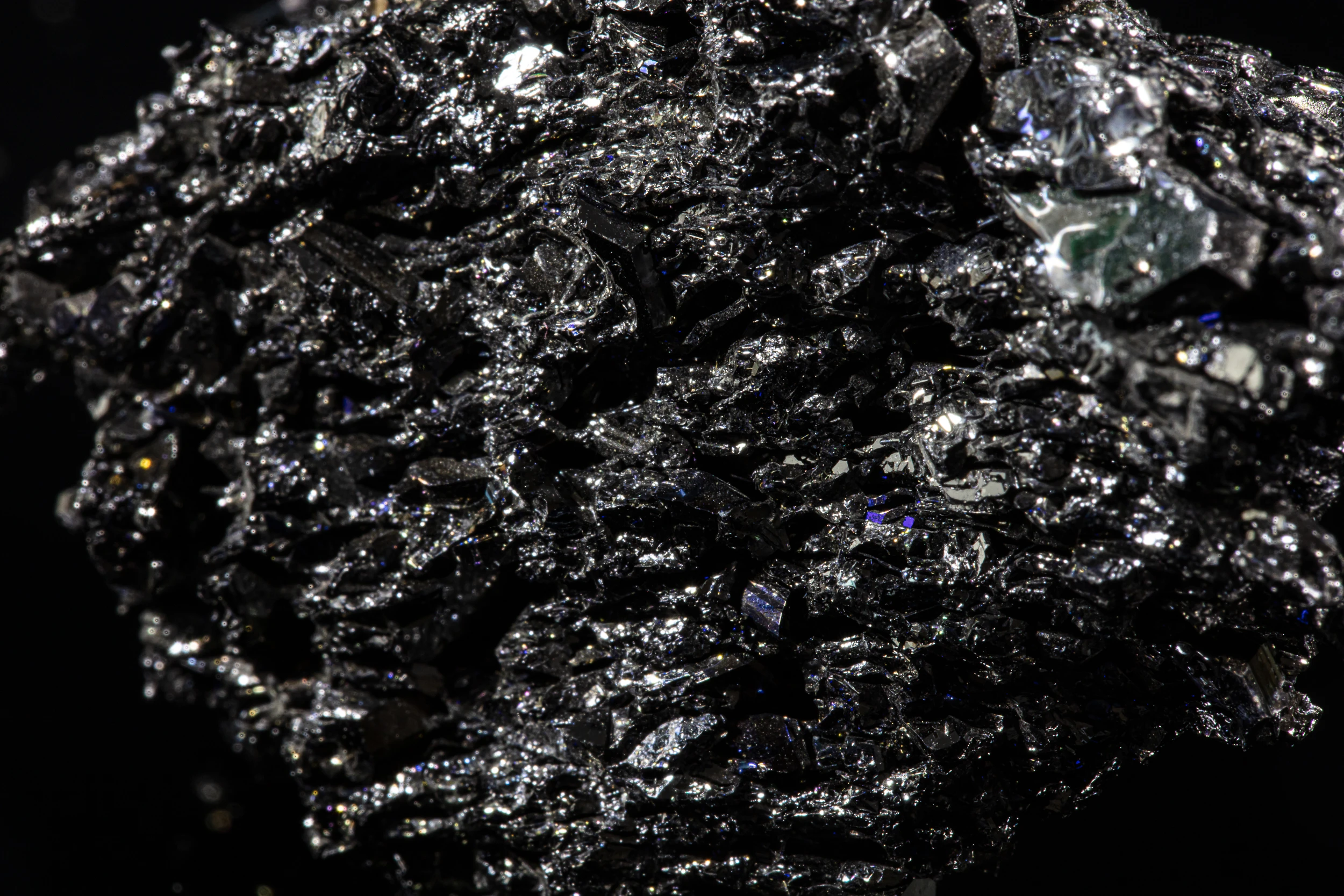
This specimen comes from Mount Vesuvius, near Naples in Campania, southern Italy. The modern cone grew inside the older Monte Somma caldera after the famous eruption of AD 79, which destroyed Pompeii and Herculaneum, and the volcano's last eruption took place in March 1944. According to the dealer, hematite specimens from Vesuvius are rare. Hematite is an iron oxide, and at volcanoes it can crystallize directly from hot gases. Here, splendent jet-black plates are densely intergrown in every direction, building a branching, sculptural mass that displays from all sides, with mirror-like faces that flash as the piece turns. This habit is called specularite, a variety of hematite made of small intergrown plates that glitter when rotated. The piece was named Specularite by Josef Vajdak of Pequa Rare Minerals, a dealer in rare minerals honored by the mineral vajdakite.

Mineral Species

Fe2O3
Elements: Iron, Oxygen
Class: Oxides
Crystal System: Trigonal
Hardness: 5-6
Orthoclase
Talc (1)Diamond (10)
About as hard as a steel knife blade.
Fe2O3
Elements: Iron, Oxygen
Class: Oxides – Hematite Group
Crystal System: Trigonal
Hardness: 5-6
Orthoclase
Talc (1)Diamond (10)
About as hard as a steel knife blade.

Did you know?

HematiteHematite is named from the Greek for blood, and it keeps the secret well: a silvery or black specimen, scratched or powdered, leaves a vivid blood-red streak.

SpeculariteSpecularite is named from the Latin for mirror. It is hematite grown in flat micaceous flakes, thousands of tiny mirrors that make the stone glitter like silver, though its powder is still rust red.