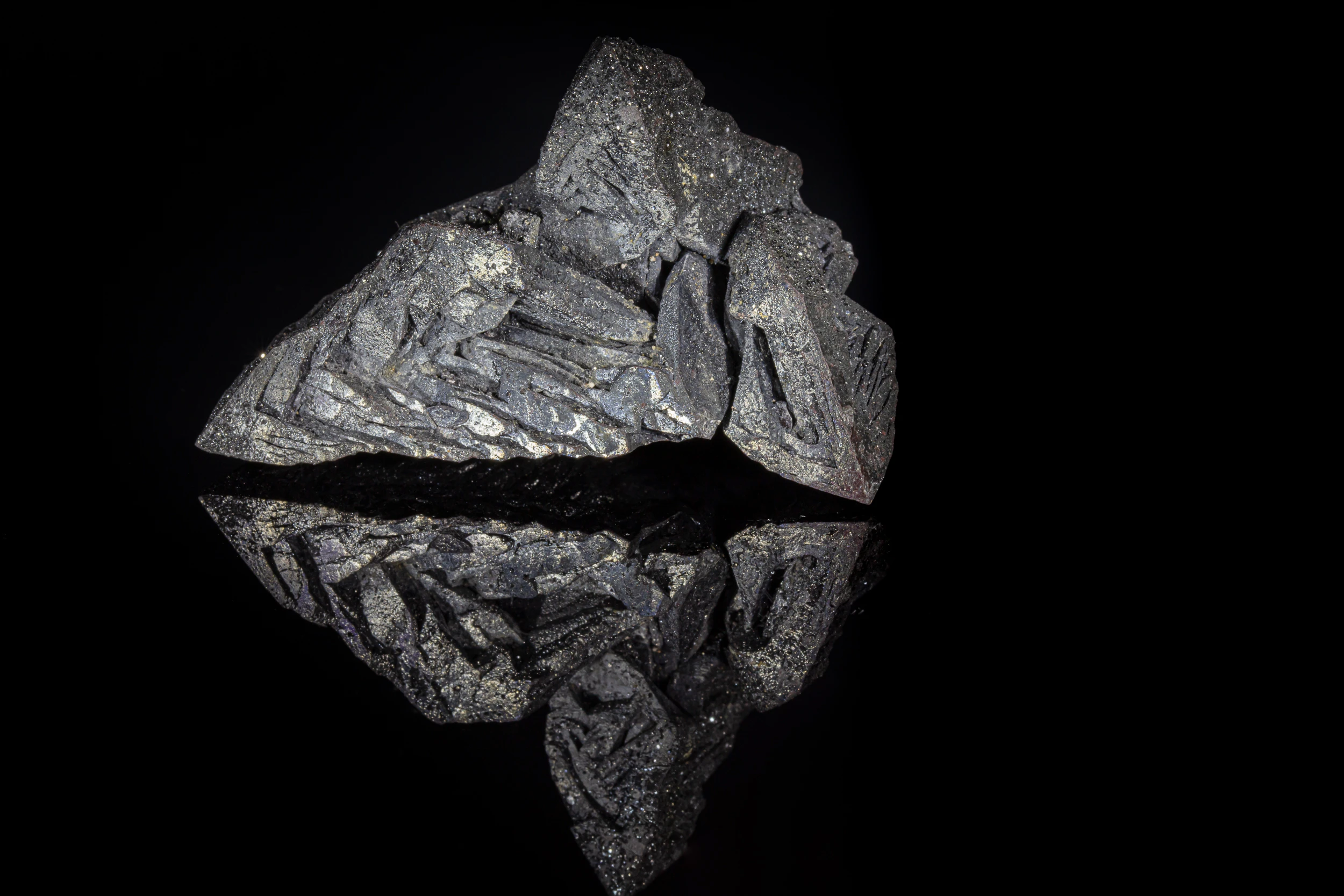
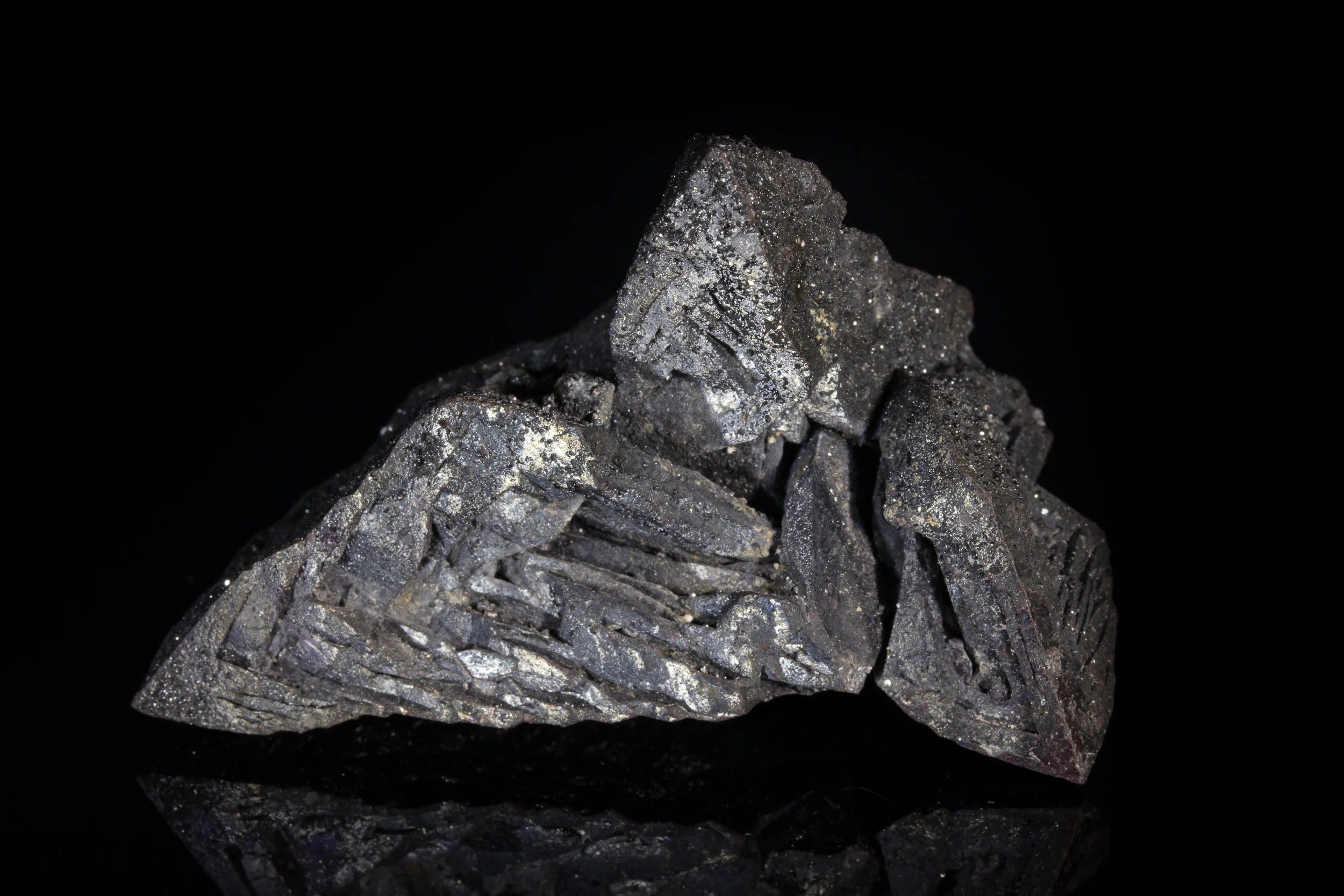
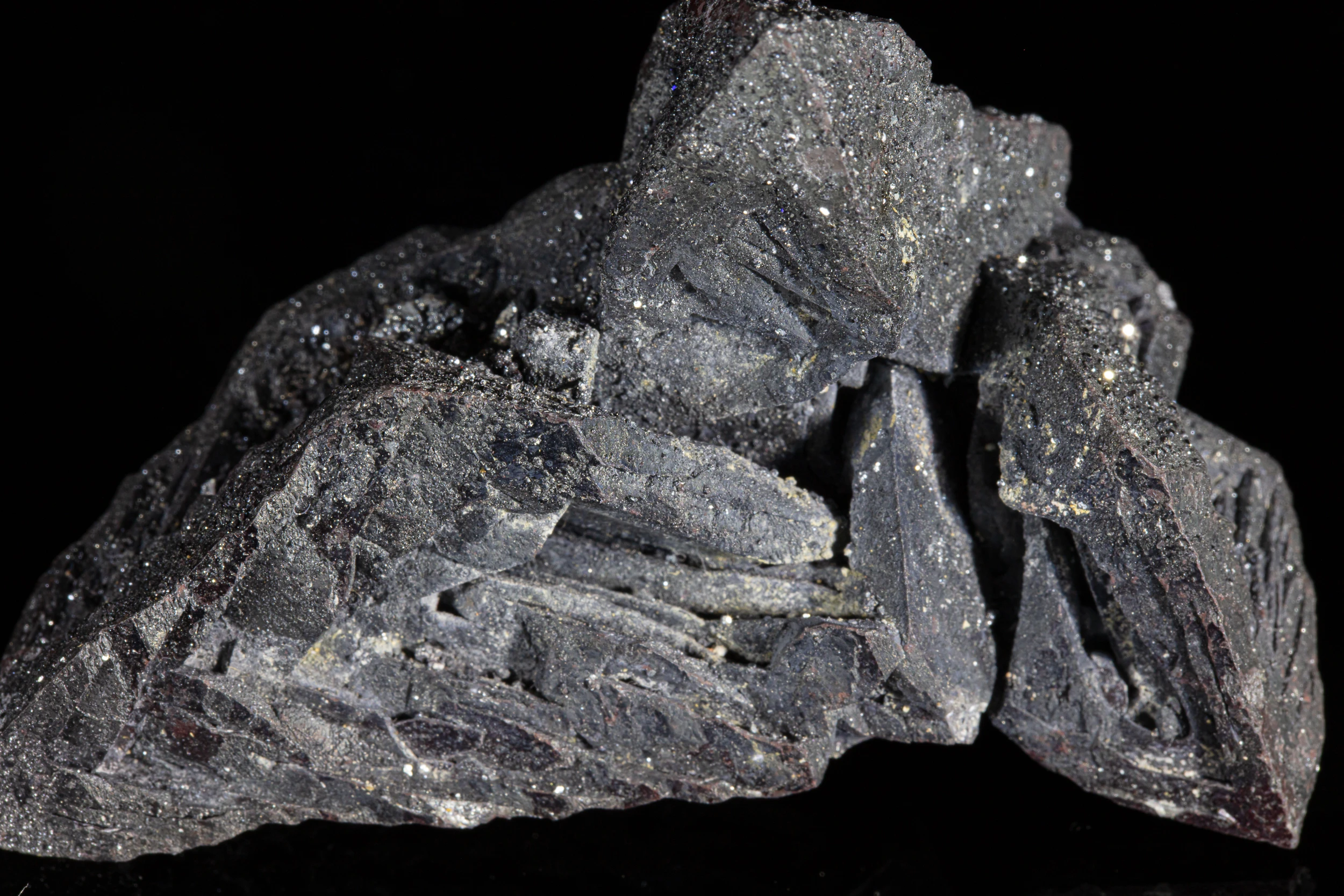
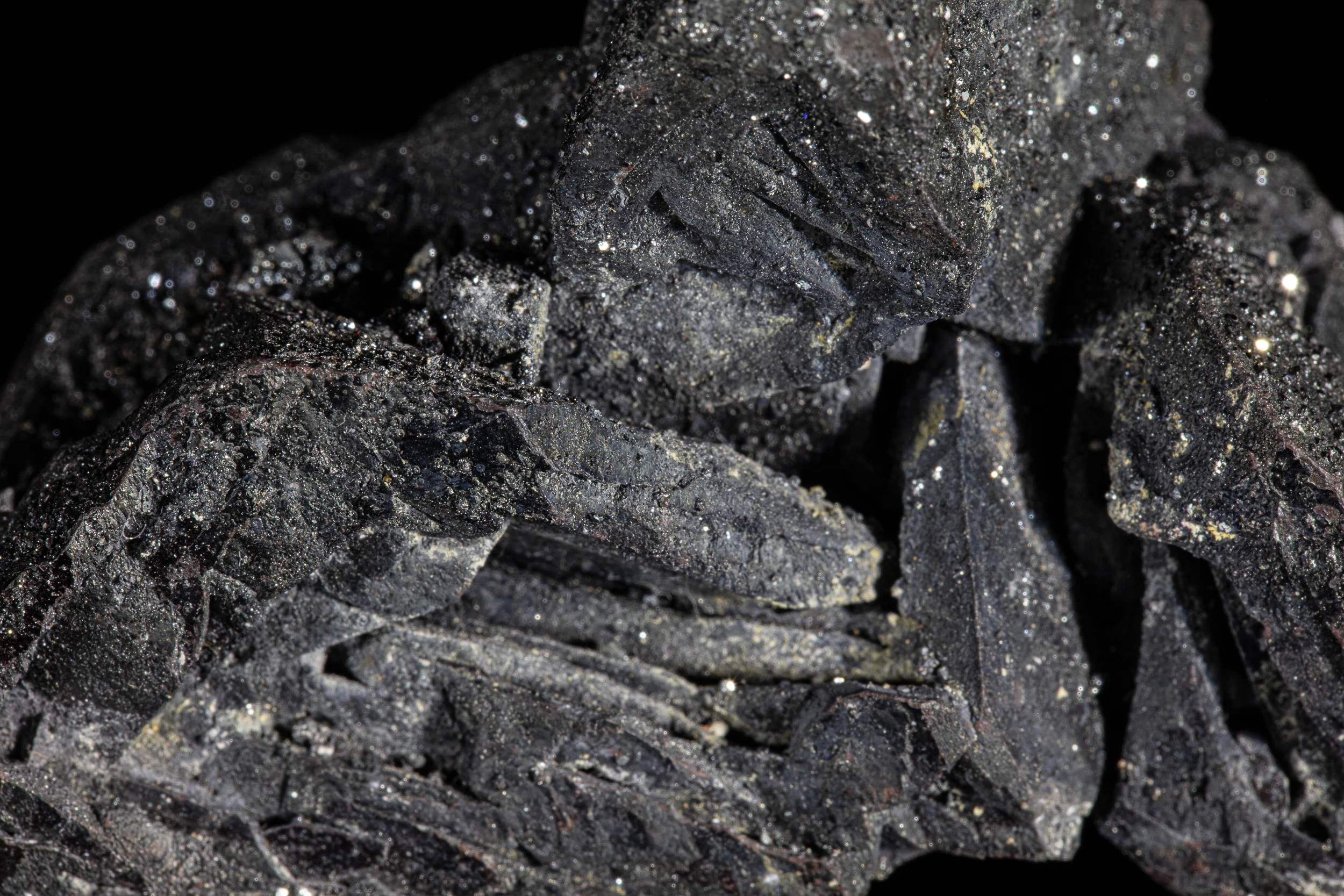
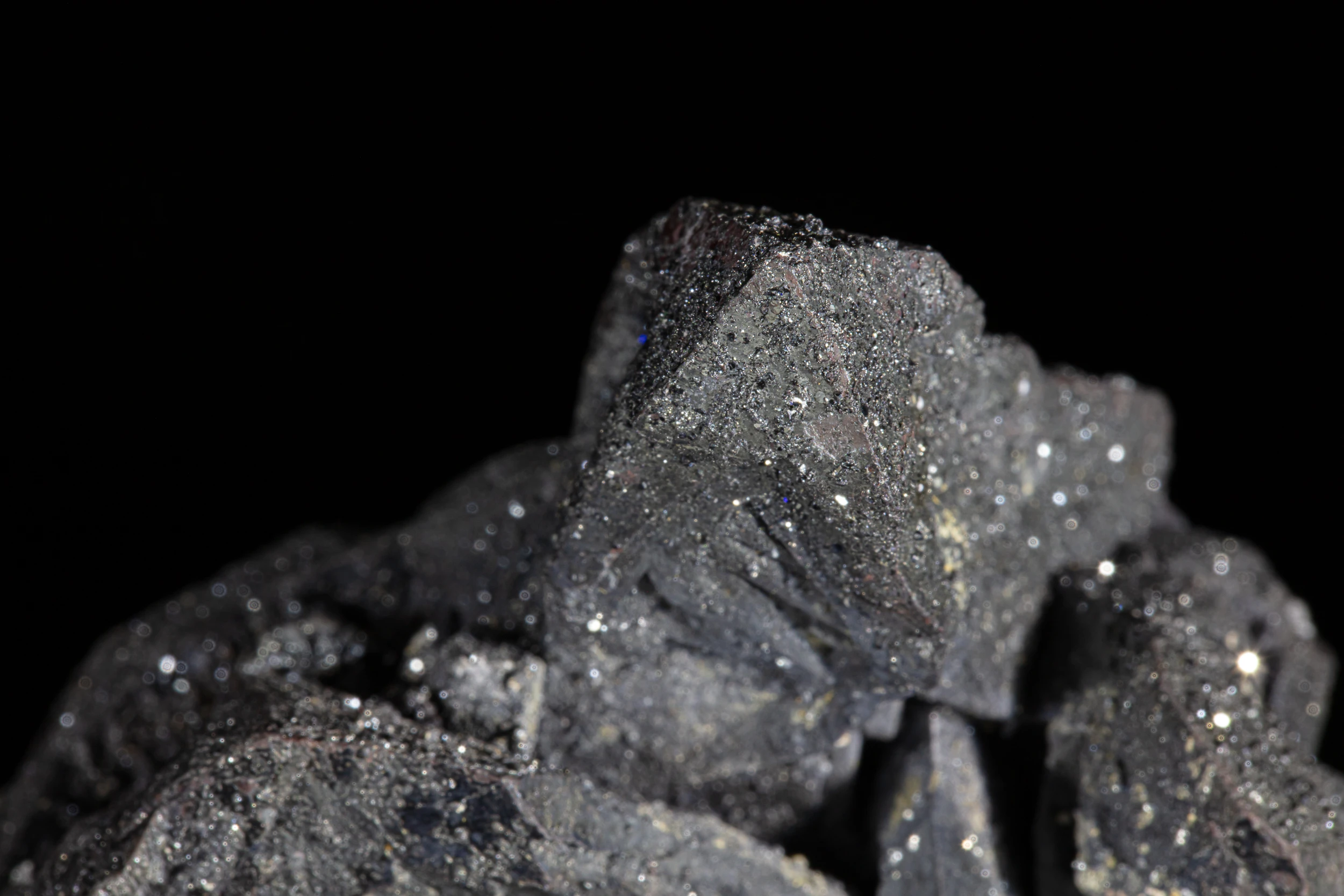
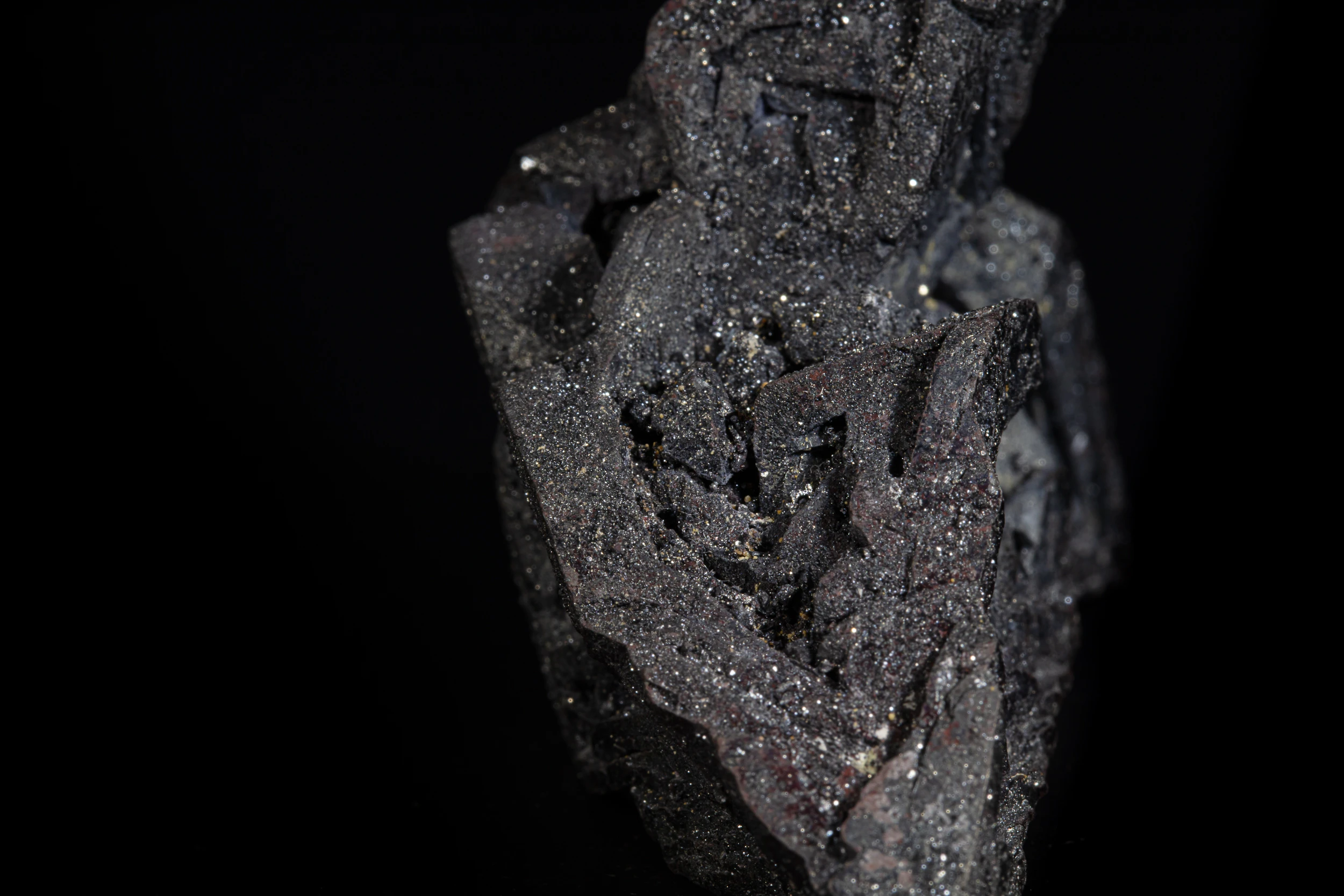
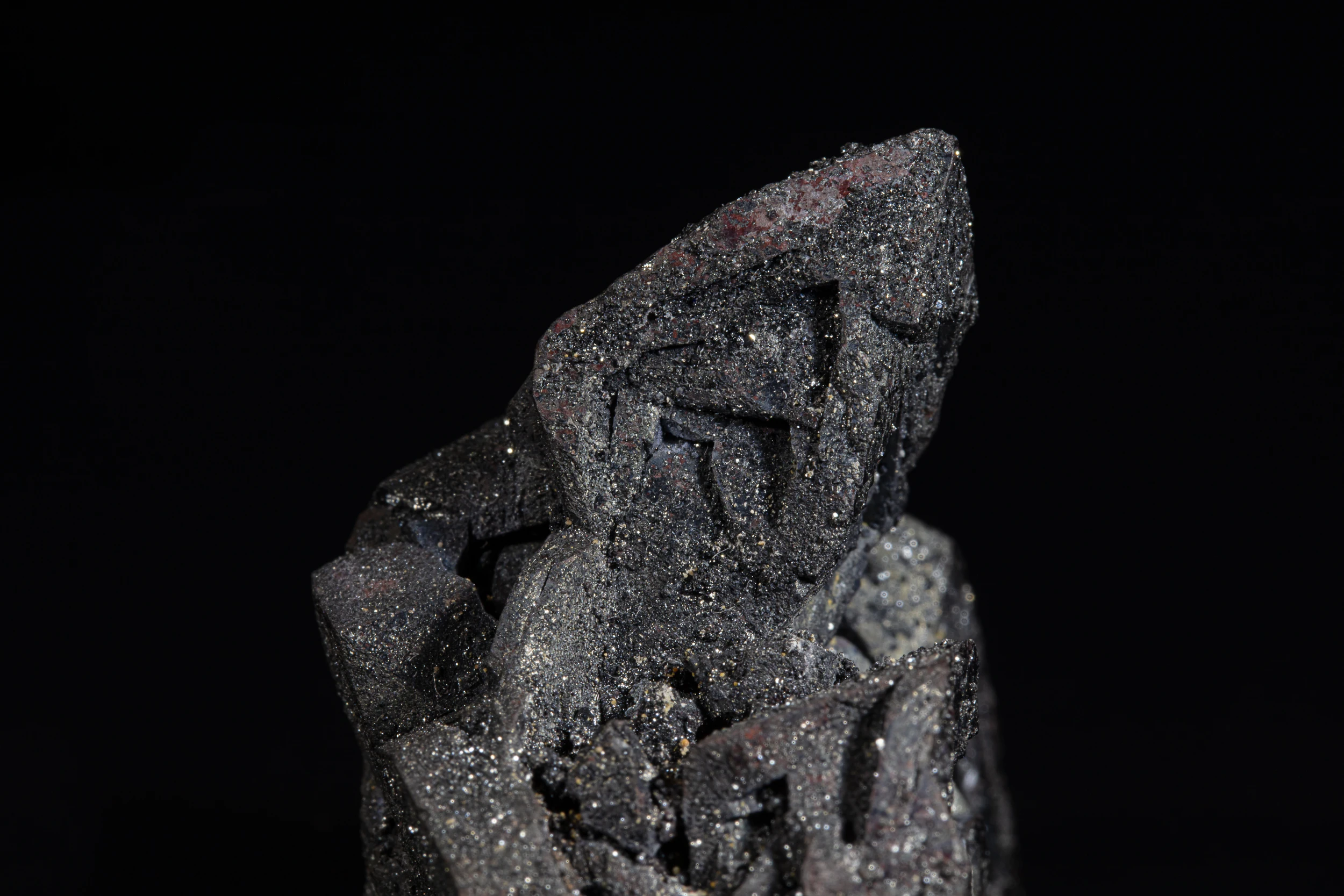
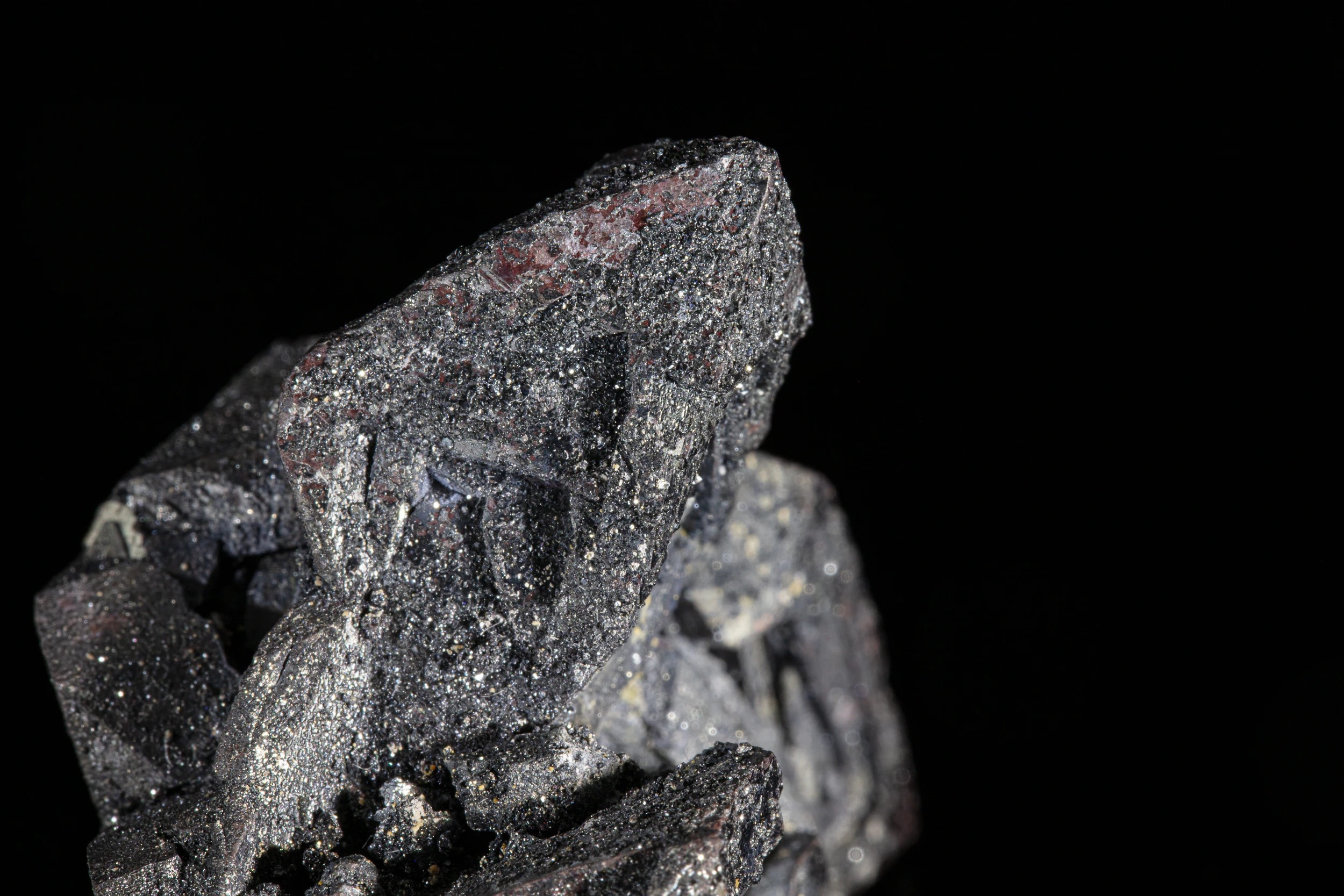
Hematite ps. Magnetite

The Specimen

Cabinet: Small Cabinet (4.5 - 7 cm) – Size: 6.3 x 4.6 x 2.7 cm Origin: Payún Matrú volcano, La Payunia, Malargüe Department, Mendoza – Argentina

Notes

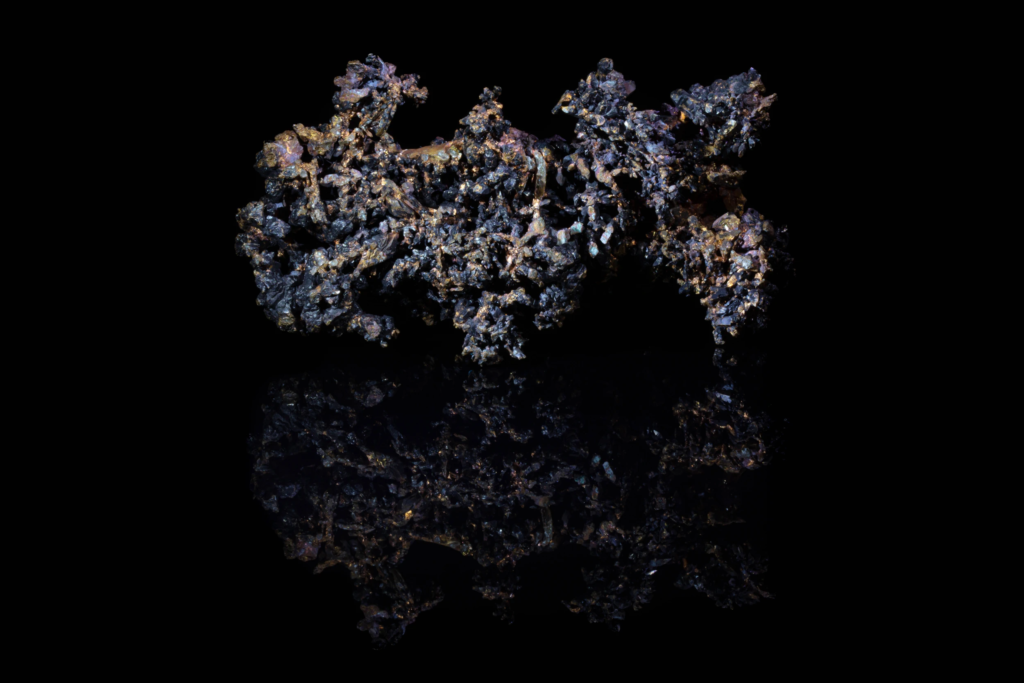
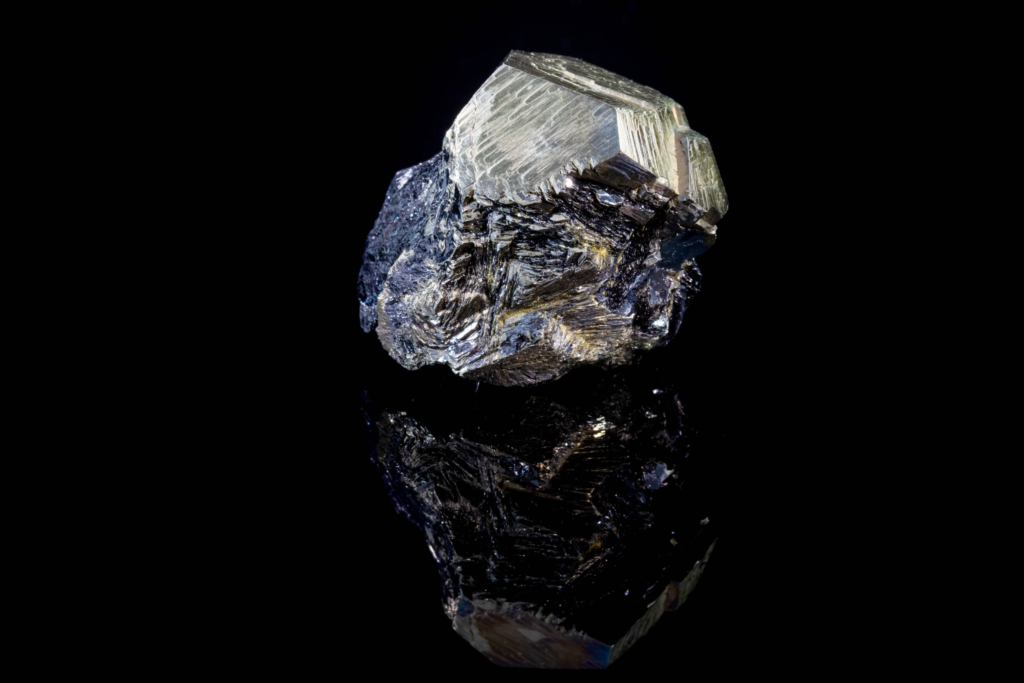
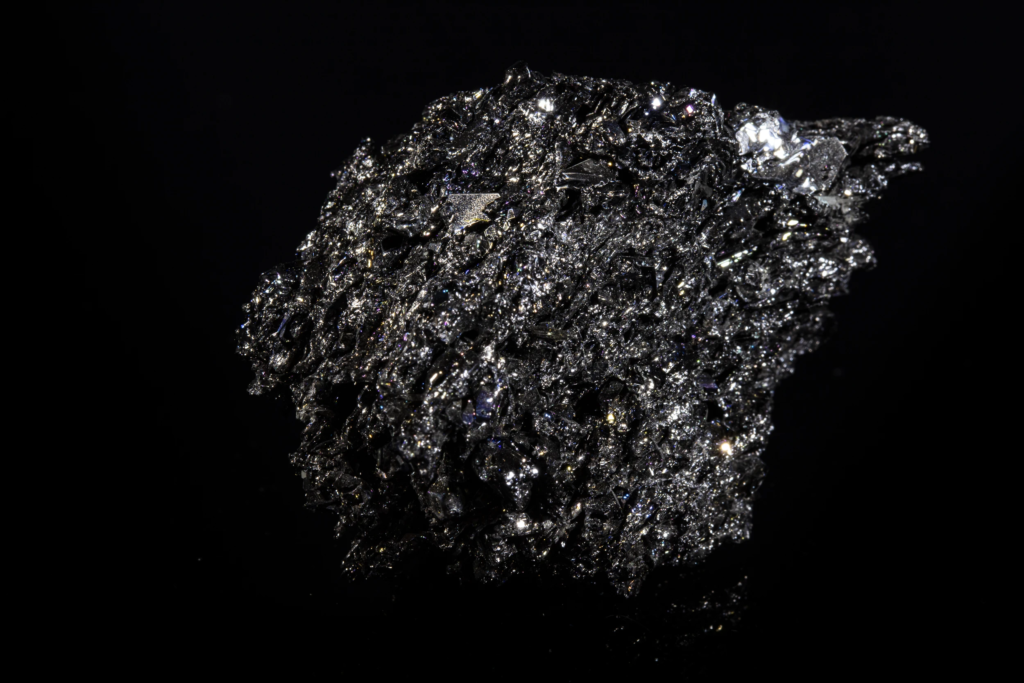
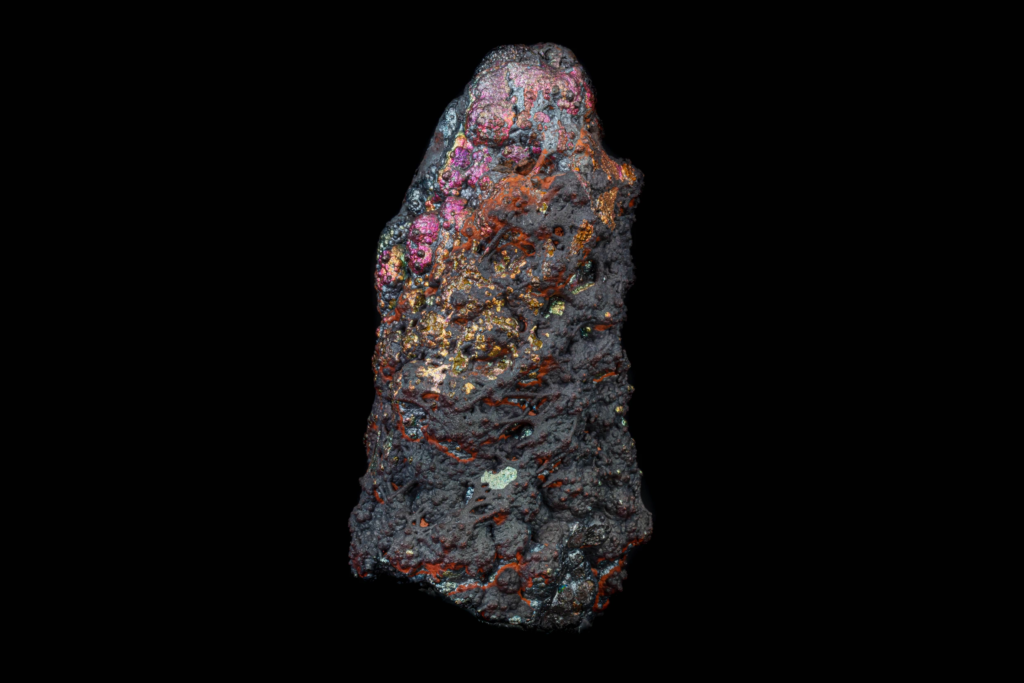
This specimen comes from the Payún Matrú volcano, a shield volcano in the La Payunia provincial reserve, in the Malargüe Department of southern Mendoza Province, Argentina. In the local language, Payún means "bearded" and Matrú means "goat." Its volcanic field also holds the Pampas Onduladas lava flow, the longest Quaternary lava flow in the world. These crystals formed around volcanic gas vents: magnetite first grew as octahedra, then hematite replaced it while keeping its exact shape. Such a replacement is called a pseudomorph, and hematite after magnetite is also known as martite. This floater, complete all around, is a cluster of sharp, hoppered octahedra whose stepped, skeletal faces look hollowed out. Tiny bright flakes make the gray surface sparkle; on specimens from this volcano, they are a second generation of small hematite crystals. According to the dealer, it comes from a second find, made a few years after the first one in the late 1990s, and of even higher quality.

Mineral Species

Fe2O3
Elements: Iron, Oxygen
Class: Oxides
Crystal System: Trigonal
Hardness: 5-6
Orthoclase
Talc (1)Diamond (10)
About as hard as a steel knife blade.
Fe2+Fe3+2O4
Elements: Iron, Oxygen
Class: Oxides
Crystal System: Cubic
Hardness: 5.5-6.5
Orthoclase
Talc (1)Diamond (10)
Scratches glass. Harder than a steel knife.

Did you know?

HematiteHematite is named from the Greek for blood, and it keeps the secret well: a silvery or black specimen, scratched or powdered, leaves a vivid blood-red streak.

MagnetiteOrdinary magnetite is merely drawn to magnets, but a rare form, lodestone, is a natural magnet of its own. The leading idea is that lightning striking iron-rich rock delivers the jolt that magnetizes it.