Kröhnkite and Natrochalcite

The Specimen

Cabinet: Small Cabinet (4.5 - 7 cm) – Size: 5.7 x 4.6 x 4.3 cm Origin: Chuquicamata Mine, Calama, El Loa Province, Antofagasta Region – Chile

Notes

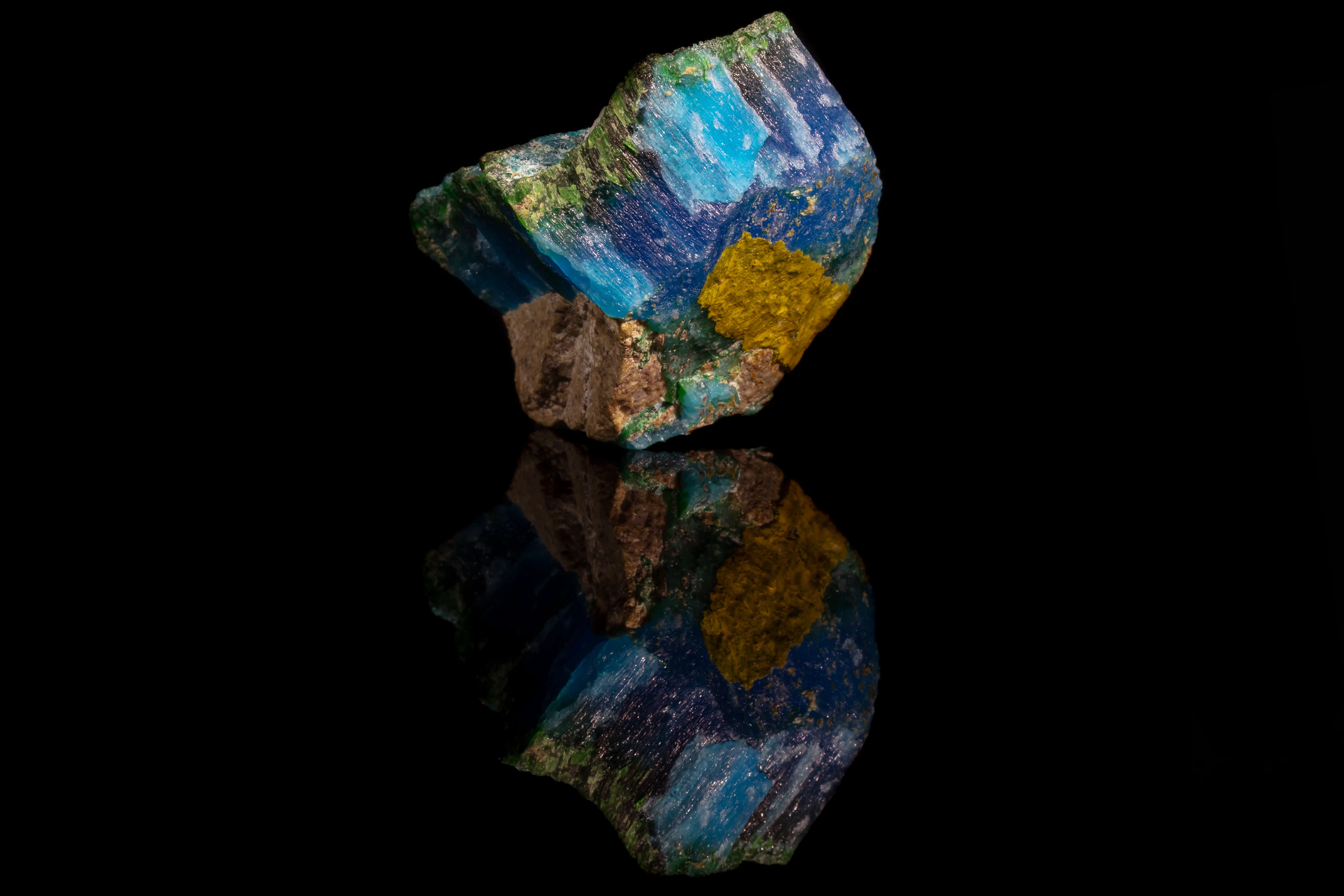
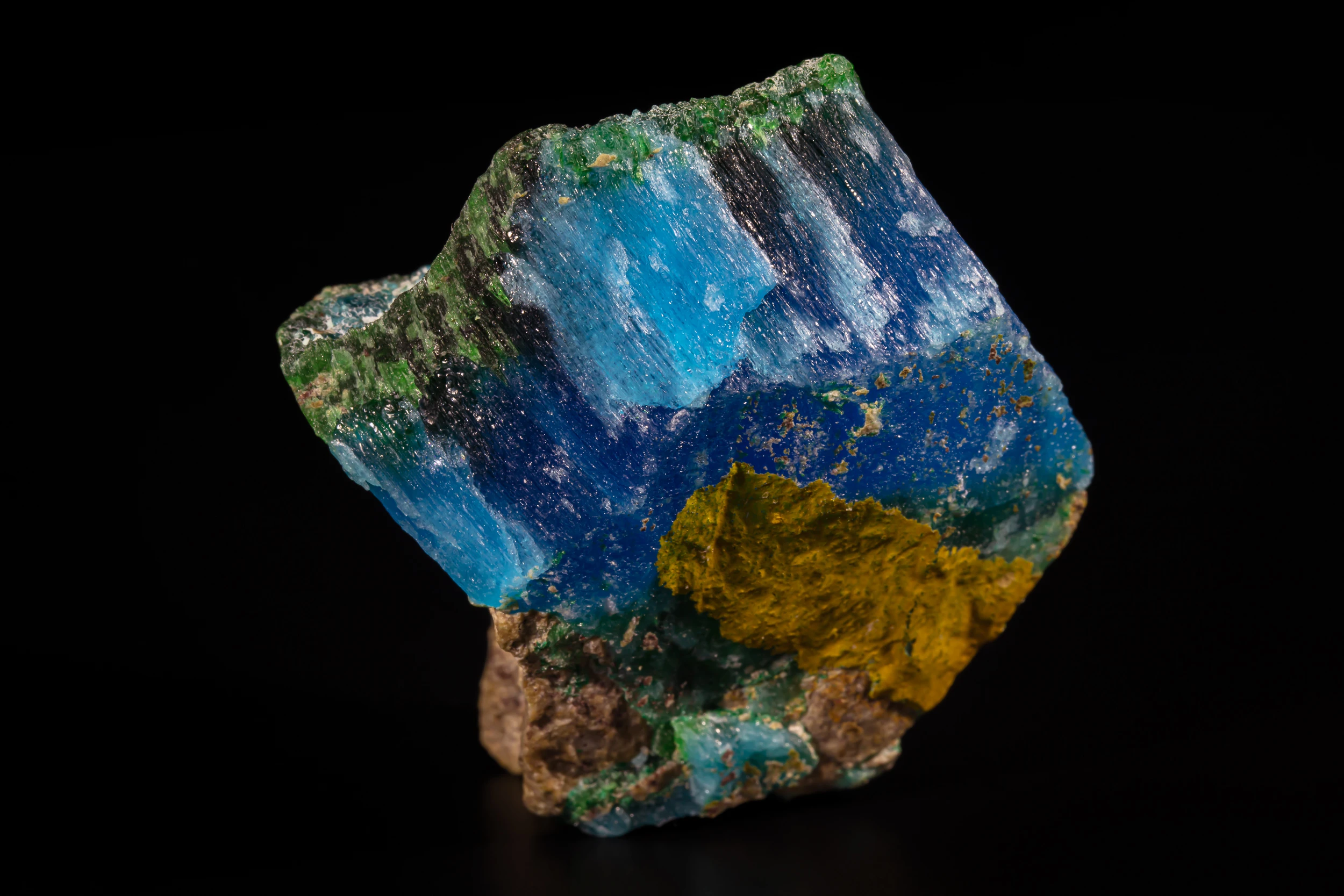
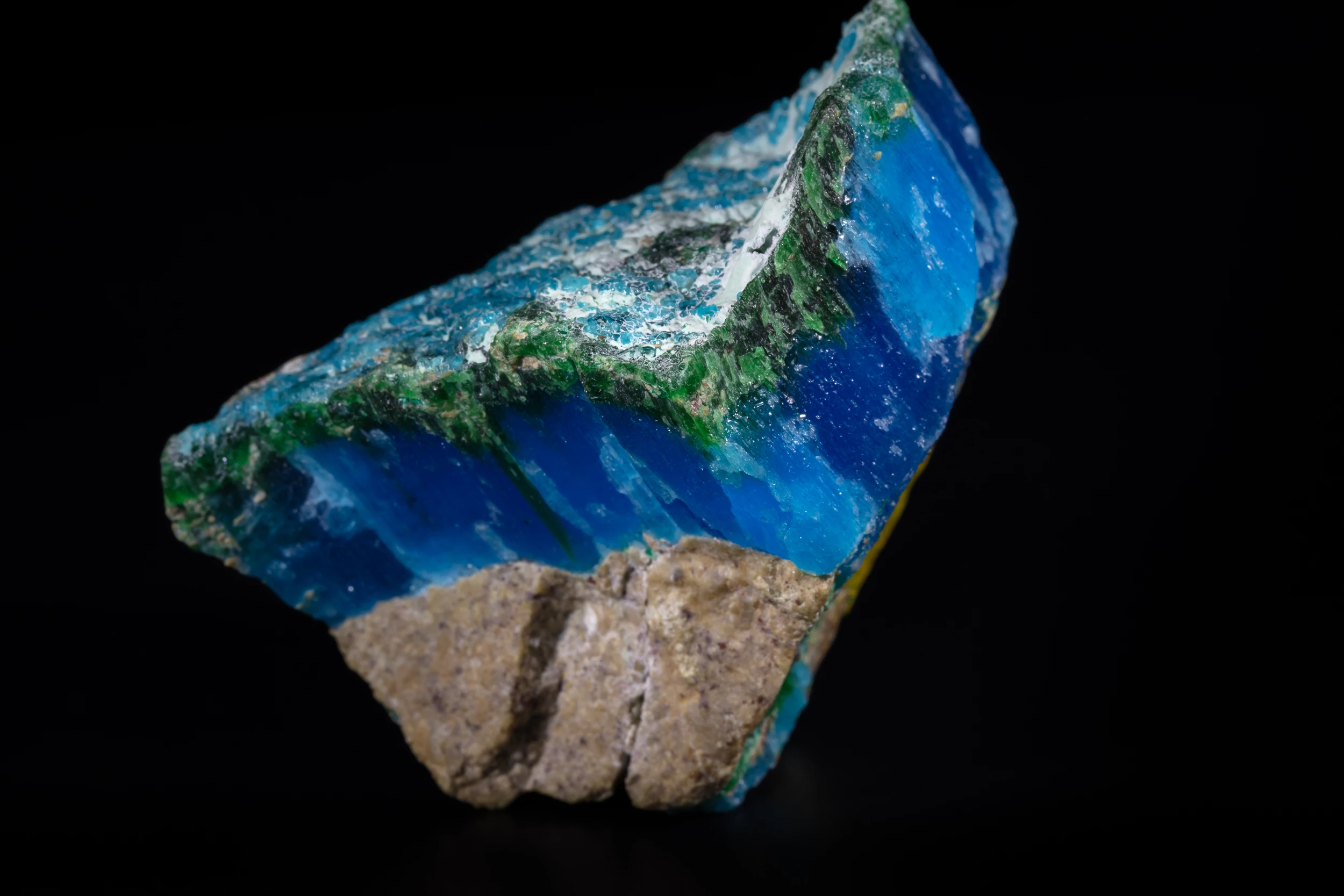
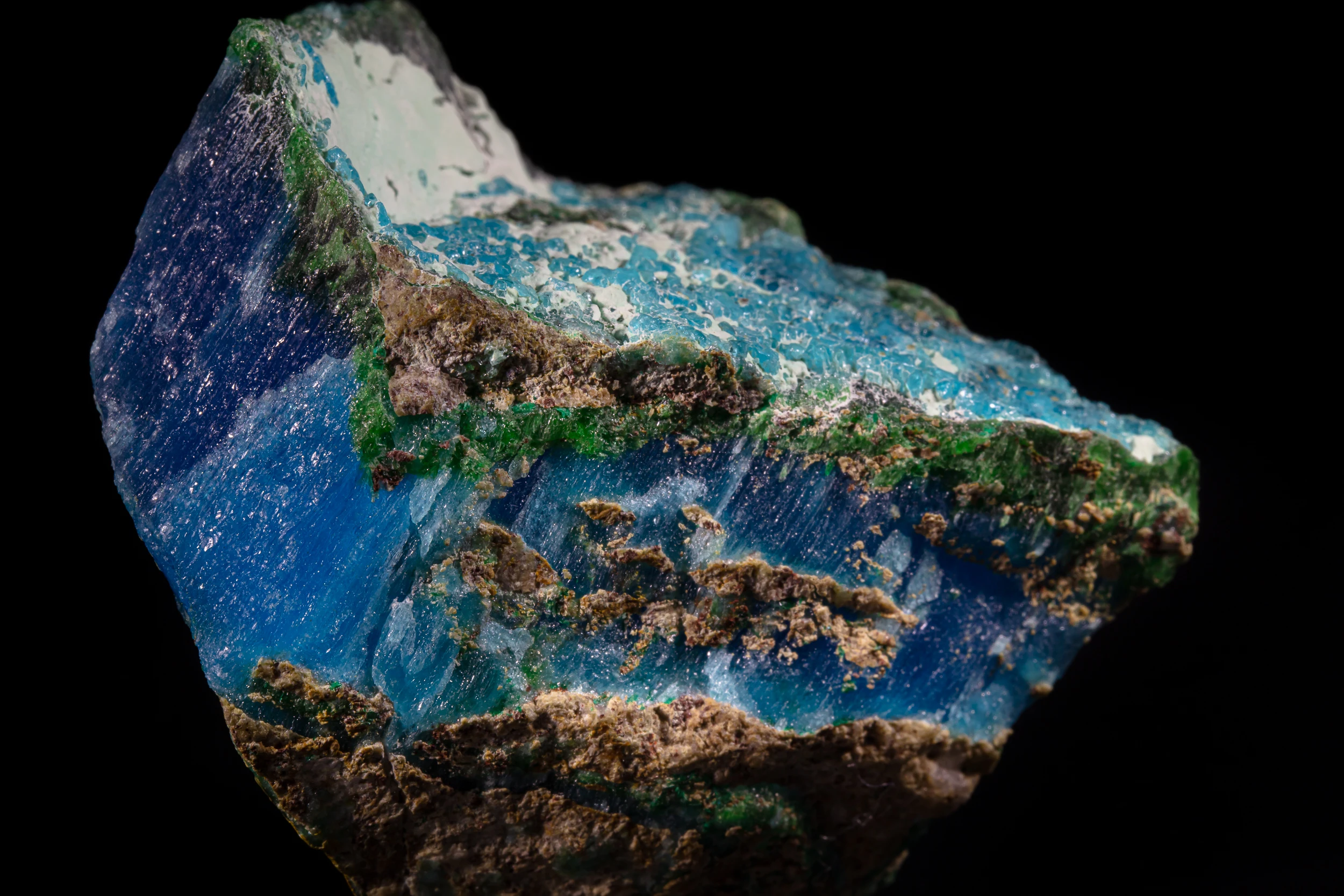
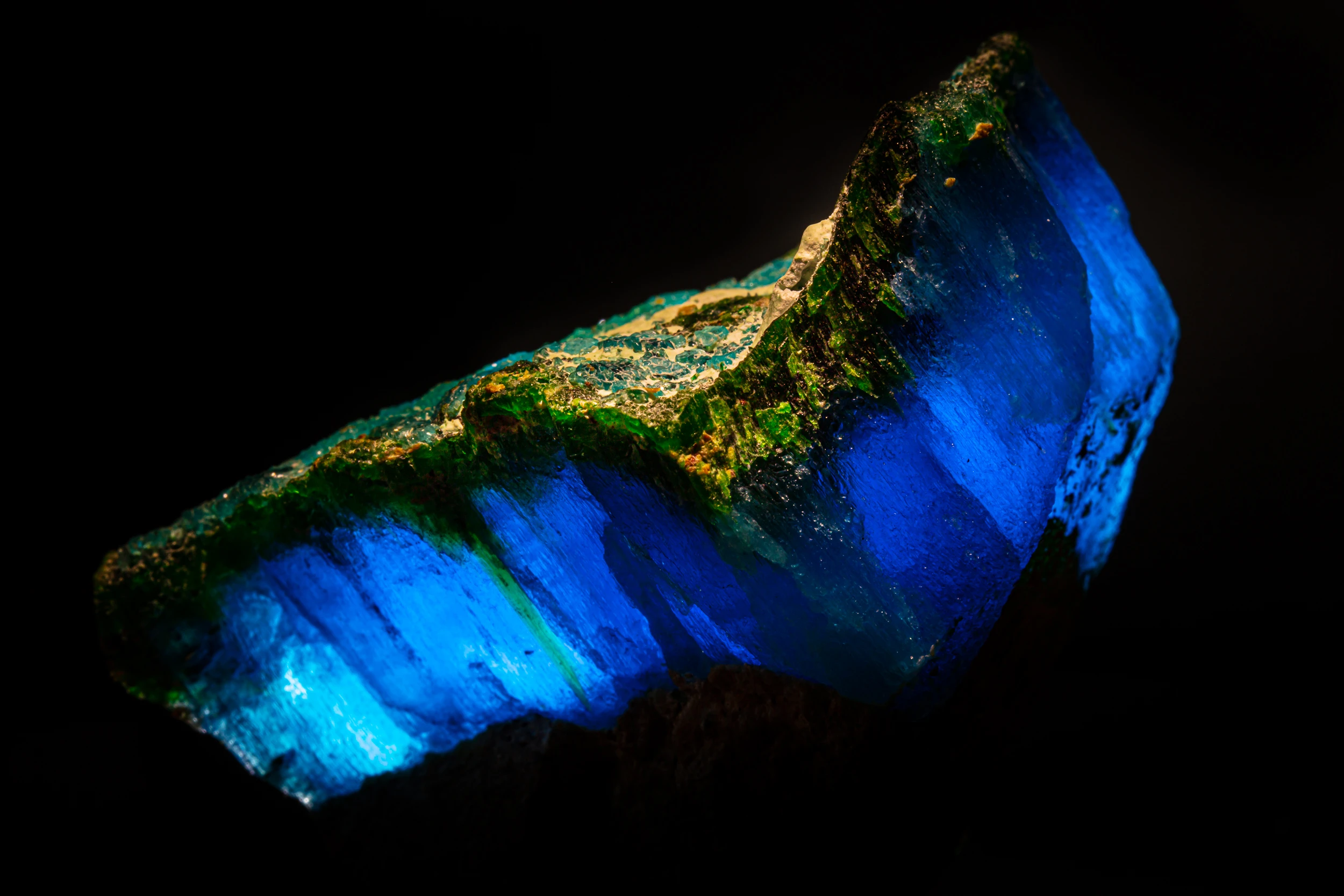
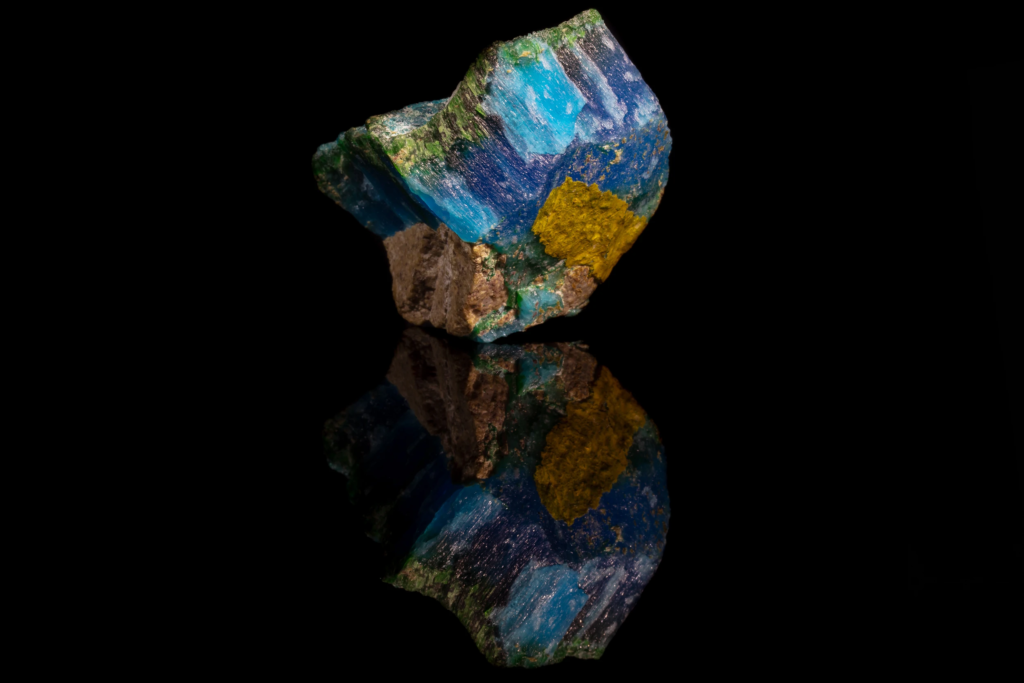
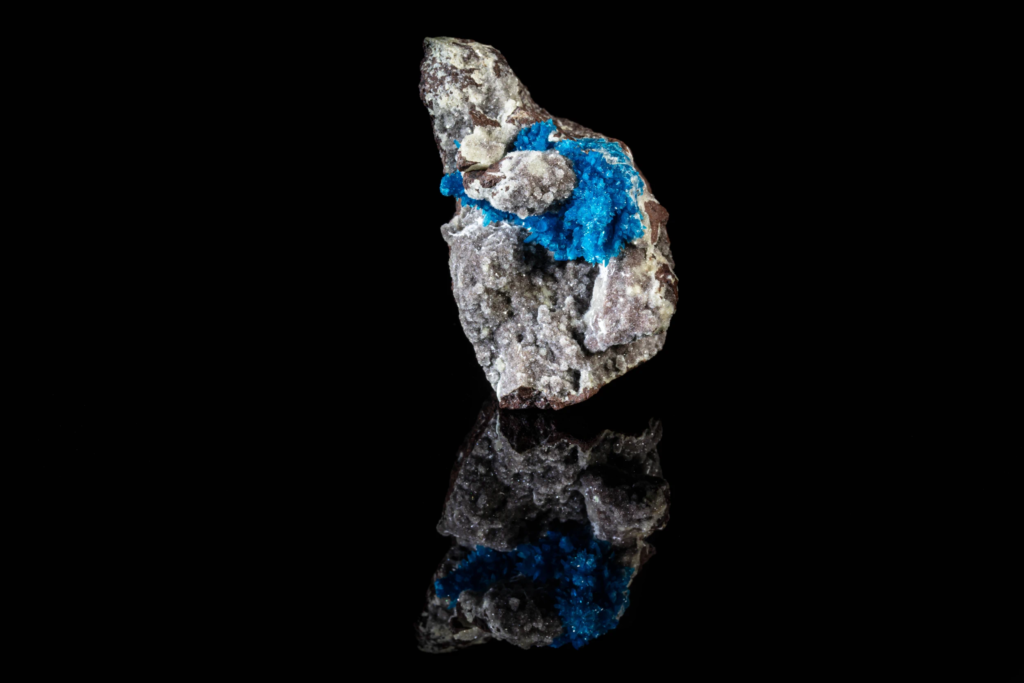
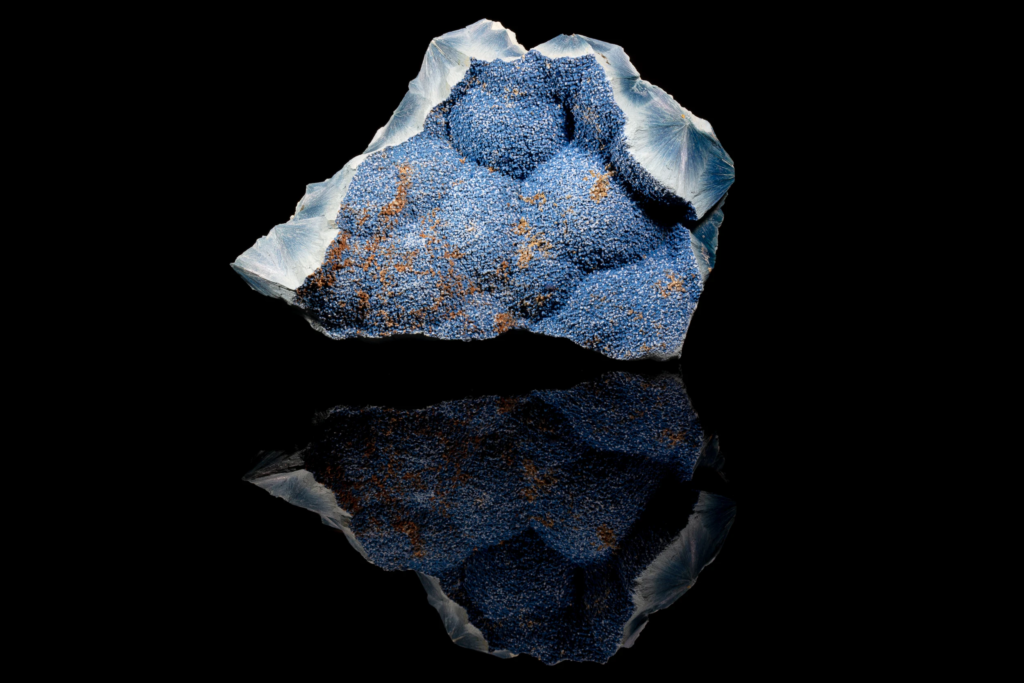
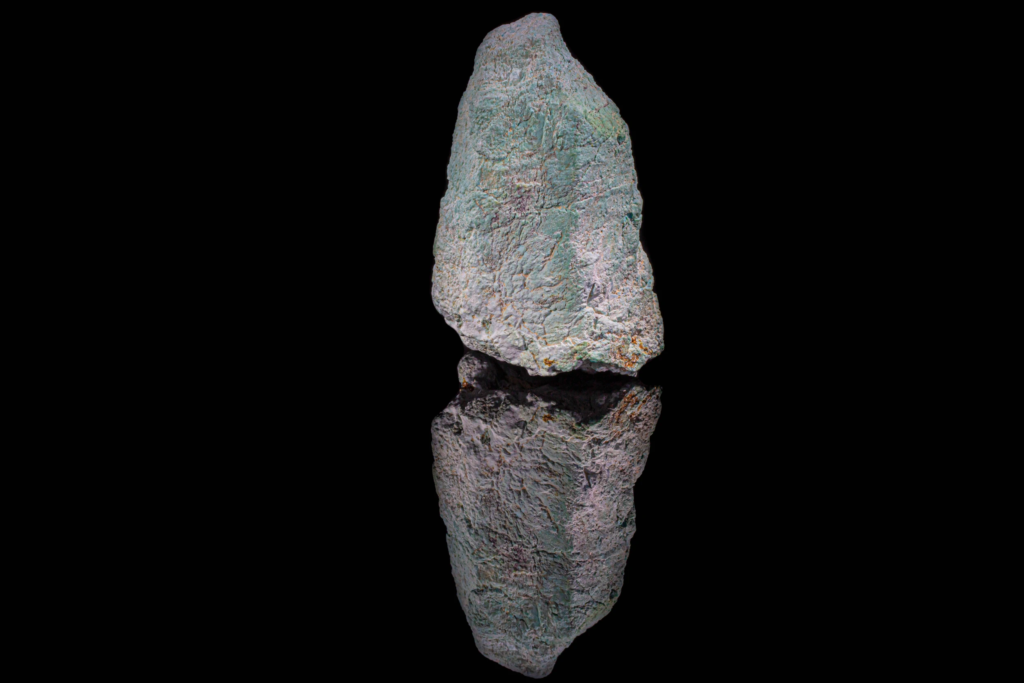
This specimen comes from Chuquicamata, near Calama in the Atacama Desert of northern Chile, one of the largest open-pit copper mines in the world. It has been worked since 1910, its pit reaches about 850 meters deep, second only to Bingham Canyon in Utah, and mining moved underground in 2019. Chuquicamata is the type locality of both minerals on this piece. Kröhnkite, a hydrated sodium copper sulfate, was described in 1876 by Ignacy Domeyko and named for Johann Kröhnke, a chemist working in Chile who first analyzed it. Natrochalcite, a sodium copper sulfate with hydroxyl and water, was described as a new mineral in 1908 by Charles Palache and Charles Warren; its name joins natrium, the Latin word for sodium, with the Greek word for copper. Here, a thick vein of translucent blue kröhnkite, built of parallel columns, makes up most of the specimen, and when lit from behind it glows a deep blue. A bright green crust of natrochalcite runs along the top edges and over parts of the surface. The kröhnkite rests on brownish rock at the base, and a patch of ocher-yellow material on the front has not been identified.

Mineral Species

Did you know?

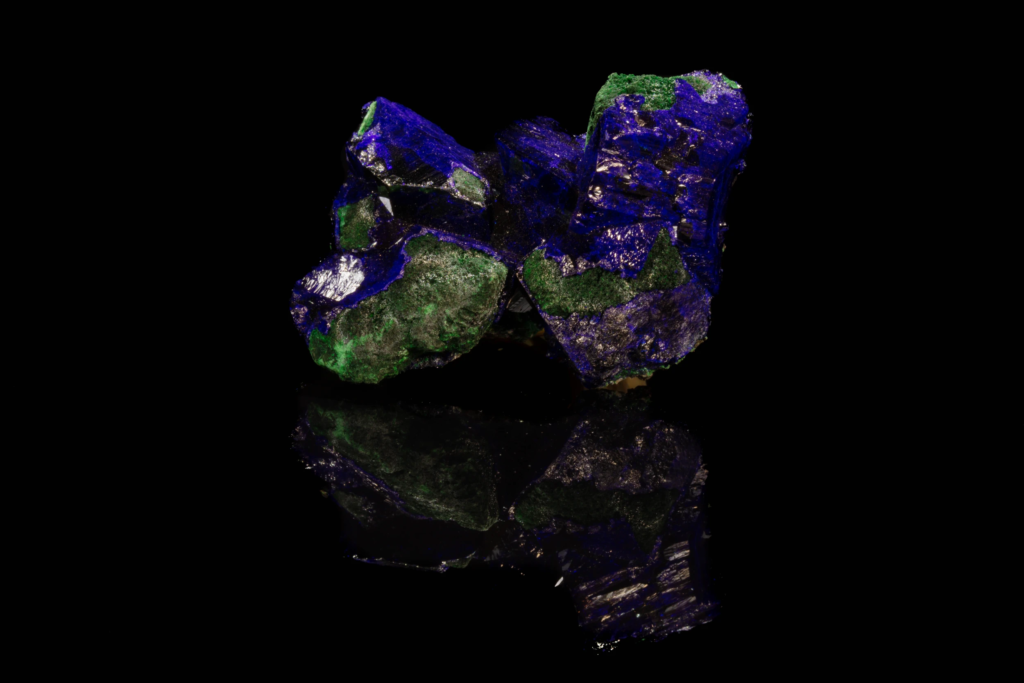
KröhnkiteKrohnkite is a sky-blue copper mineral from the Atacama Desert that survives only where it never rains. So soluble it would wash away in a single shower, it exists thanks to the driest air on Earth.

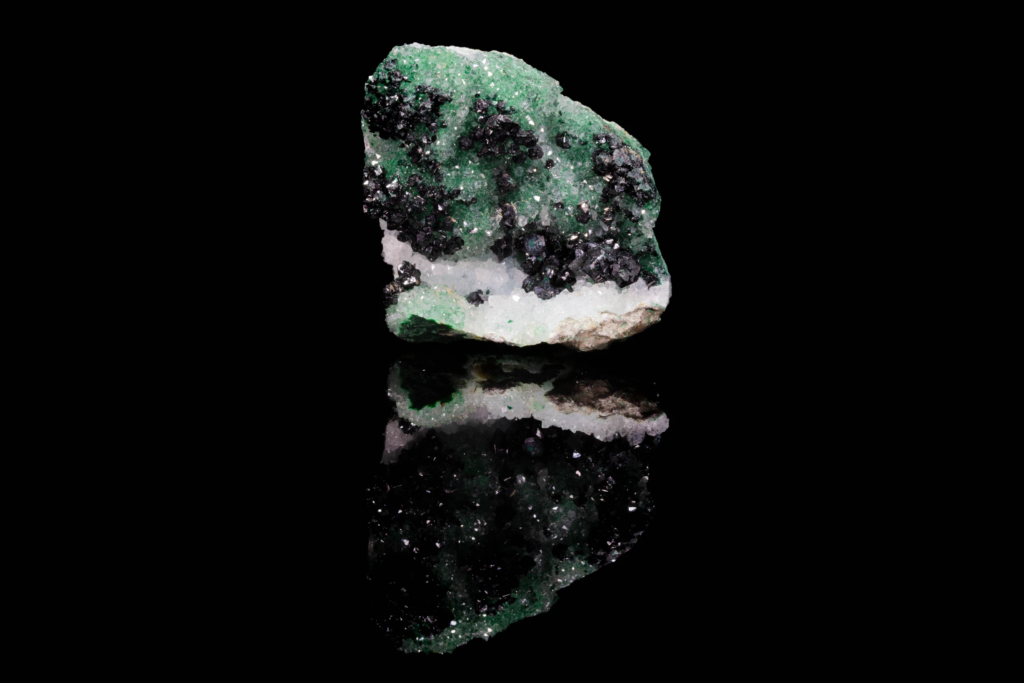
NatrochalciteNatrochalcite shows emerald-green crystals that look tropical, but it is a desert mineral through and through. Bound with the sodium of common salt, this copper sulfate forms only in the rainless Atacama.