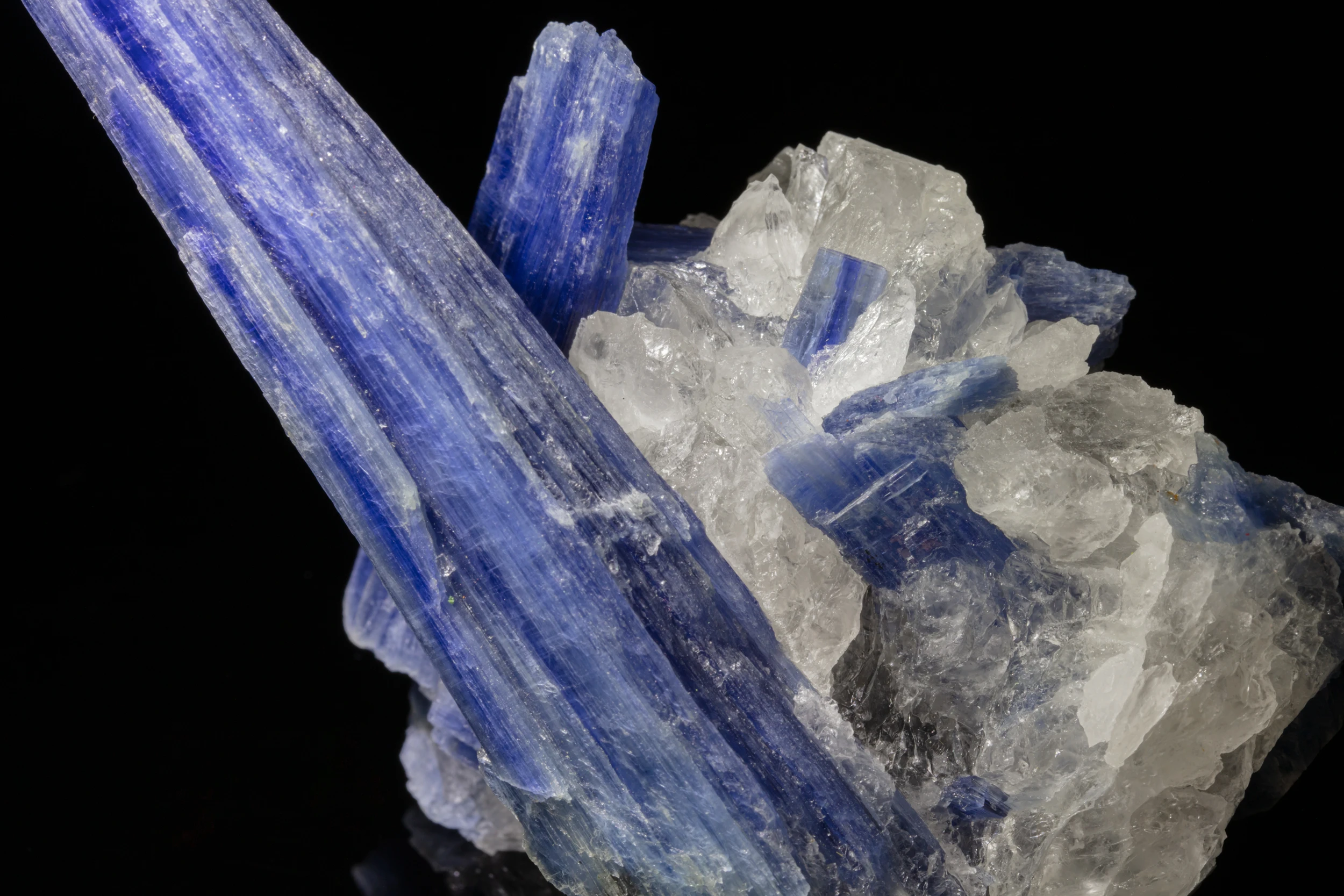
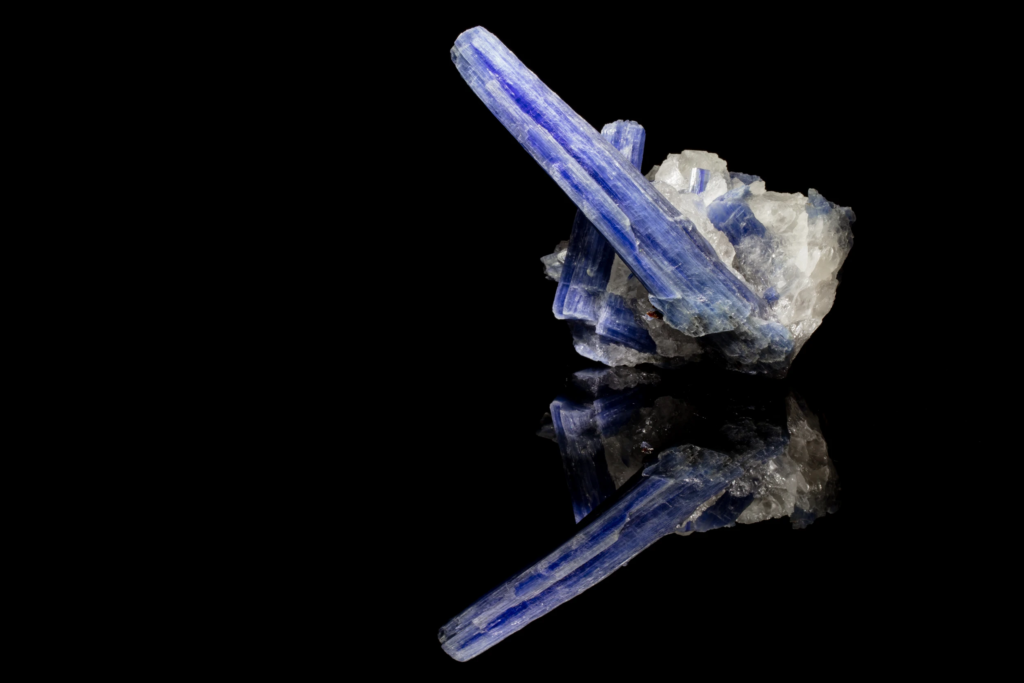
Kyanite with Quartz

The Specimen

Cabinet: Large Cabinet (10 cm+) – Size: 11.9 x 7.1 x 5.1 cm Origin: Barra do Salinas, Coronel Murta, Minas Gerais – Brazil

Notes

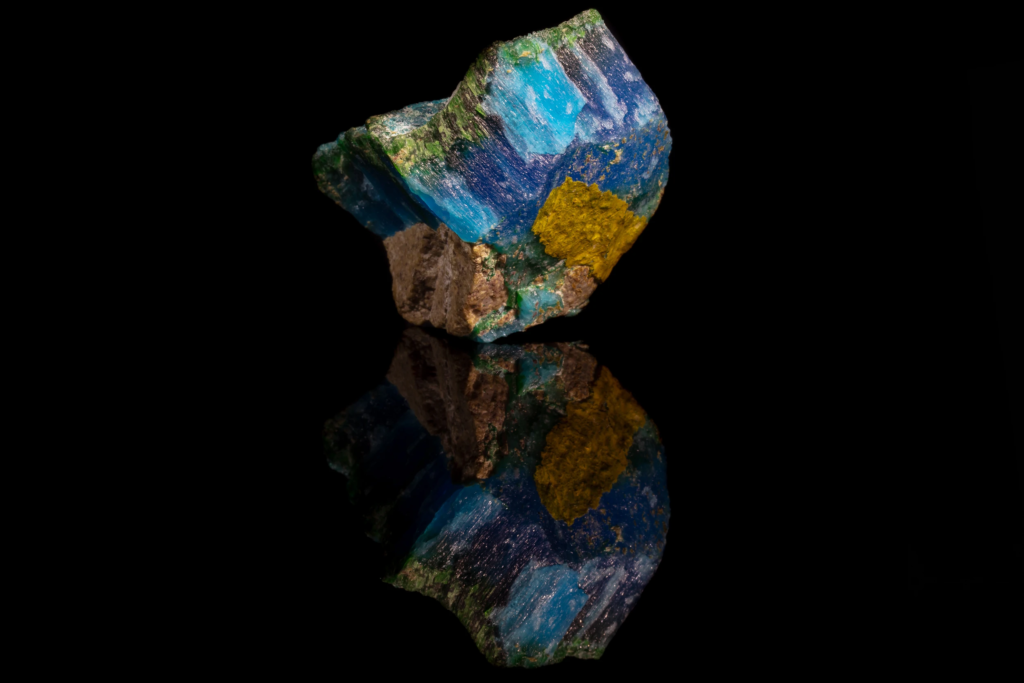
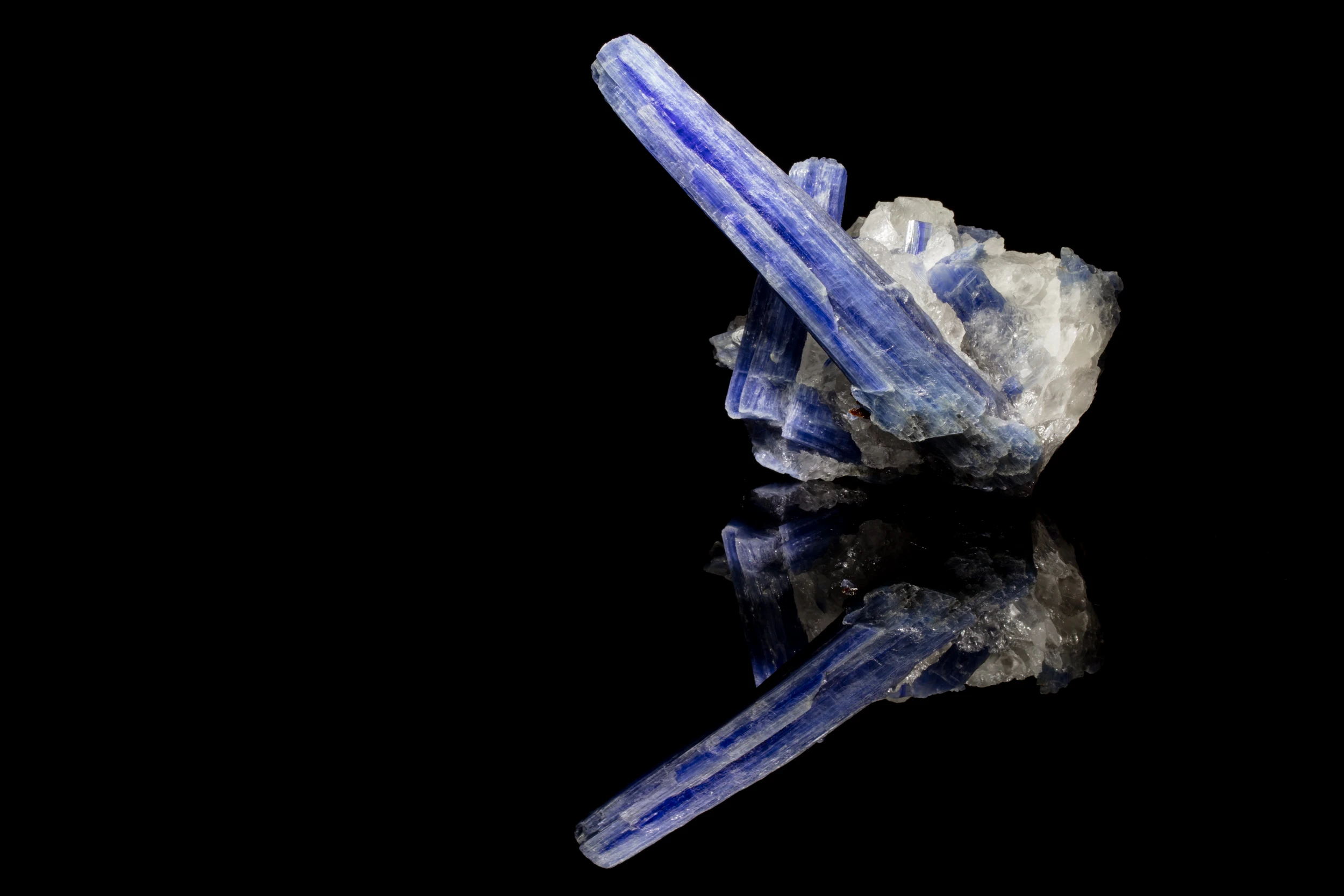
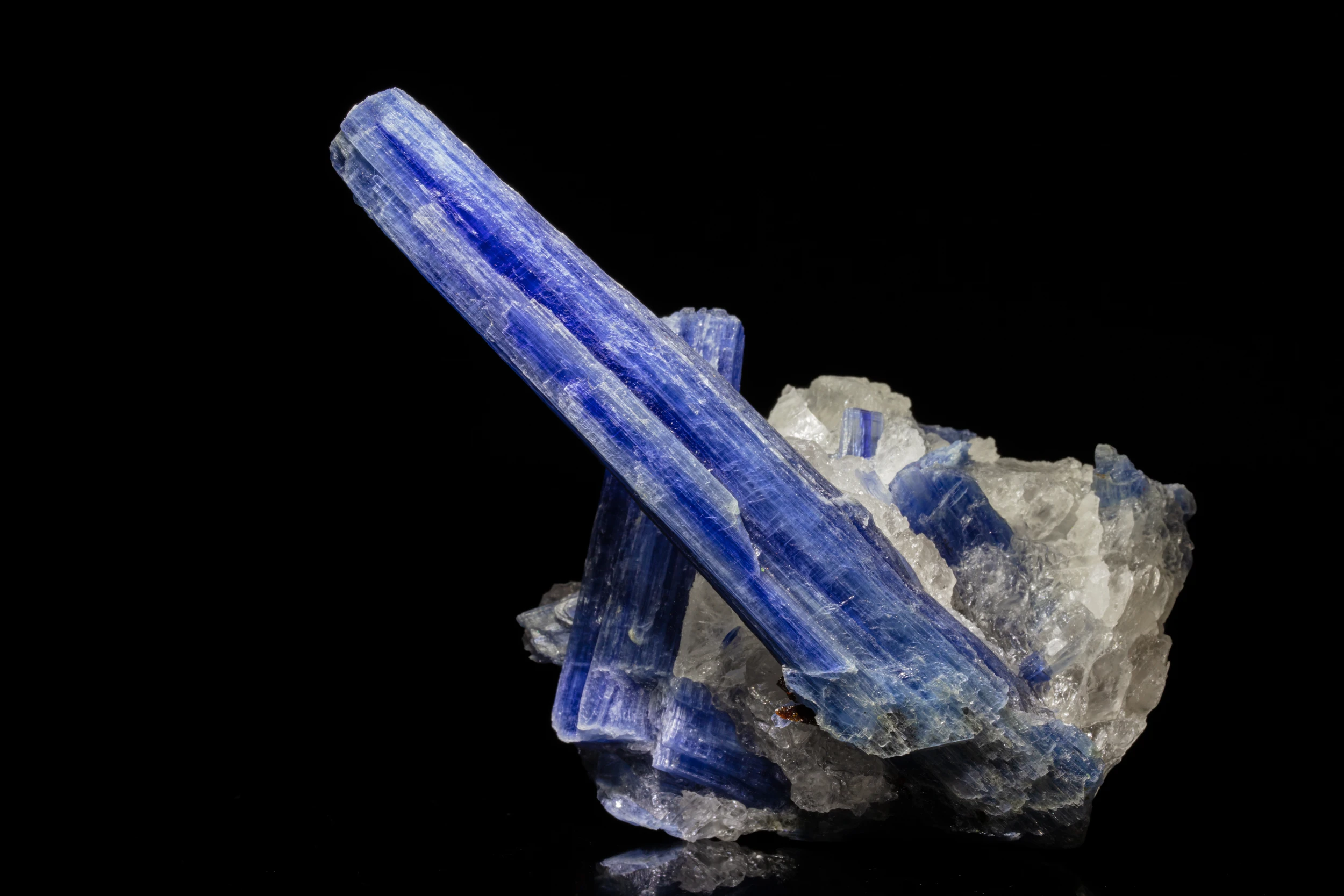
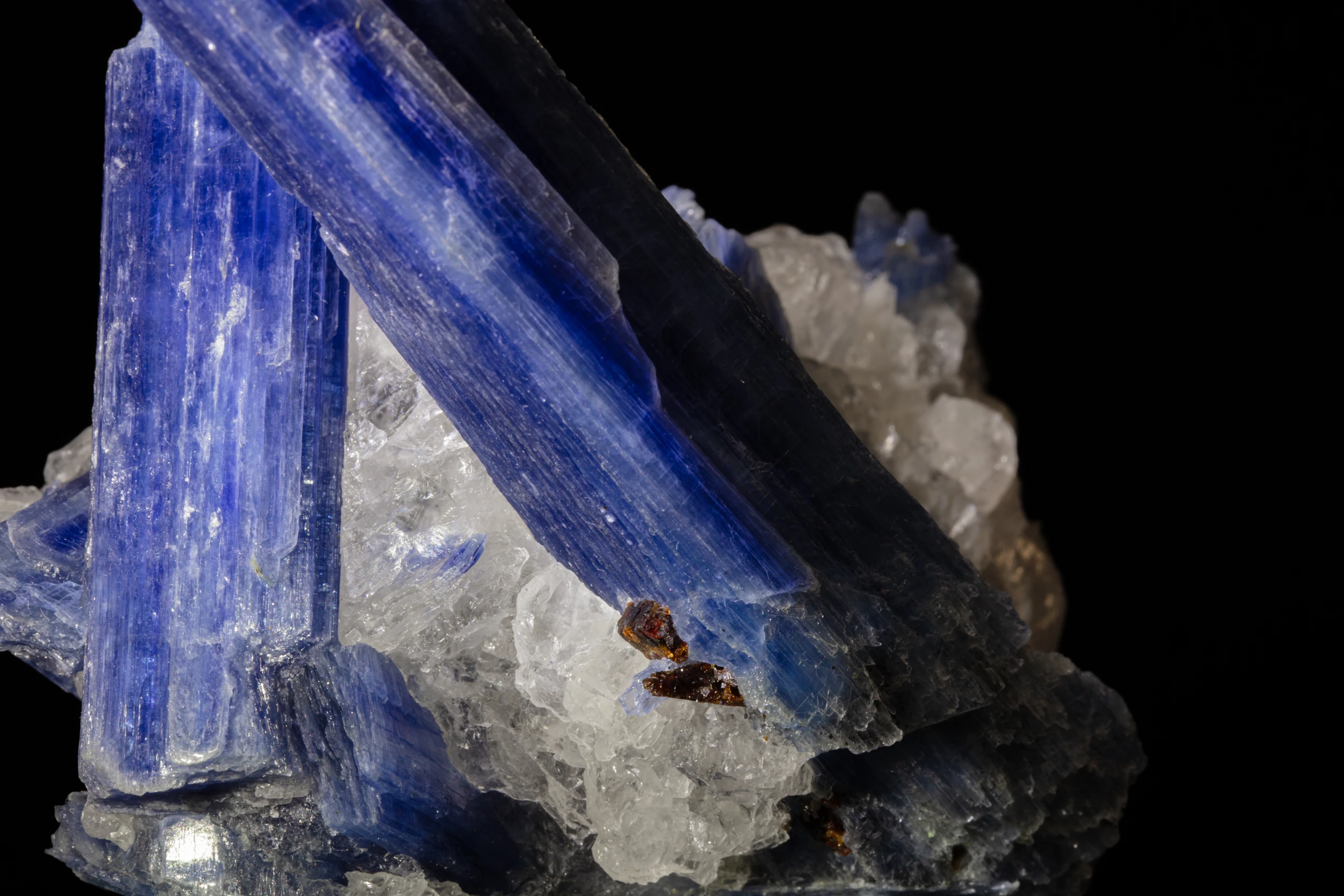
This specimen comes from Barra do Salinas, a district of the municipality of Coronel Murta in the Jequitinhonha valley of Minas Gerais, Brazil. The name means the mouth of the Salinas river, and the district is known for its granite pegmatites, a source of tourmaline, topaz, and many rarer species. It is also one of the best places in the world for kyanite: the blue blades from Barra do Salinas, usually set in white quartz, are counted among the finest of the species. Kyanite is an aluminum silicate, and its name comes from the Greek word for blue. It is one of three minerals with the same formula, along with andalusite and sillimanite; kyanite is the form that grows under high pressure, so geologists use it as a clue to how deeply a rock was once buried. Here, one long, terminated kyanite blade, rich cornflower blue with a glassy luster, rises diagonally across the whole specimen. A few shorter blue blades stand beside it and are partly set into a cluster of white quartz crystals at the base. Near the bottom of the large blade sits a small reddish-brown crystal; staurolite is recorded with kyanite at this locality and is a likely match, but it has not been tested.

Mineral Species

Did you know?

KyaniteKyanite breaks the rule that a mineral has one hardness. Along the length of a blade it is soft enough to mark with a knife, yet across the same crystal it will scratch steel.

QuartzPressing a quartz crystal makes it give off a precise electric beat, which is why it keeps time in nearly every watch and once tuned the radios of World War II, when good crystals were a strategic resource.