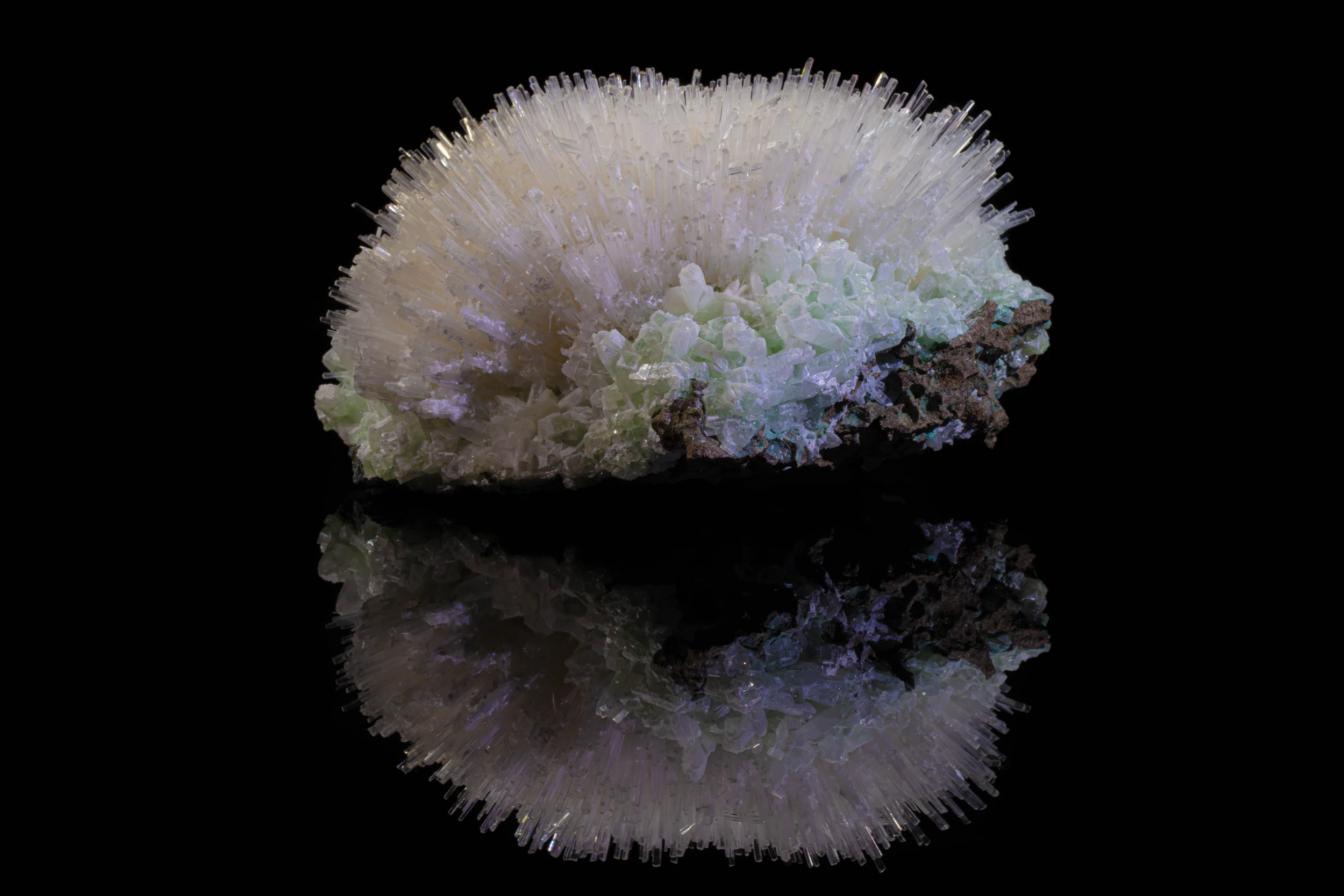
Mesolite on Apophyllite

The Specimen

Cabinet: Large Cabinet (10 cm+) Origin: Pune District, Maharashtra – India

Notes

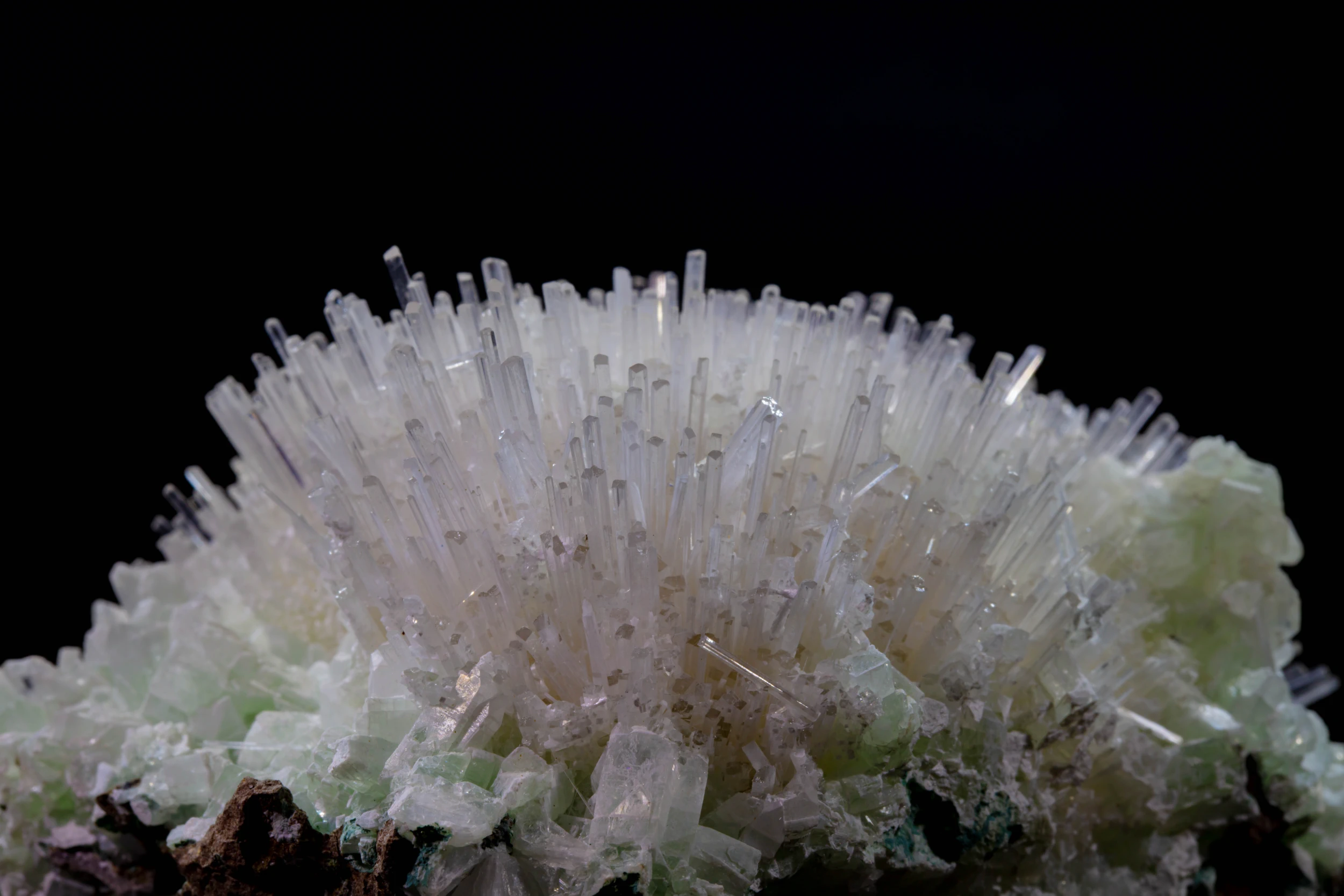
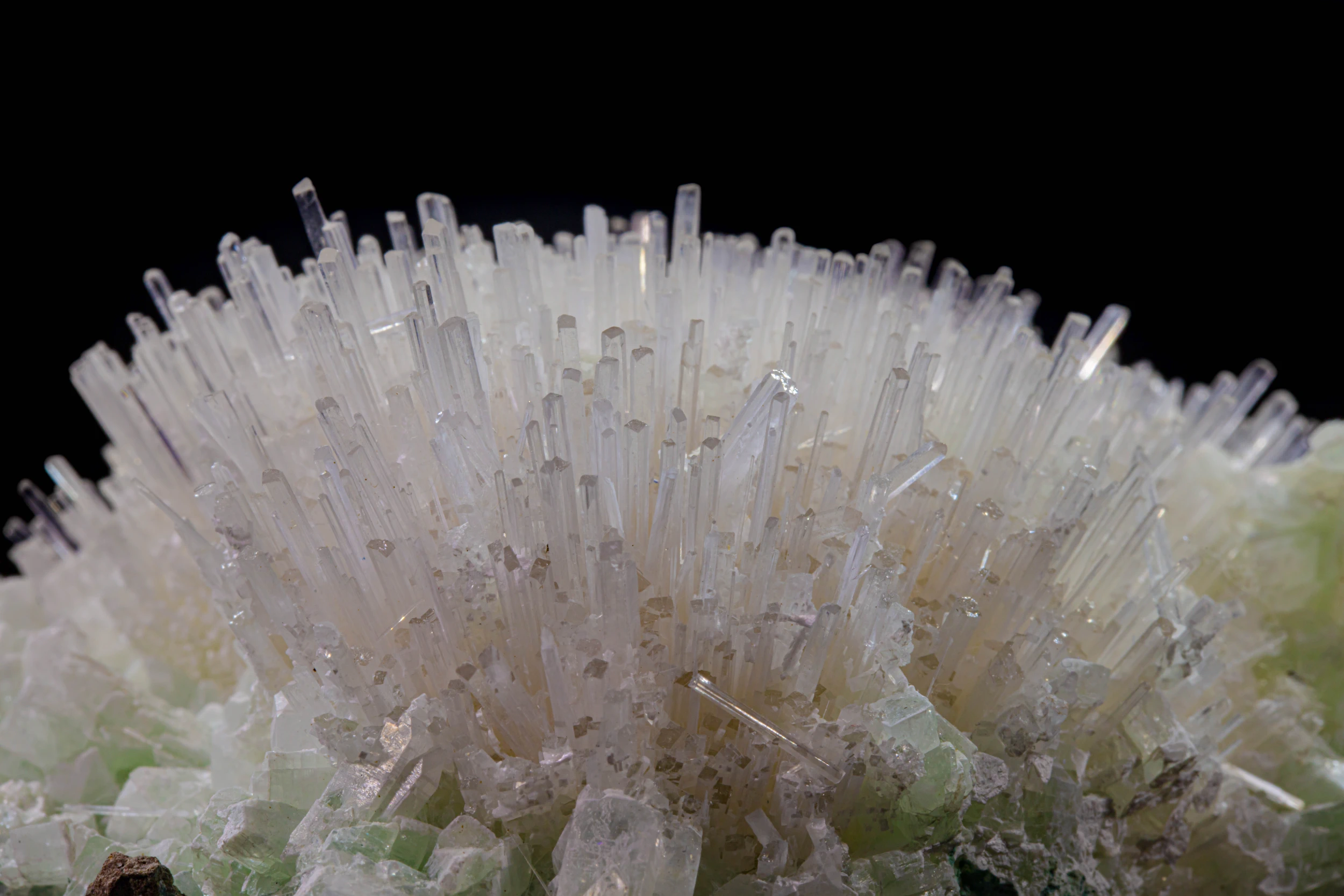
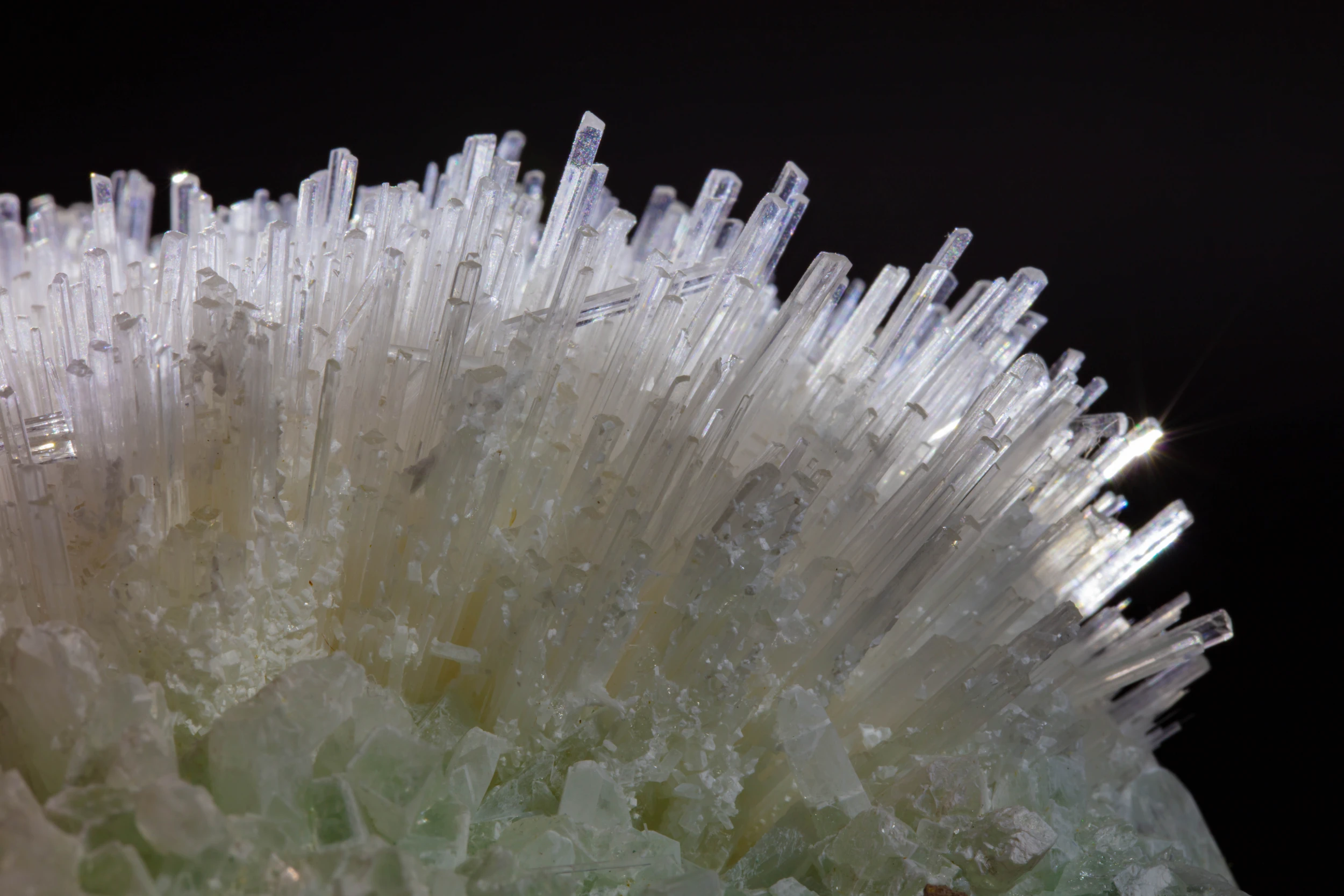
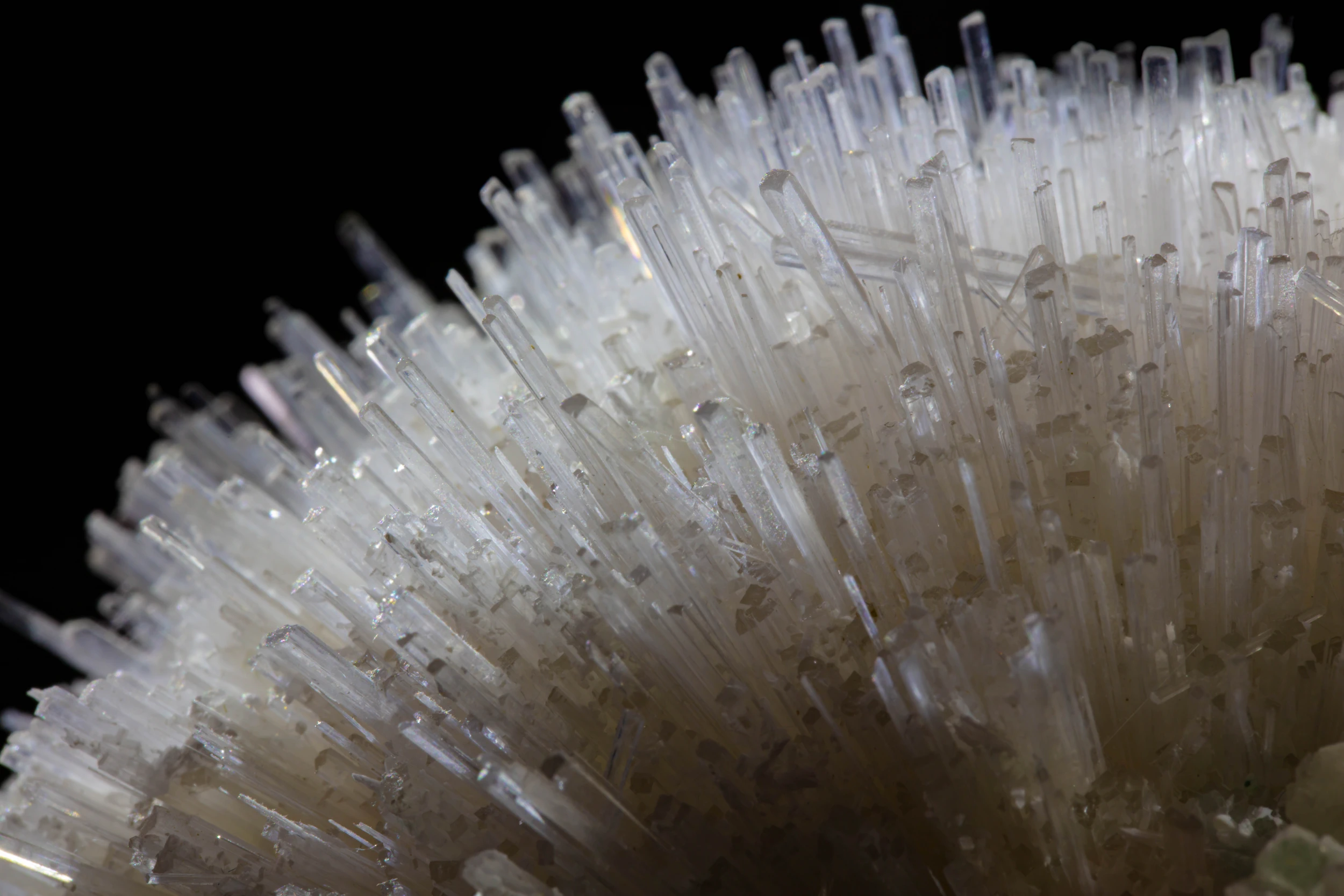
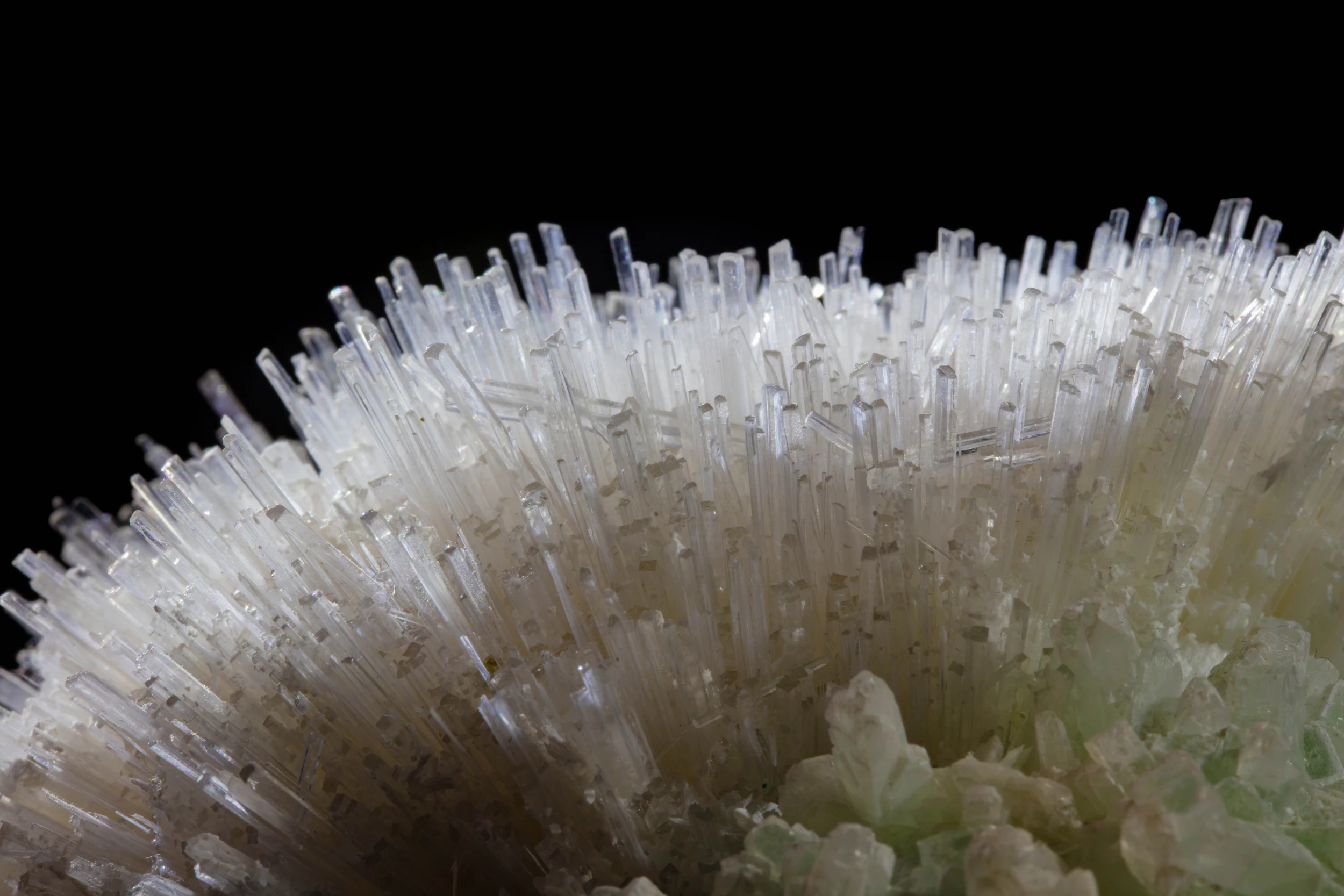
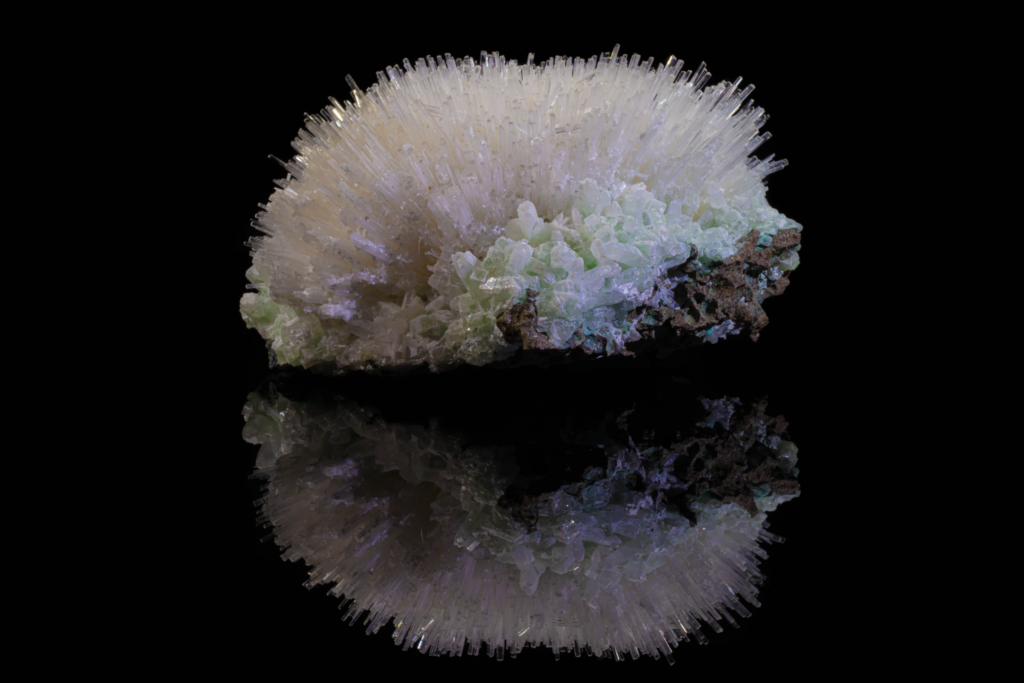
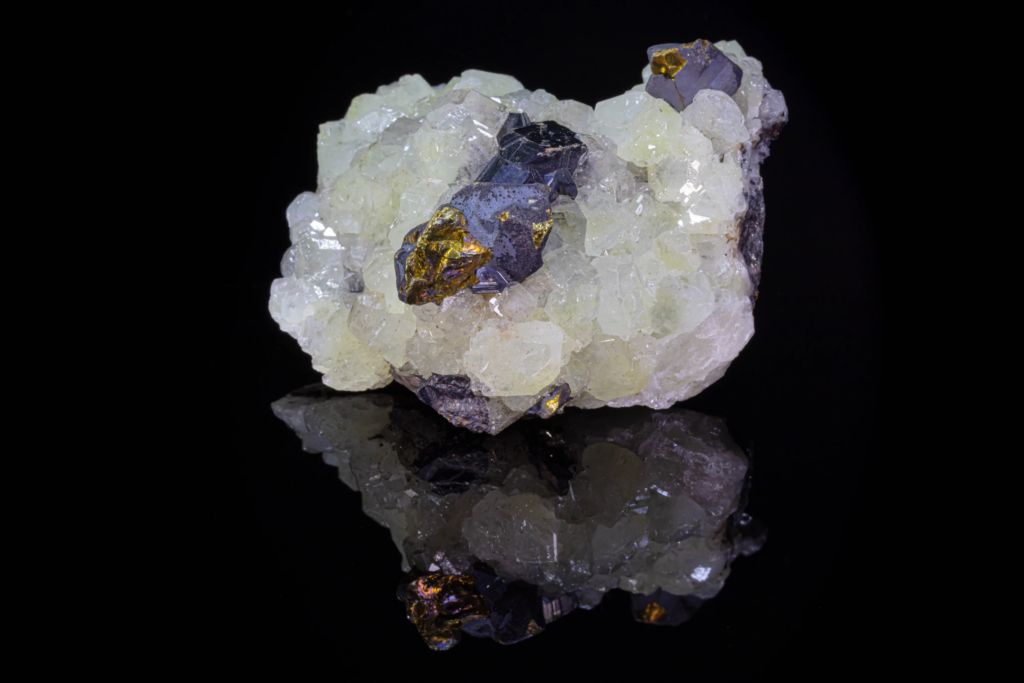
This specimen comes from the Pune District in Maharashtra, western India. The region sits on the Deccan Traps, the huge stack of basalt lava flows that covers much of the west of the country. Most of that lava erupted in a short burst around 66 million years ago, at the time the dinosaurs died out. As the lava cooled, gas bubbles left holes in the rock. Much later, warm water rich in calcium, sodium, potassium and silica moved through the basalt and filled those holes with zeolites and other minerals, in several stages. Apophyllite often grew late in that sequence, and some Indian apophyllites have been dated to tens of millions of years after the eruptions. Here, a dense spray of glassy white mesolite needles rises from a bed of pale green apophyllite crystals. The needles grow side by side in a rounded tuft, and their tips catch the light.

Mineral Species

Did you know?

MesoliteMesolite forms airy white tufts that look as soft as cotton, but the touch deceives. They are bundles of hair-fine glassy needles so brittle that a single breath can shatter a specimen.

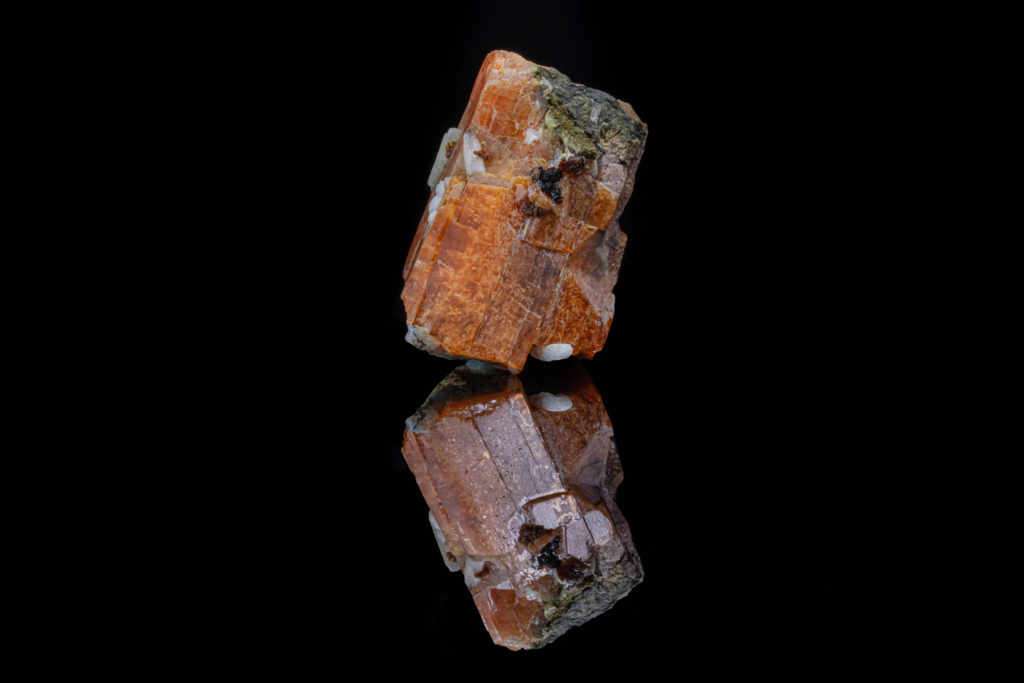
ApophylliteApophyllite is named from the Greek for to flake off in leaves, and heat makes it do exactly that. The water bound inside the crystal escapes and the surface peels apart into thin white sheets.