Mimetite var. Campylite

The Specimen

Cabinet: Cabinet (7 - 10 cm) – Size: 7.8 x 5.7 x 4.7 cm Origin: Dry Gill Mine, Caldbeck, Allerdale, Cumbria, England – United Kingdom History: Ex Kay Robertson Collection

Notes

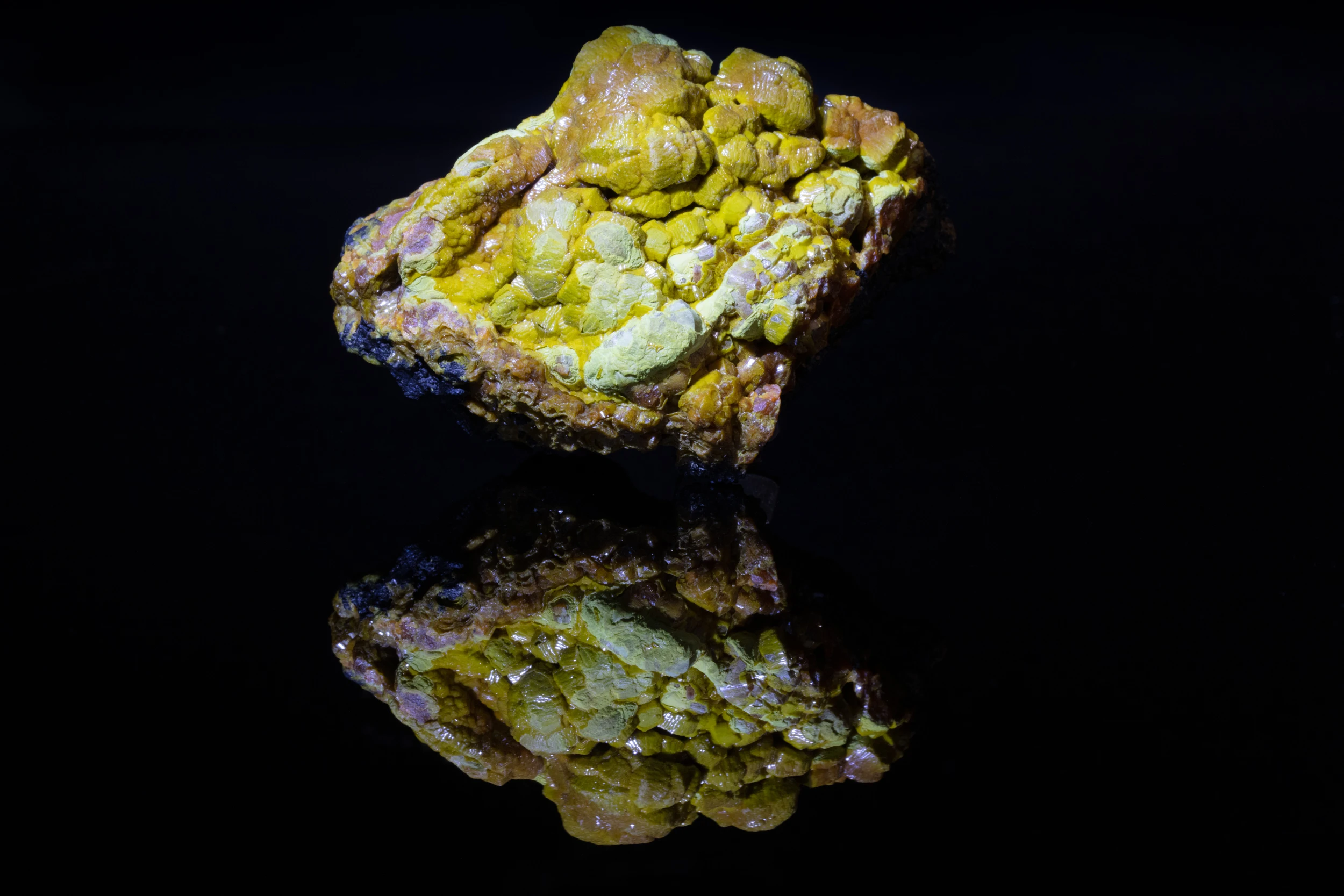
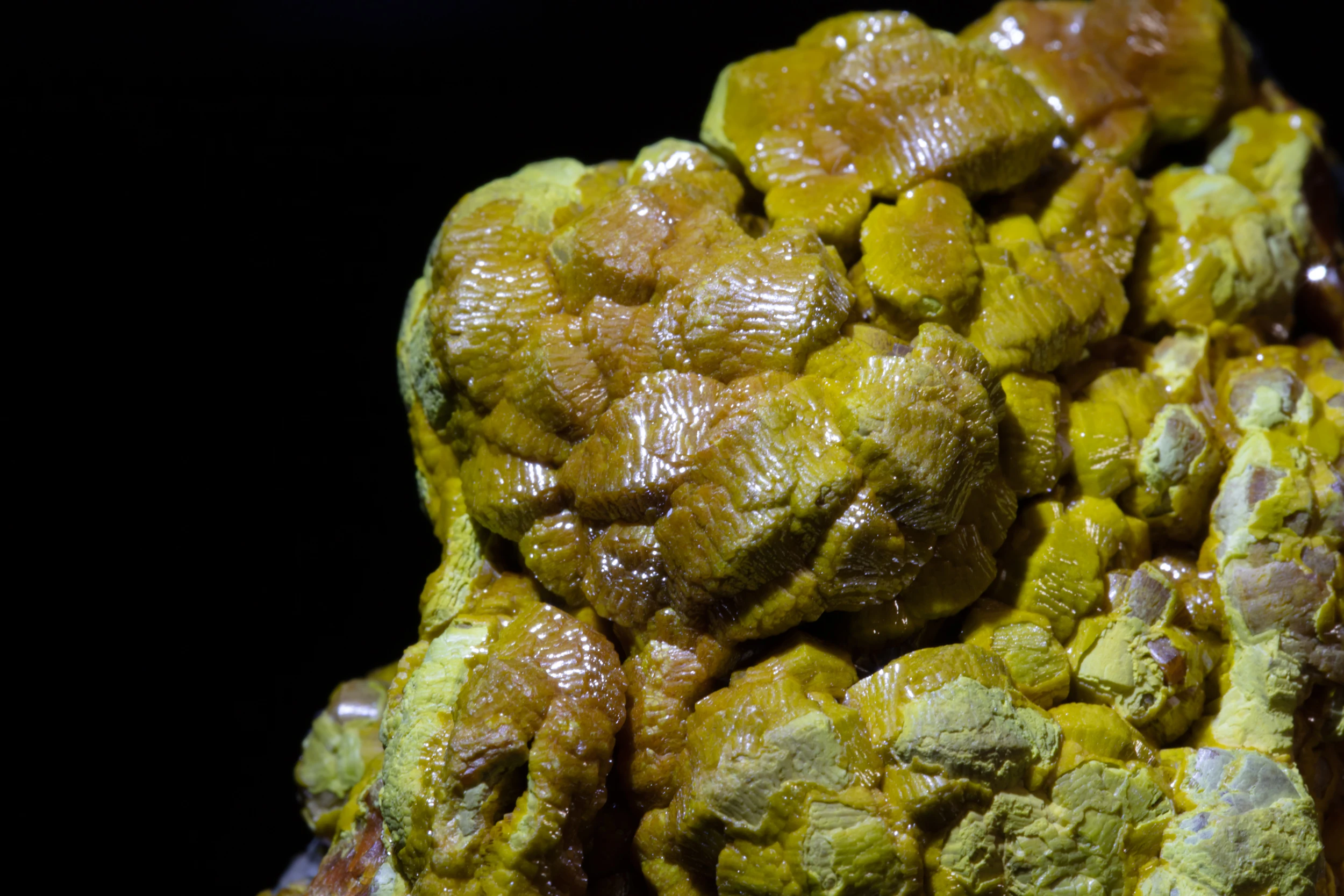
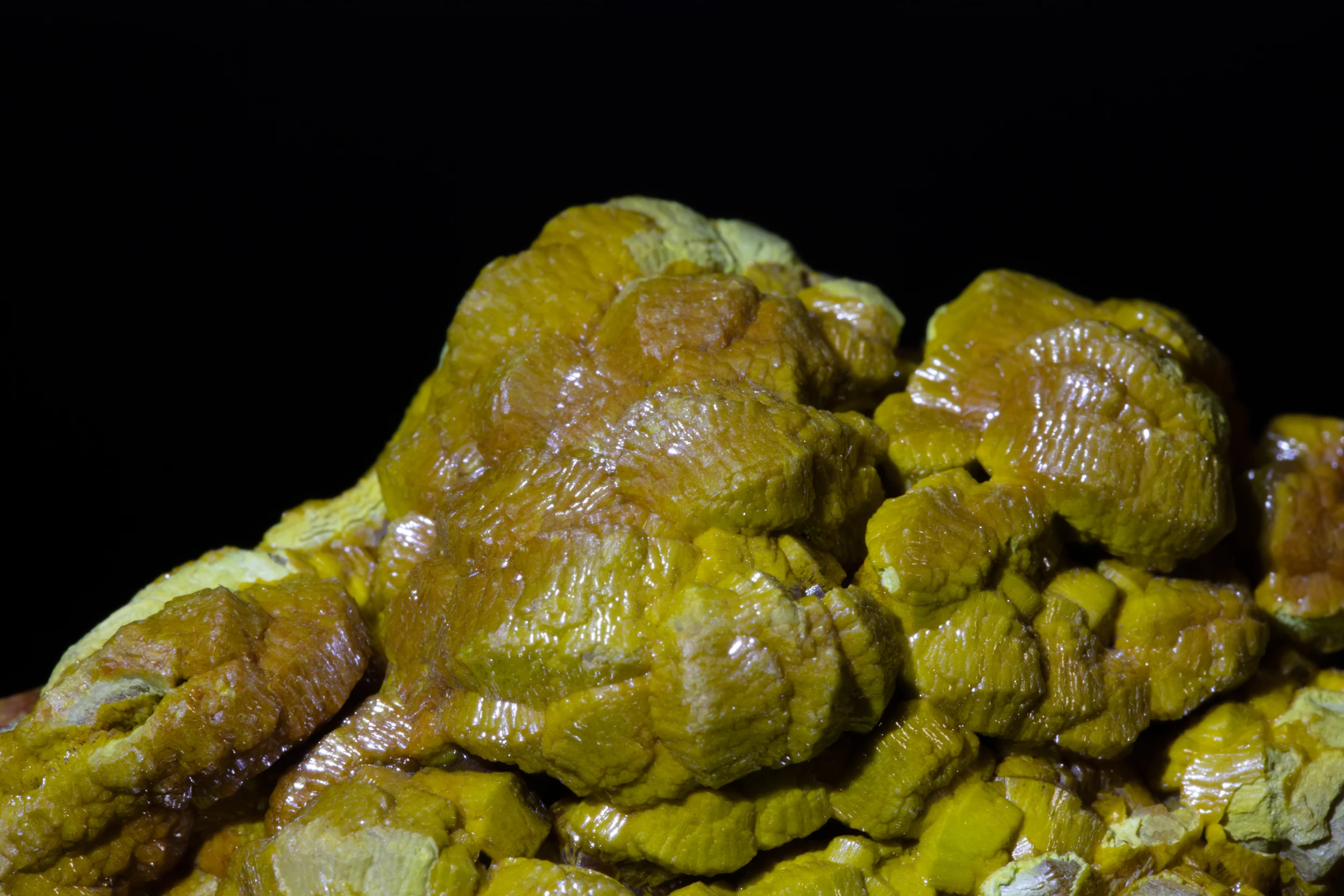
This specimen comes from the Dry Gill Mine on the Caldbeck Fells, in the north of the English Lake District. Unlike most of the old mines around Caldbeck, it was only worked from the middle of the 19th century, and it was never a commercial success, though several hundred tons of its ore went to glassmakers. What made it famous was campylite. For many years it was counted as its own species, but it is now defined as a variety of mimetite that carries some phosphorus in place of arsenic. The name comes from the Greek word for curved, after its rounded, barrel-shaped crystals, and Dry Gill is the classic home of this variety. Collecting there is now controlled by a permit system run by the Lake District National Park Authority. This piece belonged to Kay Robertson (1920-2020), a California collector who built a collection of about 13,000 specimens over more than nine decades and specialized in European classics. Here, curved, half-round crystal groups up to 1.1 cm cover the display side of the host rock. Their color shifts from golden brown to a bright greenish yellow, and their faces, crossed by fine growth lines, shine with a resinous to adamantine luster. According to the dealer, a little quartz is attached on the back.

Mineral Species

Did you know?

MimetiteMimetite is named from the Greek for imitator, after how closely it copies pyromorphite. Its cheerful orange and yellow crystals hide a grim makeup, an ore of toxic lead and arsenic.

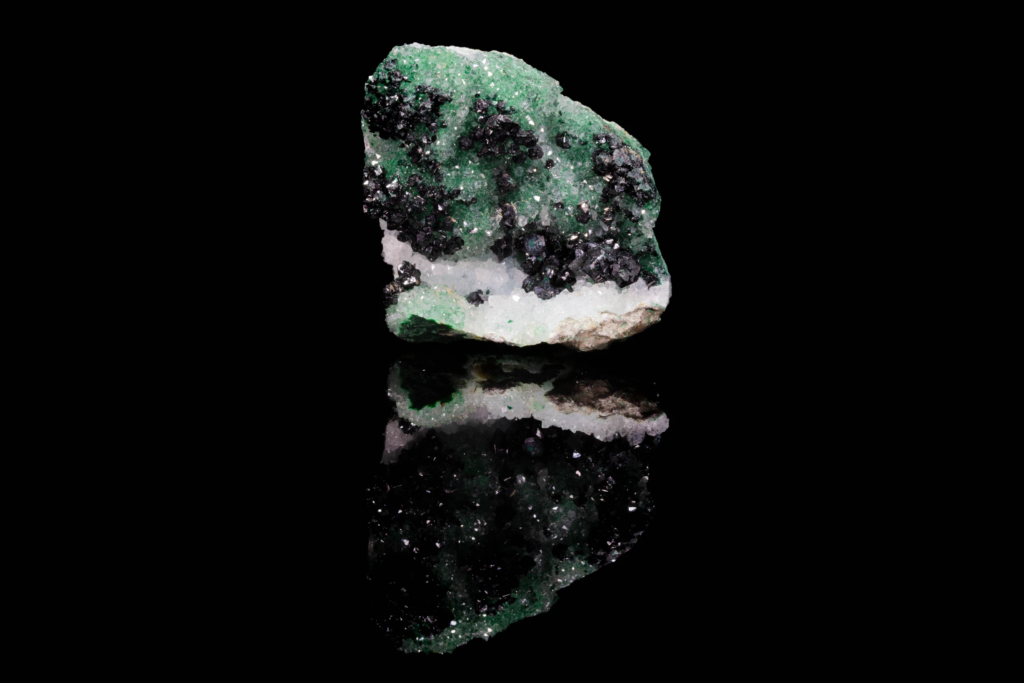
QuartzPressing a quartz crystal makes it give off a precise electric beat, which is why it keeps time in nearly every watch and once tuned the radios of World War II, when good crystals were a strategic resource.