Nantan Iron Meteorite (Kamacite)

The Specimen

Cabinet: Miniature (2.5 - 4.5 cm) – Size: 4.2 x 3.3 x 2.9 cm Origin: Lihu-Yaochai area, Nandan County, Hechi, Guangxi Zhuang Autonomous Region – China

Notes

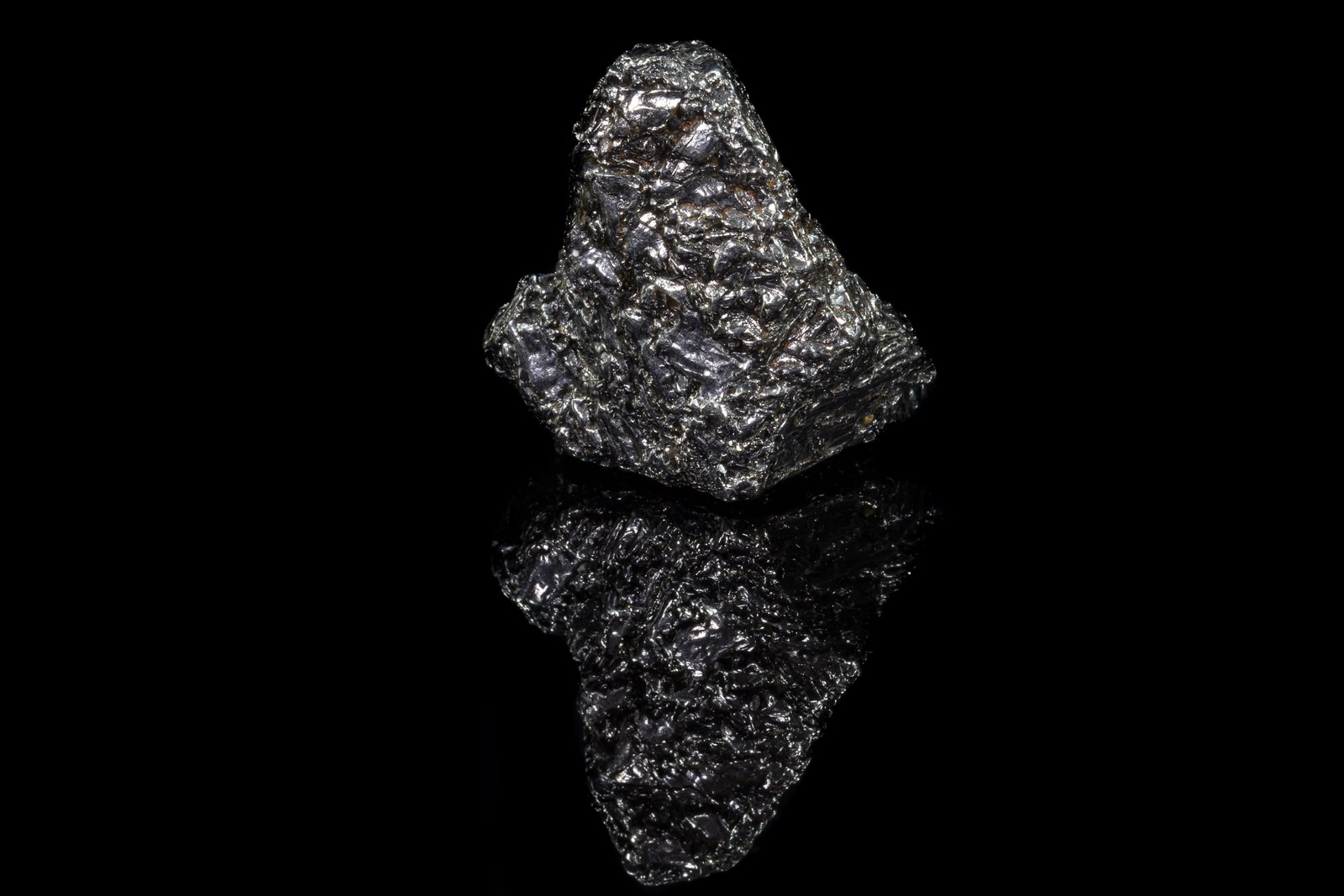
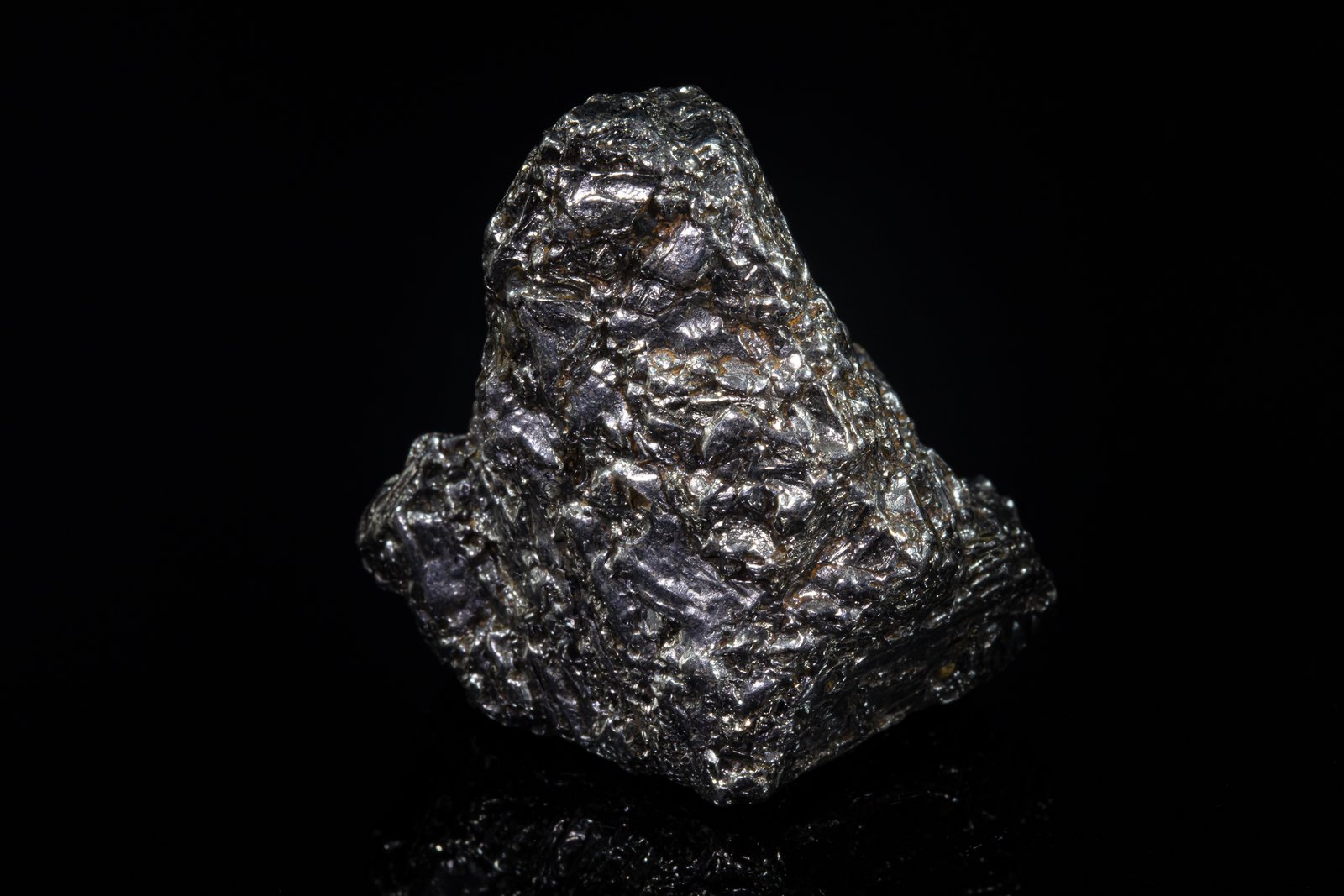
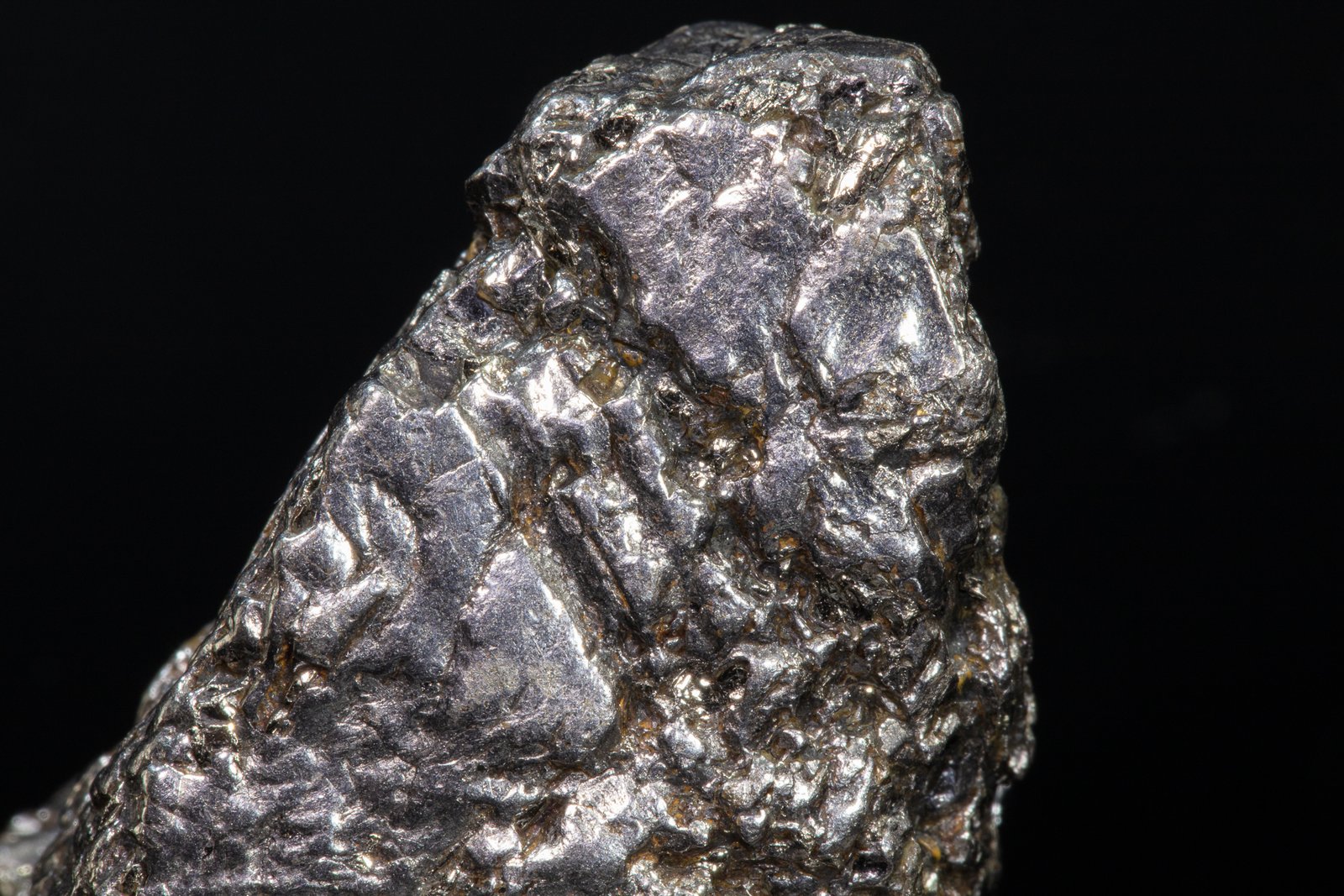
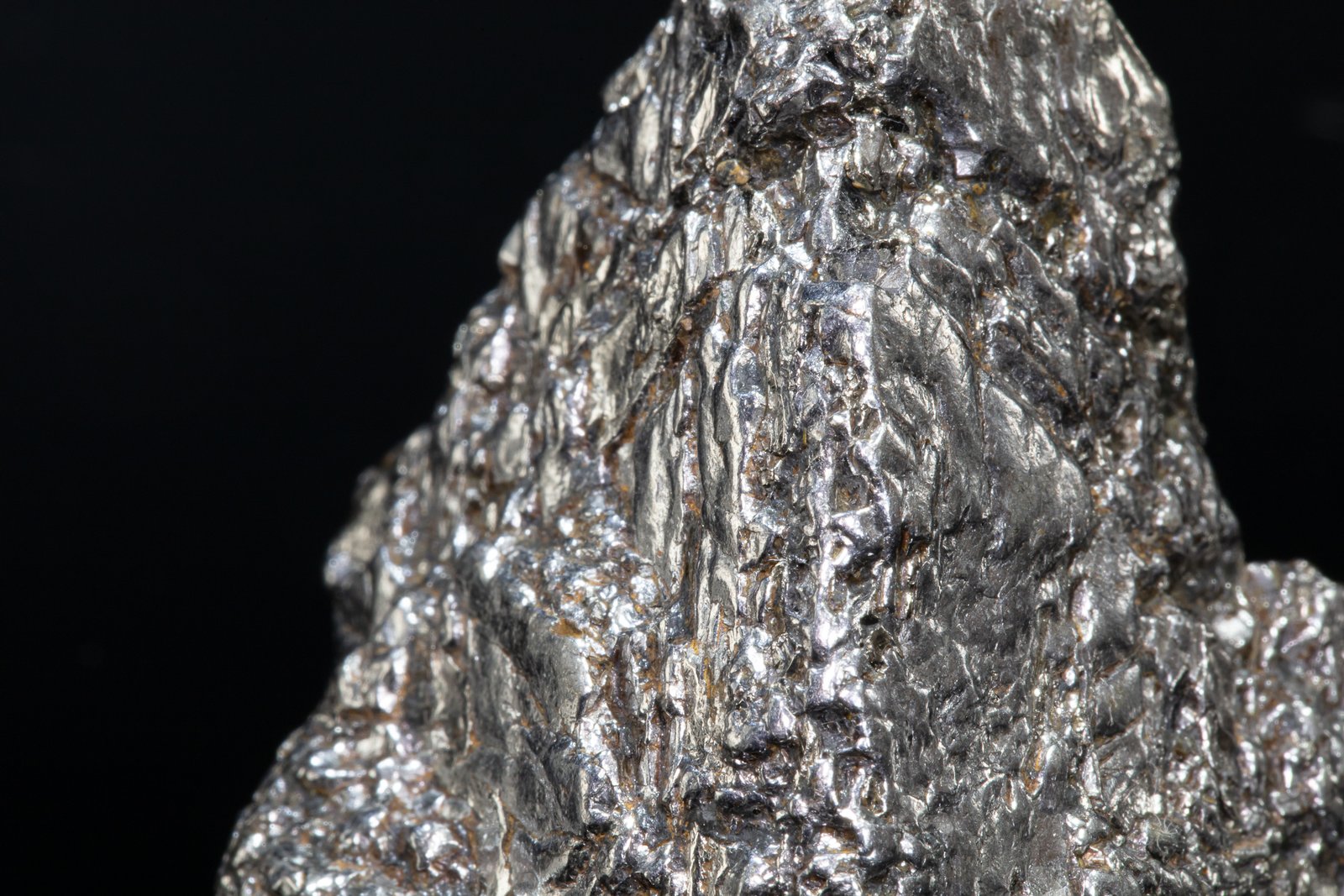
This specimen is a piece of the Nantan meteorite, an iron meteorite named after the town of Nantan in Nandan County, Guangxi, southern China. It broke apart in the atmosphere and scattered its fragments over a strip of land about 28 kilometers long and 8 kilometers wide, for a total of about 9.5 metric tons. Chinese records describe bright falling stars over the region in the early 16th century, and the fall may have been seen in 1516, though it is hard to prove that this event matches the pieces found later. The fragments lay untouched until 1958, when they were gathered to be smelted for China's new industry, and the iron turned out to hold too much nickel to use. Like other iron meteorites, Nantan comes from the asteroid belt and is about 4.5 billion years old, as old as the Earth. It is made mostly of kamacite, an iron-nickel alloy, and is now classified in the IAB group. Here, a triangular piece of 121 grams shows a bright silver-gray metal surface, deeply pitted and rough, with a few small brown spots of rust.

Mineral Species

α-(Fe,Ni)
Elements: Iron, Nickel
Class: Meteorite – Iron Meteorite
Crystal System: Cubic
Hardness: 4-5
Apatite
Talc (1)Diamond (10)
Softer than glass. A steel knife scratches it.
γ-(Fe,Ni)
Elements: Iron, Nickel
Class: Meteorite – Iron Meteorite
Crystal System: Cubic
Hardness: 5-5.5
Apatite
Talc (1)Diamond (10)
About as hard as a steel knife blade.

Did you know?

KamaciteKamacite looks like plain steel but cannot be made on Earth. This iron-nickel alloy forms only when the core of a shattered planetesimal cools a few degrees every million years in deep space, leaving a pattern no furnace can copy.

TaeniteTaenite, a nickel-rich alloy laced through iron meteorites, works like an ancient recorder. Tiny zones in it froze the magnetic field of the early solar system, letting scientists read the cores of worlds long destroyed.