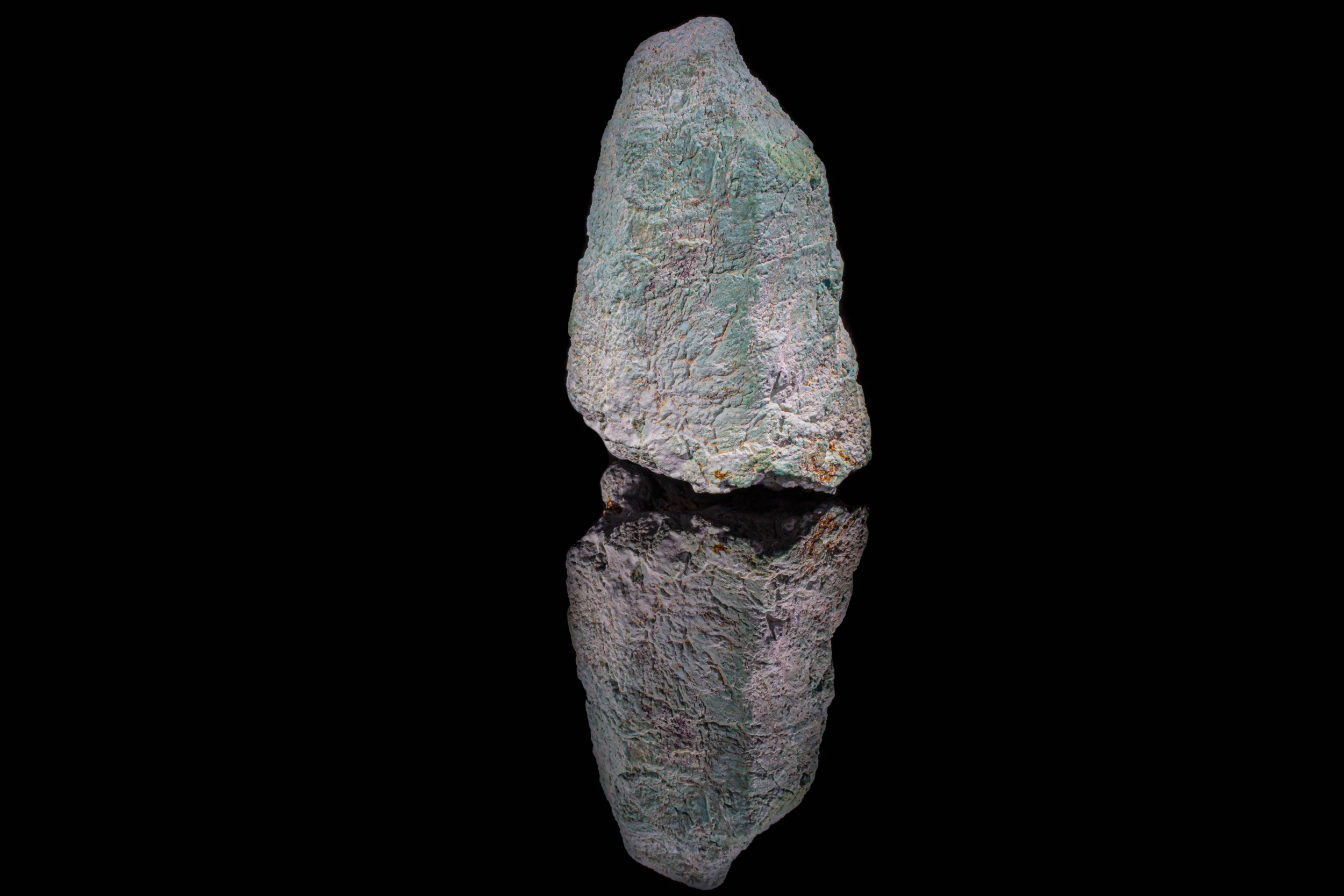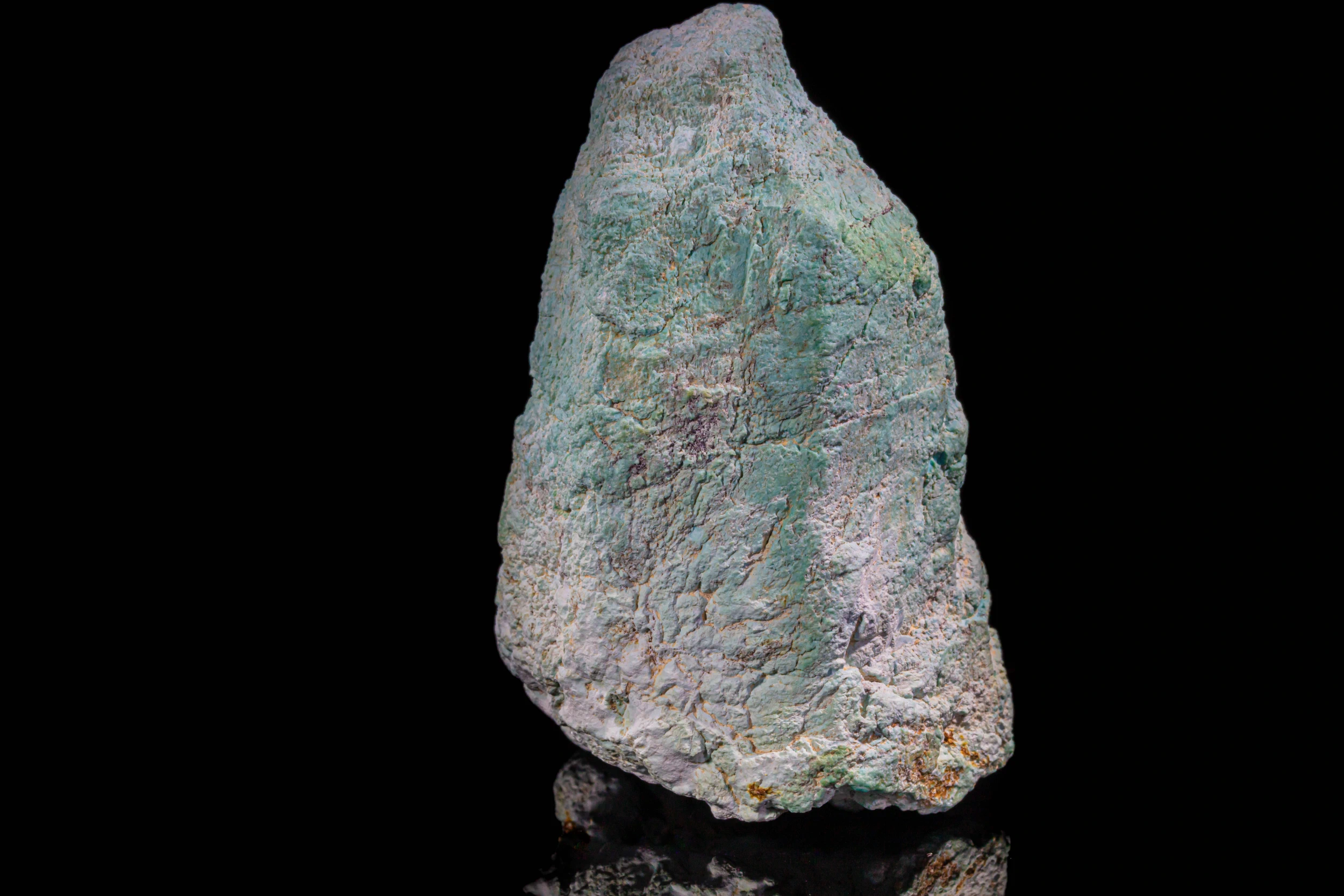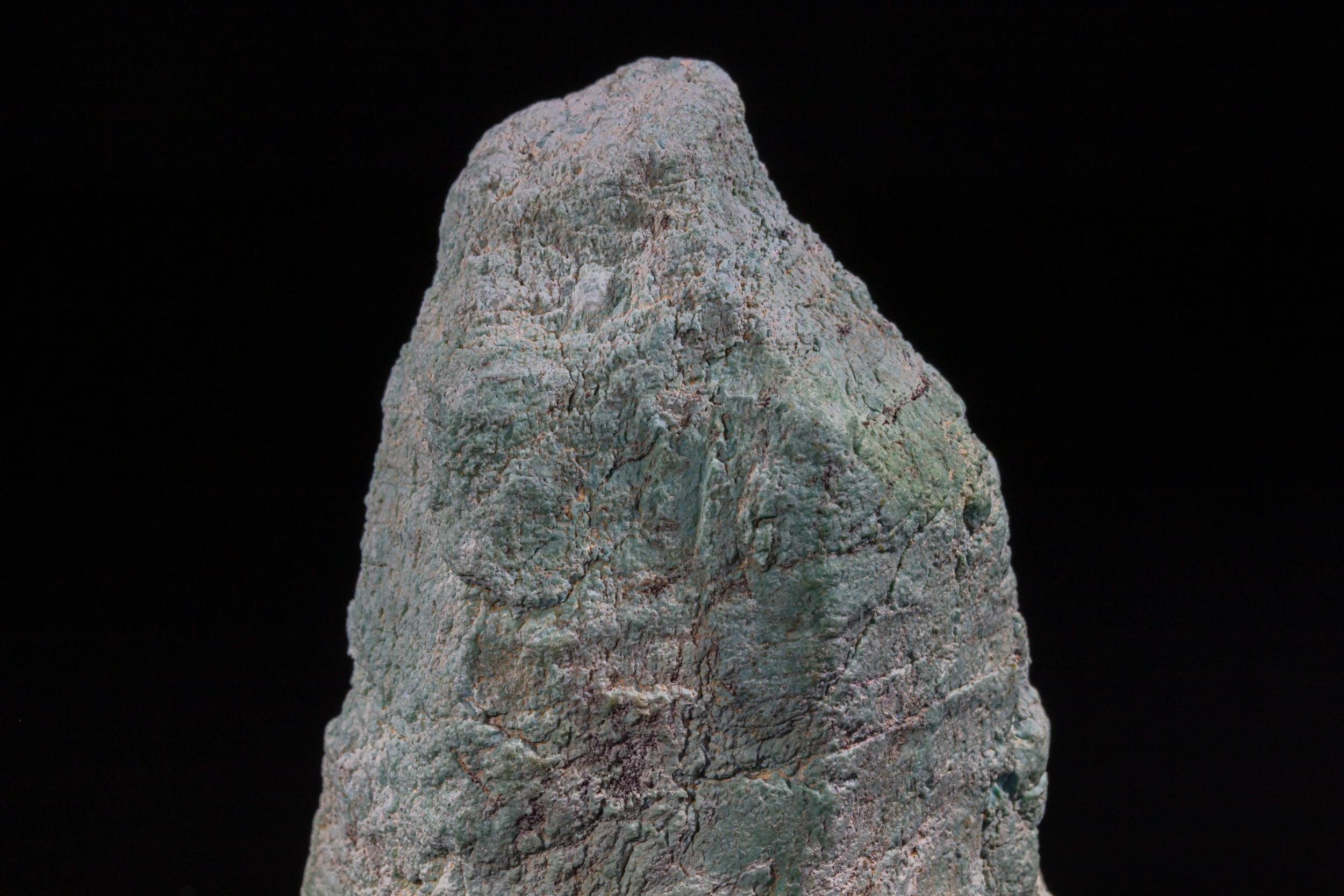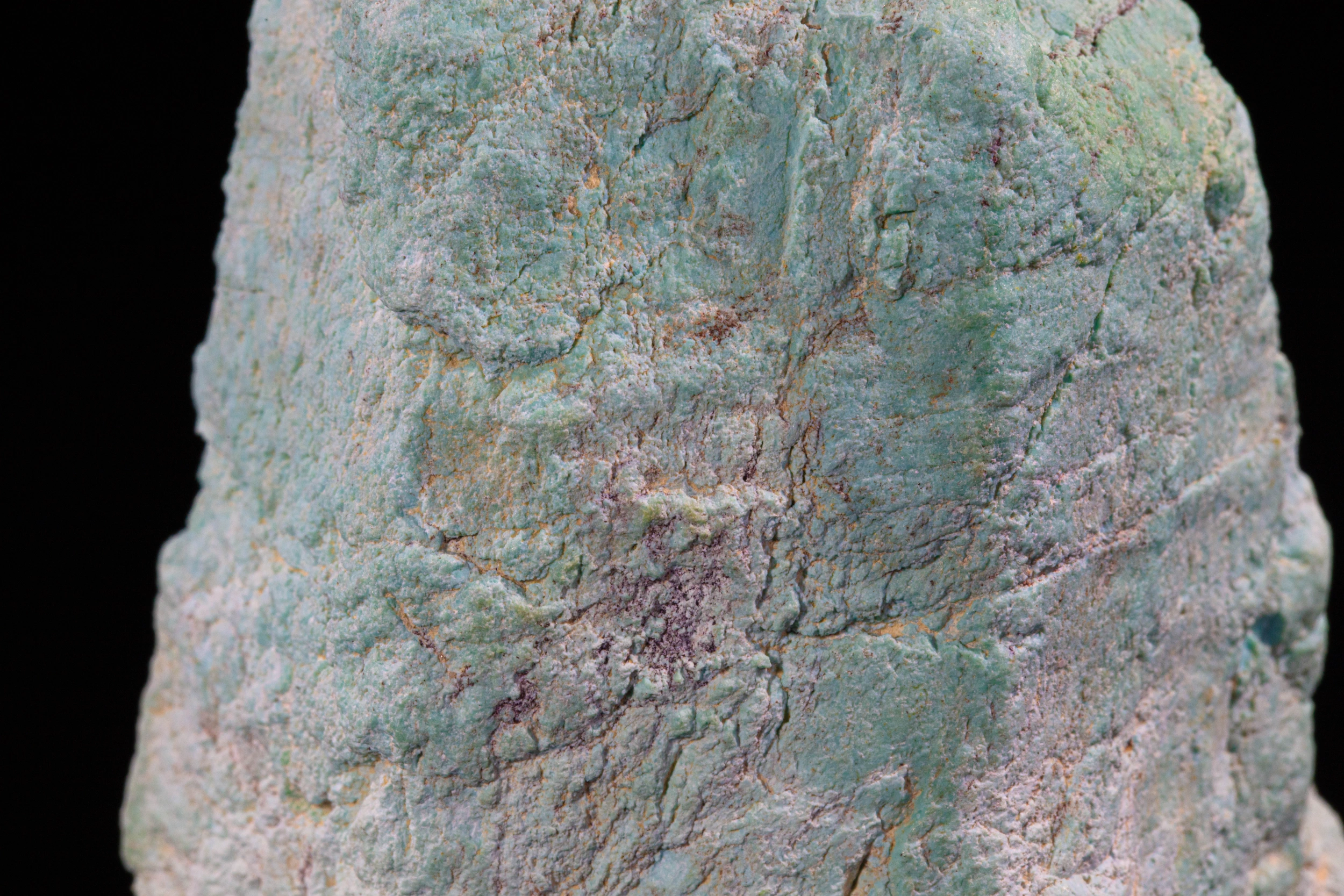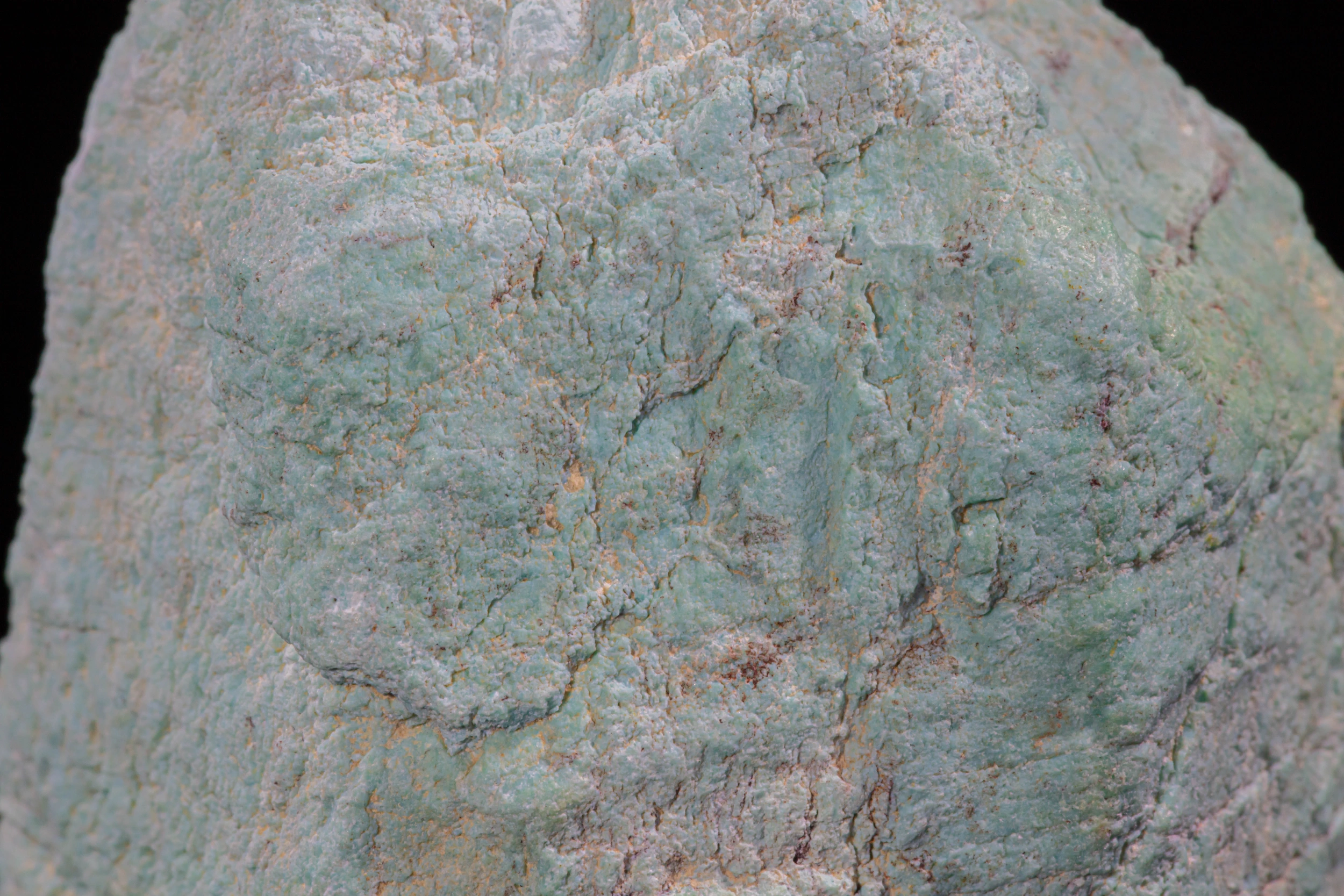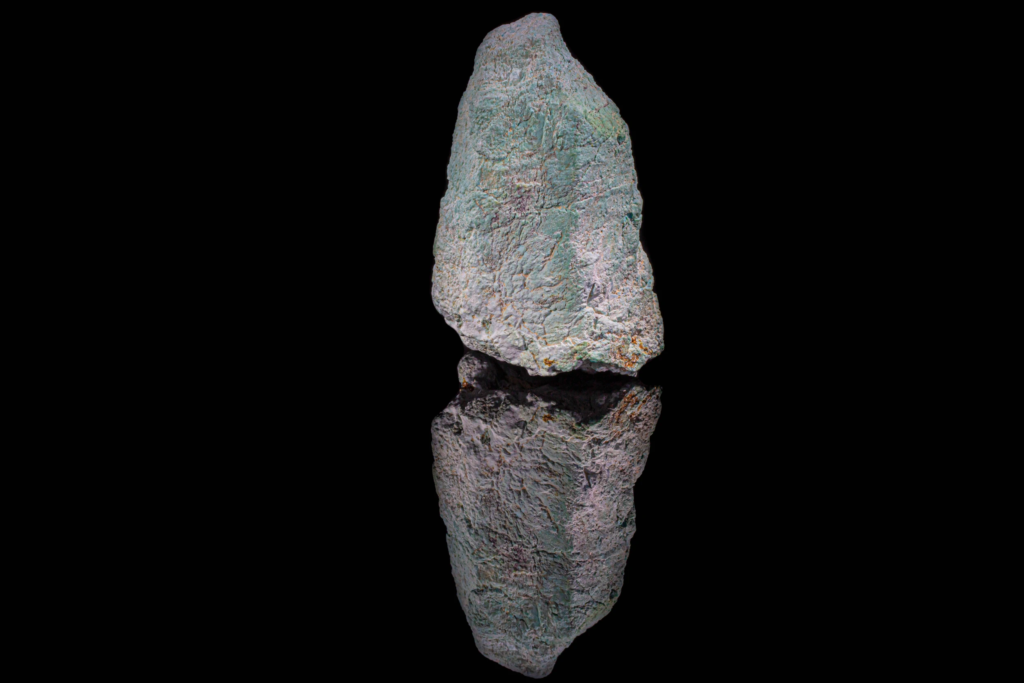
Turquoise ps. Apatite

The Specimen

Cabinet: Cabinet (7 - 10 cm) – Size: 8.0 x 5.1 x 4.4 cm Origin: Zhushan County, Shiyan, Hubei – China

Notes

Turquoise has completely replaced an earlier apatite crystal while keeping its overall shape: a tapered, roughly hexagonal prism, now rounded and softened. The surface is pale bluish green, crossed by fine brownish orange veins. Pseudomorphs like this, where one phosphate takes the place of another, are better known from Sonora, Mexico; pieces of this size are unusual. Zhushan County, in western Hubei, is a relatively recent source of gem-quality turquoise, which occurs there in nodules and veins within slate.

Mineral Species

Did you know?

One of the most striking turquoise objects ever made is a real human skull. Mixtec or Aztec artisans covered it in bands of turquoise and black lignite, gave it eyes of polished pyrite ringed with white shell, and hinged its jaw on deerskin so a priest could wear it. Made between 1400 and 1521, it stands for Tezcatlipoca, the Smoking Mirror, and is now in the British Museum.