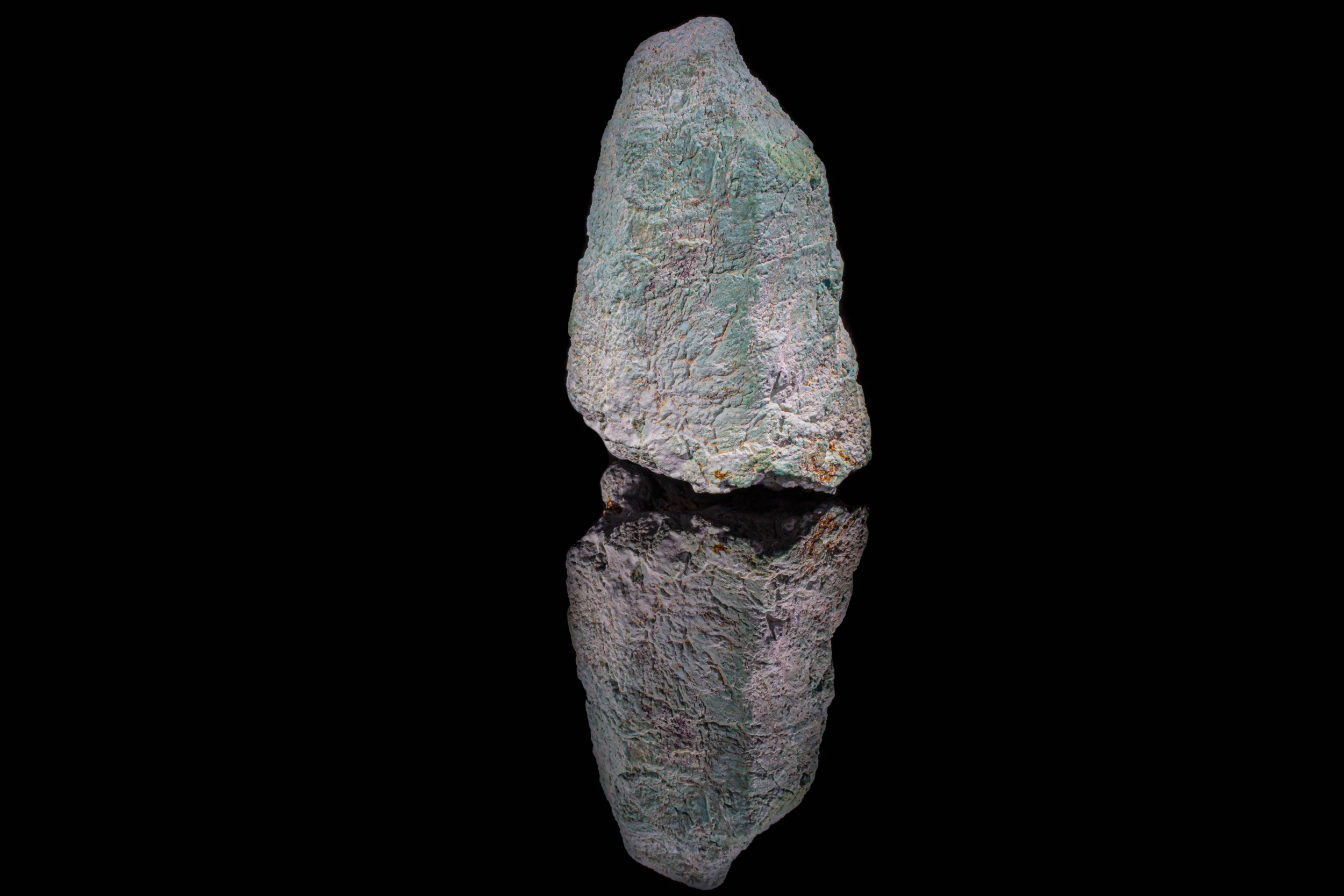
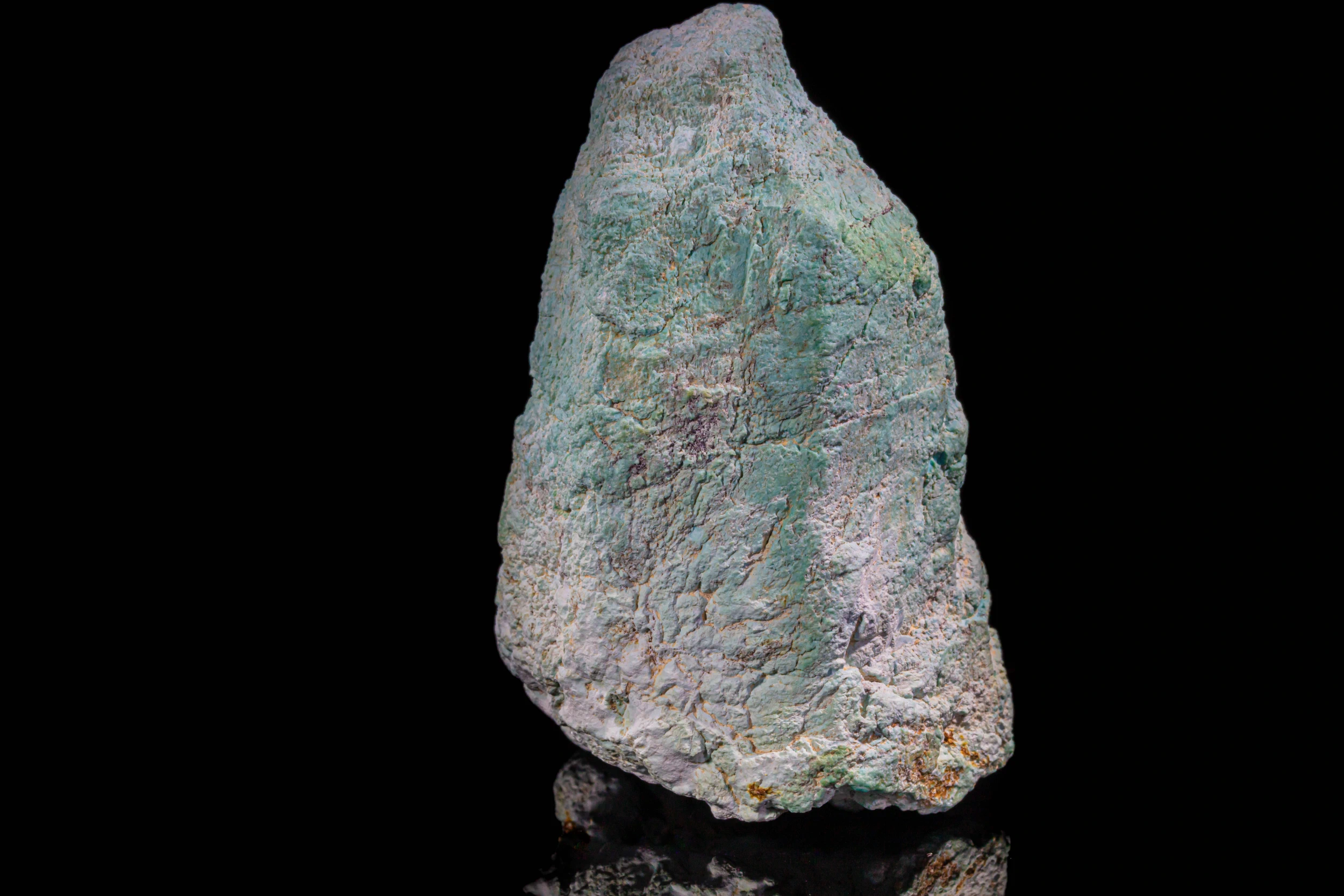
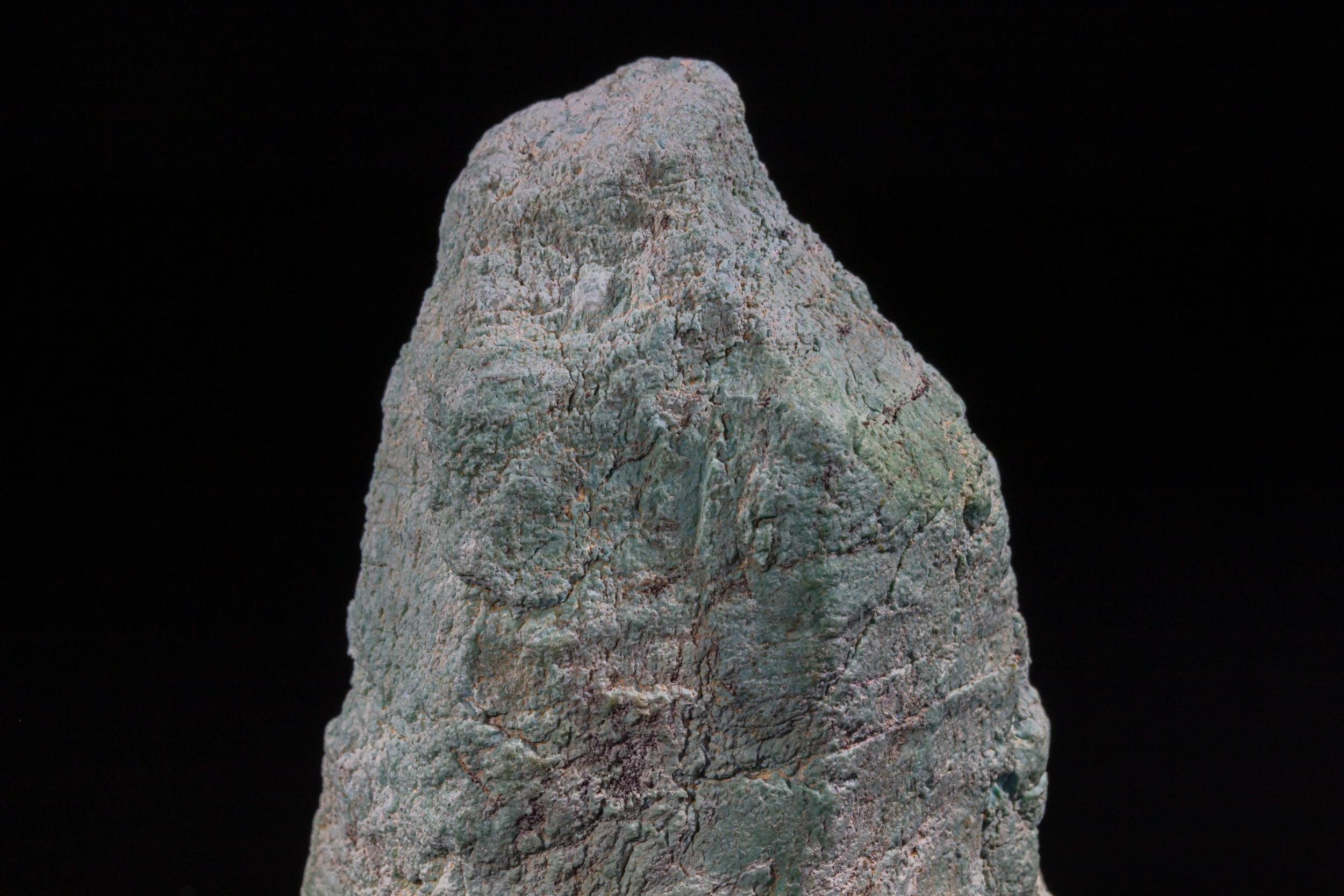
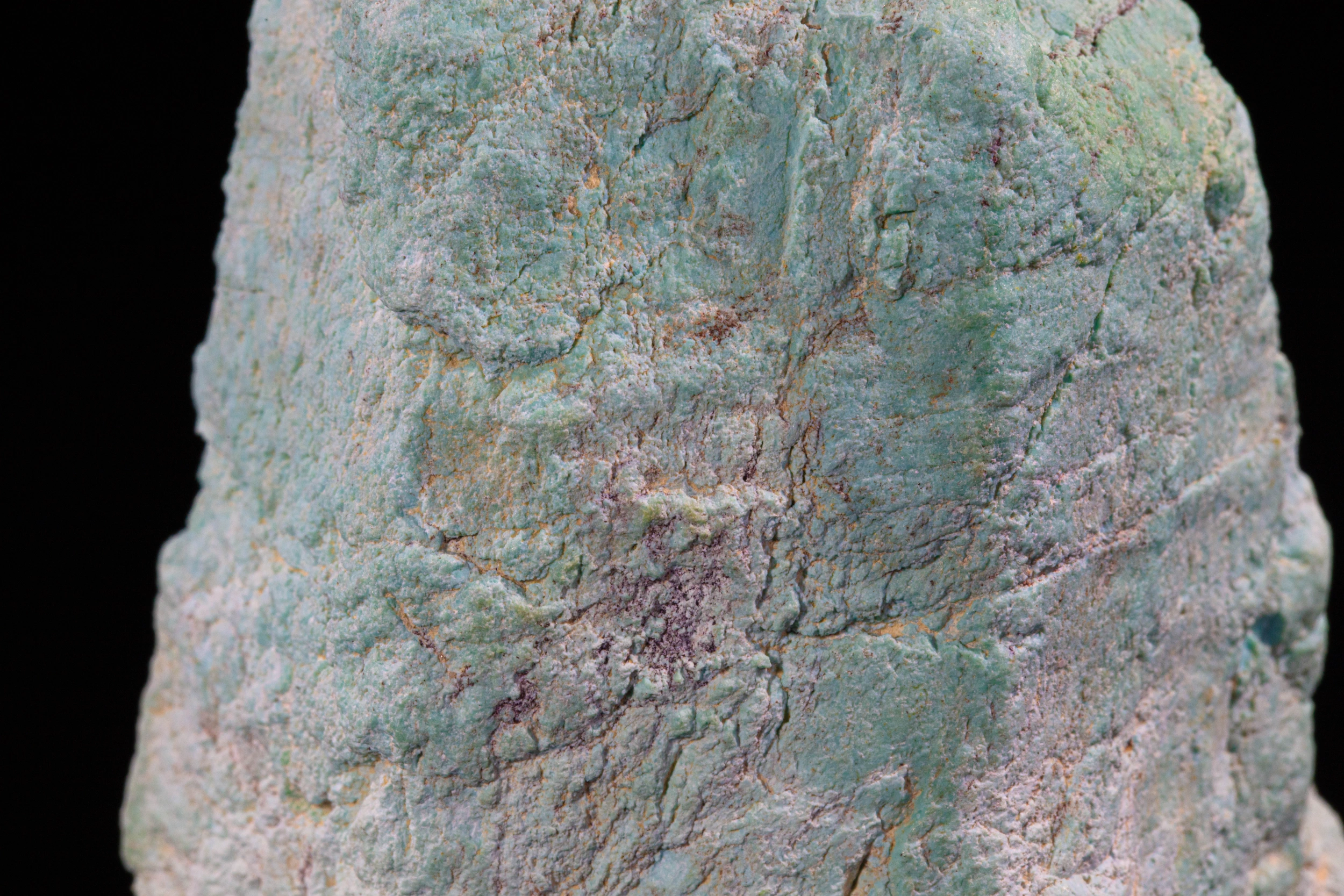
Turquoise ps. Apatite

The Specimen

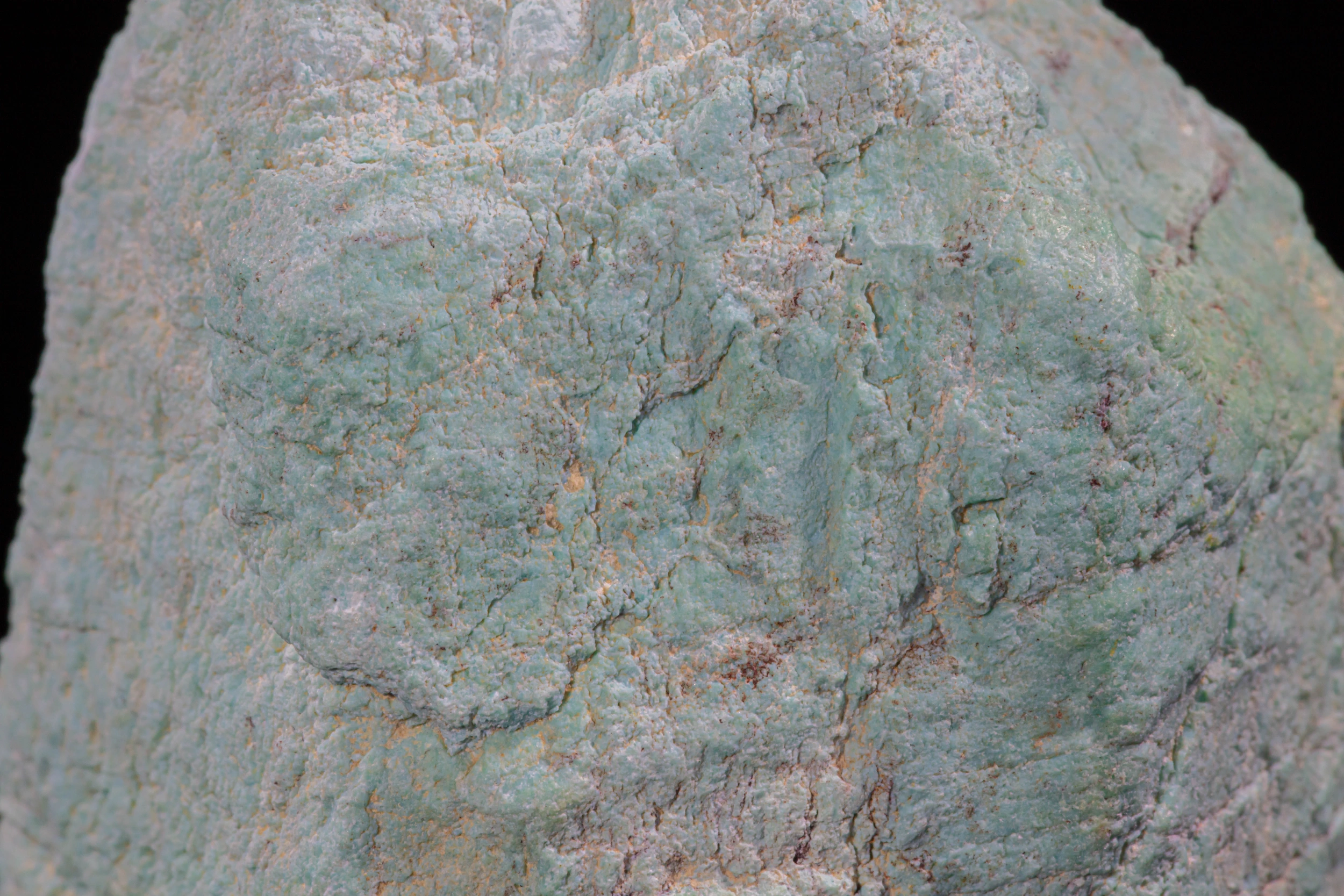
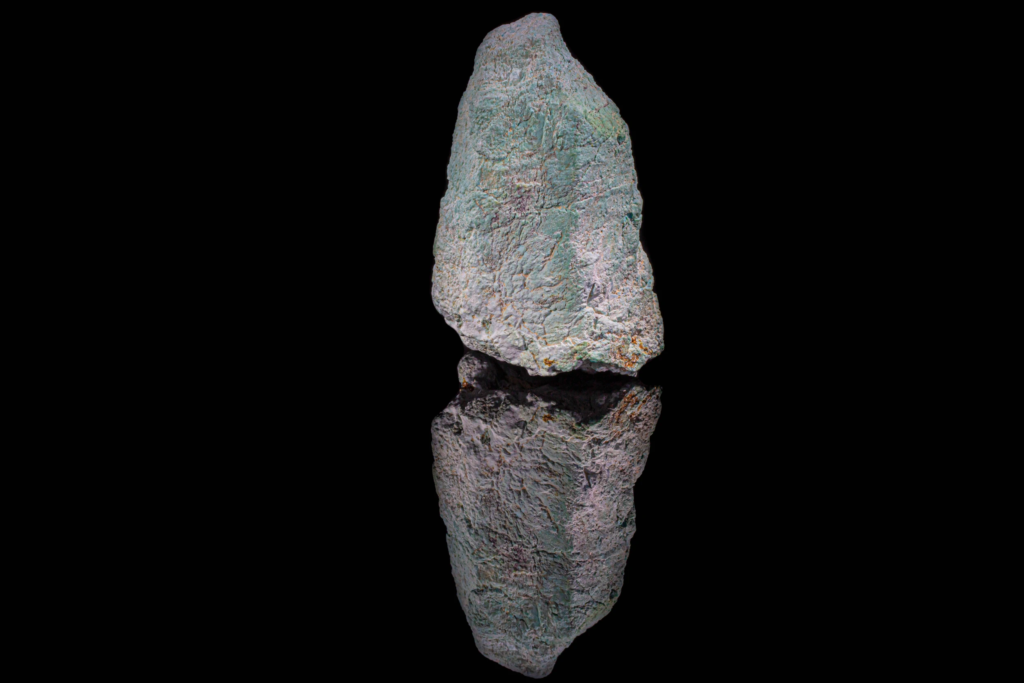
Cabinet: Cabinet (7 - 10 cm) – Size: 8.0 x 5.1 x 4.4 cm Origin: Zhushan County, Shiyan, Hubei – China

Notes

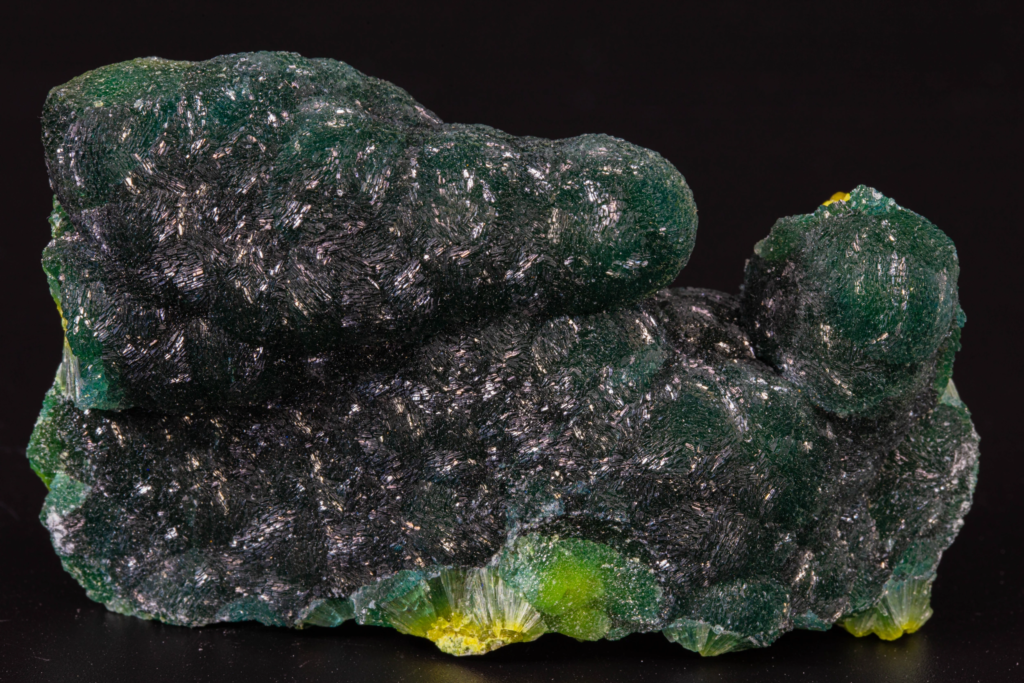
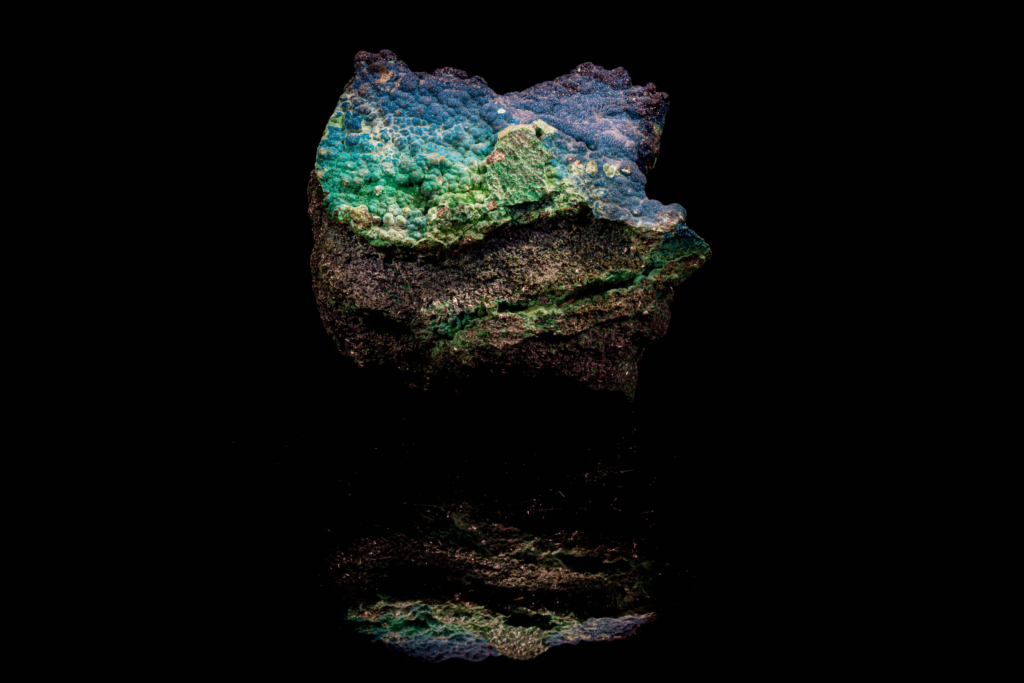
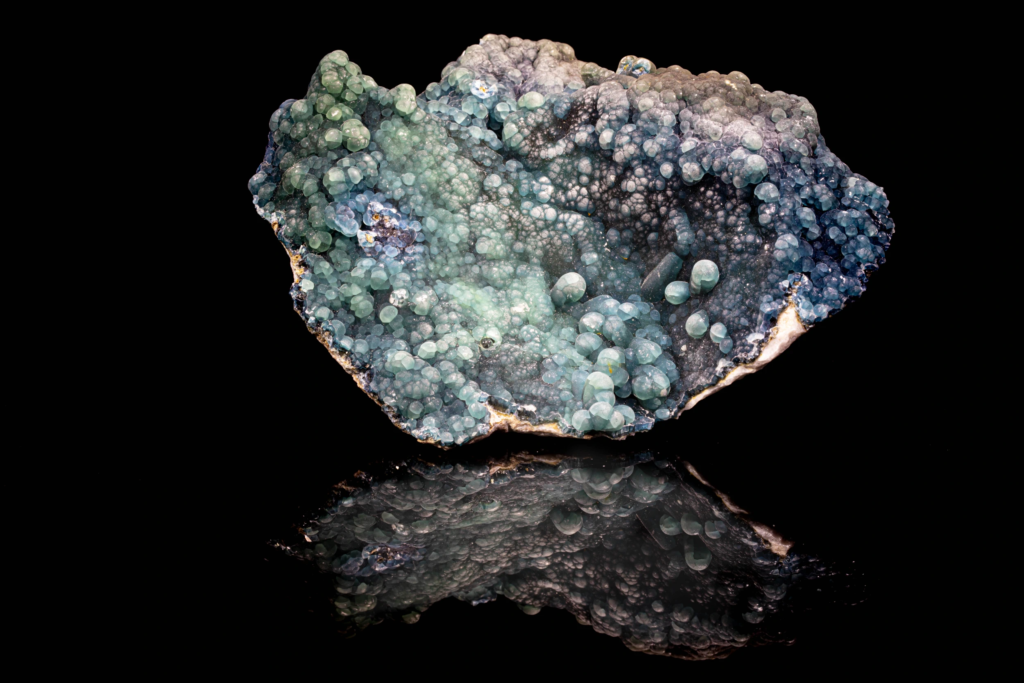
Turquoise has completely replaced an earlier apatite crystal and kept its outline: a tapered, roughly hexagonal prism with a rounded pyramidal top. Nothing of the apatite itself remains. The surface is pale bluish green and granular, crossed by fine brownish veins. Turquoise pseudomorphs after apatite are better known from Sonora, Mexico.
Zhushan County, in western Hubei, is a fairly recent source of gem-quality turquoise, which forms there as nodules, masses and thin veins in slate. Hubei is today the largest commercial source of turquoise in the world.

Mineral Species

Did you know?

One of the most striking turquoise objects ever made is a real human skull. Mixtec or Aztec artisans covered it in bands of turquoise and black lignite, gave it eyes of polished pyrite ringed with white shell, and hinged its jaw on deerskin so a priest could wear it. Made between 1400 and 1521, it stands for Tezcatlipoca, the Smoking Mirror, and is now in the British Museum.