Identity
Technical notes (click to open)(click to close)
Name & Human History
Etymology
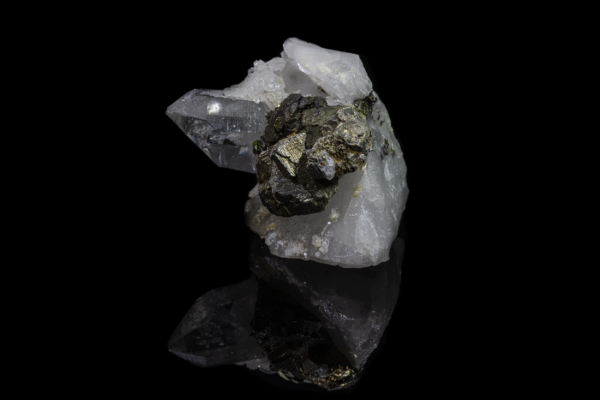
Stannite is a steel gray metal mineral, a sulfide of copper, iron, and tin. It has a dull metallic shine, sometimes with a faint olive or bluish tinge that yellows as it tarnishes. Its name comes from the Latin word for tin, which it contains. It rarely forms good crystals, and is usually seen as grains and masses mixed with other ores.
Today
Stannite is a minor ore of tin and a mineral with an old miner's name. Tin is the metal of bronze, and the bell makers of old needed it for their bells, so stannite earned the nickname bell metal ore. Today it is a lesser source of tin, far behind the main tin ore, but collectors still seek its steel gray crystals from a few classic mines.
Geology & Occurrence
Formation
Stannite forms in veins deposited by hot fluids rich in tin. It grows alongside the main tin ore, cassiterite, and with sulfides such as chalcopyrite, sphalerite, and arsenopyrite. The veins form where these metals gather and cool, often in the same districts that yield the world's tin.
Notable Localities
Stannite comes from the great tin mining regions. Cornwall, in England, is its original home, where it was first described. The richest crystals come from the silver and tin mines of Bolivia, around Oruro and Potosi. It is also found in tin deposits in China, Tasmania, and Germany.
Stannite carries the memory of bells. Its tin is a key part of bell metal, the bronze from which church bells are cast, and that link gave the mineral its old name. It is thought that the tin mines of Cornwall, where stannite occurs, helped supply the metal that let bell founding flourish. The main tin ore that grows beside it, cassiterite, is also held in this collection.