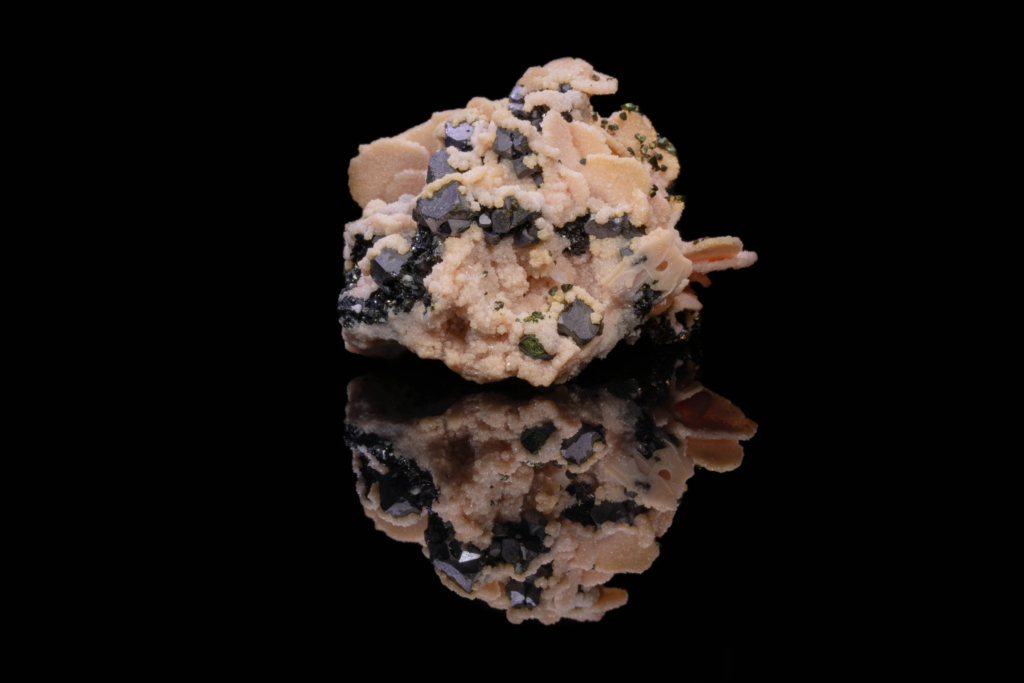
Enargite and Pyrite

The Specimen

Origin: Steward Mine, Butte Mining District, Butte-Silver Bow County, Montana – USA

Notes

Dark steel-gray enargite crystals, short prisms with deeply striated faces, cover this piece, with small brassy pyrite crystals scattered among them. This pairing is typical of Butte: in the central zone of the district, enargite was one of the copper ores, found with quartz and pyrite. The Steward Mine was one of Butte's deepest and most productive copper and silver mines, worked from the late 1890s until the 1970s, and its headframe still stands in the city. Butte earned its nickname, the Richest Hill on Earth, by producing about 21 billion pounds of copper between 1889 and 1982.

Mineral Species

FeS2
Elements: Iron, Sulfur
Class: Sulfides
Crystal System: Cubic
Hardness: 6-6.5
Orthoclase
Talc (1)Diamond (10)
Scratches glass. Harder than a steel knife.

Did you know?

EnargiteEnargite is mined for copper, but smelting it is dangerous work: nearly a fifth of the mineral by weight is arsenic, which escapes as poisonous fumes unless modern smelters trap it.

PyritePyrite is the original fool's gold, brassy enough to fool generations of prospectors. The irony is that real gold often hides inside it, locked invisibly in the crystal, which makes pyrite a true source of the very metal it once impersonated.