Ilvaite on Quartz

The Specimen

Cabinet: Large Cabinet (10 cm+) – Size: 12.5 x 10.2 x 9.2 cm Origin: 2nd Sovetskii Mine, Dalnegorsk, Primorsky Krai – Russia History: Ex Richard A. Kosnar Collection

Notes

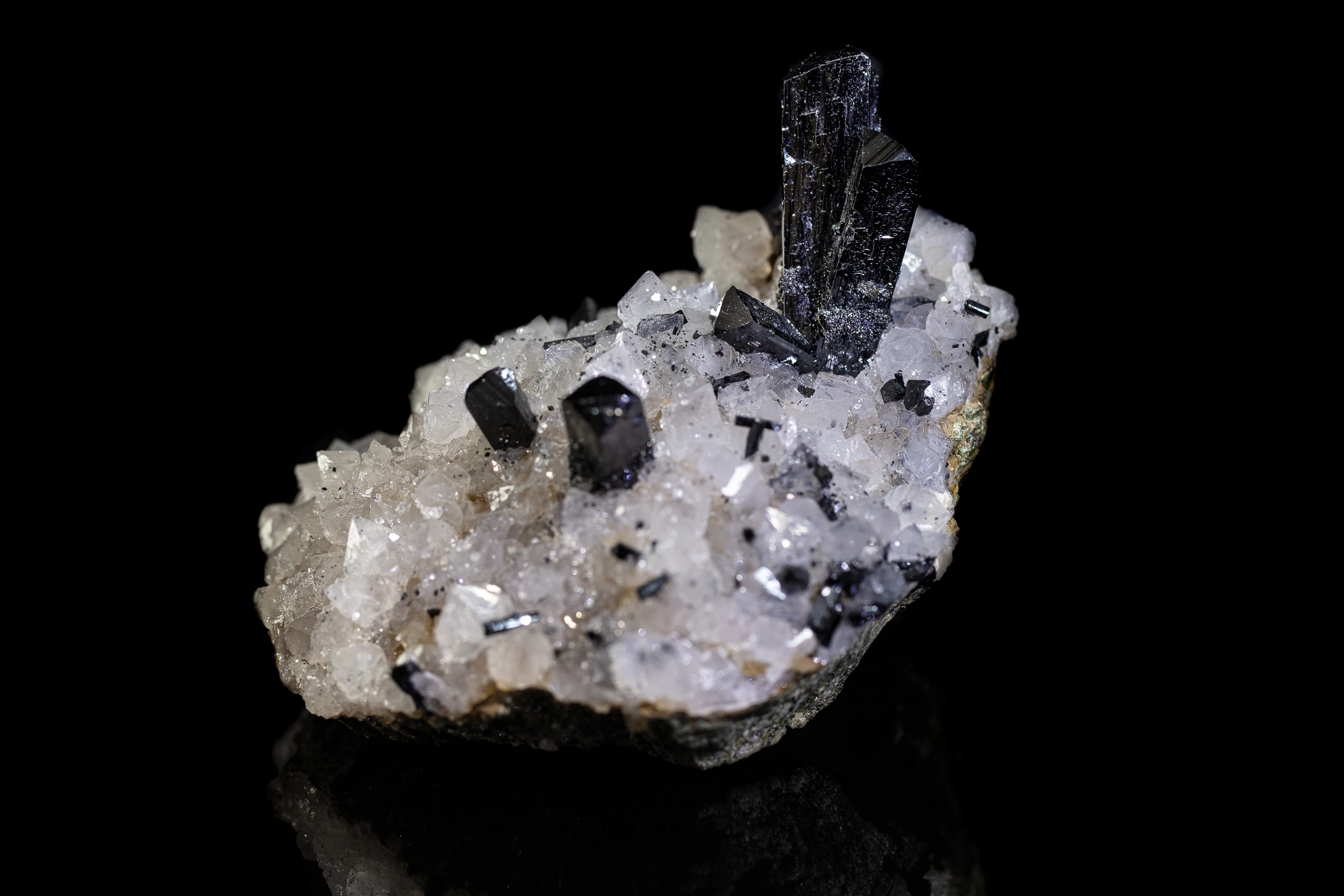
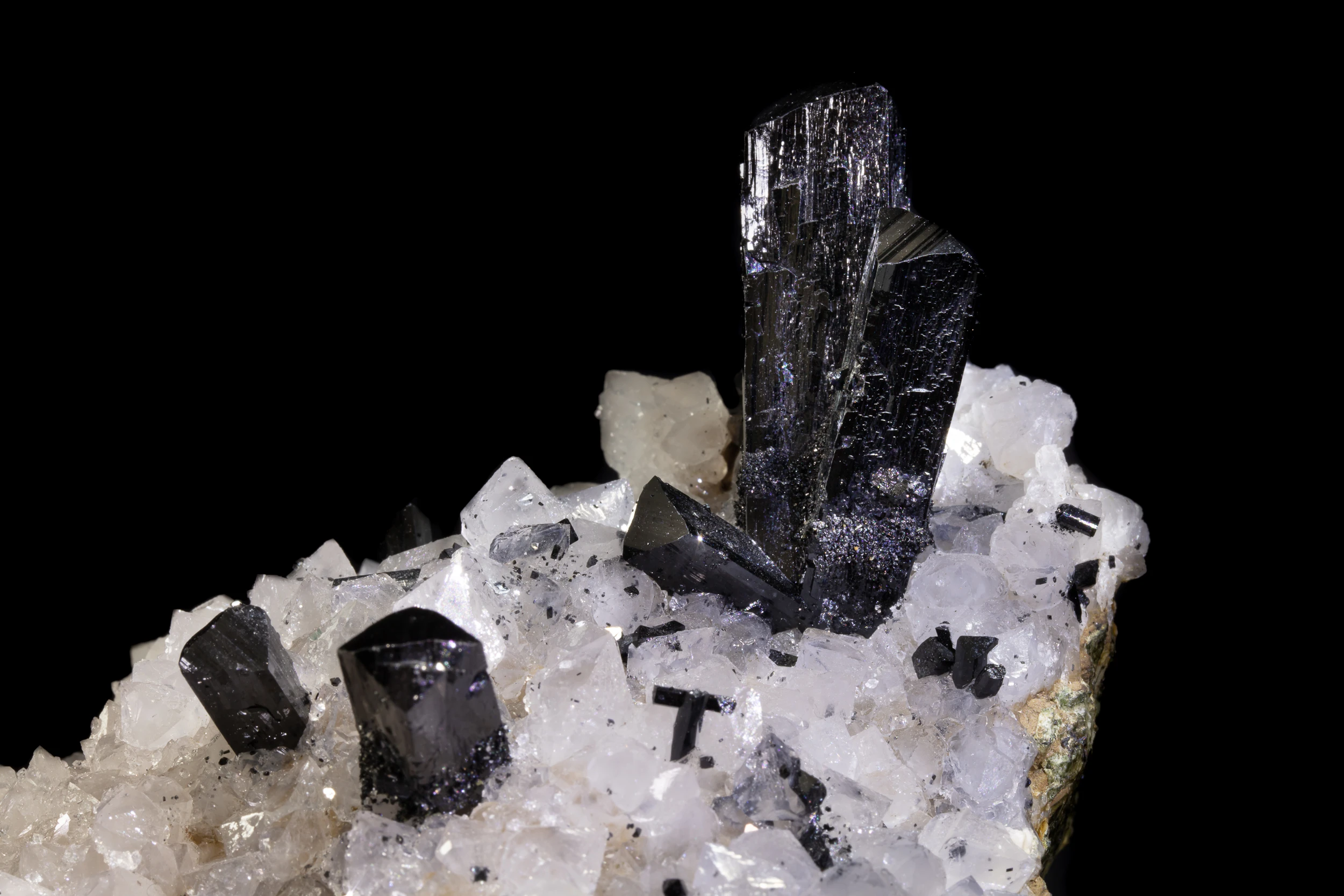
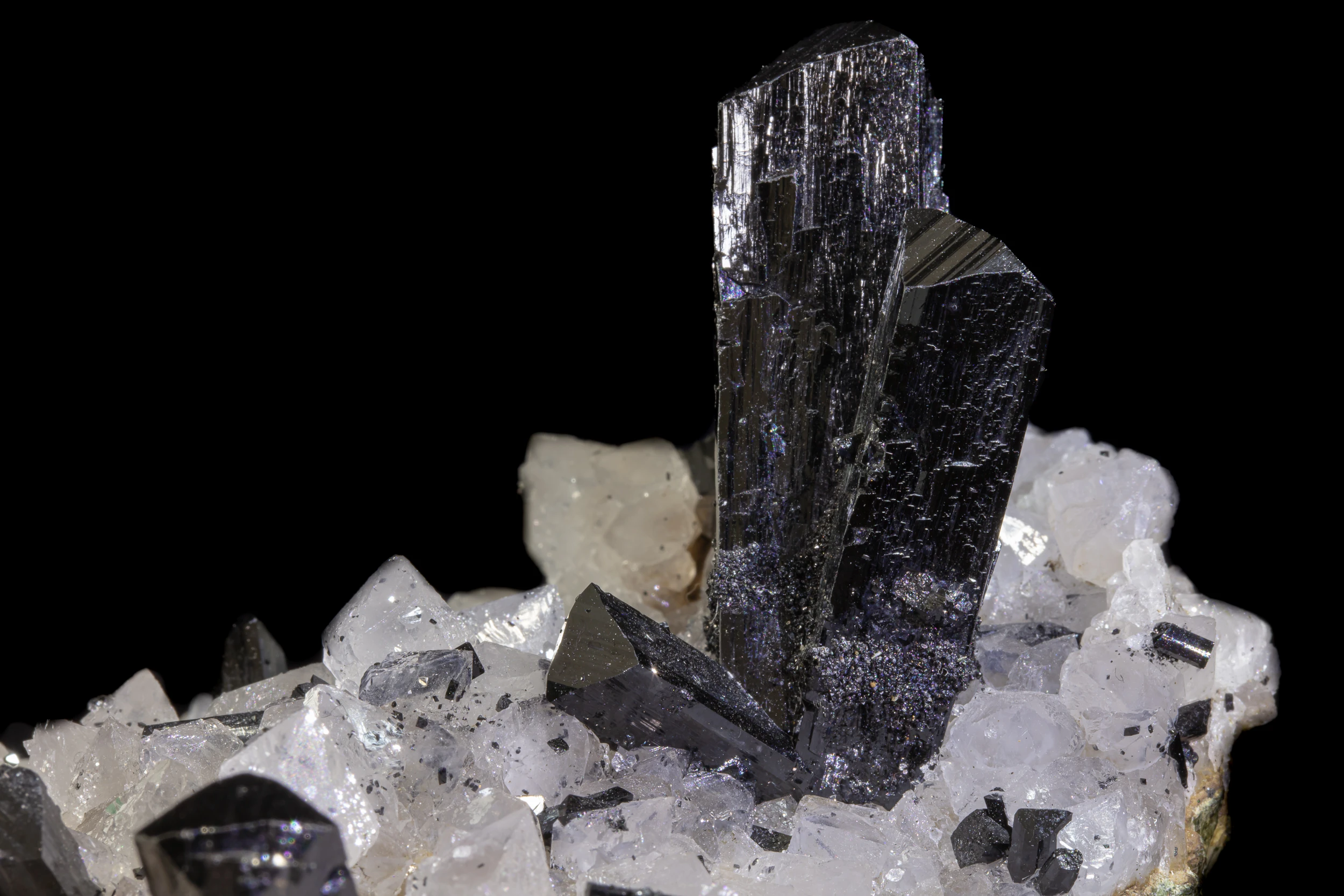
This specimen comes from the 2nd Sovetskii Mine, part of the Partizanskoe lead-zinc deposit at Dalnegorsk, in Primorsky Krai in the Russian Far East. The ore there formed in skarn, a rock created where hot fluids reacted with limestone. According to the dealer, this piece belongs to one of the most impressive ilvaite finds made at Dalnegorsk, in the mid-1990s, and the mines have not produced such specimens in years. Ilvaite is a calcium iron silicate. Here, two large black ilvaite crystals with a mirror-bright, almost wet luster and chisel-shaped tips rise from the top of the specimen, with a few smaller ilvaite crystals around them. They sit on a mound of dark green hedenbergite, visible along the base, which is covered with dozens of sharp, colorless to white quartz crystals. These quartz crystals have a short, double-pyramid shape that collectors call "beta quartz": it copies the high-temperature form of quartz, which normally loses its shape when it cools below about 573°C. This piece comes from the worldwide collection of Richard A. Kosnar (1946-2007), a Colorado mineral dealer who founded Mineral Classics in 1970 and for whom the mineral kosnarite was named in 1993.

Mineral Species

Did you know?

IlvaiteIlvaite is named for Elba, the Italian island of Napoleon's exile. Its black crystals interest physicists because heating them past a certain point reshuffles the crystal's own symmetry.

QuartzPressing a quartz crystal makes it give off a precise electric beat, which is why it keeps time in nearly every watch and once tuned the radios of World War II, when good crystals were a strategic resource.