Kinoite

The Specimen

Cabinet: Small Cabinet (4.5 - 7 cm) – Size: 6.5 x 4.4 x 3.0 cm Origin: Christmas Mine, Christmas, Banner Mining District, Gila County, Arizona – USA

Notes

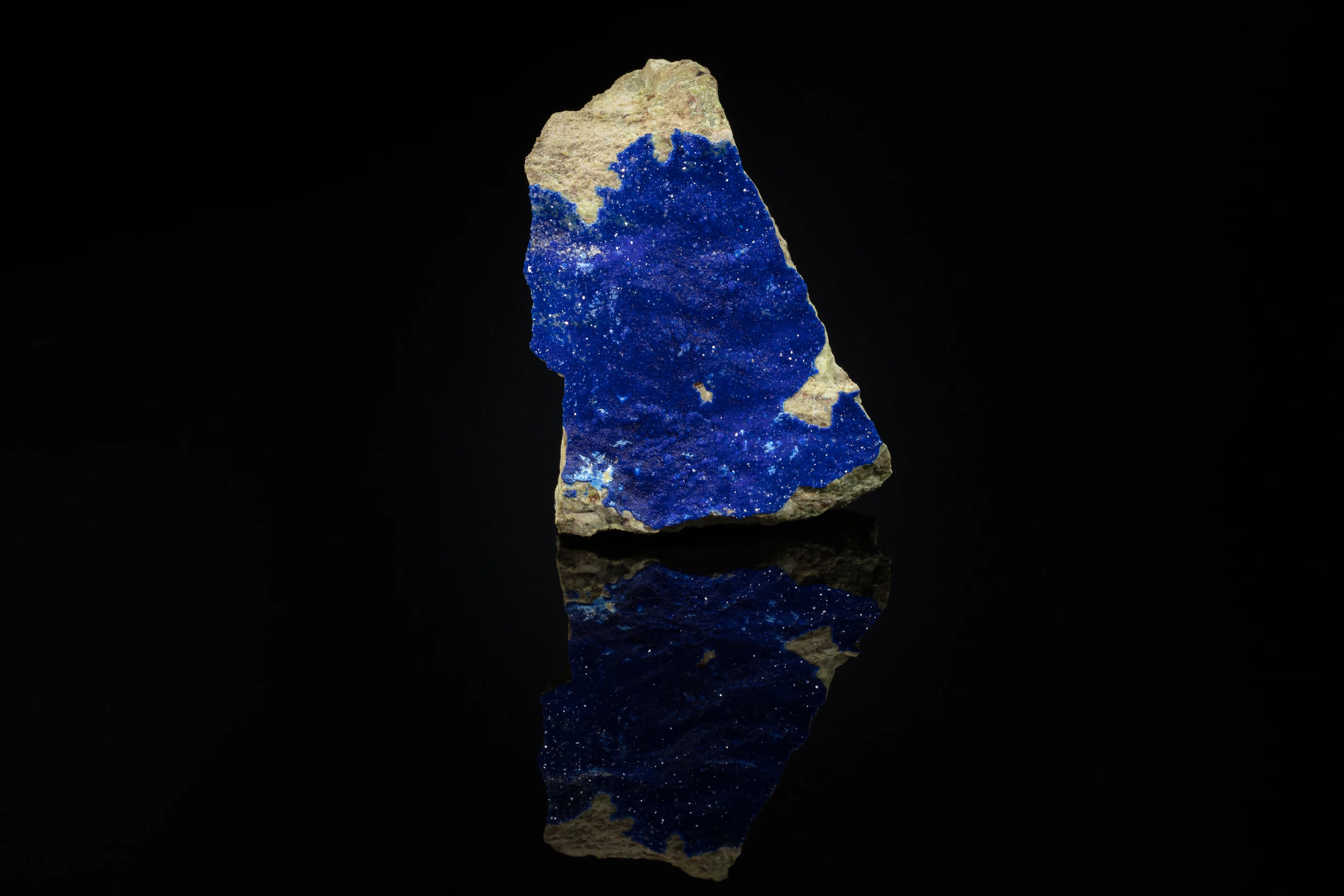
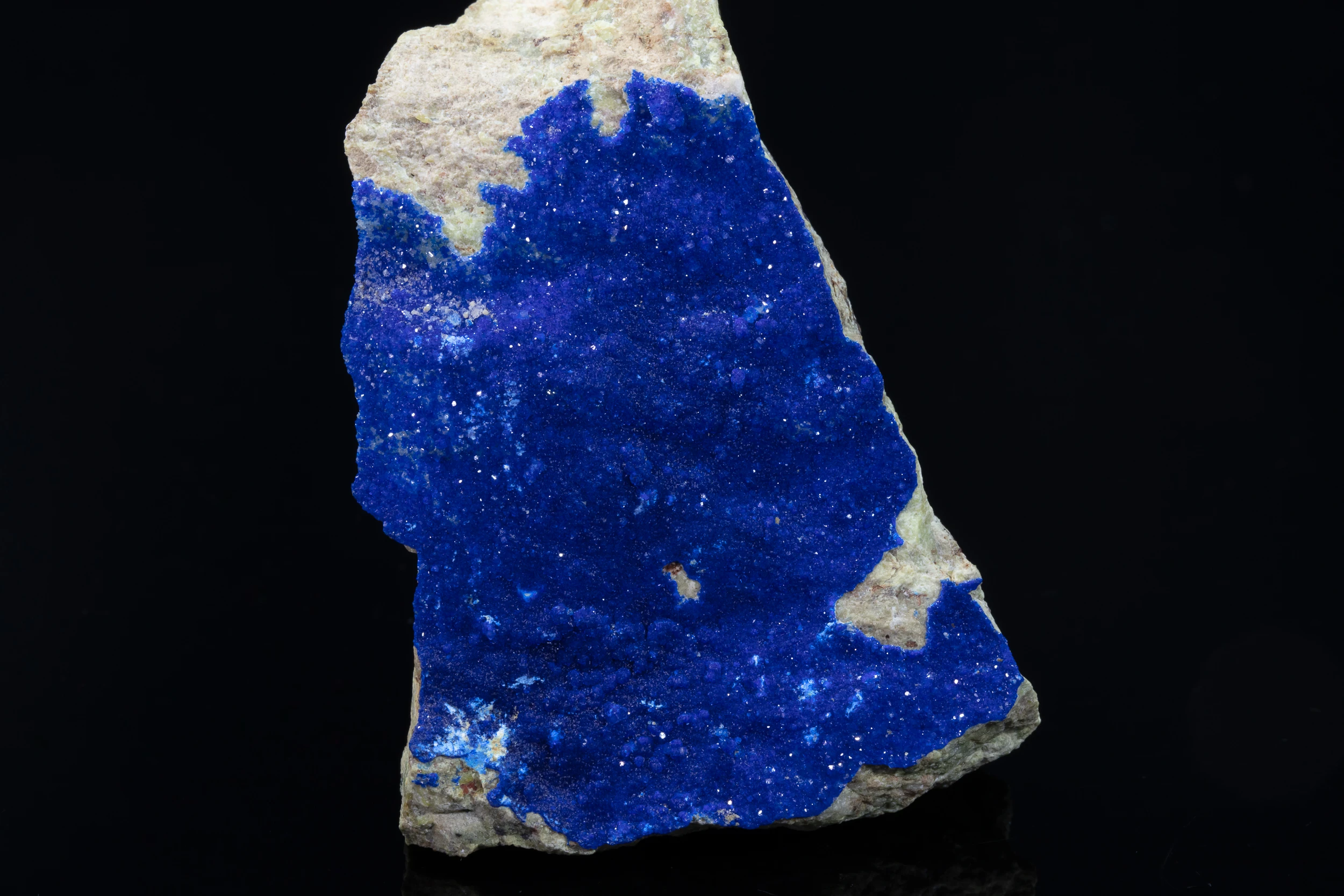
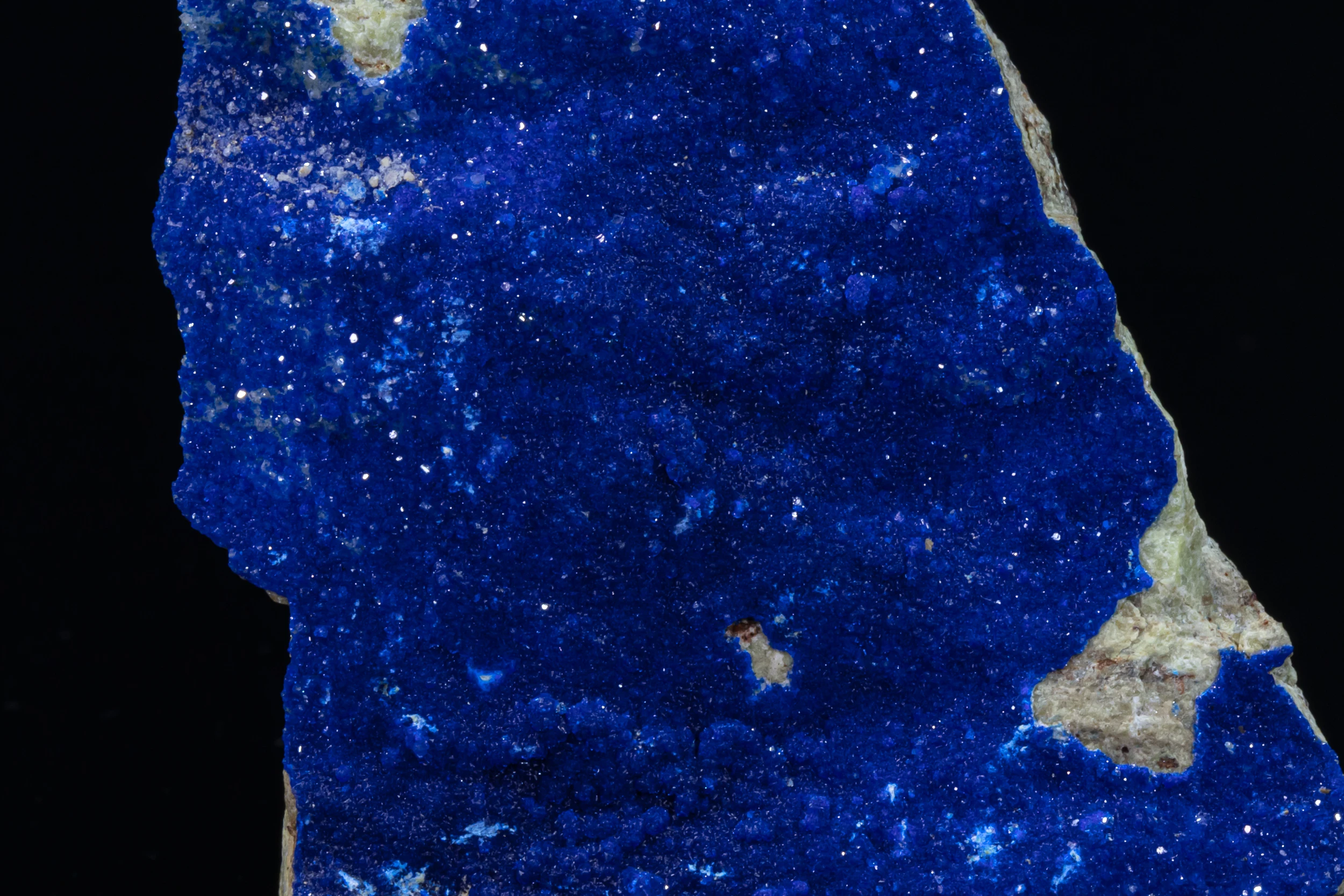
This specimen comes from the Christmas Mine, a porphyry copper mine in the Dripping Spring Mountains of Gila County, Arizona. Much of its ore sits in skarn, a hard rock formed where layers of limestone were transformed by heat and fluids next to a body of magma. When that skarn was later altered again and oxidized, it produced a suite of rare copper and zinc silicates, and the Christmas Mine is the type locality of several of them, such as junitoite, described in 1976, and apachite, described in 1980. Kinoite is a hydrated calcium copper silicate. It was first identified in drill core from the Santa Rita Mountains, south of Tucson, but once it was known, it turned out to be fairly common in the skarn at the Christmas Mine, where it is easily mistaken for azurite. According to the dealer, this piece comes from the finds of the 1970s. Here, a thick crust of tiny, deep royal blue kinoite crystals covers almost the whole front of the specimen, with a few small paler blue spots. The light-colored rock that shows at the top and along the right edge is the matrix. At the Christmas Mine, kinoite grows on fine-grained skarn, so this matrix is most likely skarn, though it has not been tested.

Mineral Species

Did you know?

Kinoite is named for Father Kino, the seventeenth-century missionary who mapped the American Southwest, yet the mineral stayed unknown until 1970. Its intense blue rivals sapphire, but it forms only as tiny crystals deep in copper deposits.