Shattuckite

The Specimen

Cabinet: Cabinet (7 - 10 cm) – Size: 9.0 x 6.1 x 3.7 cm Origin: Tantara Mine, Shinkolobwe, Kambove Territory, Haut-Katanga – Congo (DRC)

Notes

This specimen comes from the Tantara Mine, a small, long-abandoned open-pit copper mine near Shinkolobwe, in the Katanga copper belt of the Democratic Republic of the Congo. In 2014 a large pocket there produced shattuckite of a size and color never seen before. Tantara shattuckite was already known in the 1950s: the Royal Museum for Central Africa in Belgium holds dark blue pieces donated in 1957 and 1958.
Shattuckite is a rare copper silicate, named after the Shattuck Mine in Bisbee, Arizona.
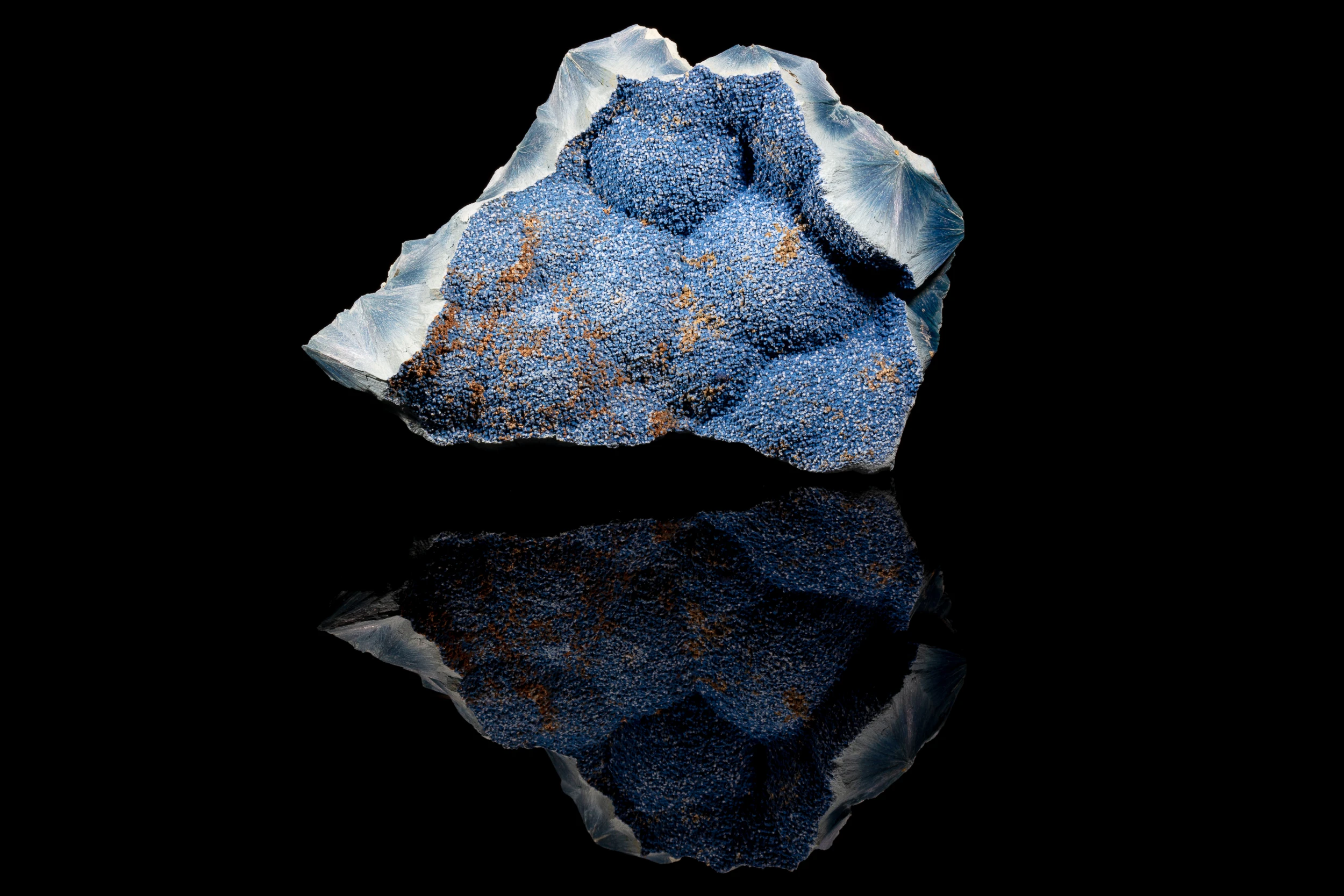
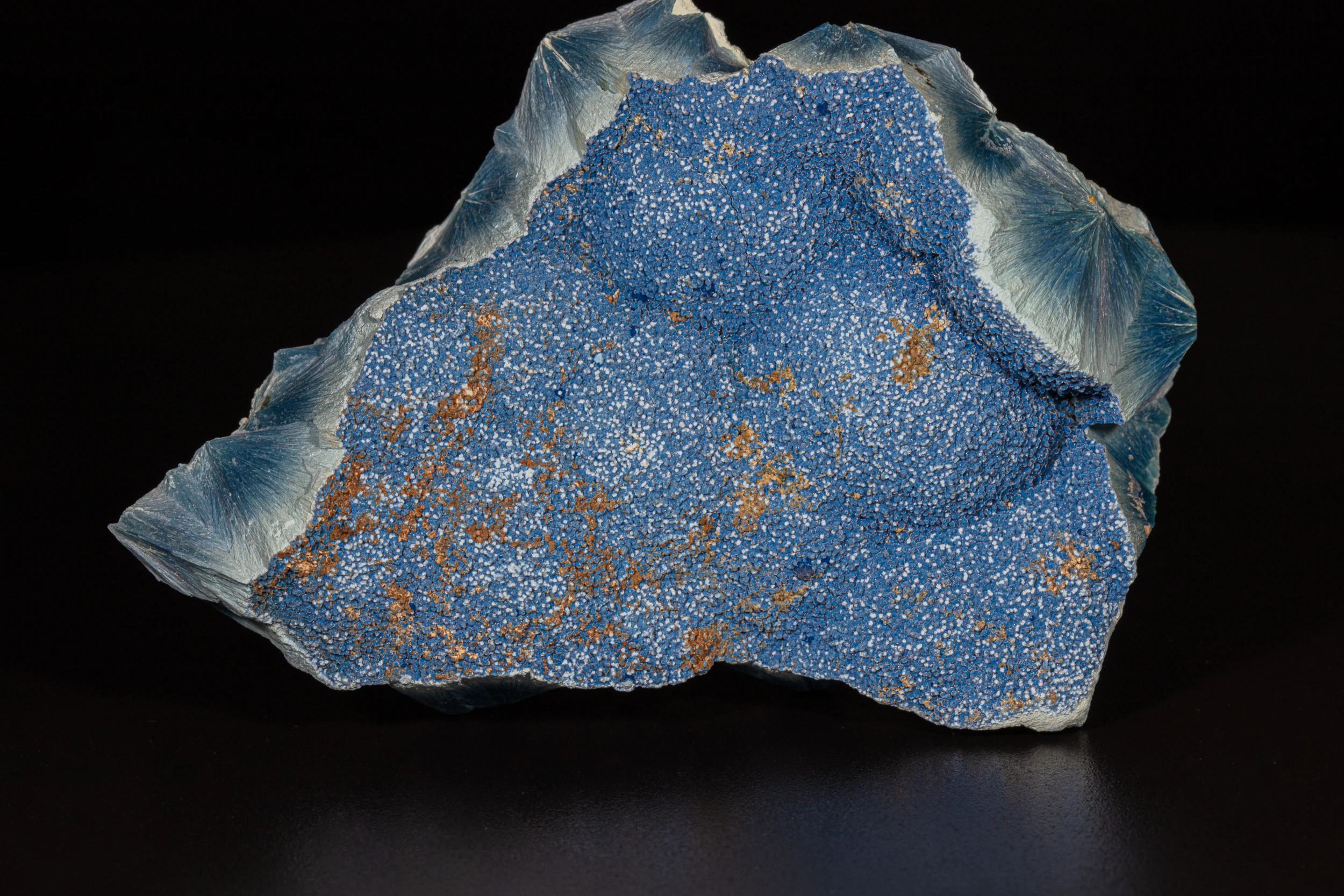
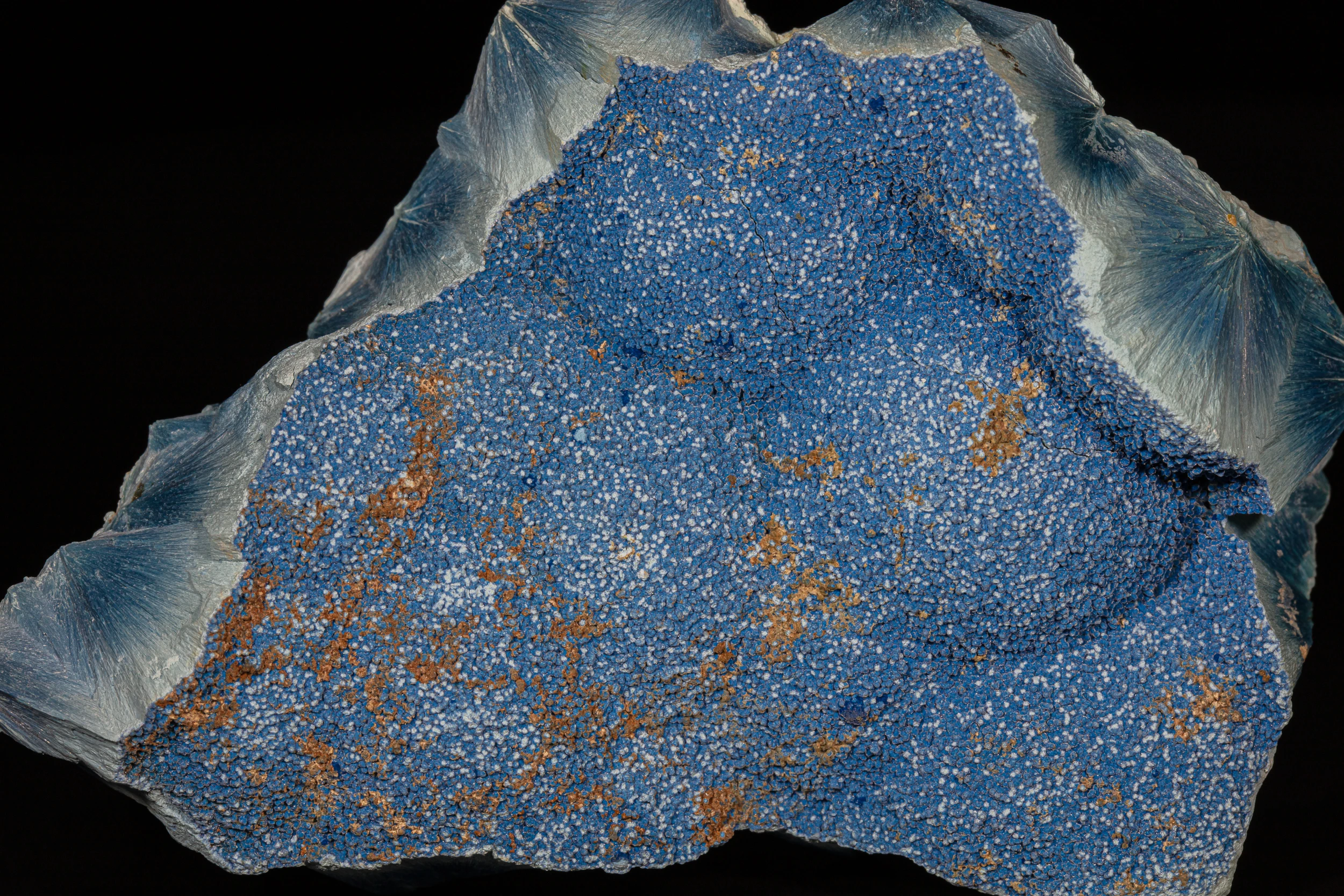
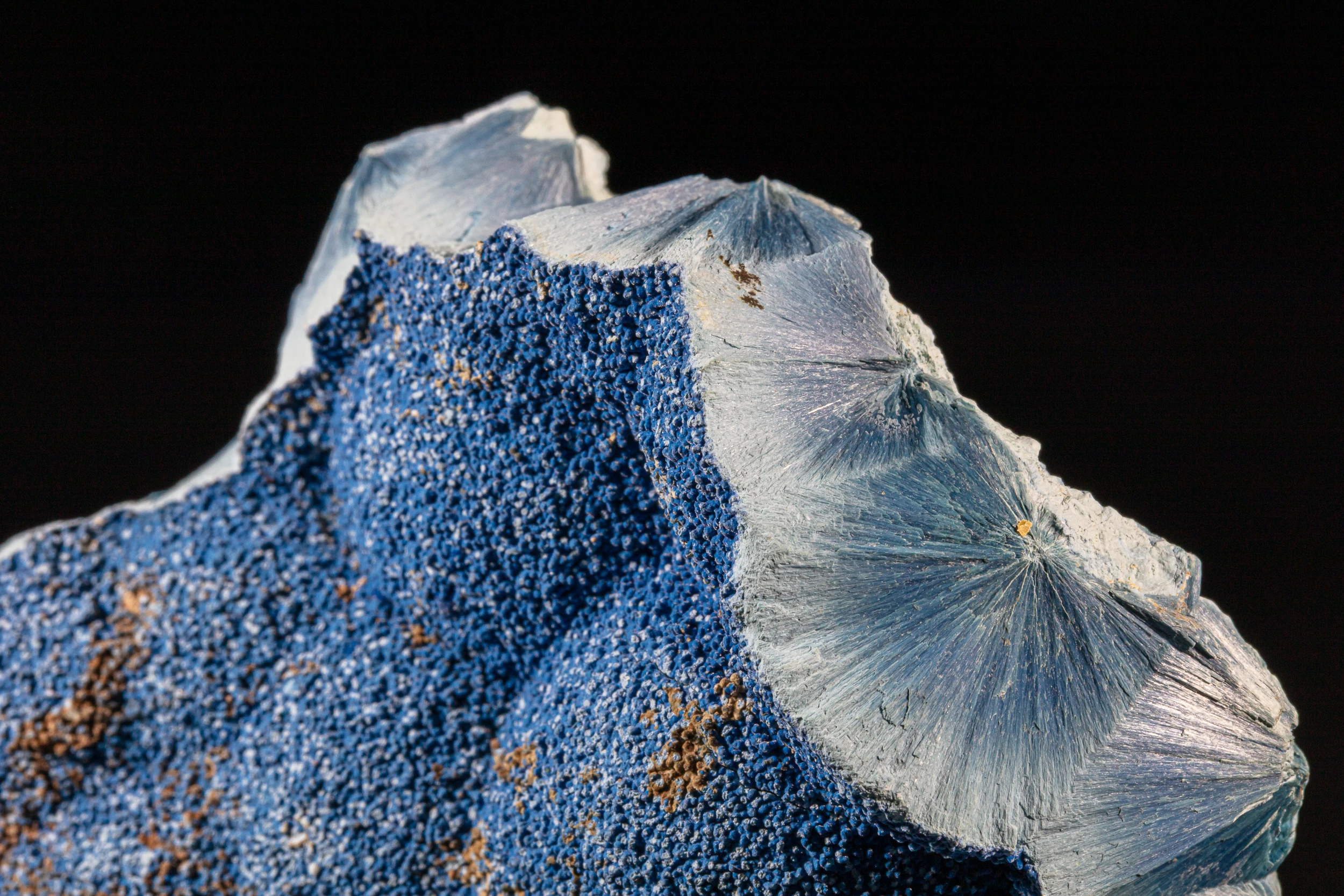
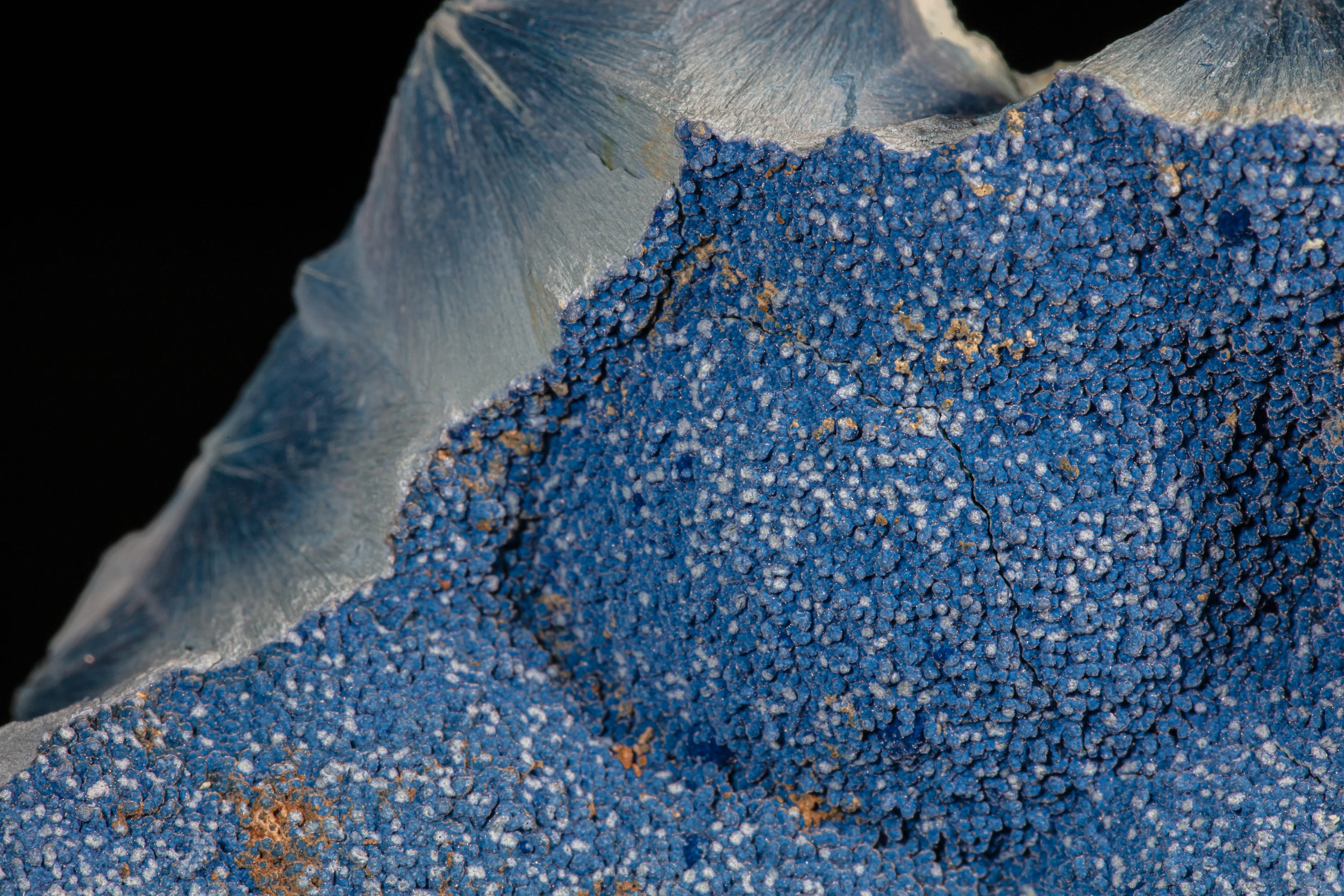
Here, a matrix-free mass of shattuckite forms rounded, bumpy blue botryoids with a grainy, sparkling surface. Along the broken edges, the inside shows pale blue-gray fibers radiating out from each botryoid. Small rusty brown specks dot the surface. According to the dealer, the material was confirmed as shattuckite at the University of Arizona, and it may also contain a little plancheite and possibly ajoite.

Mineral Species

Did you know?

Shattuckite belongs to the silicates, the same vast family as quartz and feldspar, the stuff of sand and pale rock. Yet nearly half its weight is copper, which is why it glows in deep blues rather than the quiet tones of its relatives.