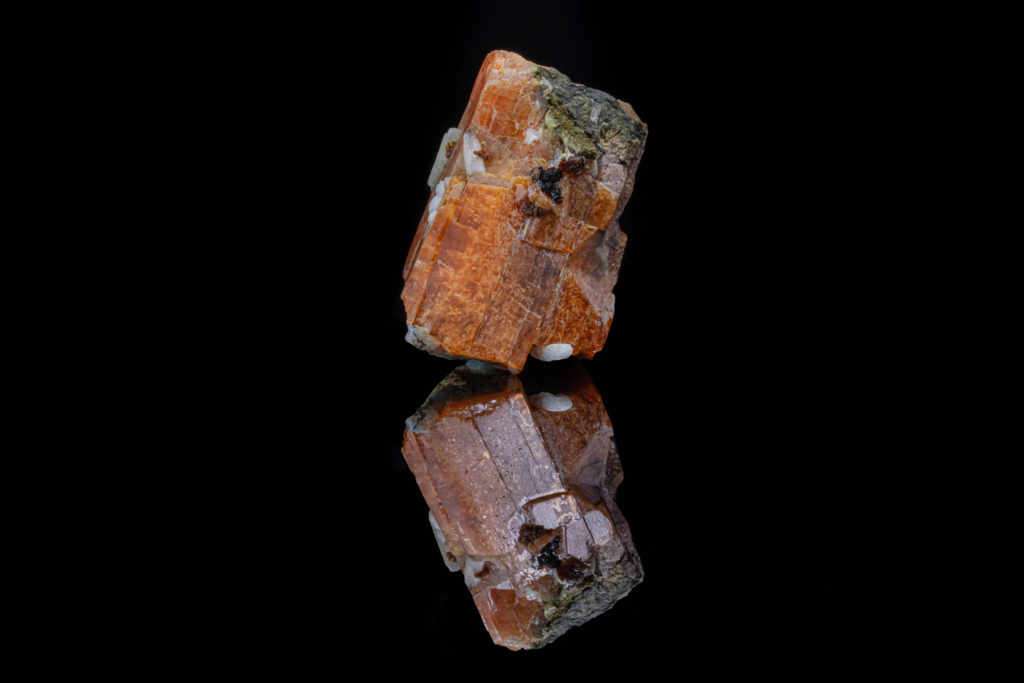
Serandite

The Specimen

Cabinet: Small Cabinet (4.5 - 7 cm) – Size: 6.4 x 3.8 x 3.2 cm Origin: Poudrette Quarry, Mont Saint-Hilaire, La Vallée-du-Richelieu RCM, Montérégie, Québec – Canada

Notes

This specimen comes from the Poudrette Quarry at Mont Saint-Hilaire, Québec, Canada. The quarry covers only about 13.5 hectares, yet it is one of the richest mineral localities in the world and has produced more new mineral species than any other site in Canada. The reason lies in its unusual alkaline rocks and their many different mineral environments.
Serandite is a sodium manganese silicate. It was first described from Guinea, and according to the dealer, the Poudrette Quarry has produced the finest serandite crystals ever found.
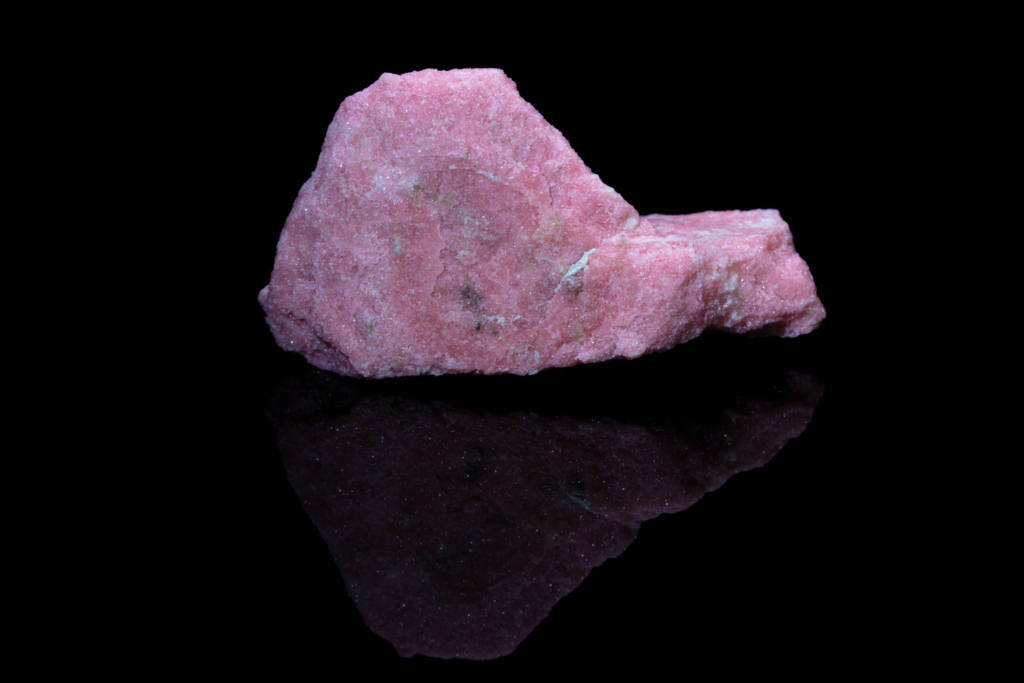
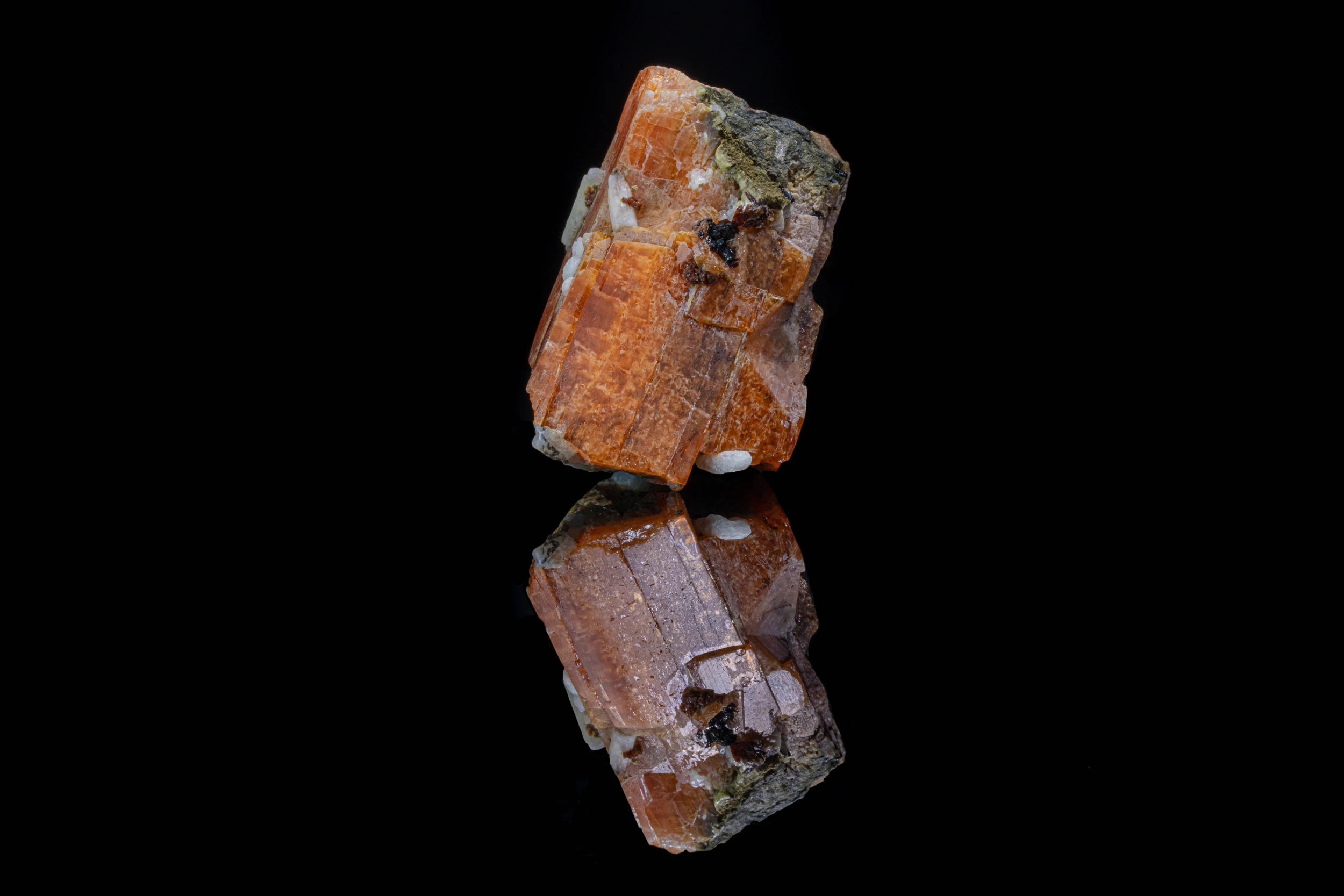
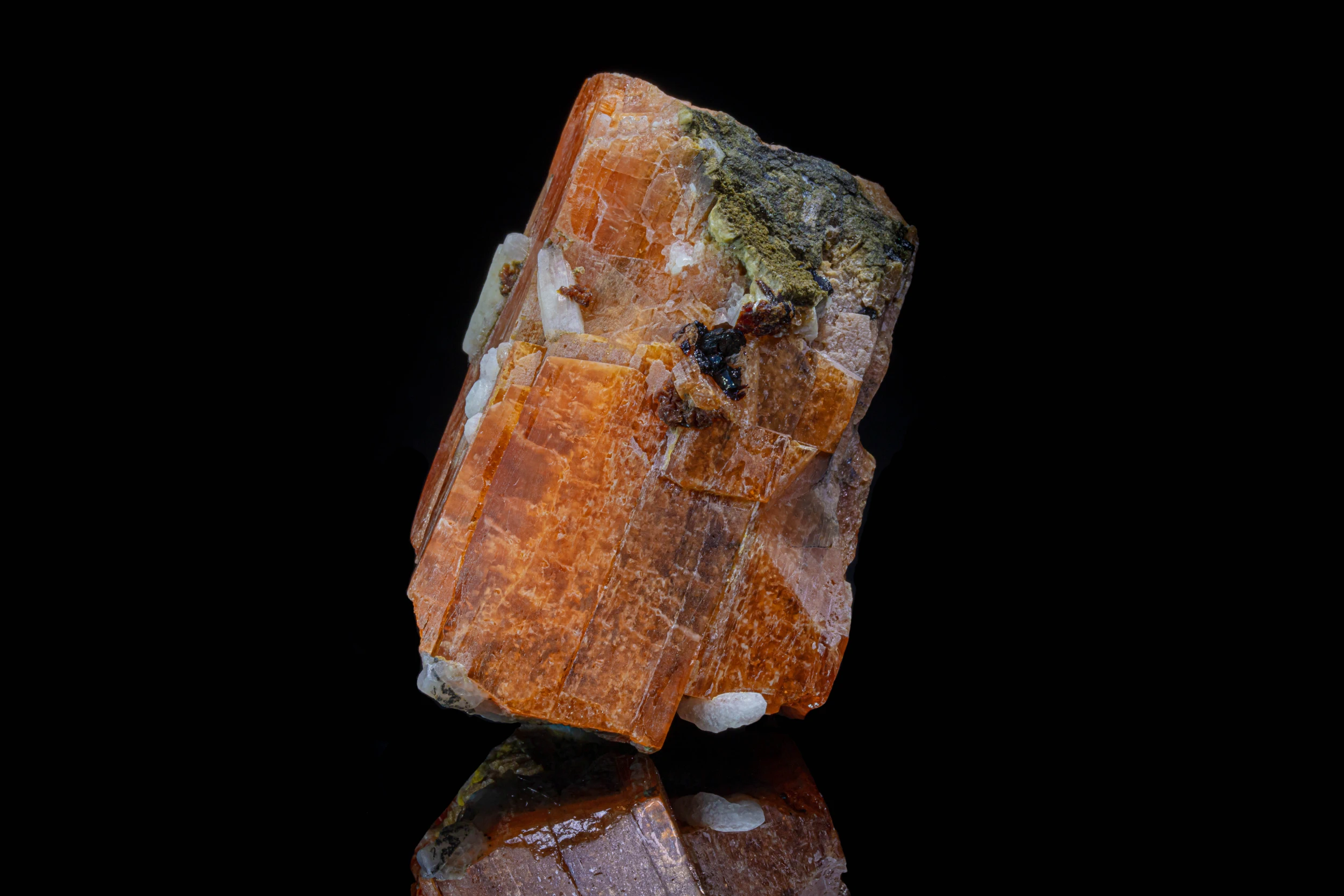
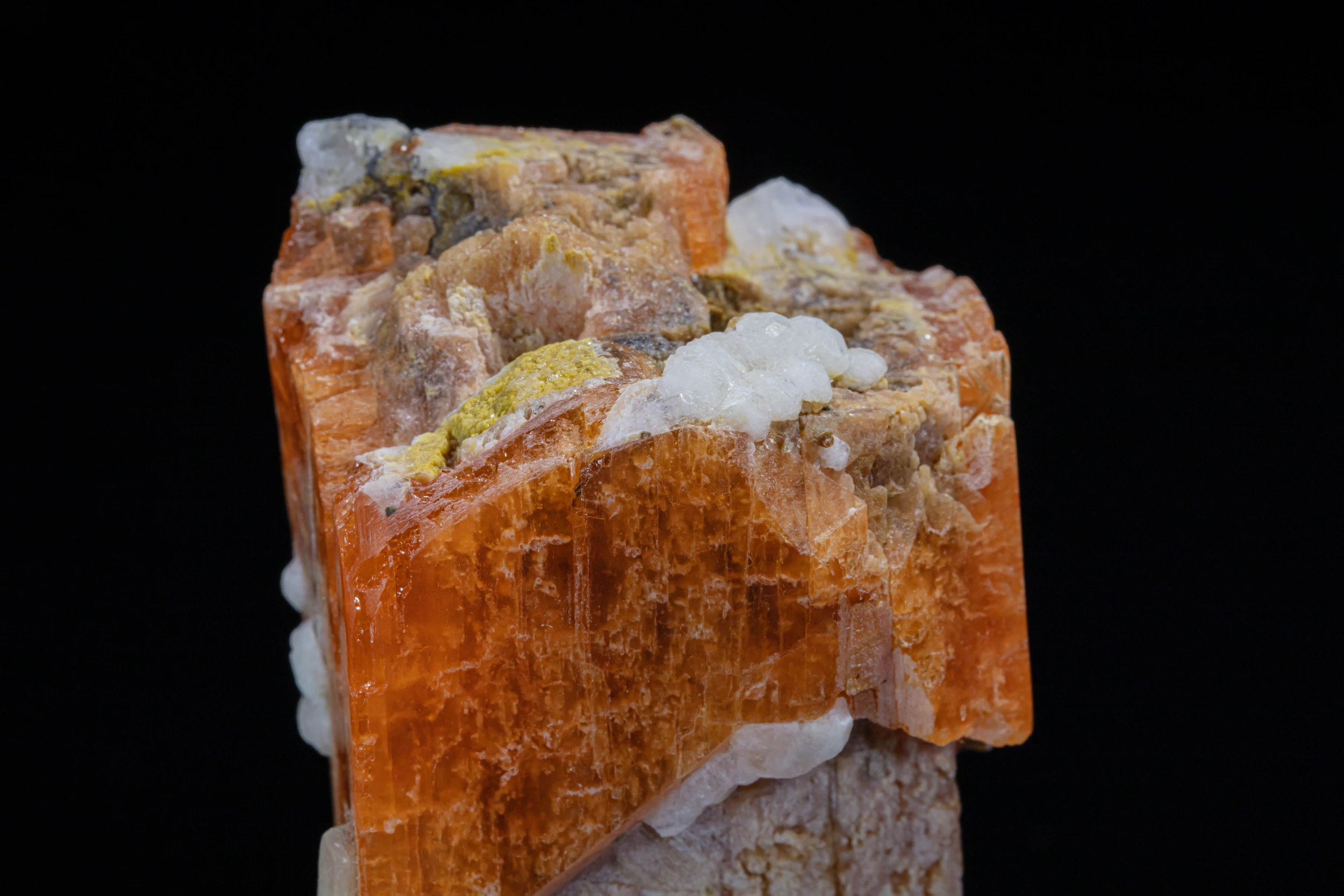
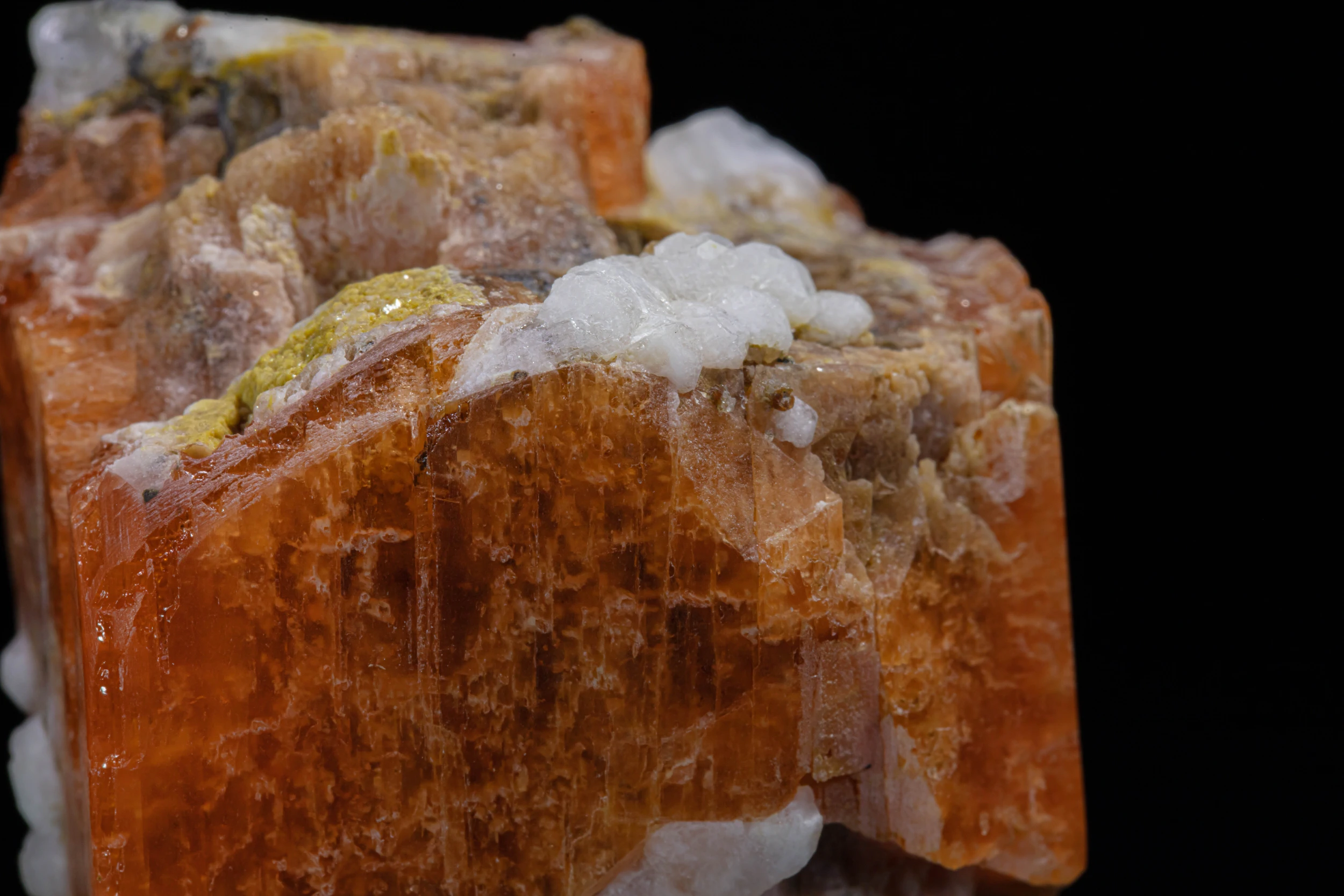
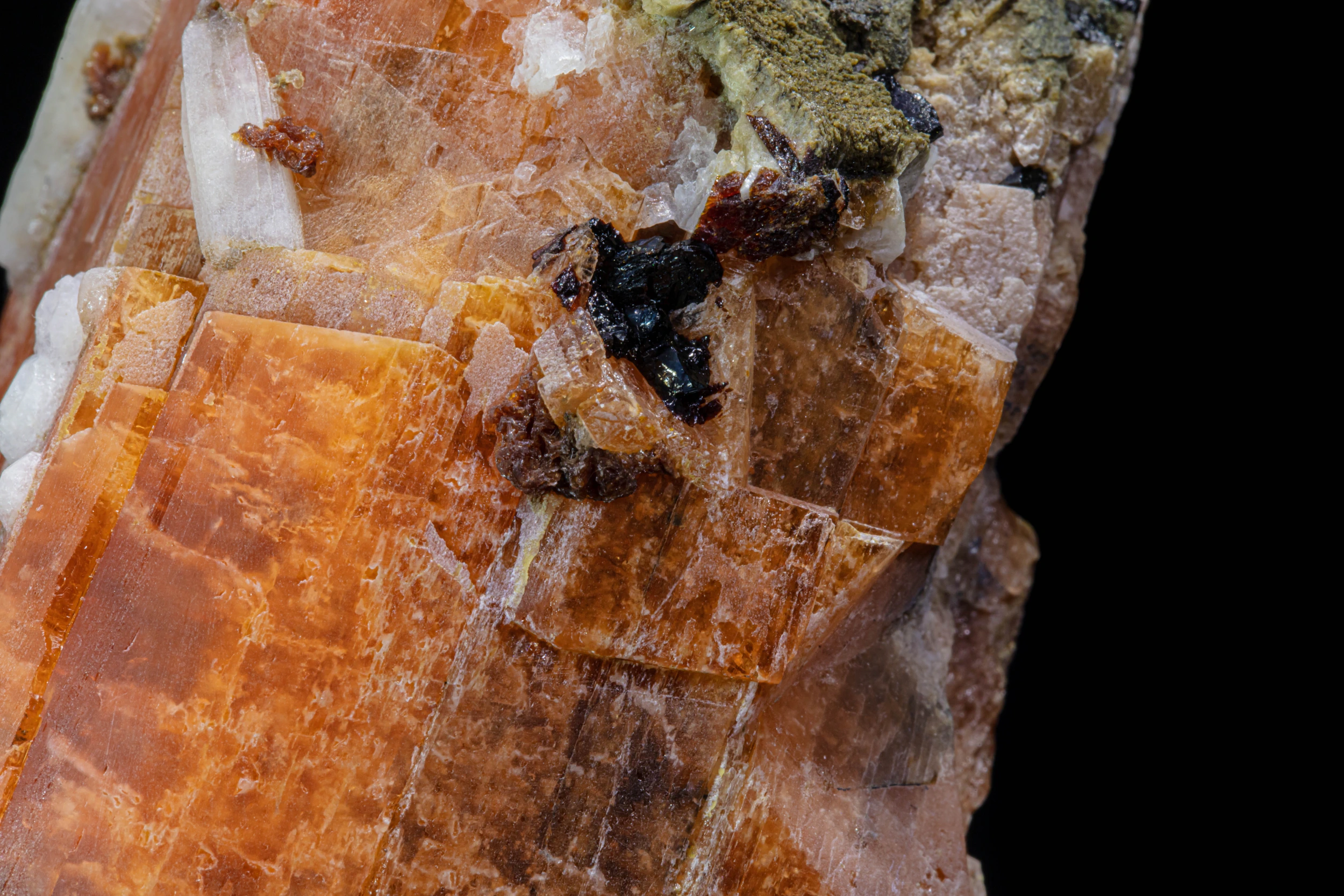
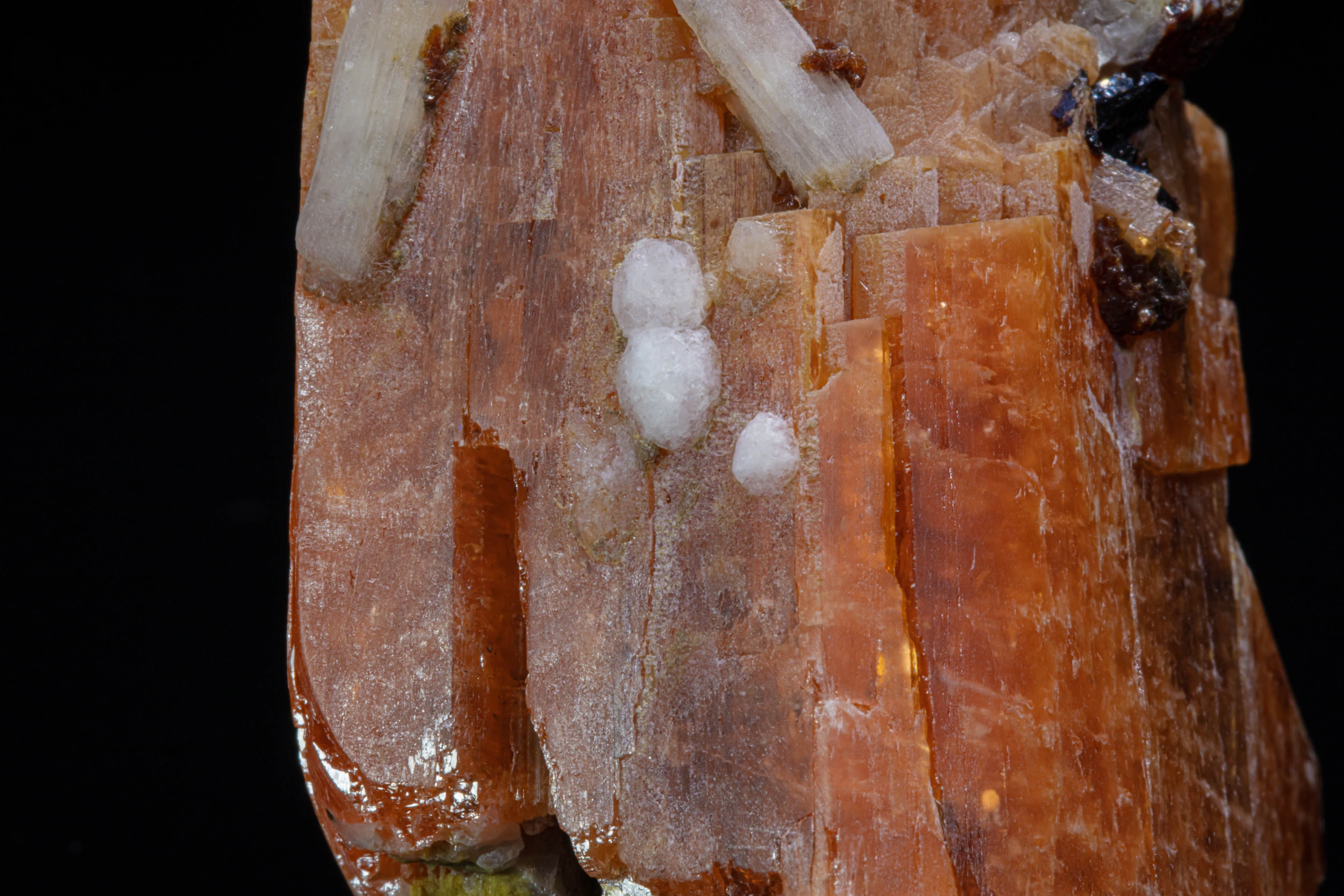
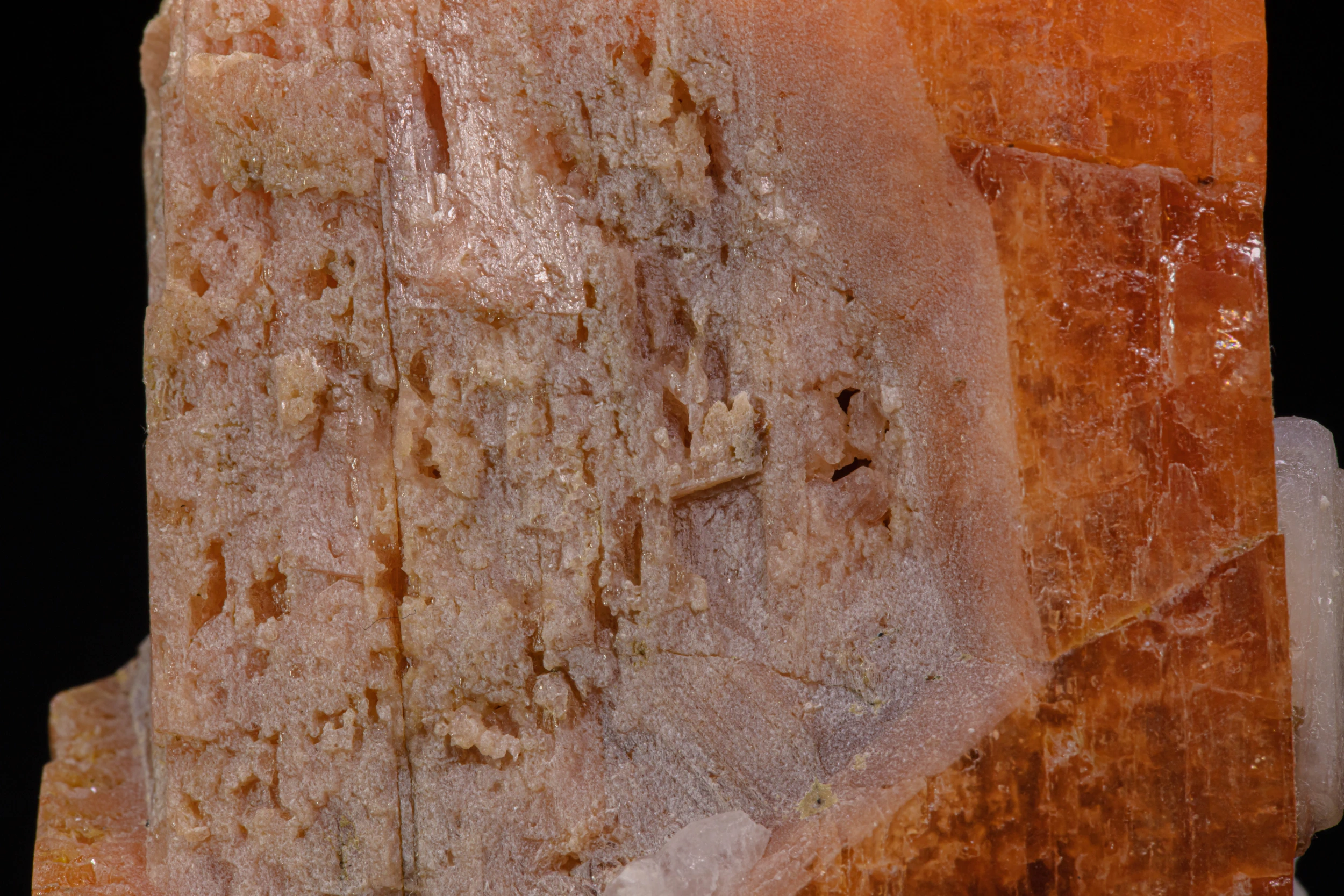
Here, a stout, salmon-orange serandite crystal is doubly terminated: it grew across its pocket until it touched both sides. One end shows striated, semi-skeletal growth, and the other a smoother termination. Small chalky white analcime crystals and natrolite prisms sit on the surface. A few small black crystals are probably aegirine, a common associate at Mont Saint-Hilaire, and a little yellow crust is not identified.

Mineral Species

Did you know?

Almost every fine serandite on Earth comes from one small quarry in Quebec. That single site, Mont Saint-Hilaire, has yielded more than 400 different mineral species, dozens of them found nowhere else, which makes one Canadian hill among the most mineral rich spots on the planet.