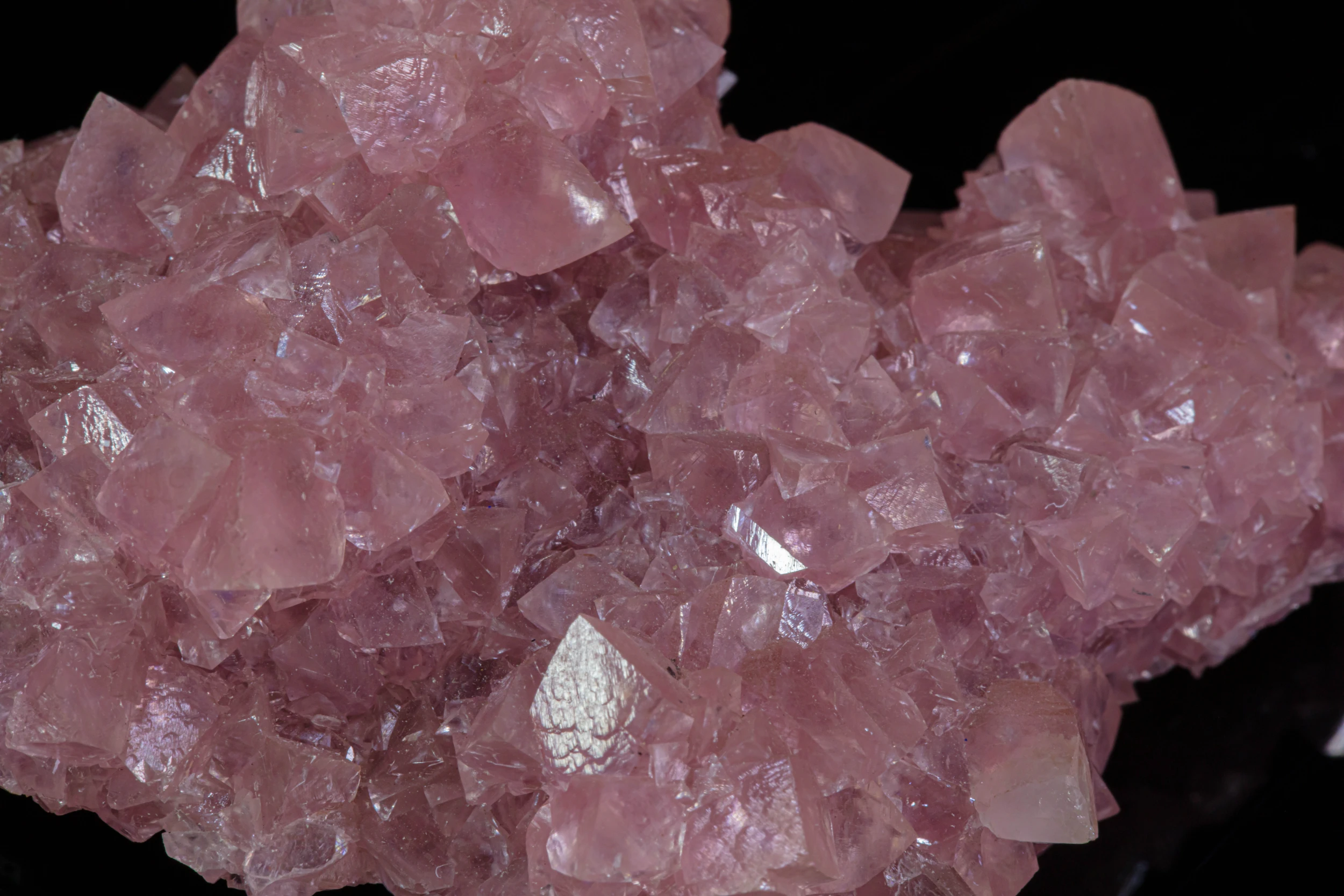
Smithsonite (Pink)

The Specimen

Cabinet: Small Cabinet (4.5 - 7 cm) – Size: 5.2 x 3.7 x 1.7 cm Origin: Tsumeb Mine, Tsumeb, Oshikoto Region – Namibia

Notes

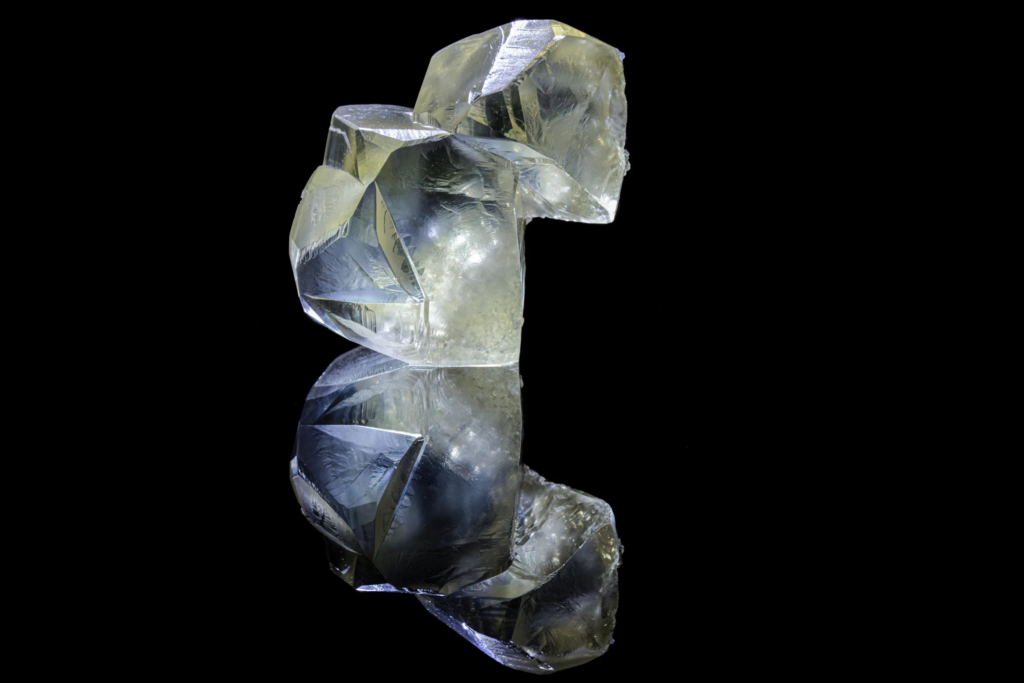
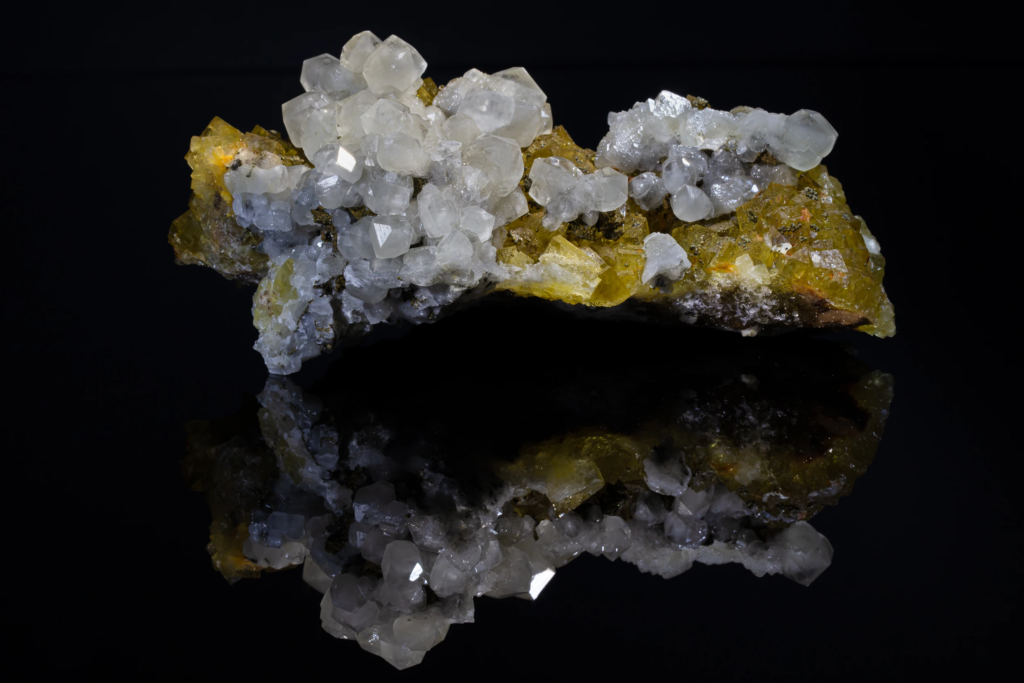
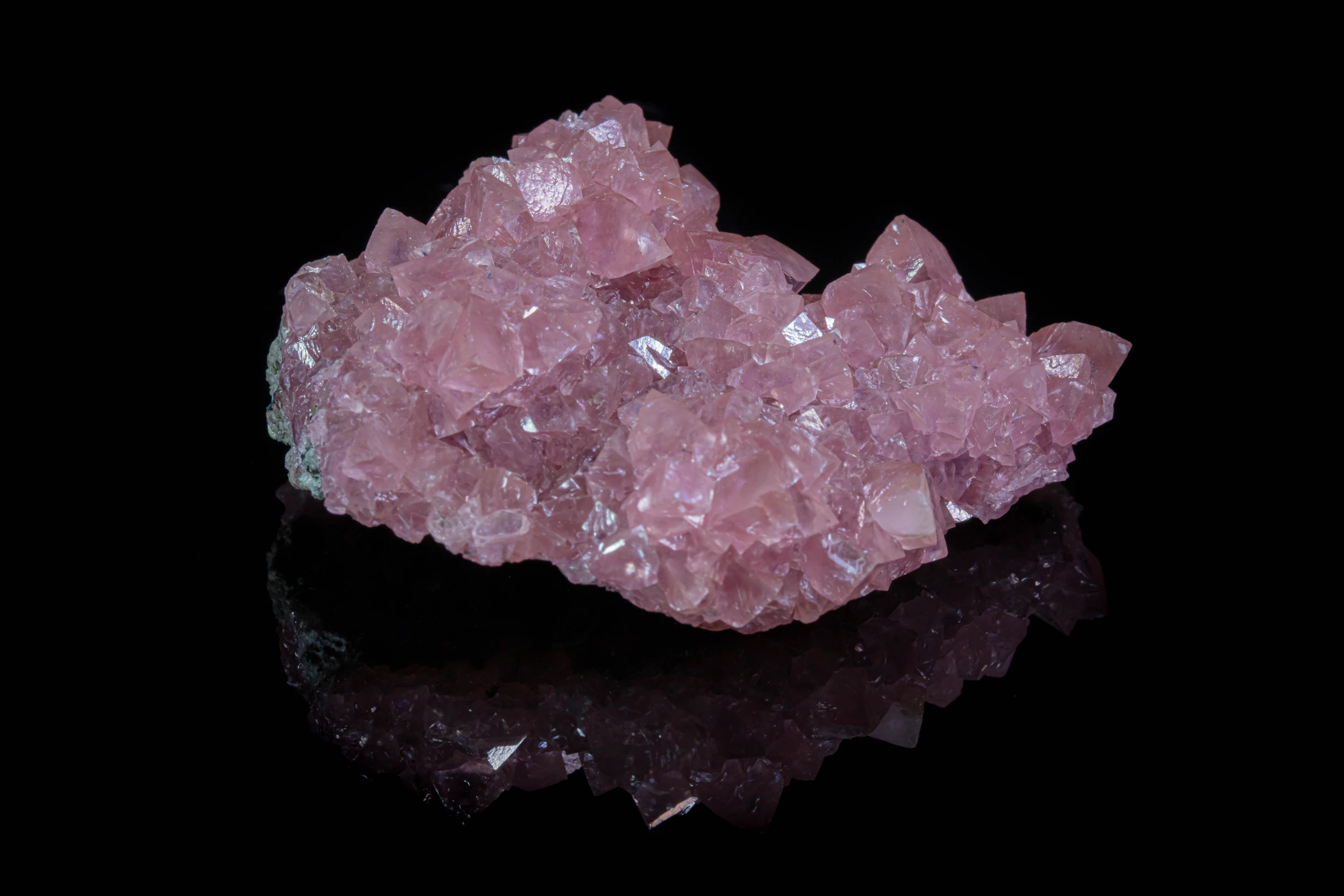
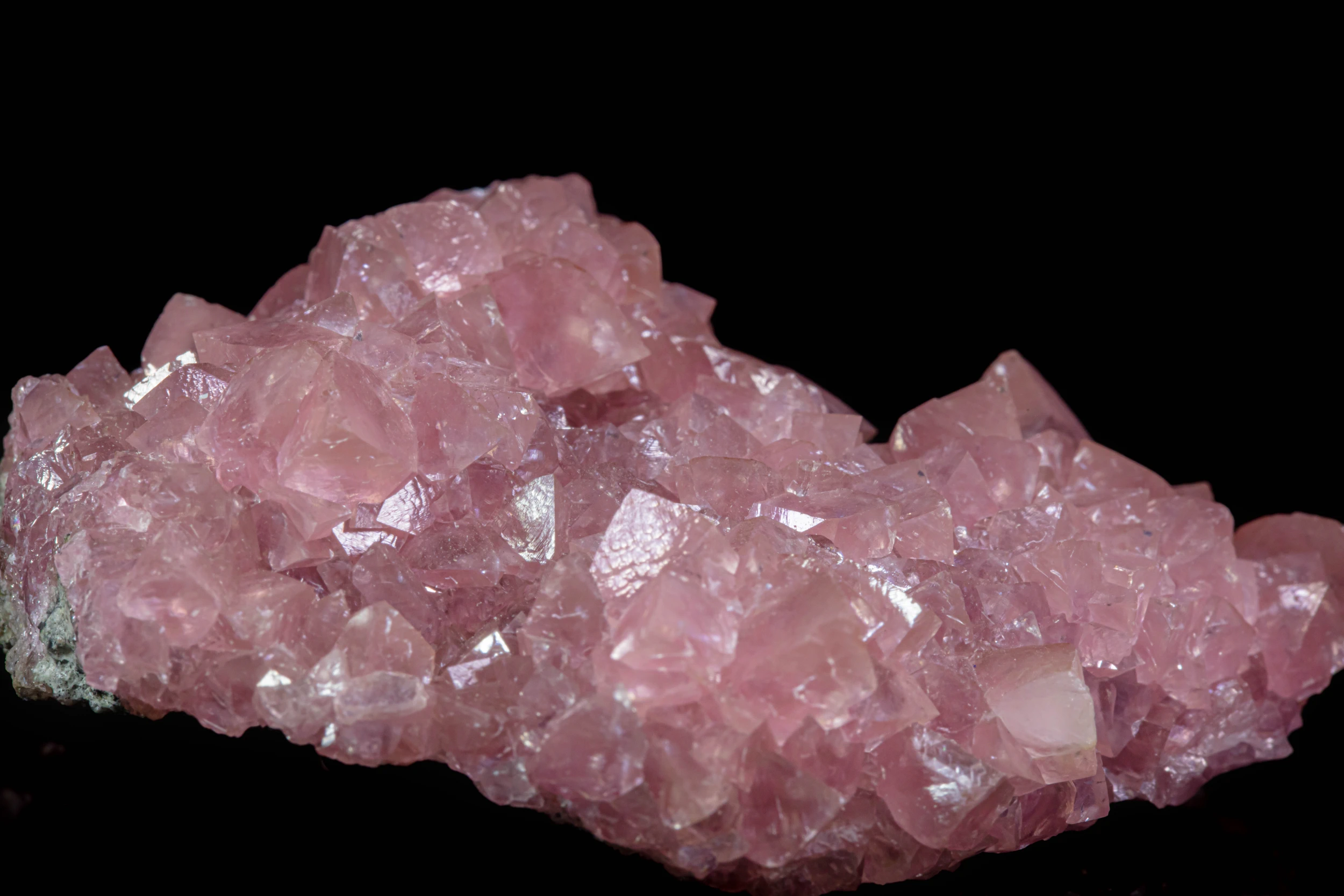
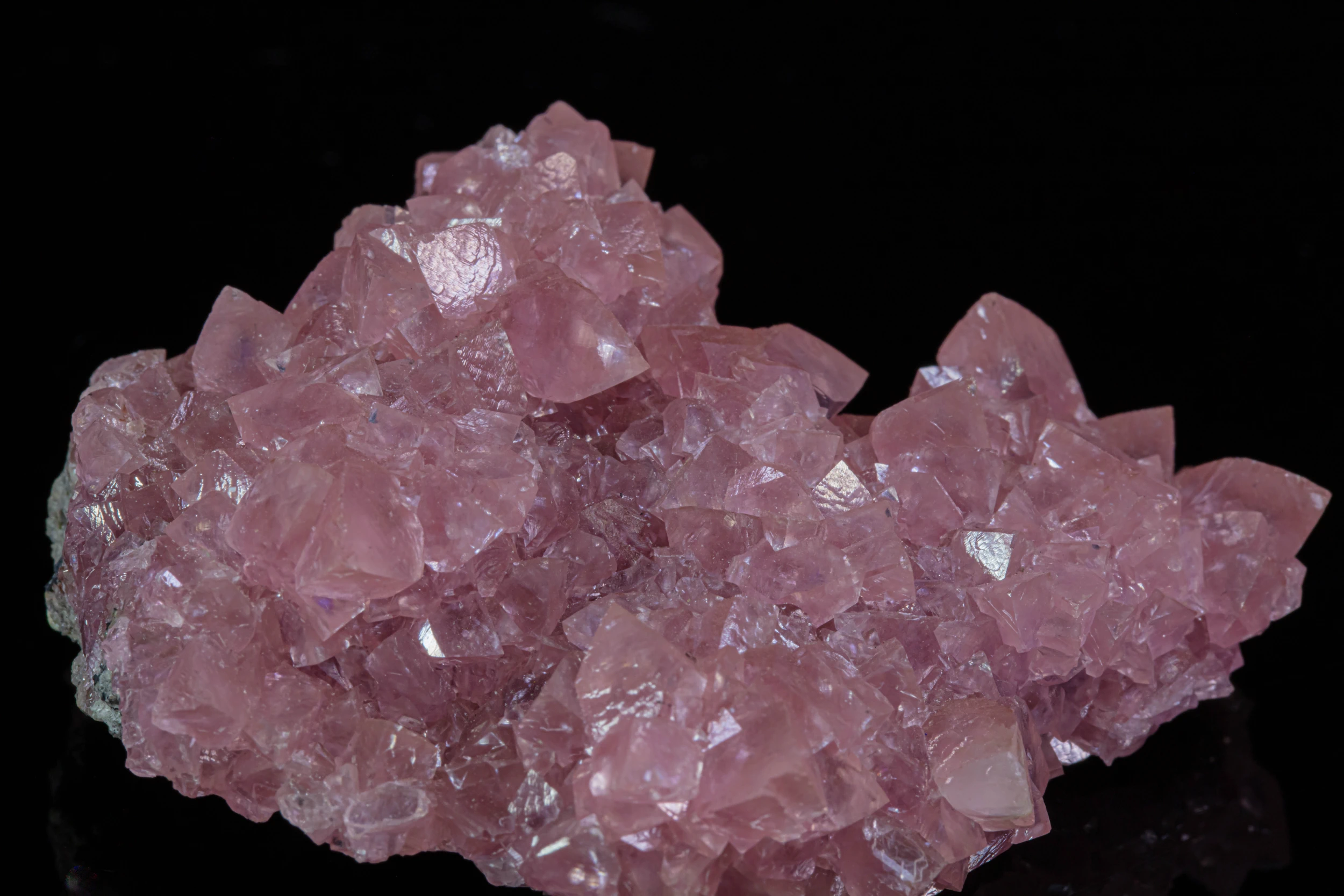
A crust of pink smithsonite crystals covers this specimen from end to end. Each crystal is a simple rhombohedron, a cube-like shape leaning to one side, with glassy to pearly faces, and many are clear enough to glow when light passes through. A small green patch shows at one end of the base. Smithsonite is a zinc carbonate that forms when zinc ores break down near the surface.
Pink smithsonite like this is known to collectors as cobalt-bearing. Studies of the mine credit the color to cobalt or manganese, without a published chemical test to say which.
Mined from 1906 to 1996, Tsumeb is one of the richest mineral localities known, with about 337 minerals, 72 of them first described there. Pink smithsonite came mostly from the second oxidation zone, and the finest crystals were found in the late 1960s and 1970s.

Mineral Species

Did you know?

For centuries smithsonite and a different zinc mineral, hemimorphite, were sold under one name, calamine. They looked alike and were mined together, and no one told them apart until chemistry did, in the 1800s. The old name lives on in calamine lotion, the pink cream once made from zinc ore.