Sodalite & Nepheline
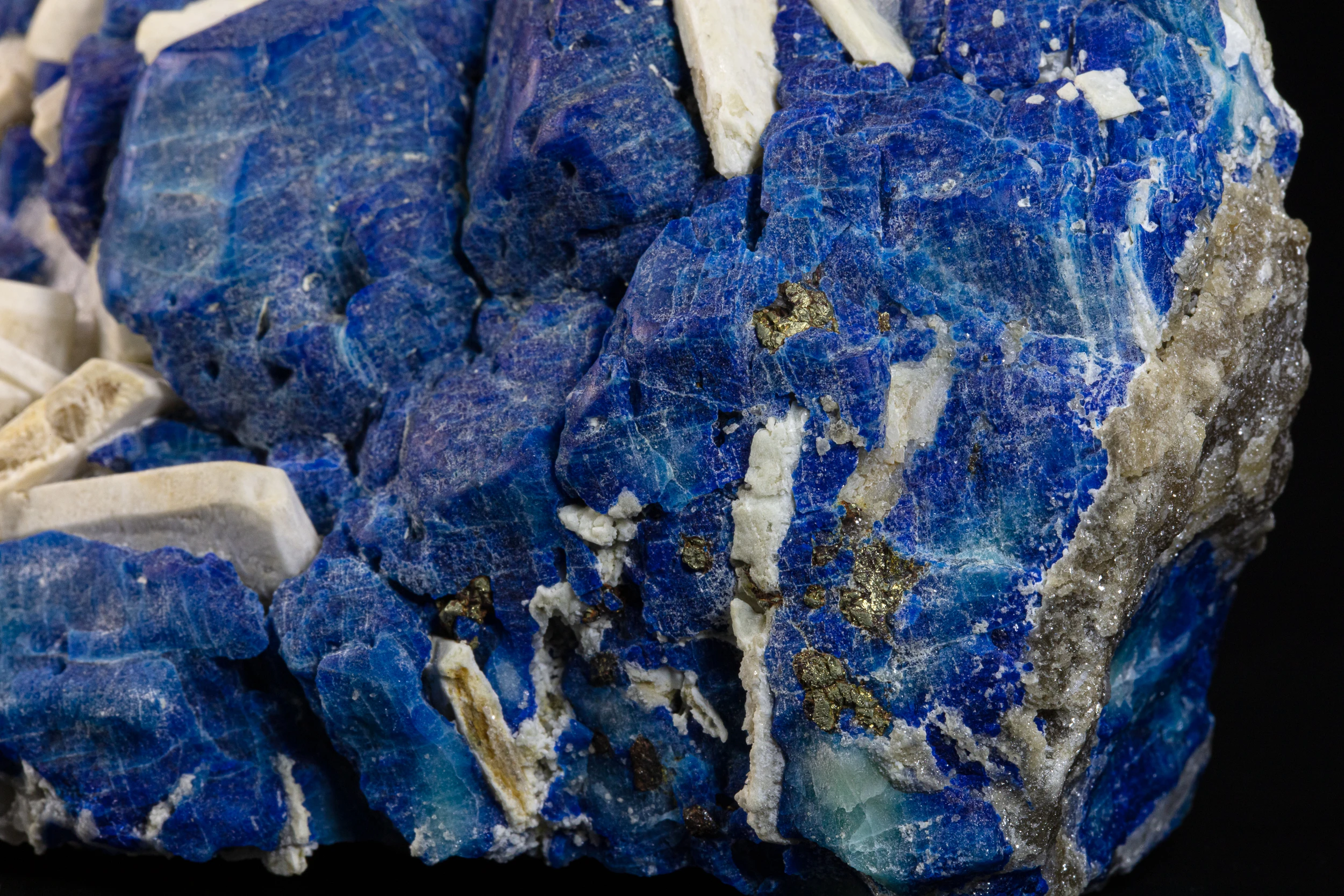
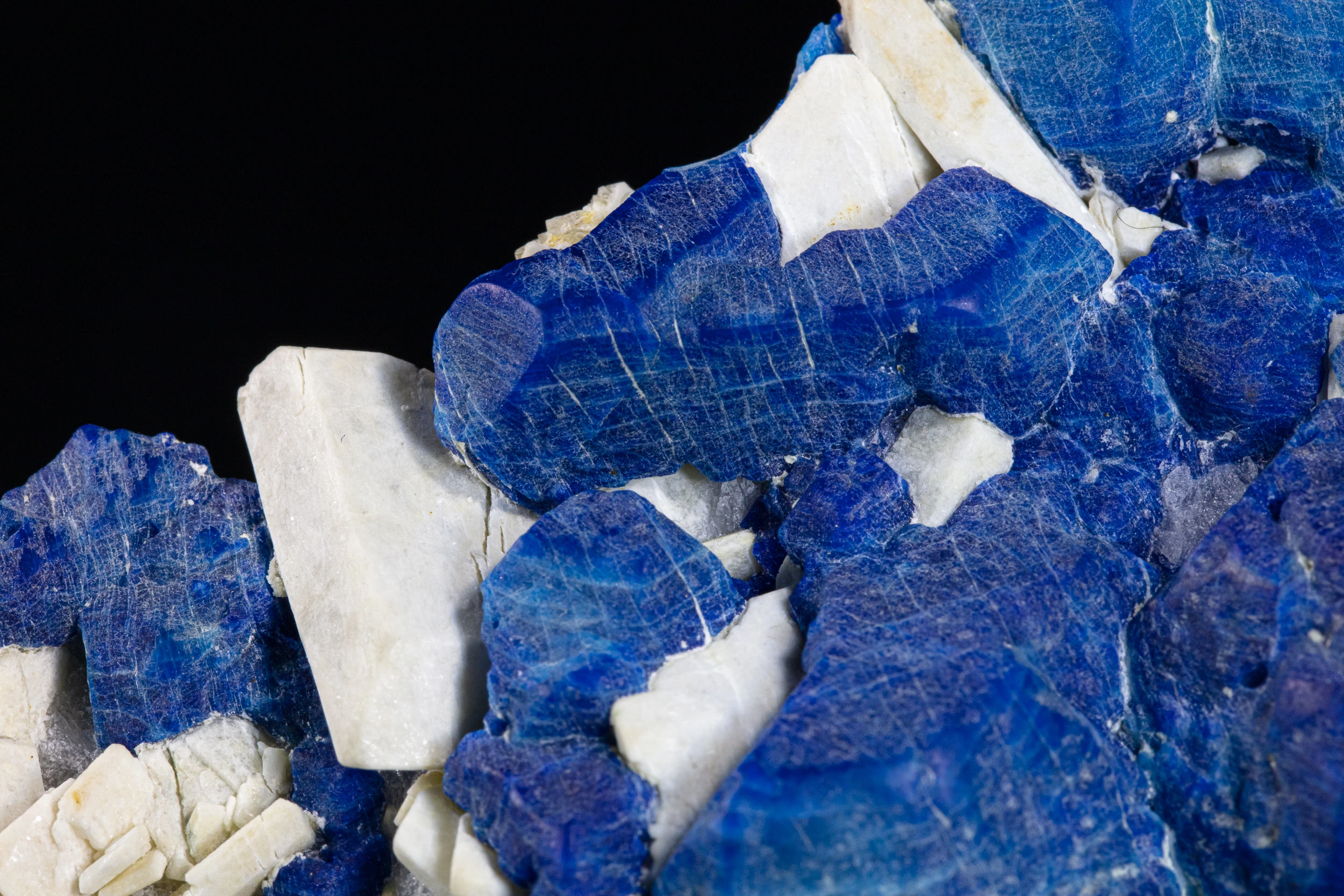
The Specimen
Notes
Mineral Species
Did you know?
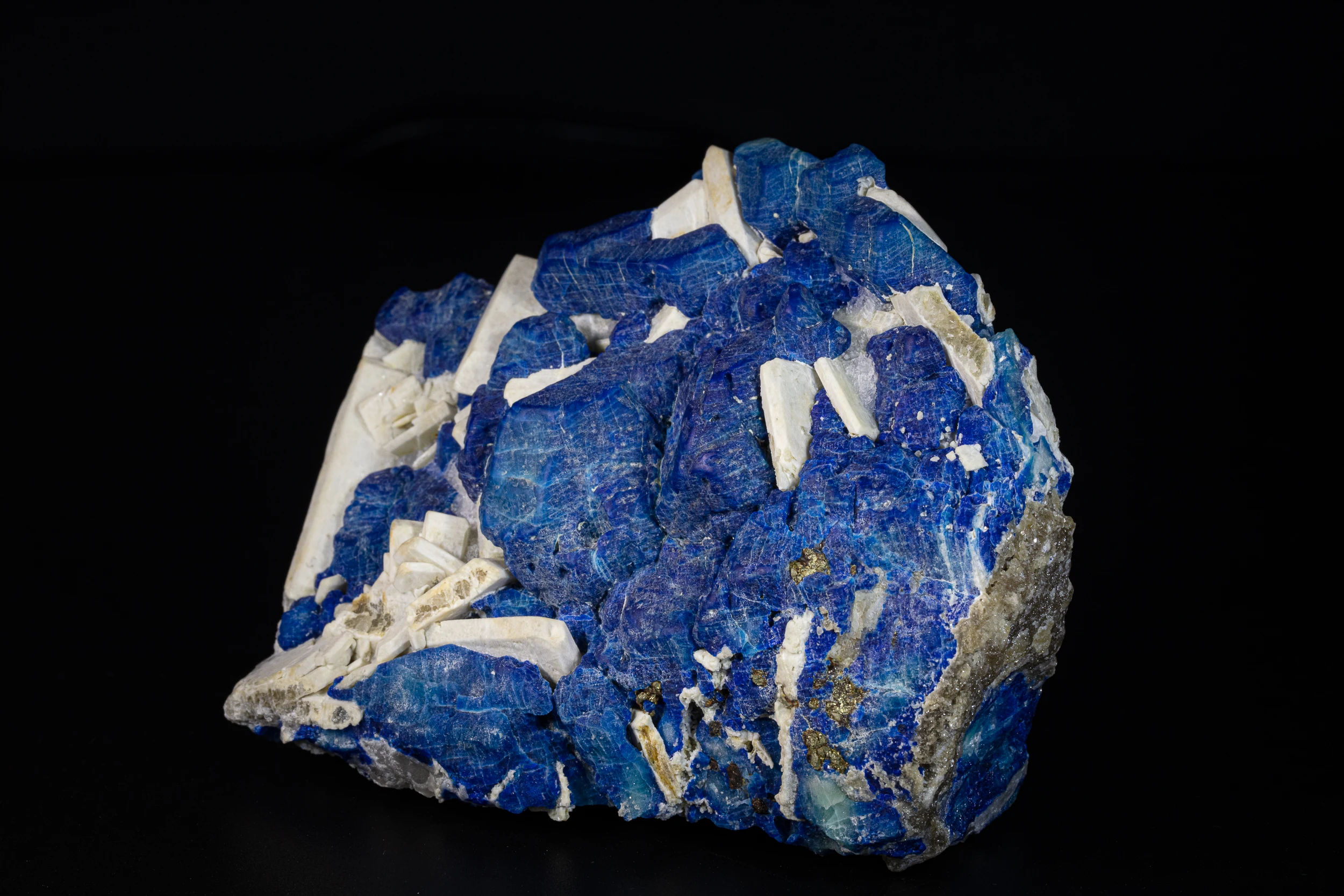
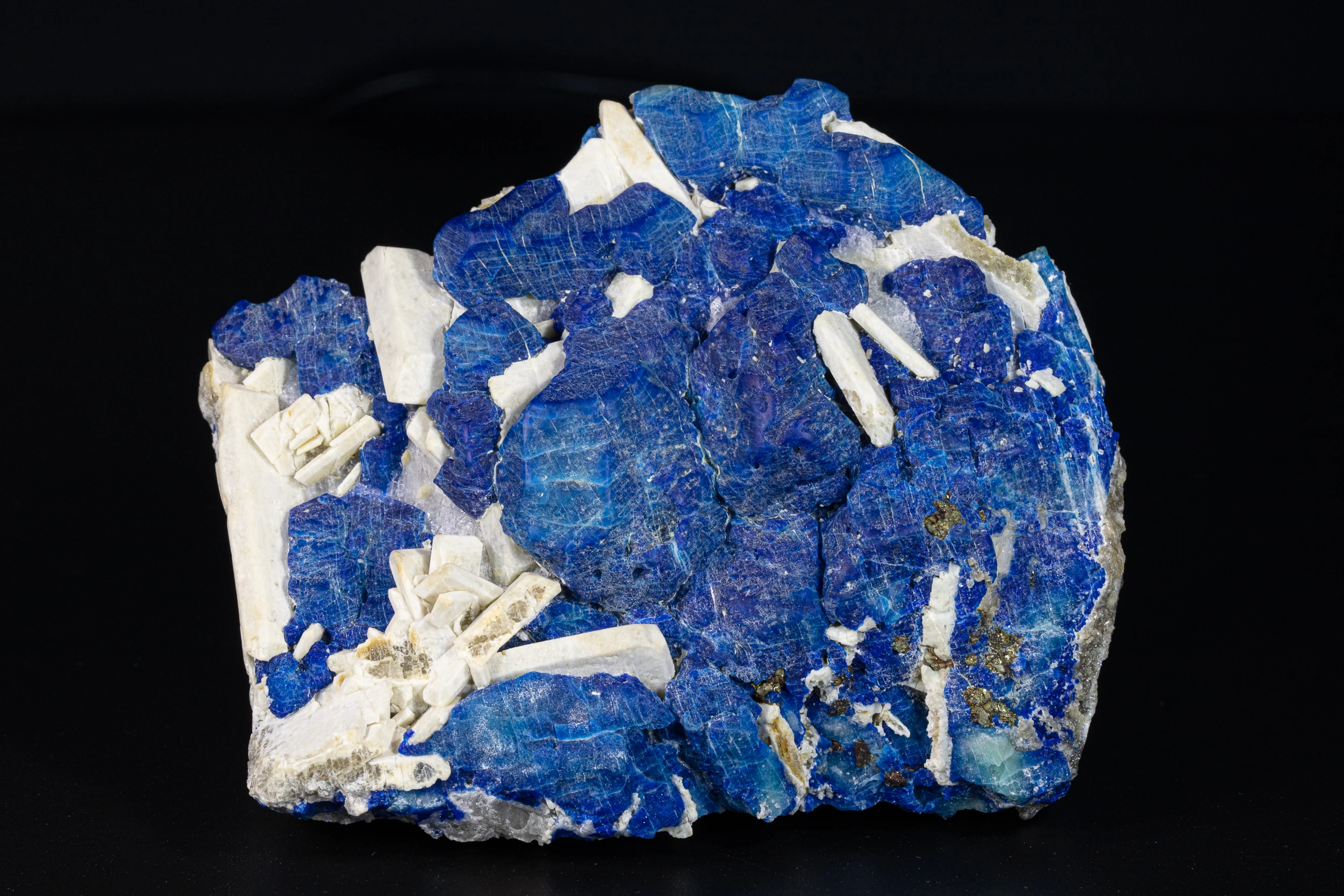
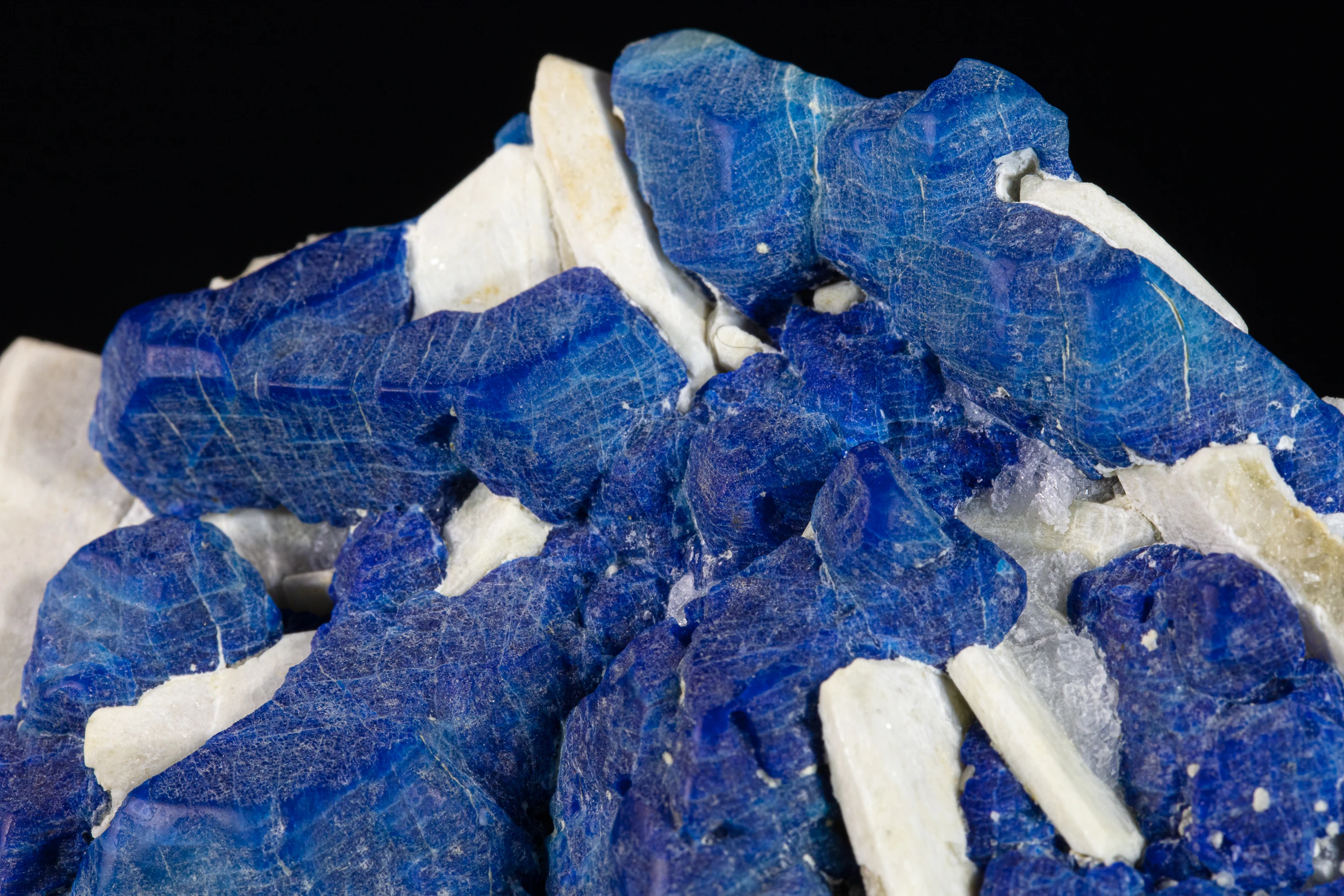
SodaliteSodalite owes its royal blue reputation to a single royal. In 1901 the future Queen Mary was so taken with a piece of Bancroft sodalite from Ontario that quantities were later quarried and shipped to England to decorate Marlborough House in London, and the source has been called the Princess Sodalite Mine ever since.
NephelineNepheline and quartz almost never share a rock, even though quartz is everywhere. The two cannot coexist at equilibrium: if any free silica is around as the magma cools, it reacts with the nepheline and turns it into feldspar instead, so finding the two together is a near contradiction in geology.
PhlogopiteTiny flakes of phlogopite fool many beginning gold panners. In a sunny stream, a flake can flash a bronze light that looks just like gold. The test is simple: poke it with a pin. If it breaks into flakes, it is mica. Real gold bends instead.