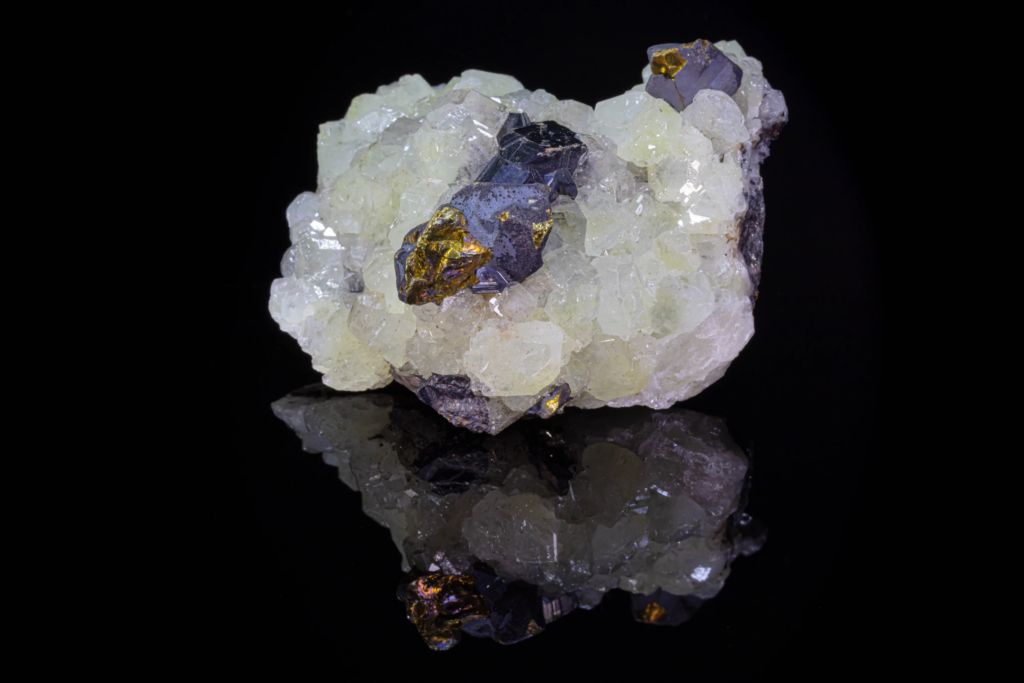
Tetrahedrite with Chalcopyrite

The Specimen

Cabinet: Cabinet (7 - 10 cm) – Size: 9.5 x 6.0 x 4.0 cm Origin: Casapalca Mine, Casapalca, Chicla District, Huarochirí Province, Lima – Peru History: Ex Rock Currier Collection

Notes

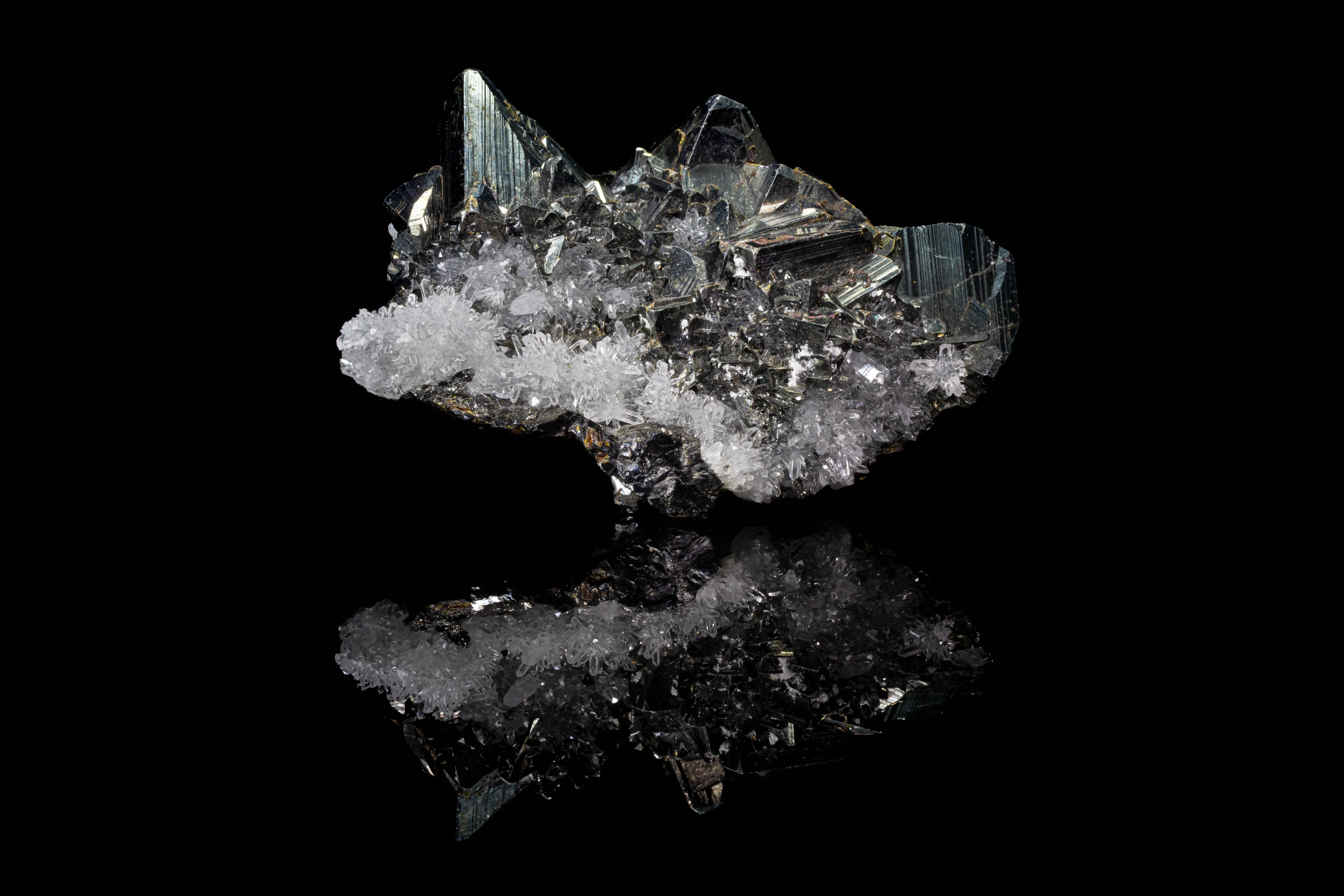
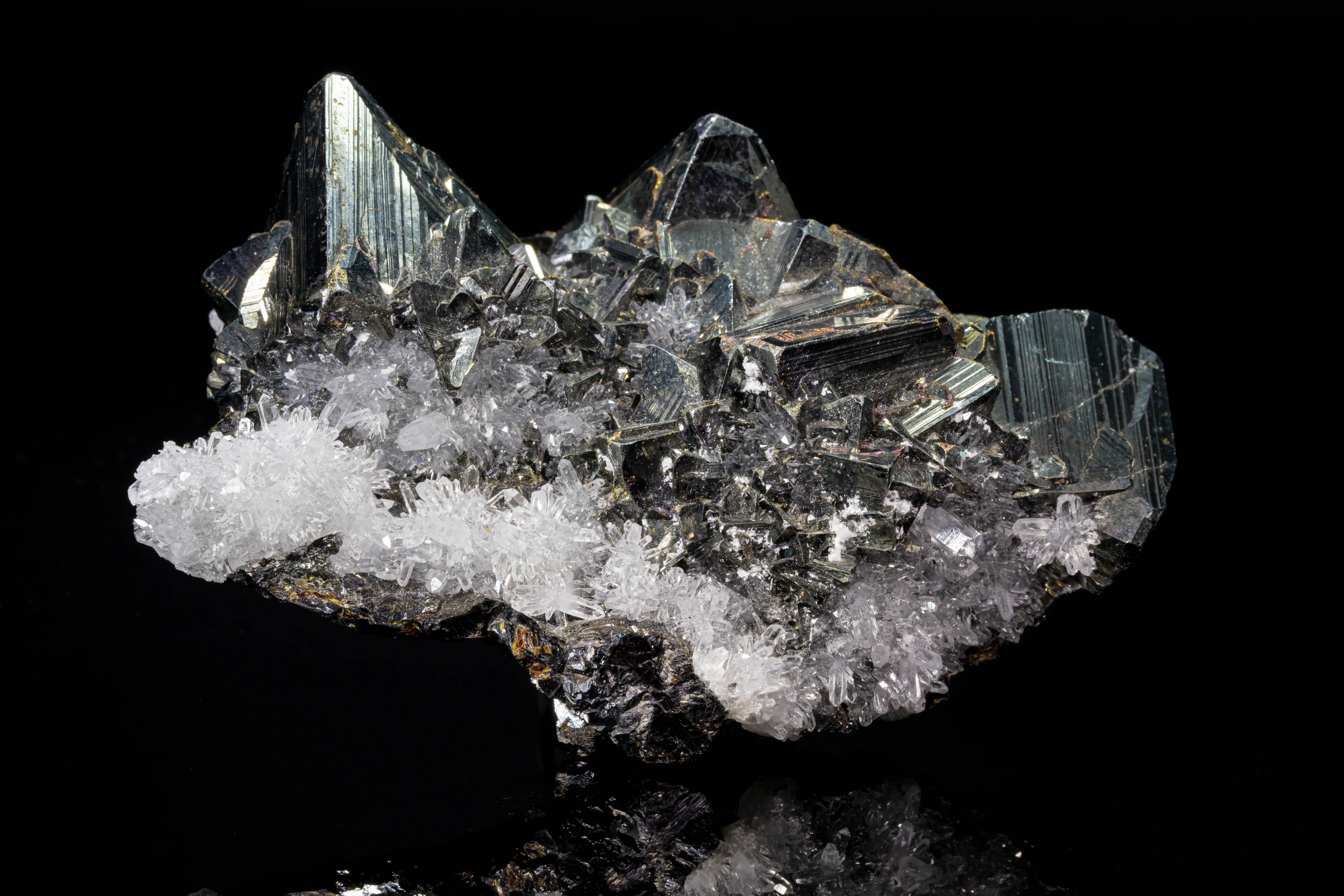
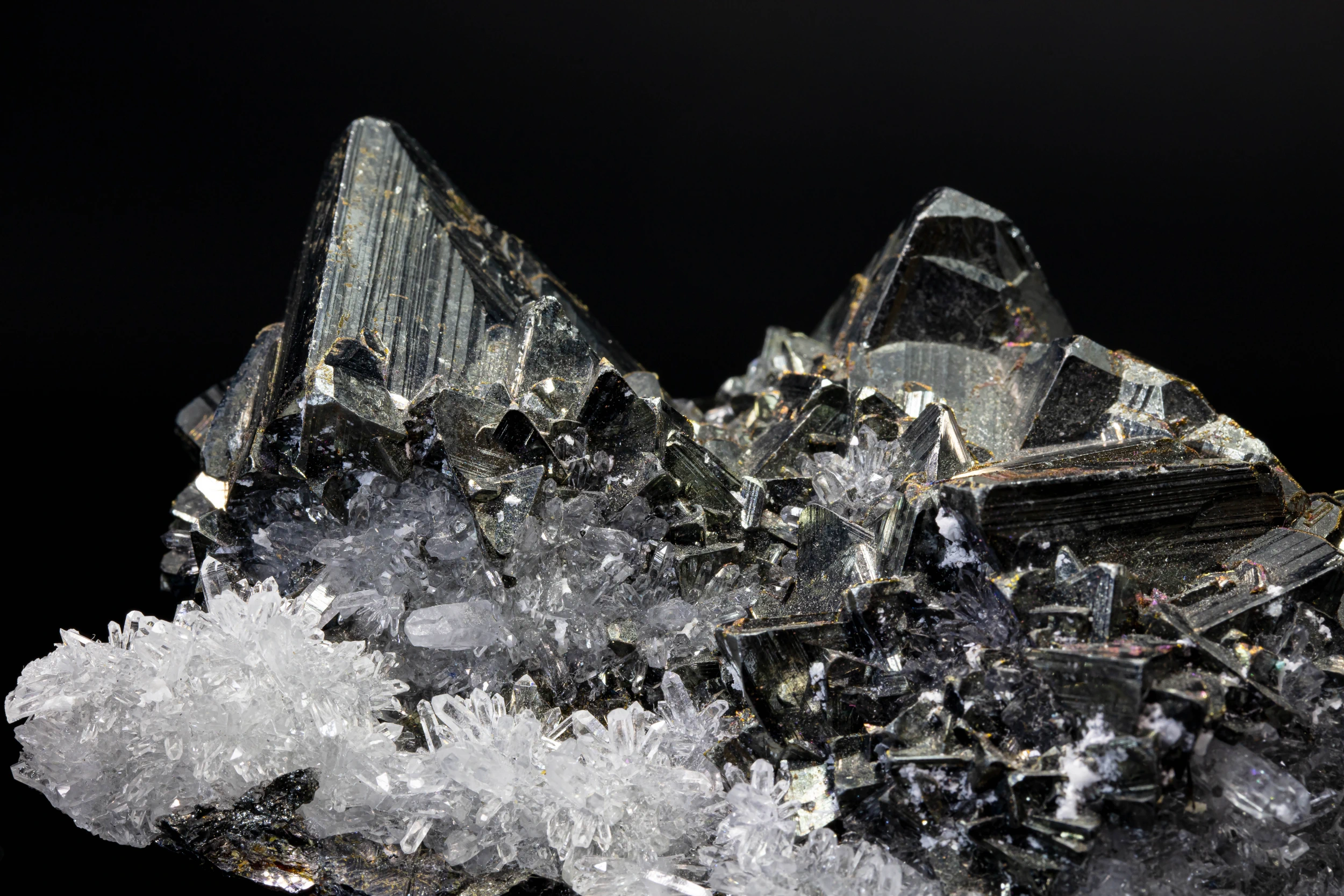
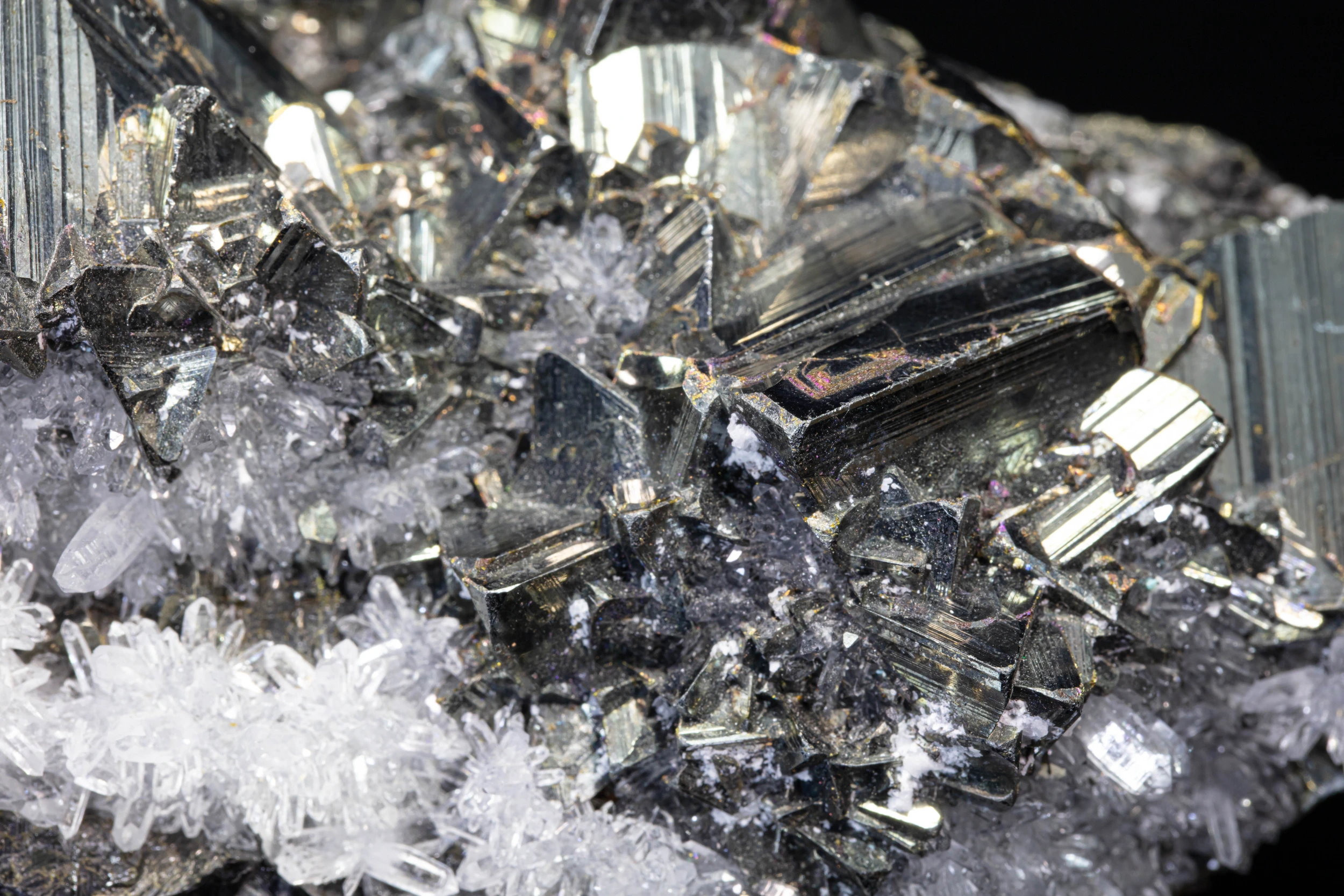
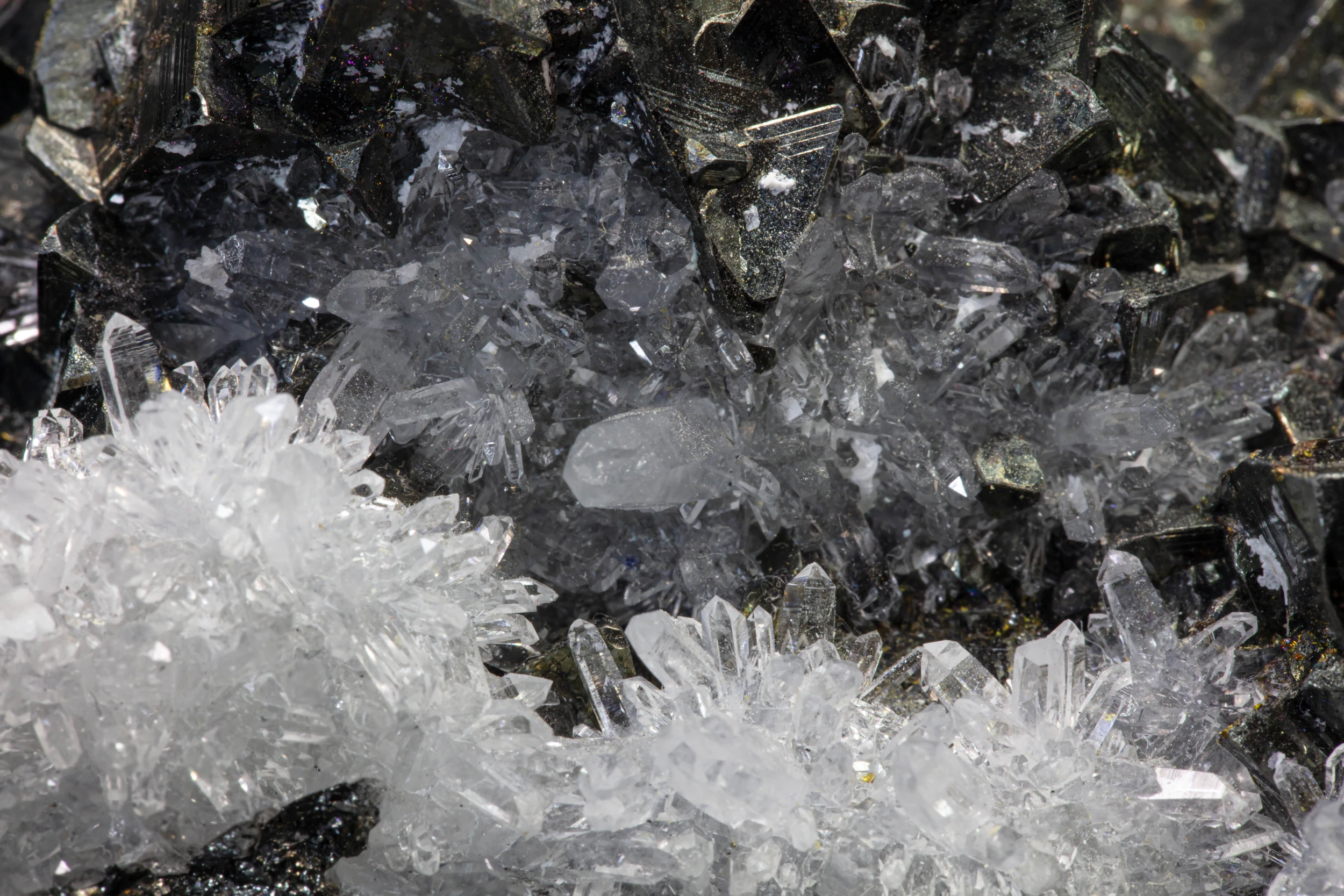
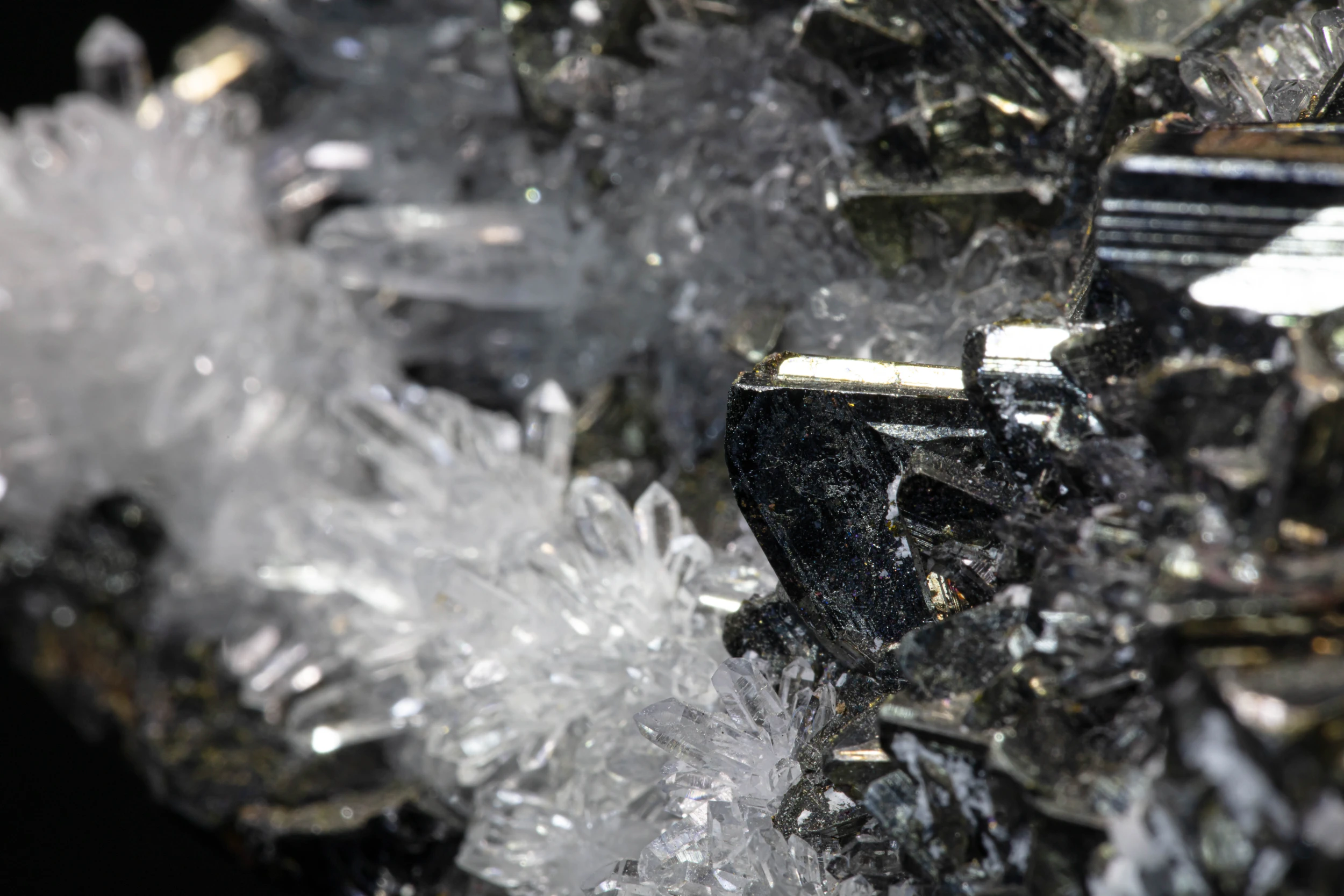
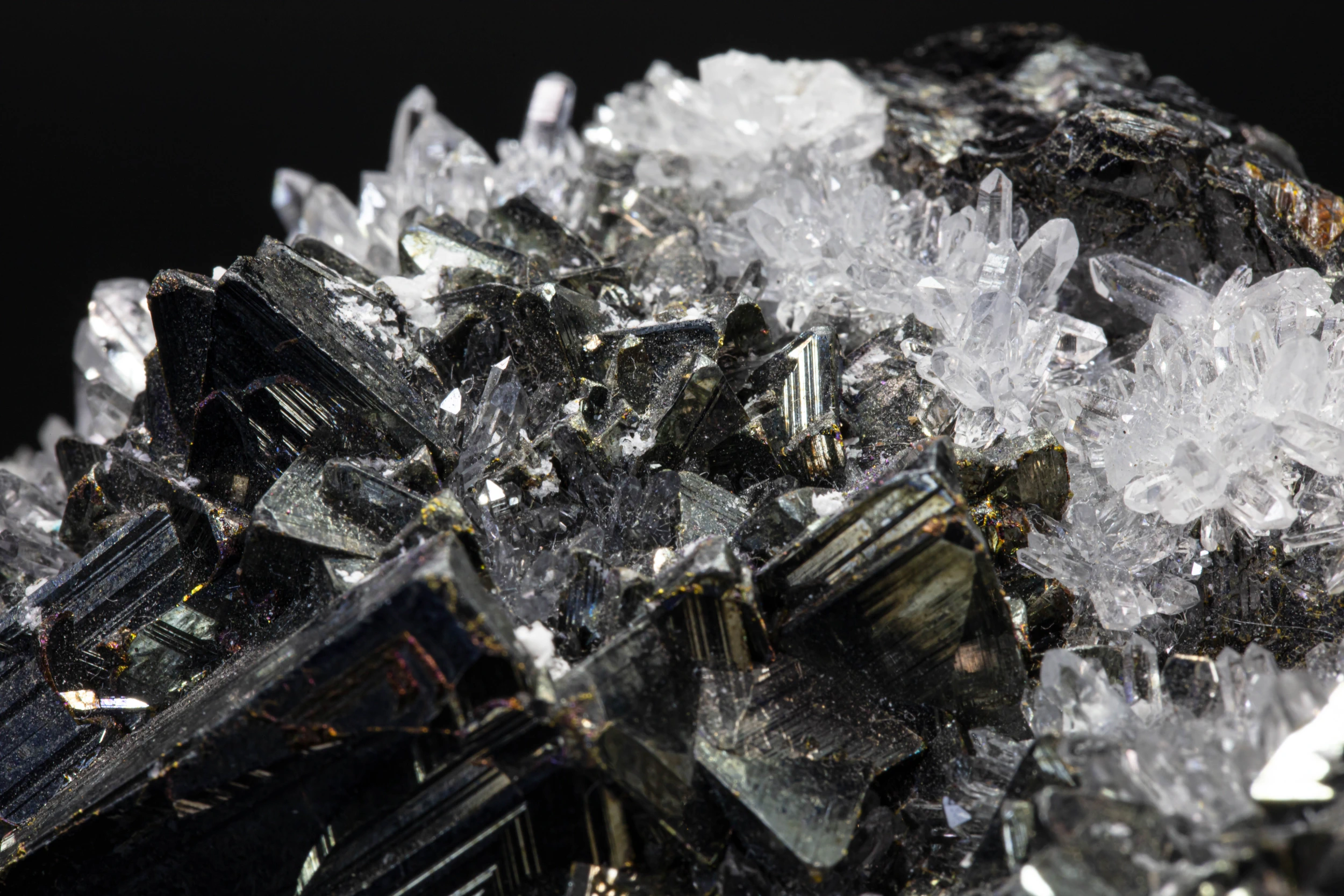
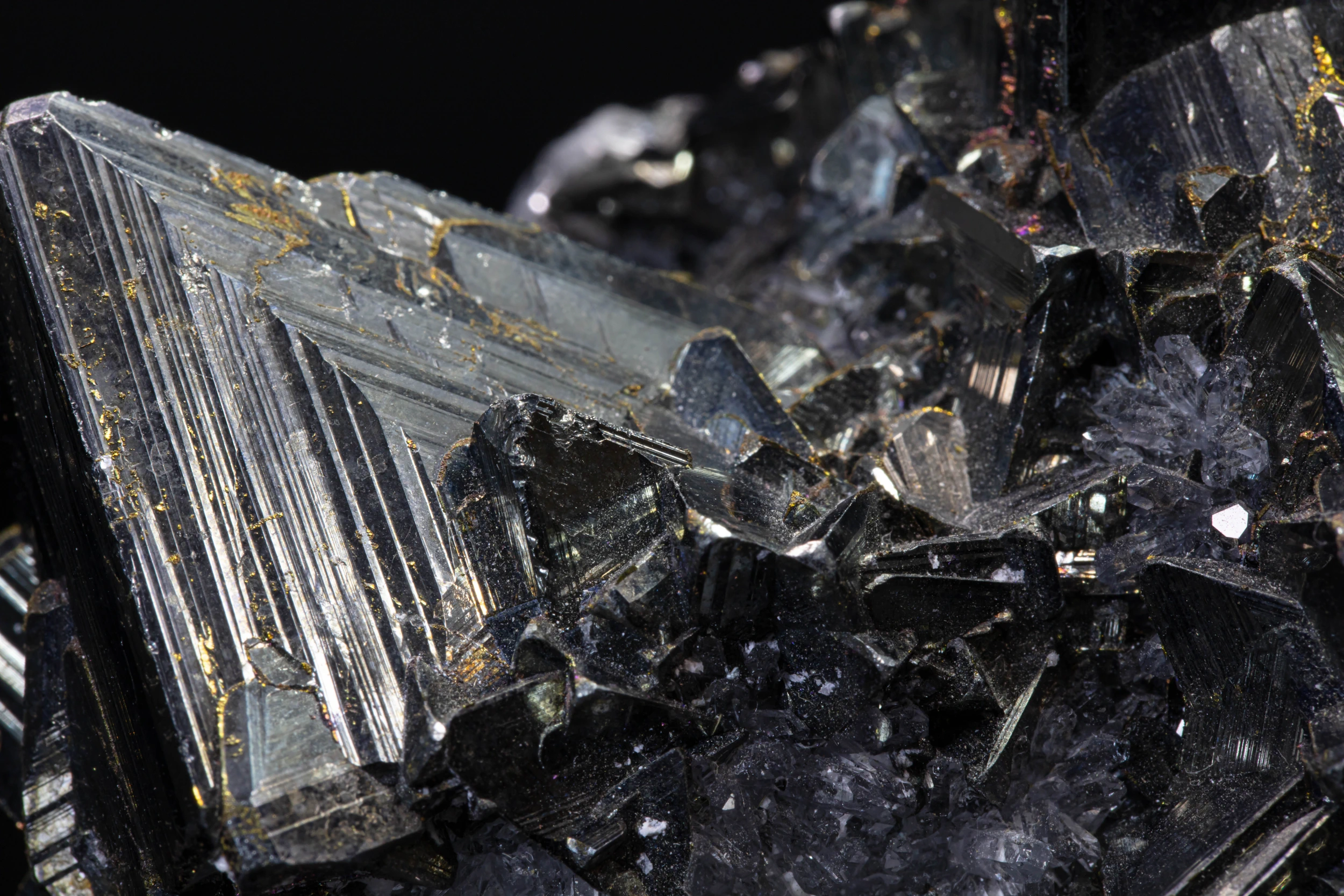
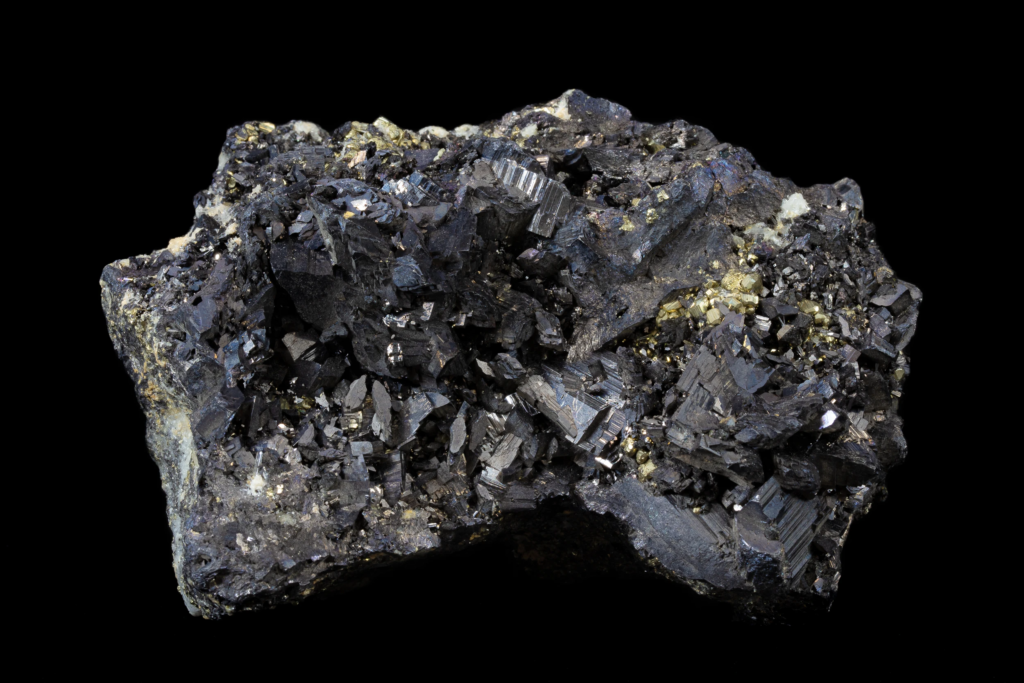
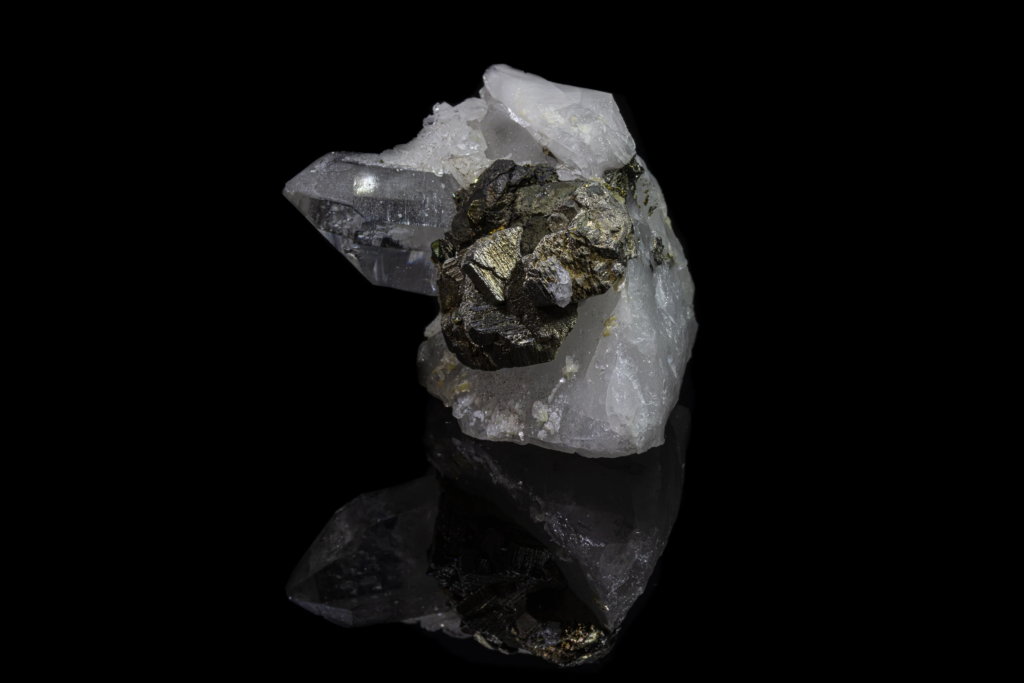
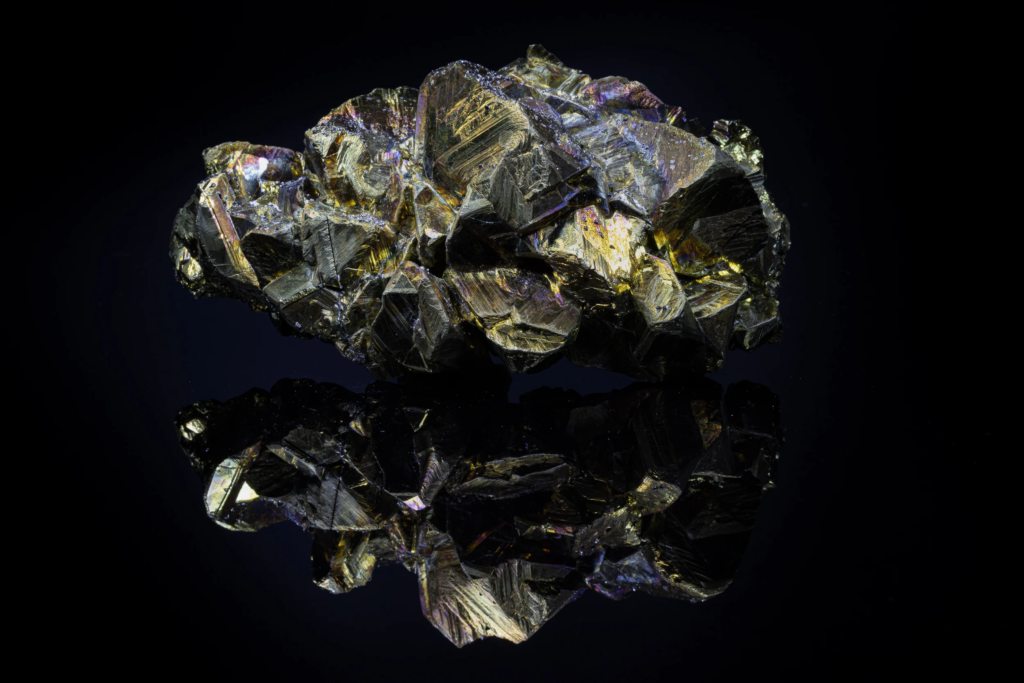
Large, sharp tetrahedrite crystals stand well apart from one another on this piece, steel gray with a bright metallic shine and complex, beveled tips. Tiny golden chalcopyrite crystals are lodged in the fine grooves of their faces and catch the light as small sparks. A band of sparkling colorless quartz crystals runs along the base. Tetrahedrite is a copper antimony sulfide, and chalcopyrite is a copper iron sulfide.
The label does not name the exact species: since 2020, tetrahedrite has been a group of several species, named for the metal they carry. A Casapalca sample tested by the RRUFF project proved to be tetrahedrite-(Zn), so this one may be the zinc species, but it has not been analyzed.
The Casapalca Mine, high in the Andes east of Lima, has been known for silver-bearing tetrahedrite for about a century.
The piece comes from the collection of Rock Currier, a mineral dealer who traveled the world for specimens and brought this one back from Peru. The digital library of Mindat is named after him.

Mineral Species

Did you know?

TetrahedriteSome tetrahedrite carries enough silver to be mined as a silver ore in its own right.

ChalcopyriteChalcopyrite is built almost exactly like sphalerite, the main ore of zinc. Copper and iron take turns in the places where zinc sits, and that alternation makes its basic building block twice as tall.

QuartzPressing a quartz crystal makes it give off a precise electric beat, which is why it keeps time in nearly every watch and once tuned the radios of World War II, when good crystals were a strategic resource.