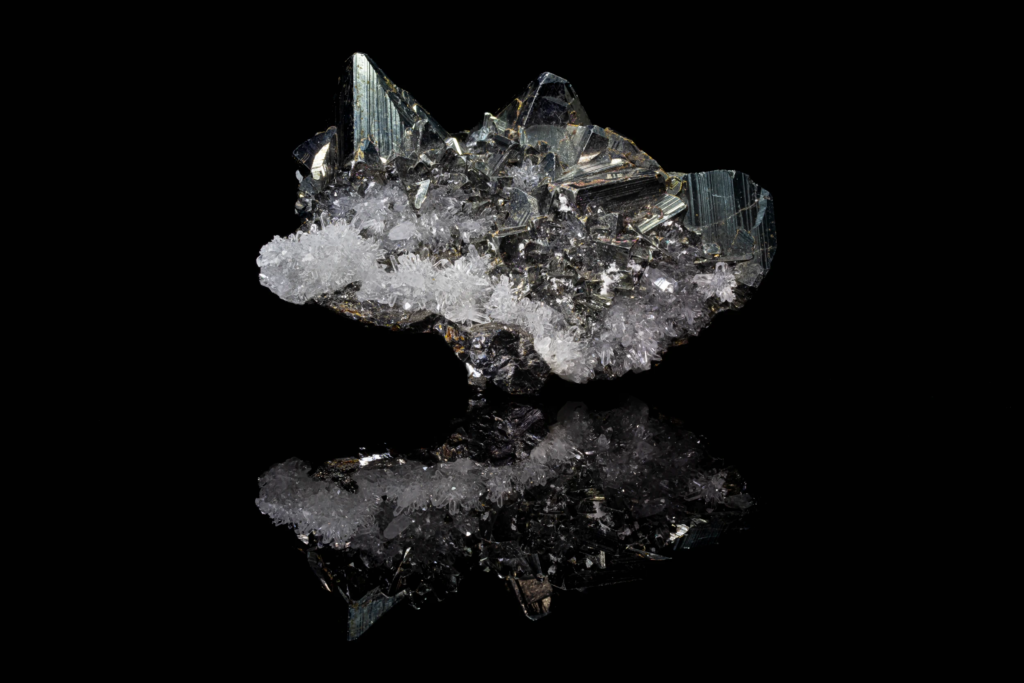
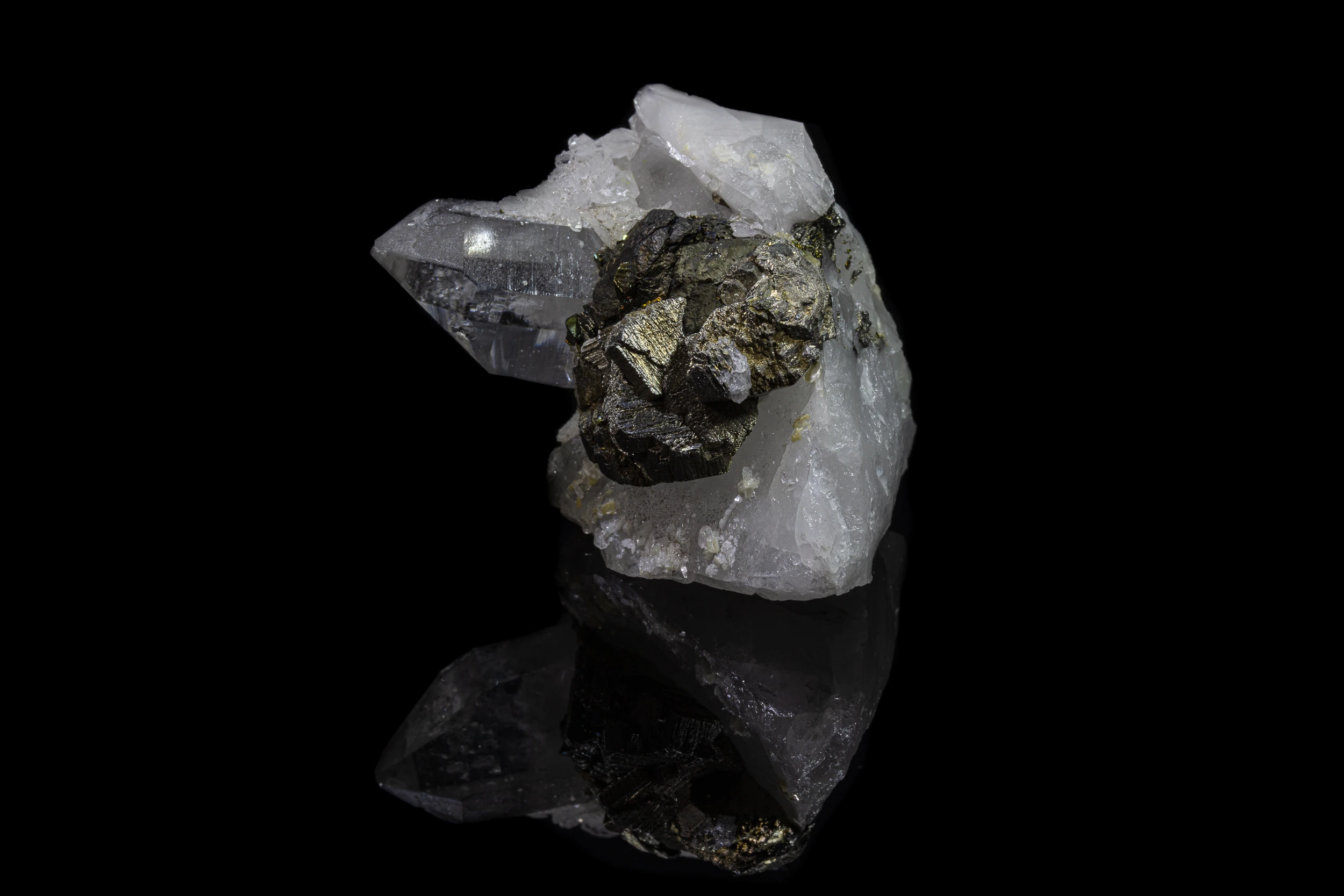
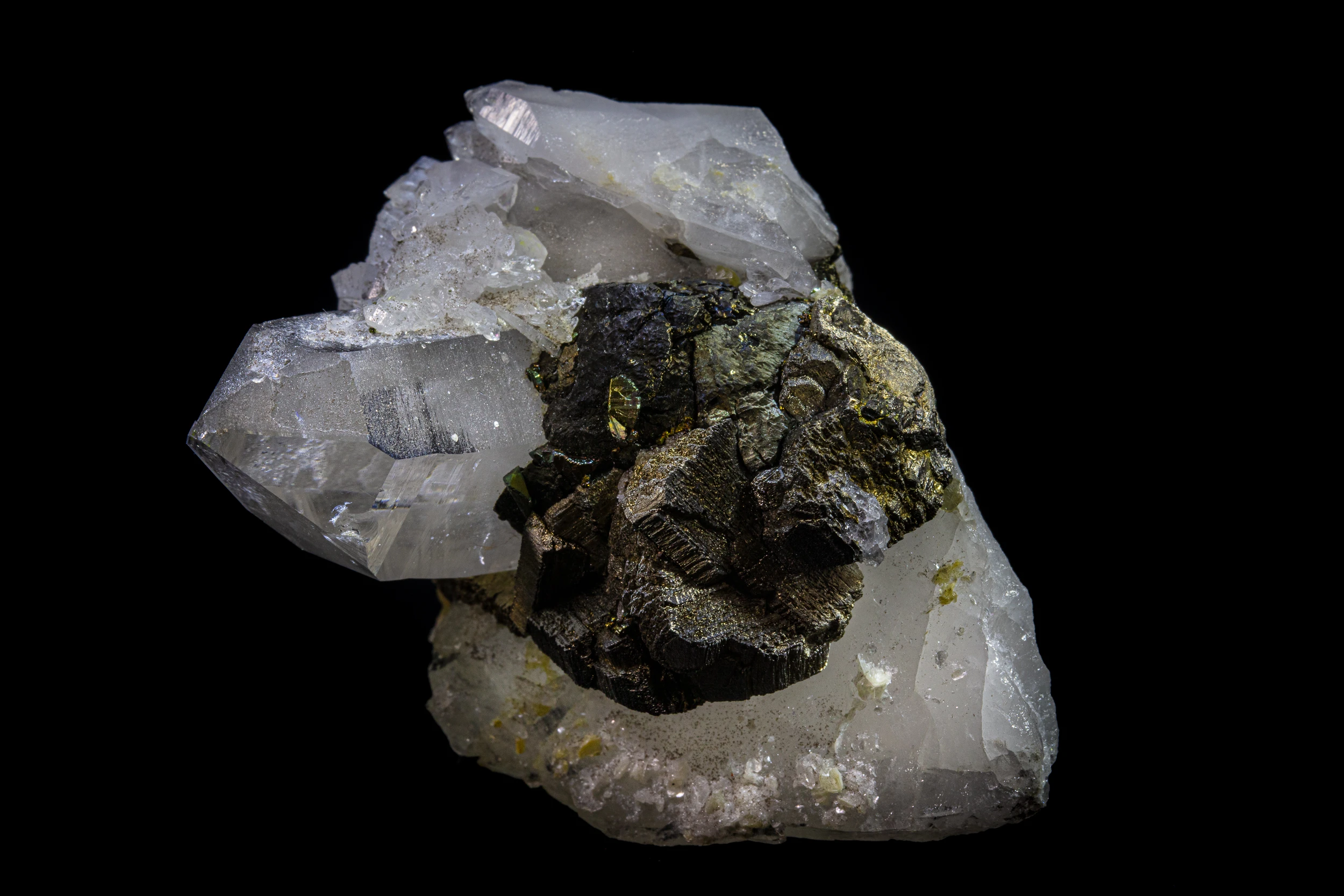
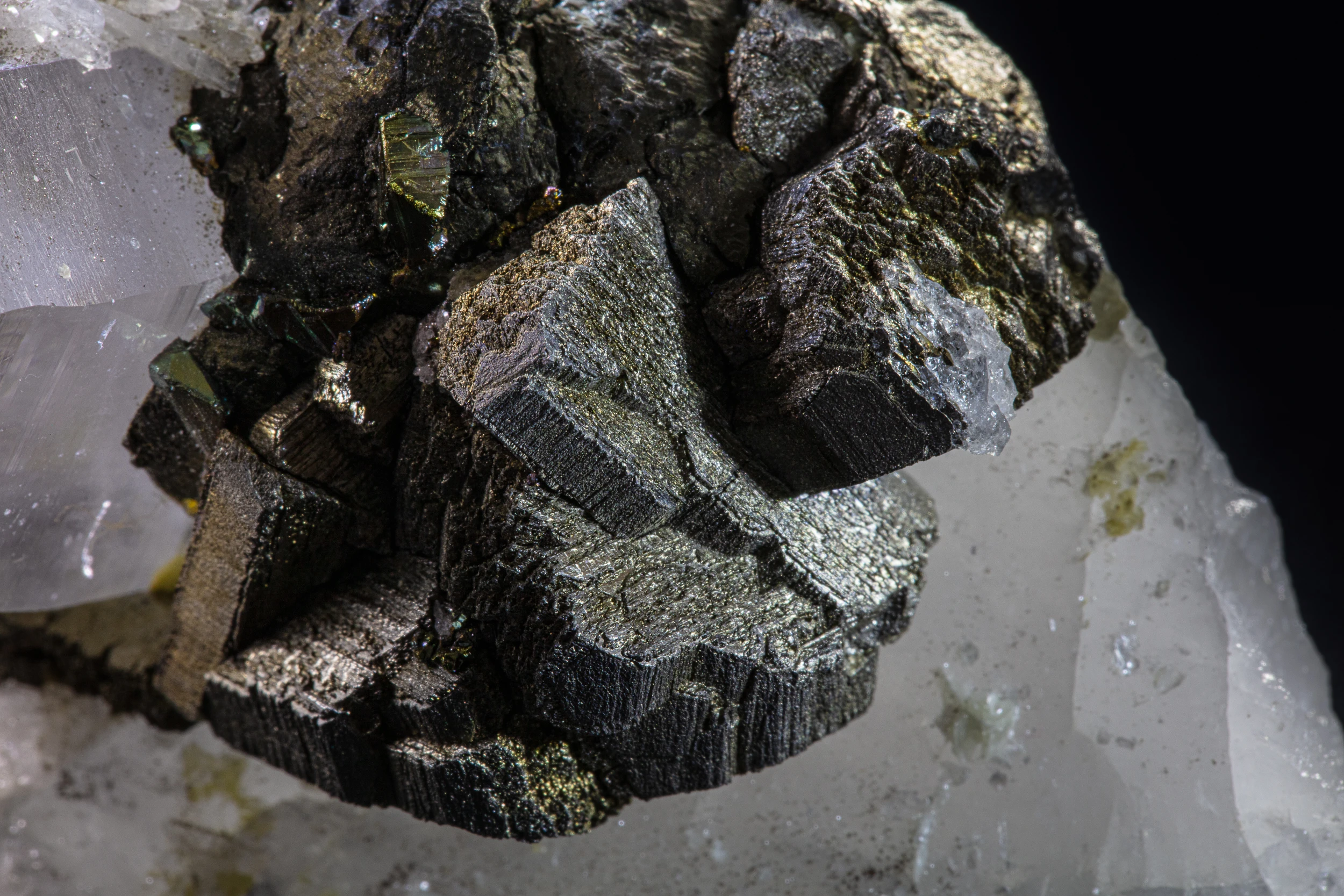
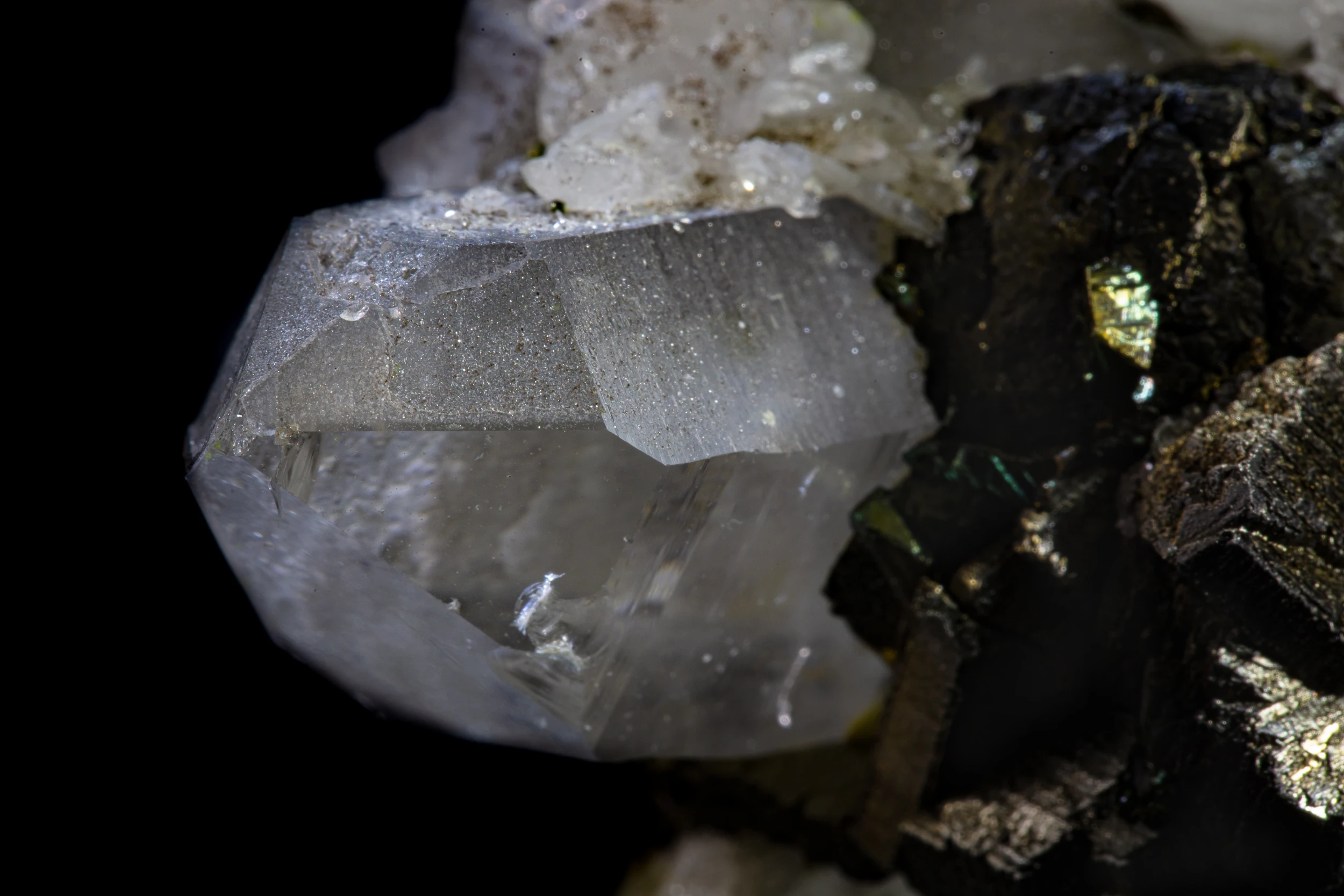
Stannite Arsenopyrite and Quartz
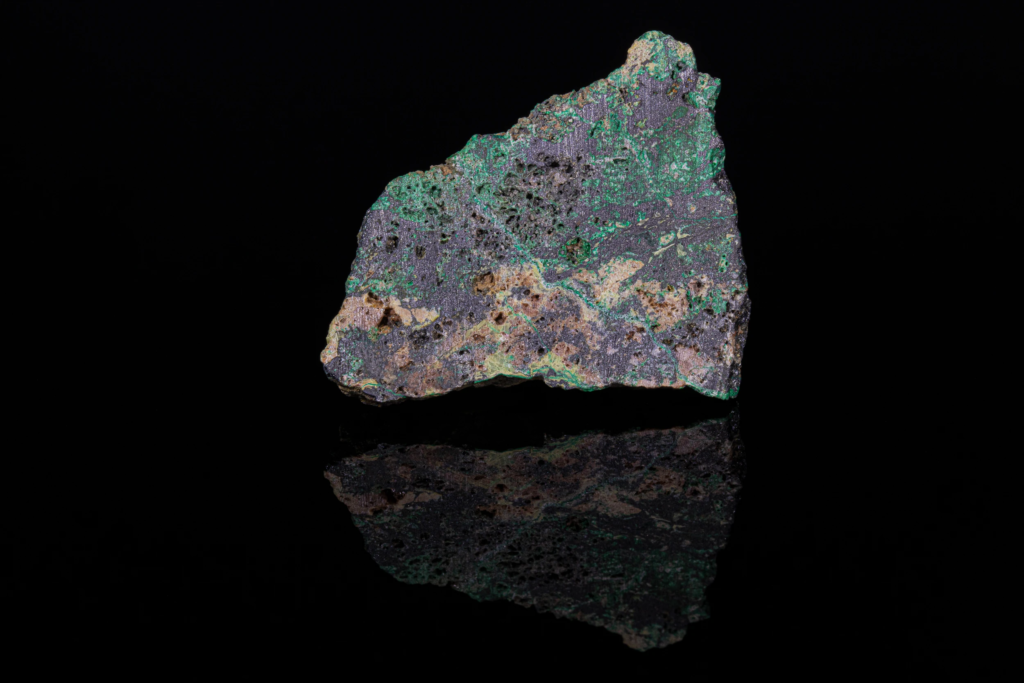
Stannite
– Cu2FeSnS4
Fluorite
Talc (1)Diamond (10)
Softer than glass. A steel knife scratches it.
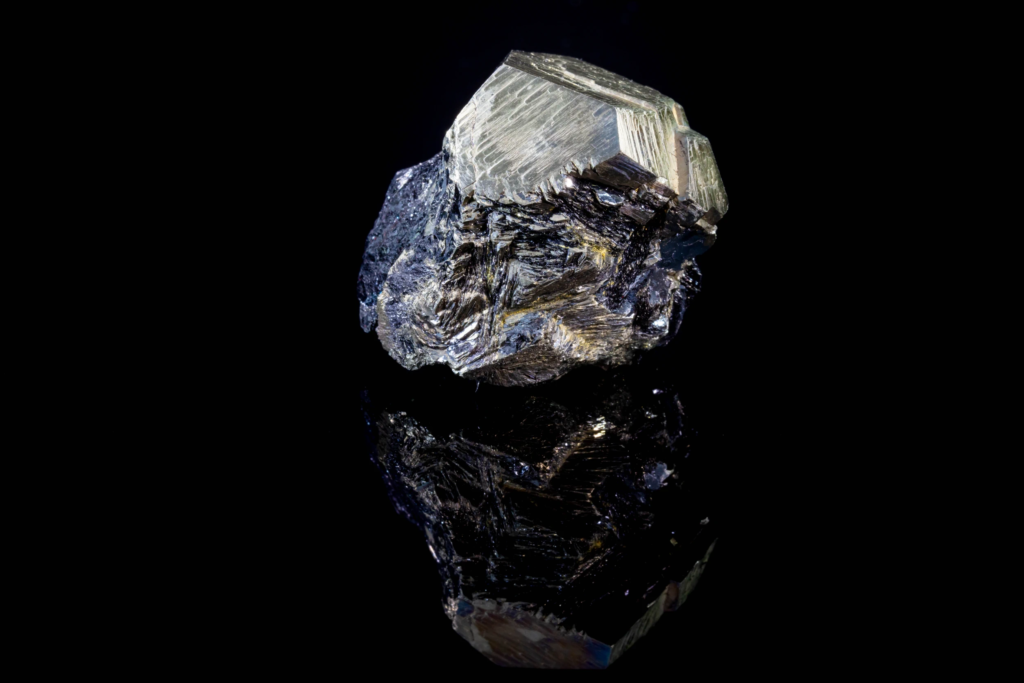
Arsenopyrite
– FeAsS
Orthoclase
Talc (1)Diamond (10)
Scratches glass. Harder than a steel knife.
Did you know?
Stannite sits at the heart of an old mystery. Scholars still argue whether the very first bronze was alloyed from this tin sulfide or from cassiterite, the tin oxide, because no one is sure where the earliest tin of the Bronze Age actually came from.
Geologists long knew arsenopyrite by a striking test: a sharp knock throws sparks and releases a distinct smell of garlic.
Pressing a quartz crystal makes it give off a precise electric beat, which is why it keeps time in nearly every watch and once tuned the radios of World War II, when good crystals were a strategic resource.