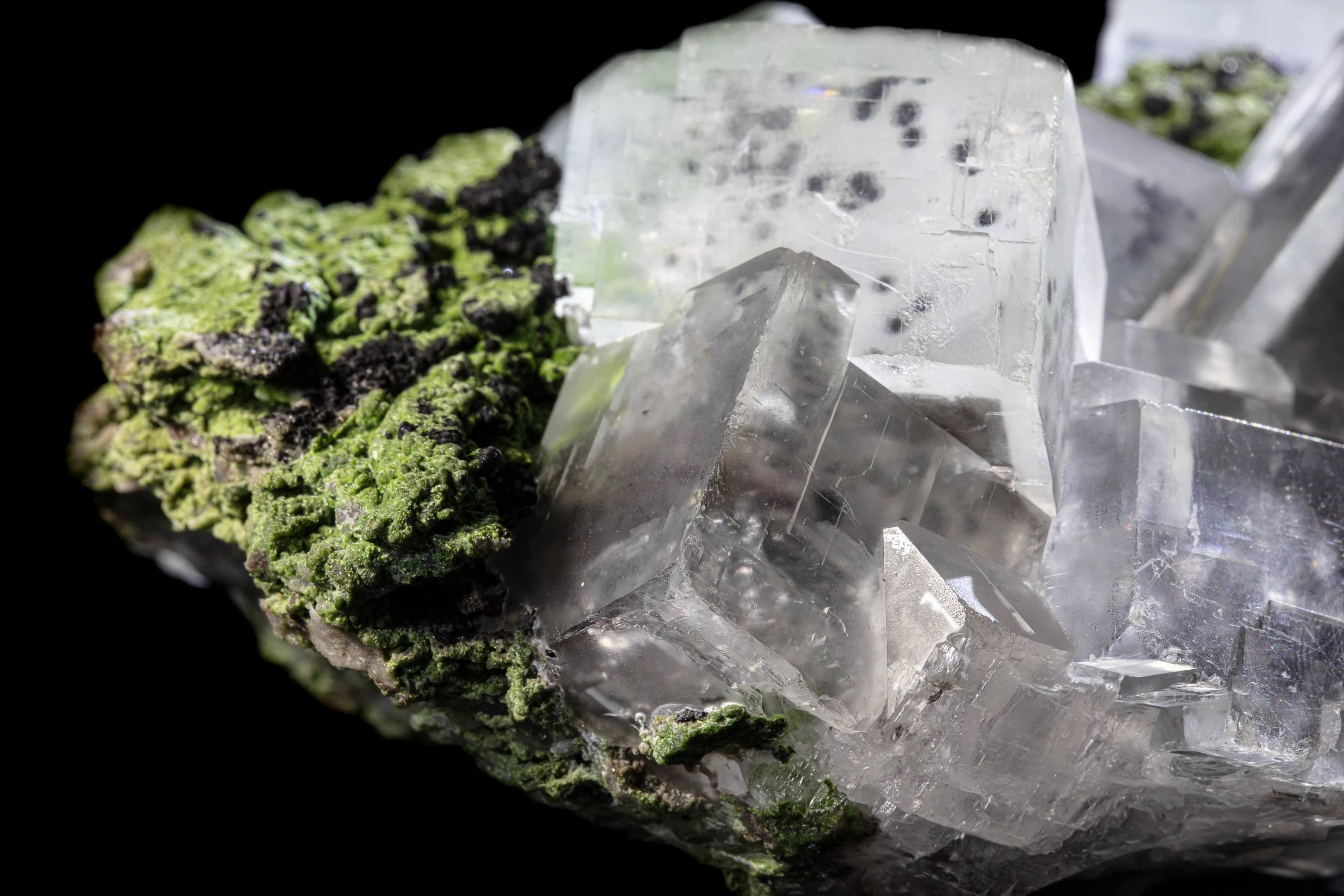
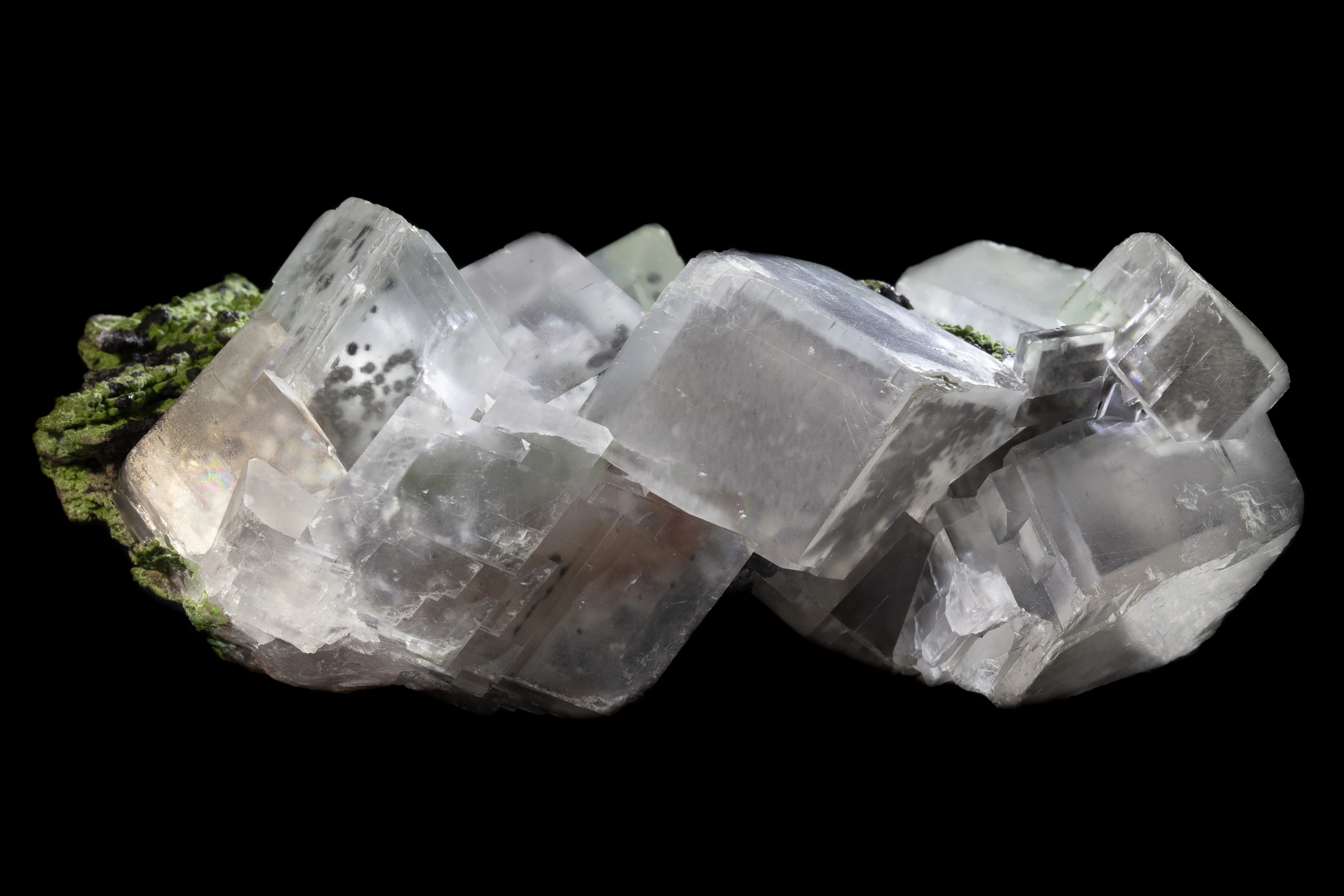
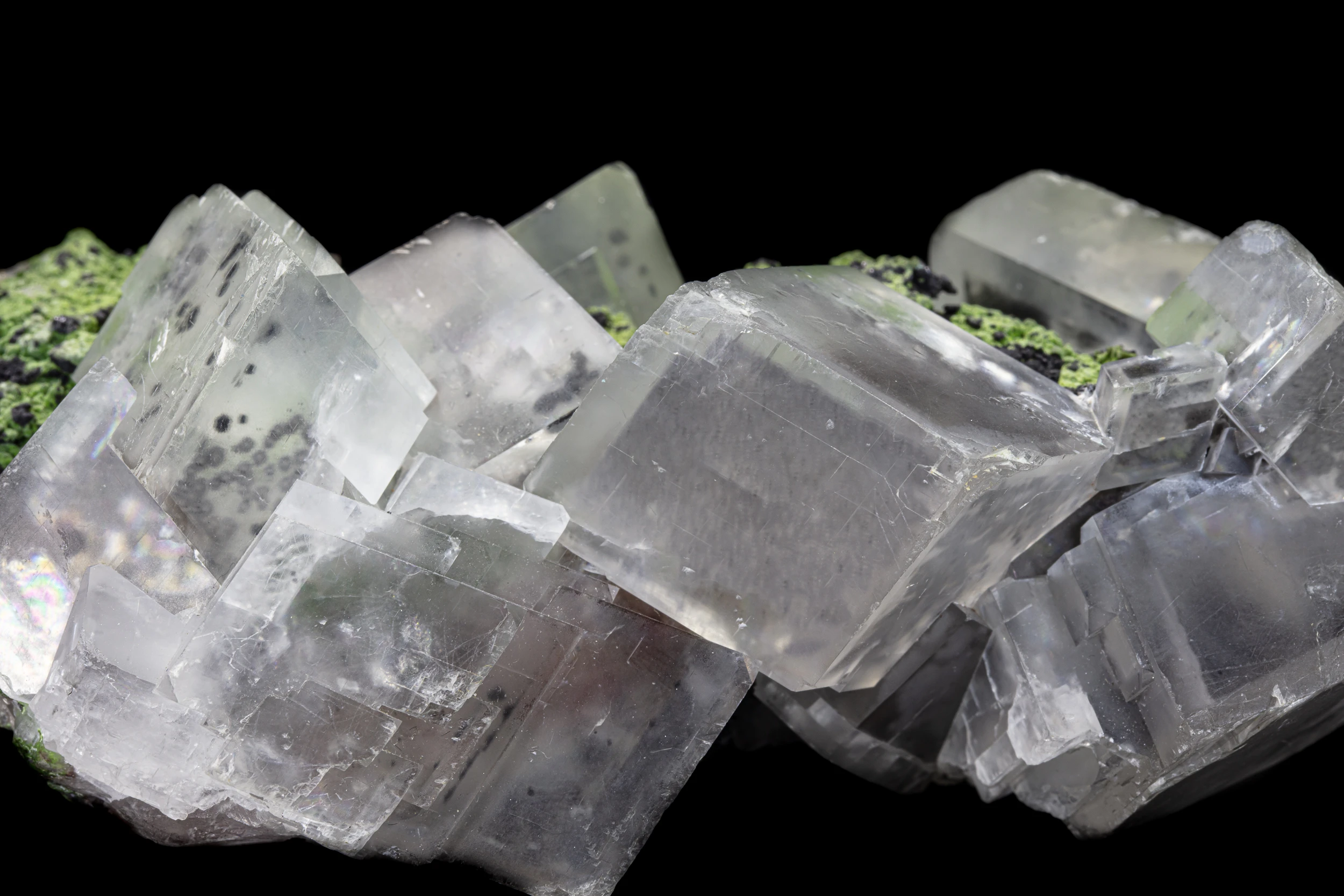
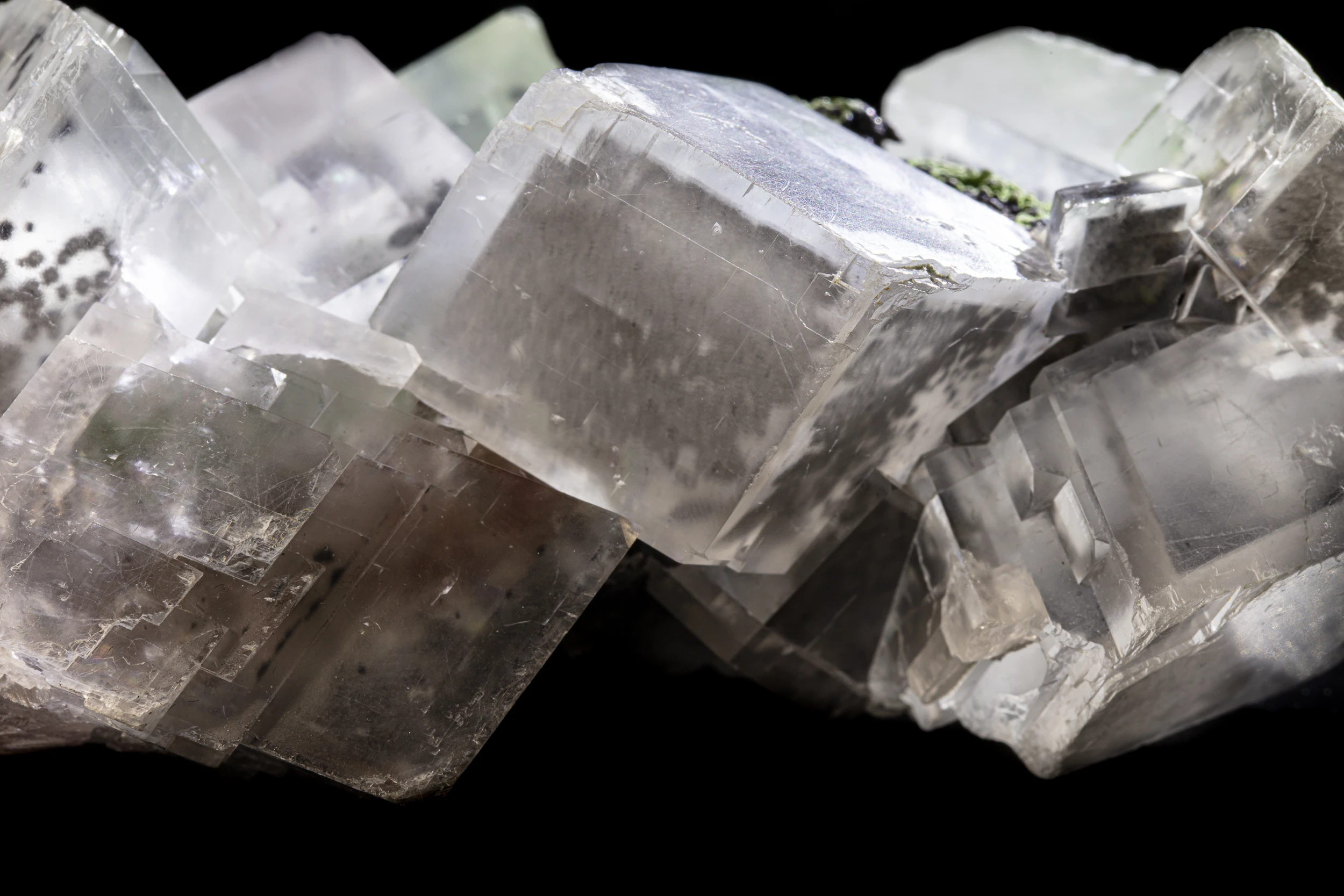
Phantom Calcite on Mottramite

The Specimen

Cabinet: Large Cabinet (10 cm+) – Size: 10.7 x 7.6 x 4.6 cm Origin: Tsumeb Mine, Tsumeb, Oshikoto Region – Namibia

Notes

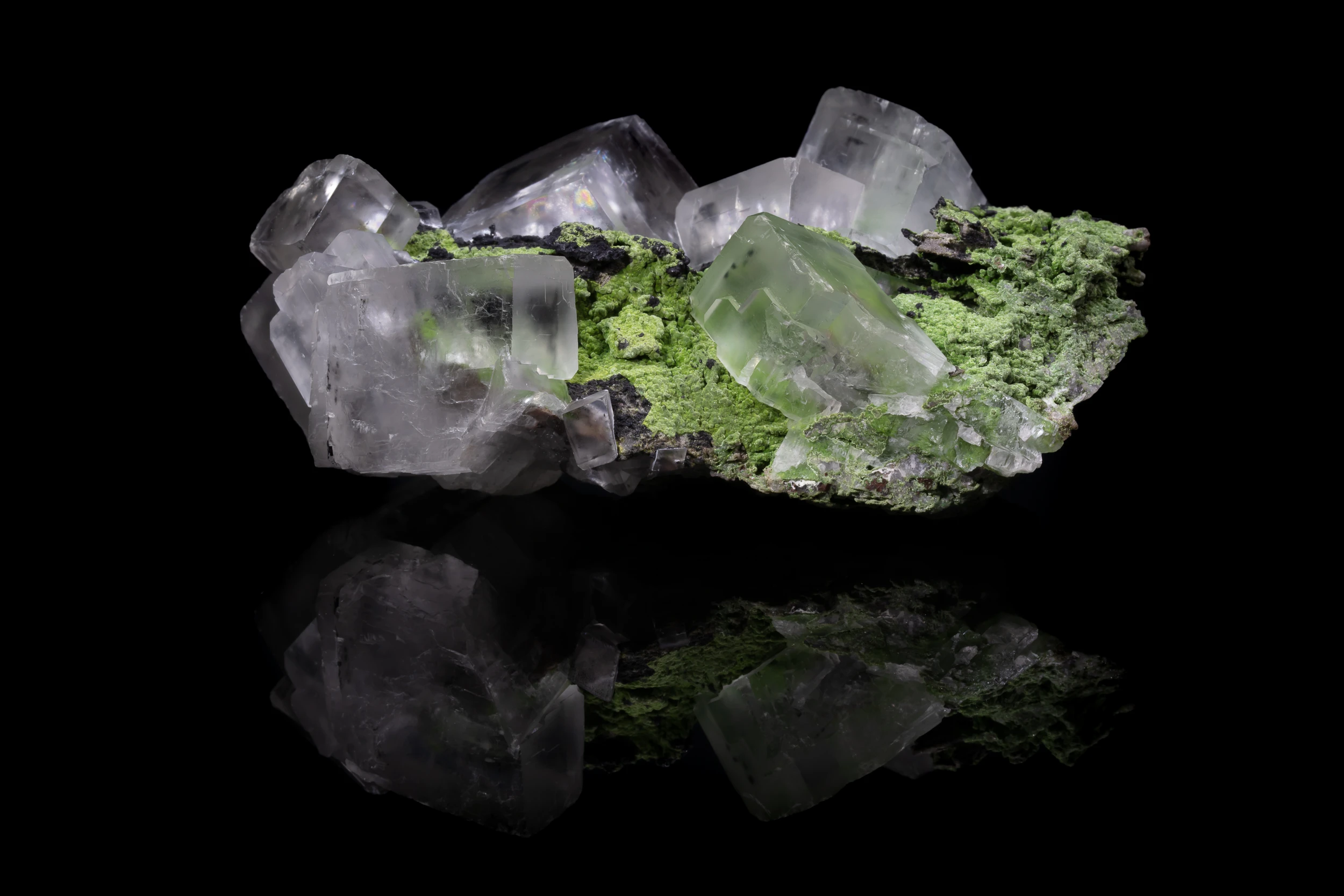
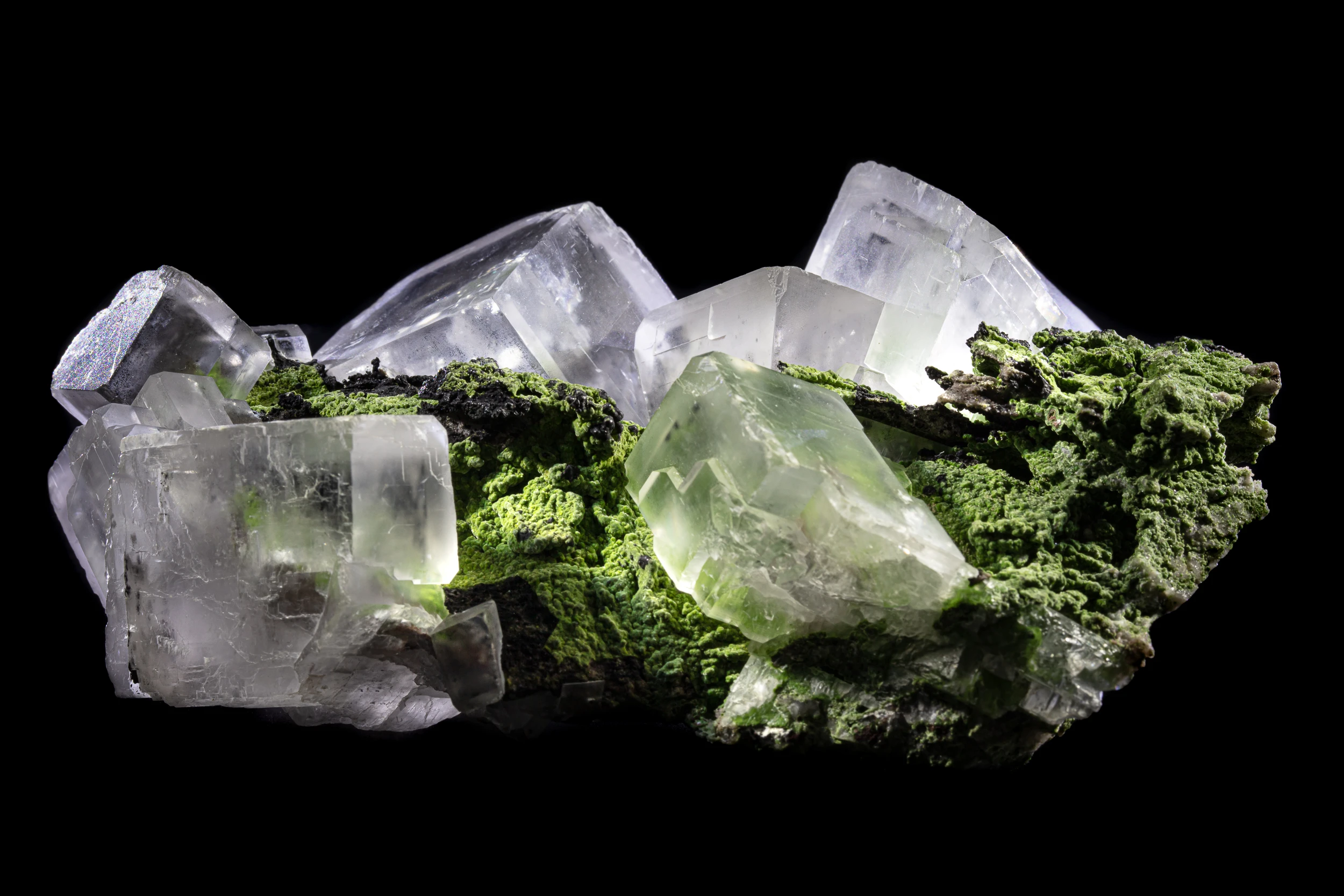
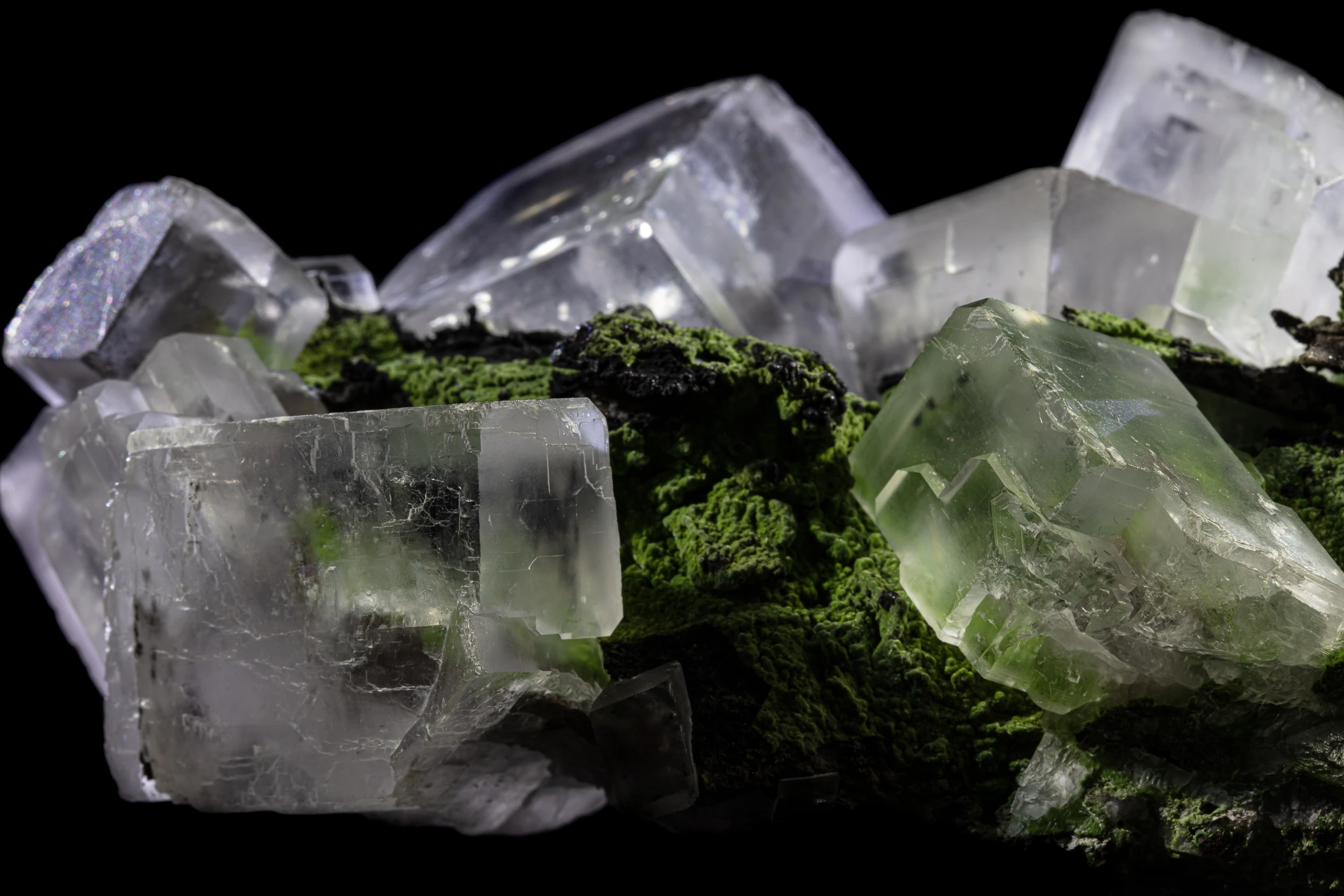
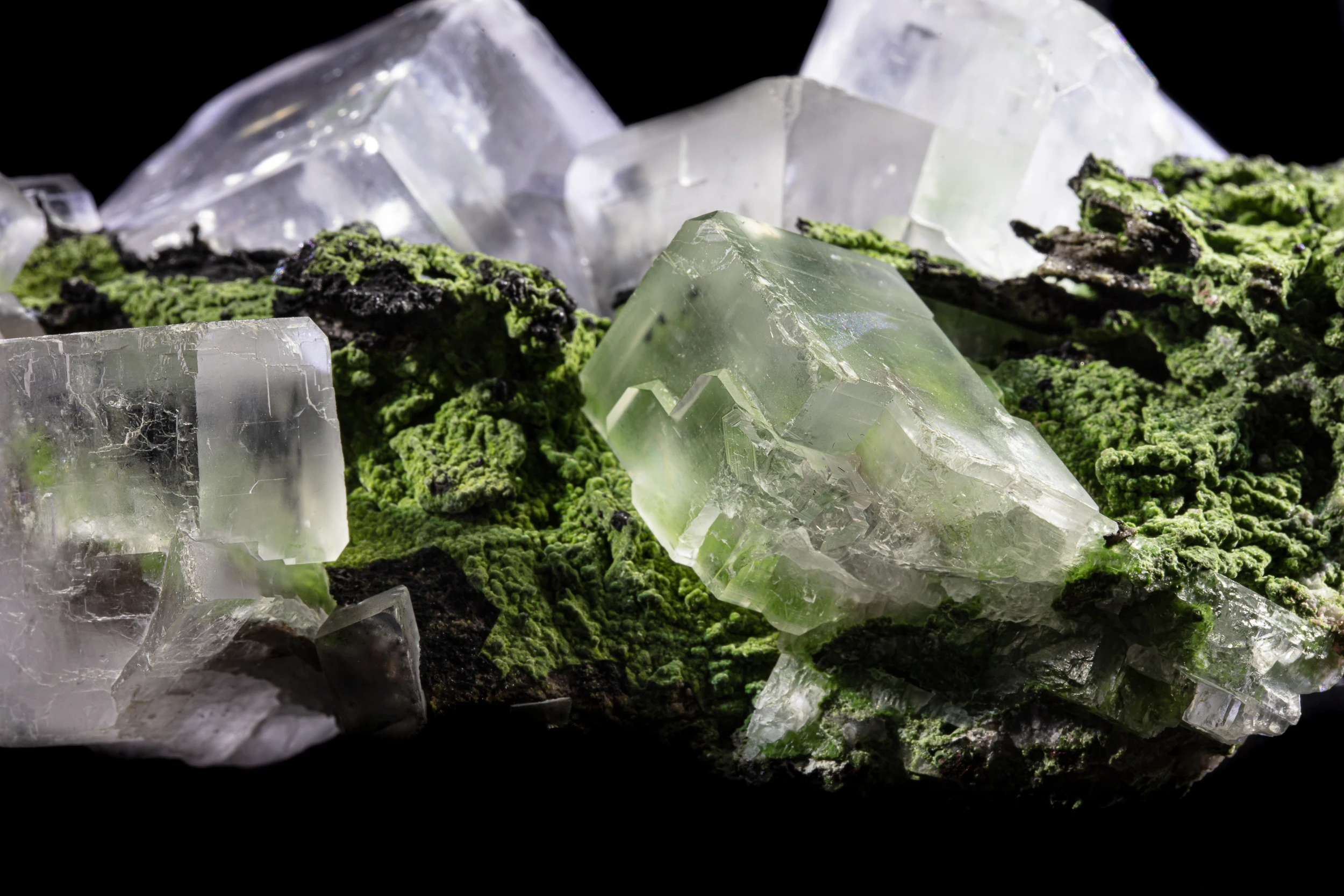
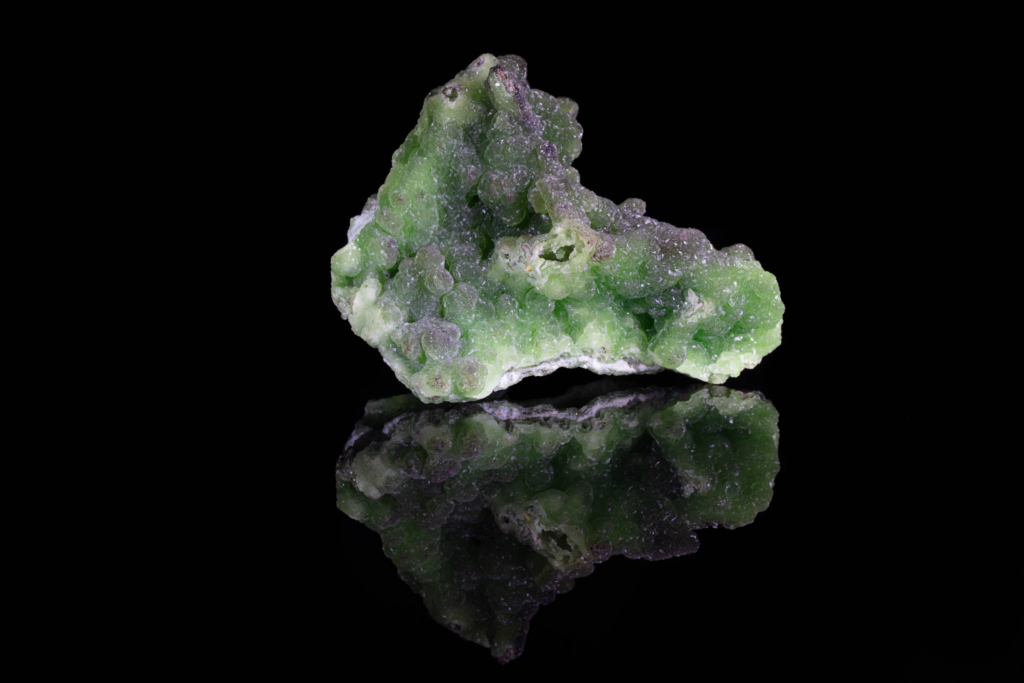
This specimen comes from the Tsumeb Mine in the Oshikoto Region of northern Namibia, one of the most famous mineral localities on Earth. Local people worked its green copper outcrop long before colonial times, and from the early 1900s until its closure in 1996 it was mined on a large scale for copper, lead, zinc and germanium. The ore filled a huge, nearly vertical pipe cutting down through ancient dolomite, and water and air reworked it in three separate oxidation zones. That is why Tsumeb has given more than 300 mineral species and is the type locality for more than 70 of them. Mottramite, a lead-copper vanadate, is common there. Here, sharp, translucent calcite rhombohedra, up to 3.7 cm according to the dealer, sit on a layer of mossy green mottramite. Some crystals are smoky, others faintly tinted green, and according to the dealer several show internal phantoms when lit from behind. Small black spheres sit in and on a few of the calcites, possibly mottramite or another secondary mineral.

Mineral Species

Did you know?

CalciteLook through a clear rhomb of Iceland spar calcite and the world doubles, split into twin images by the crystal's double refraction. Some researchers think Norse sailors used this very effect to find the sun through cloud, the so-called sunstone, though the idea remains a debated hypothesis.

MottramiteMottramite spreads in velvety green crusts that look like moss on rock. The soft coating is in fact a heavy lead-copper mineral carrying vanadium, the metal that toughens high-grade steel.