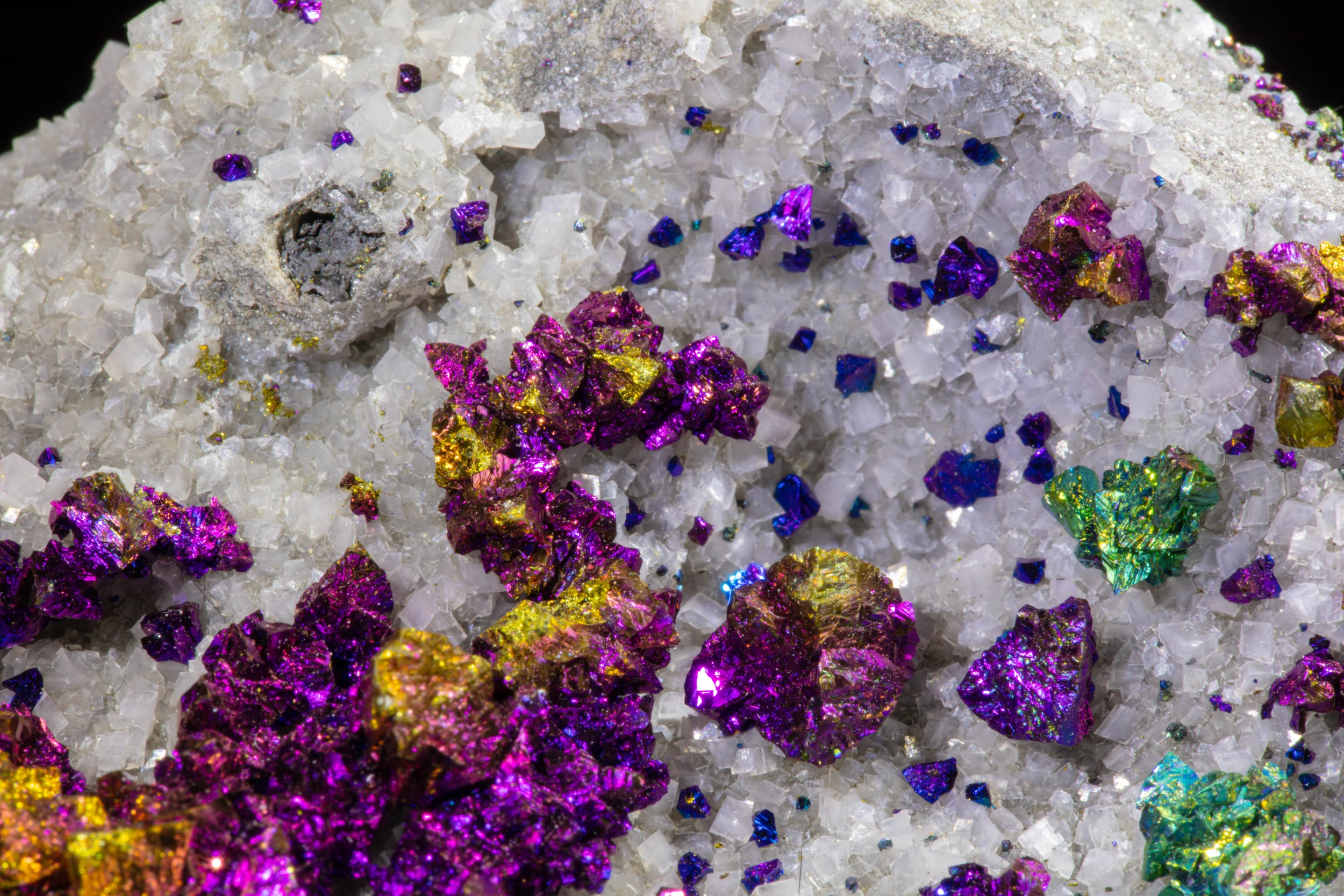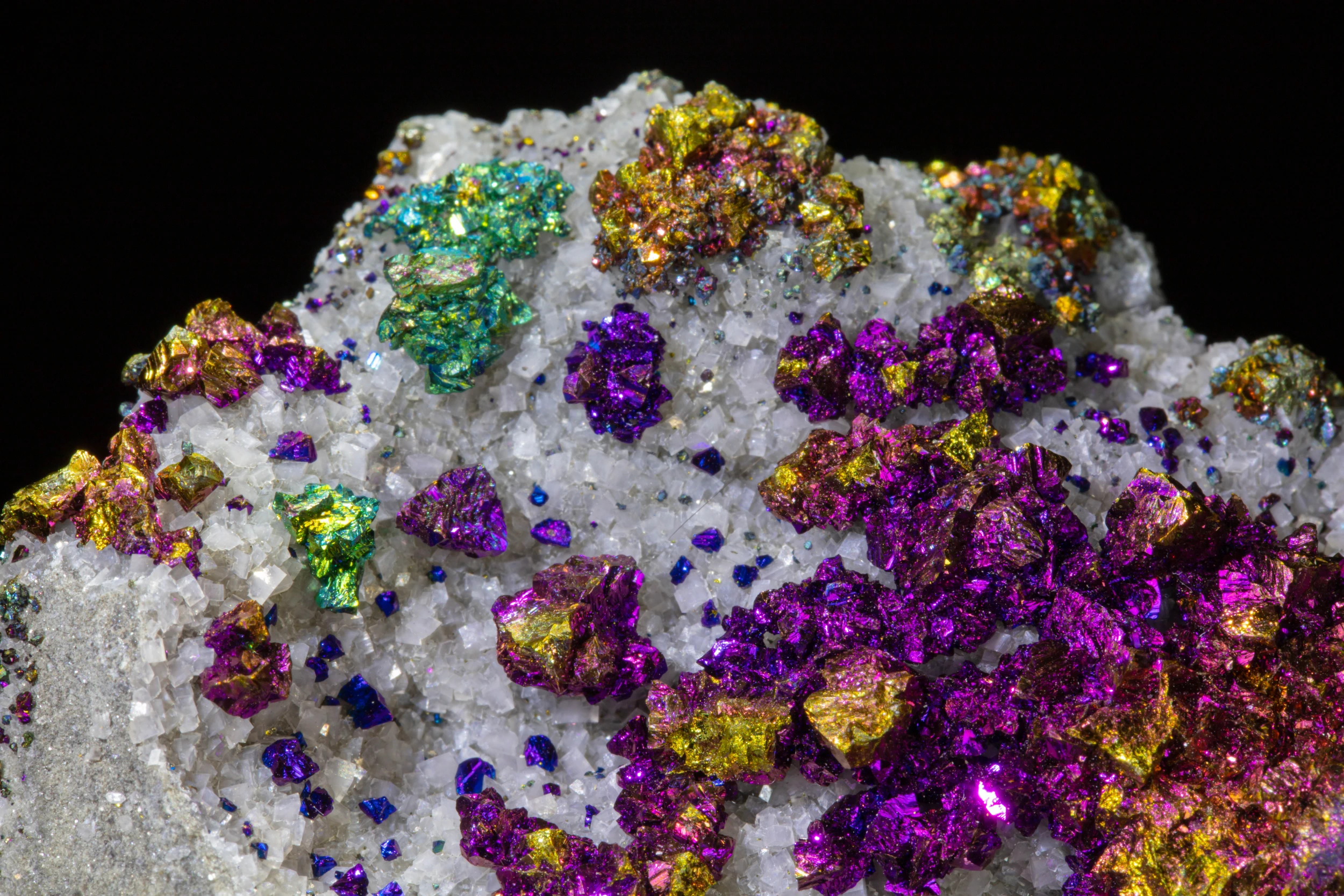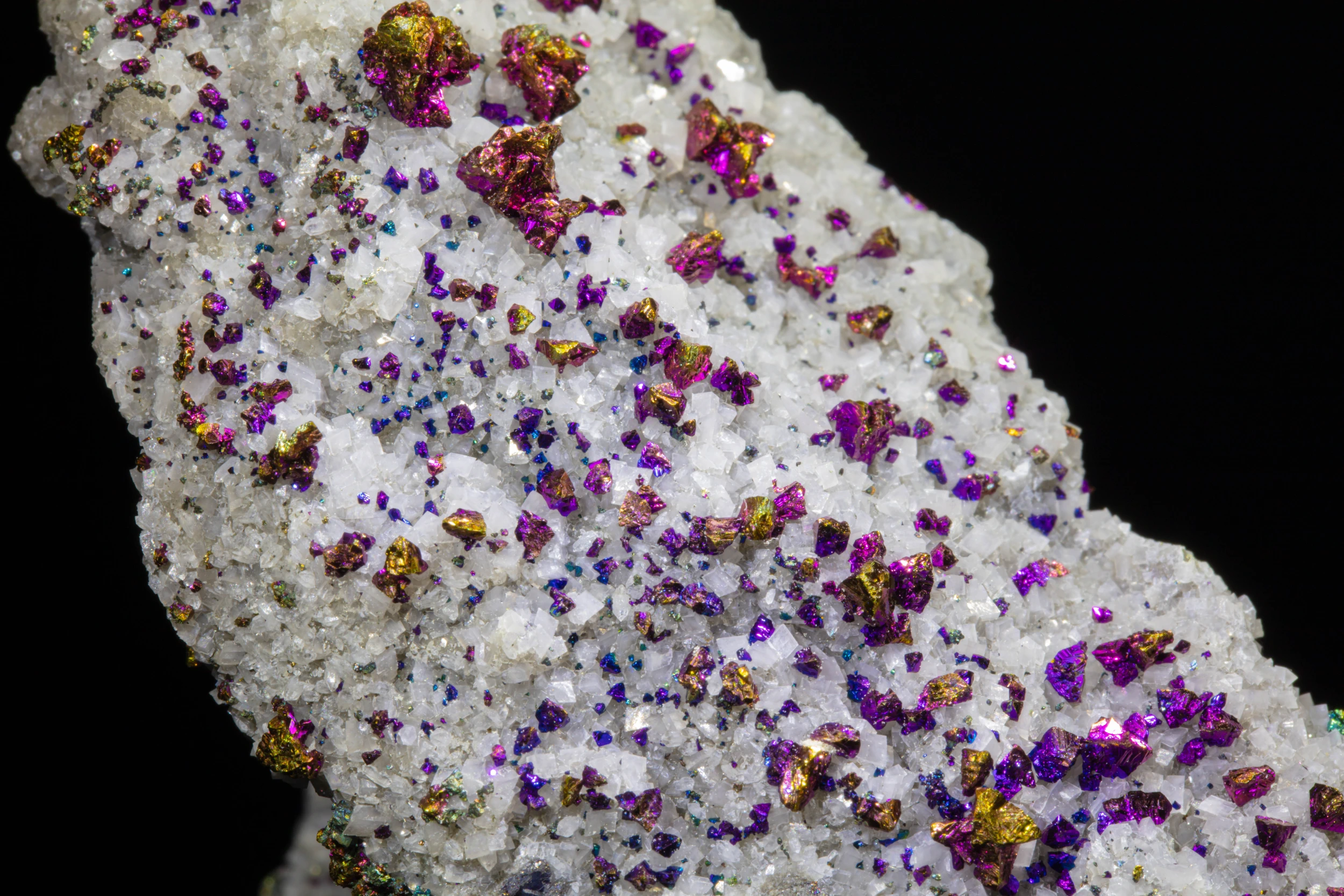
Chalcopyrite & Dolomite

The Specimen

Cabinet: Cabinet (7 - 10 cm) – Size: 8.8 x 5.7 x 4.5 cm Origin: Sweetwater Mine, Ellington, Viburnum Trend, Reynolds County, Missouri – USA

Notes

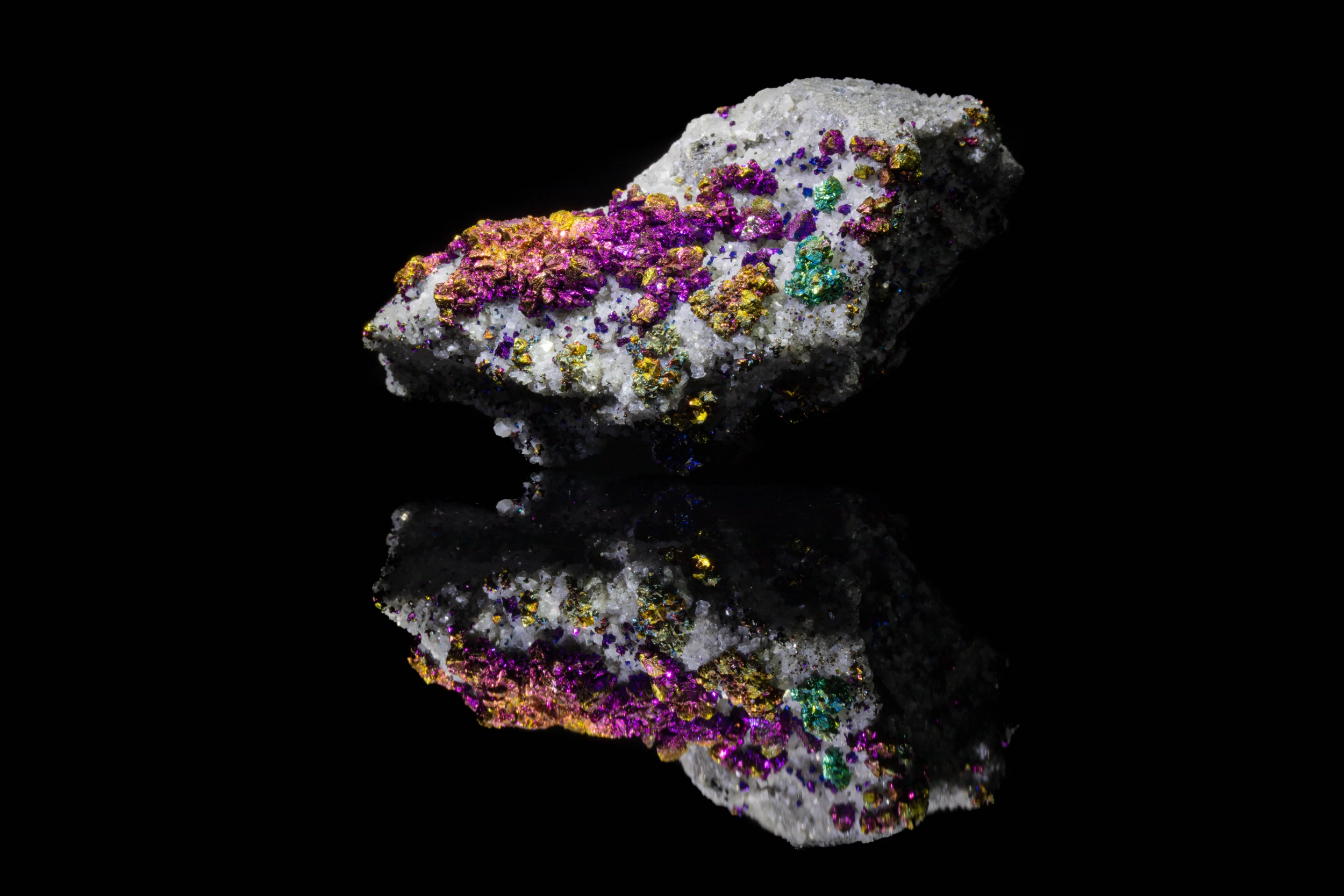
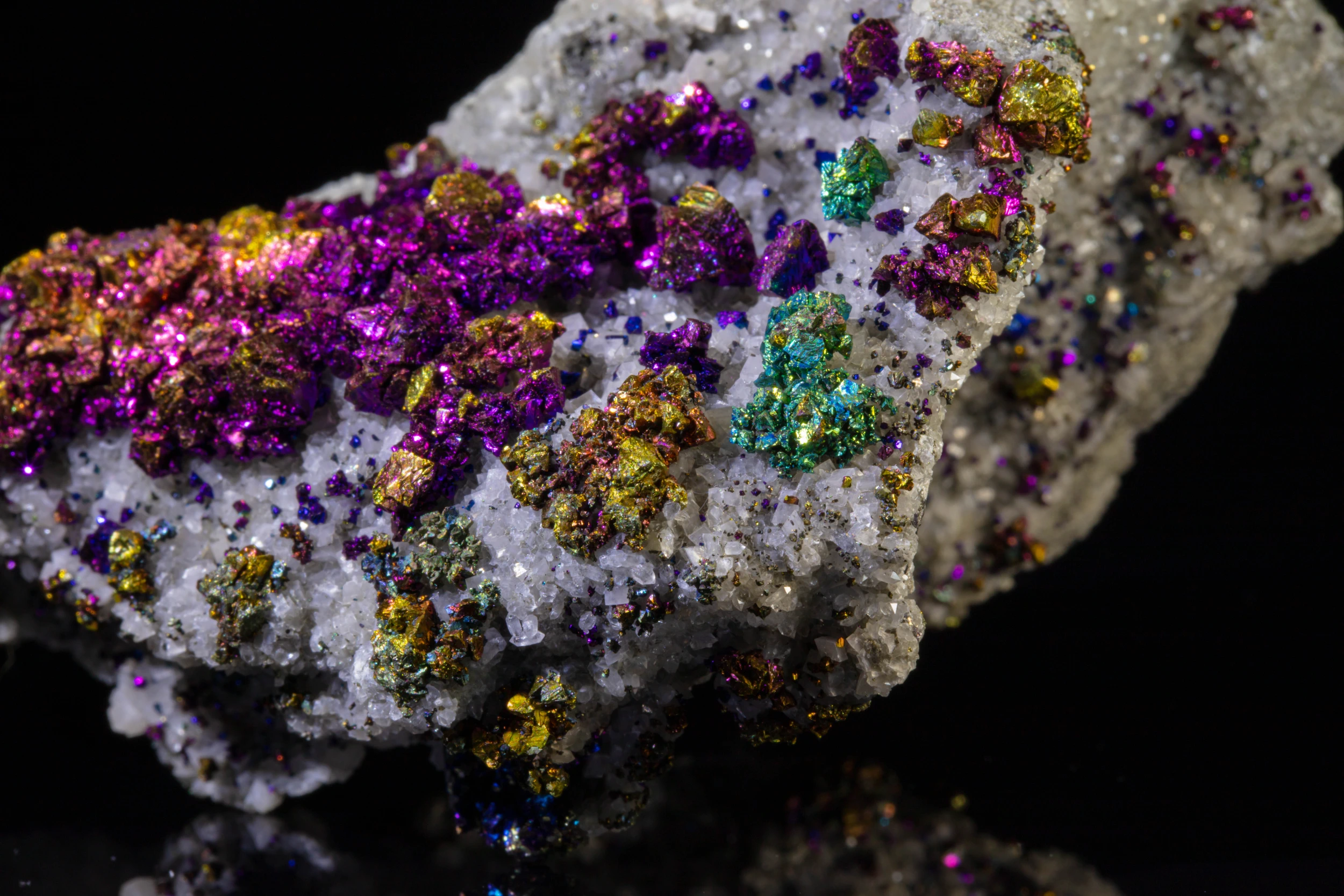
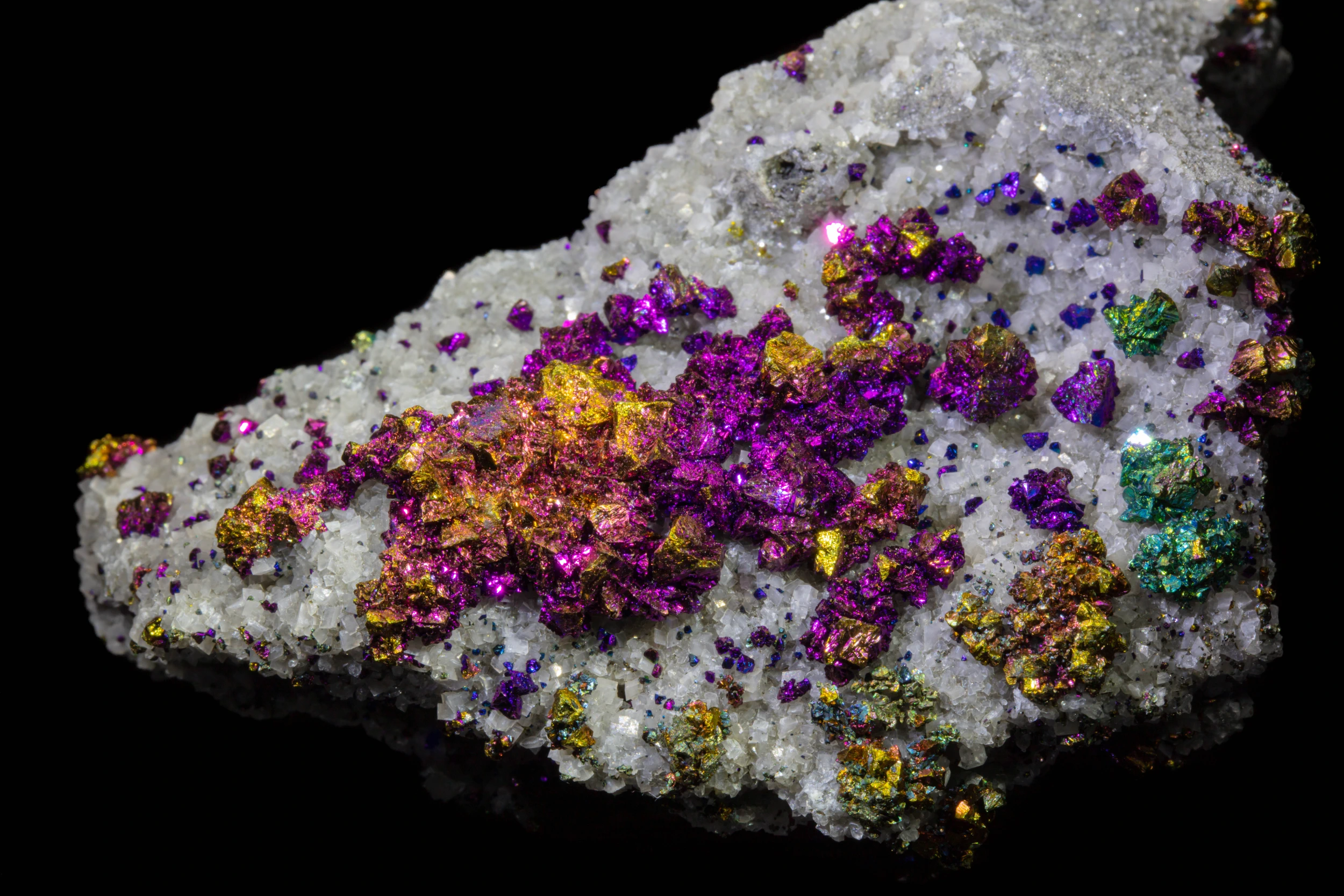
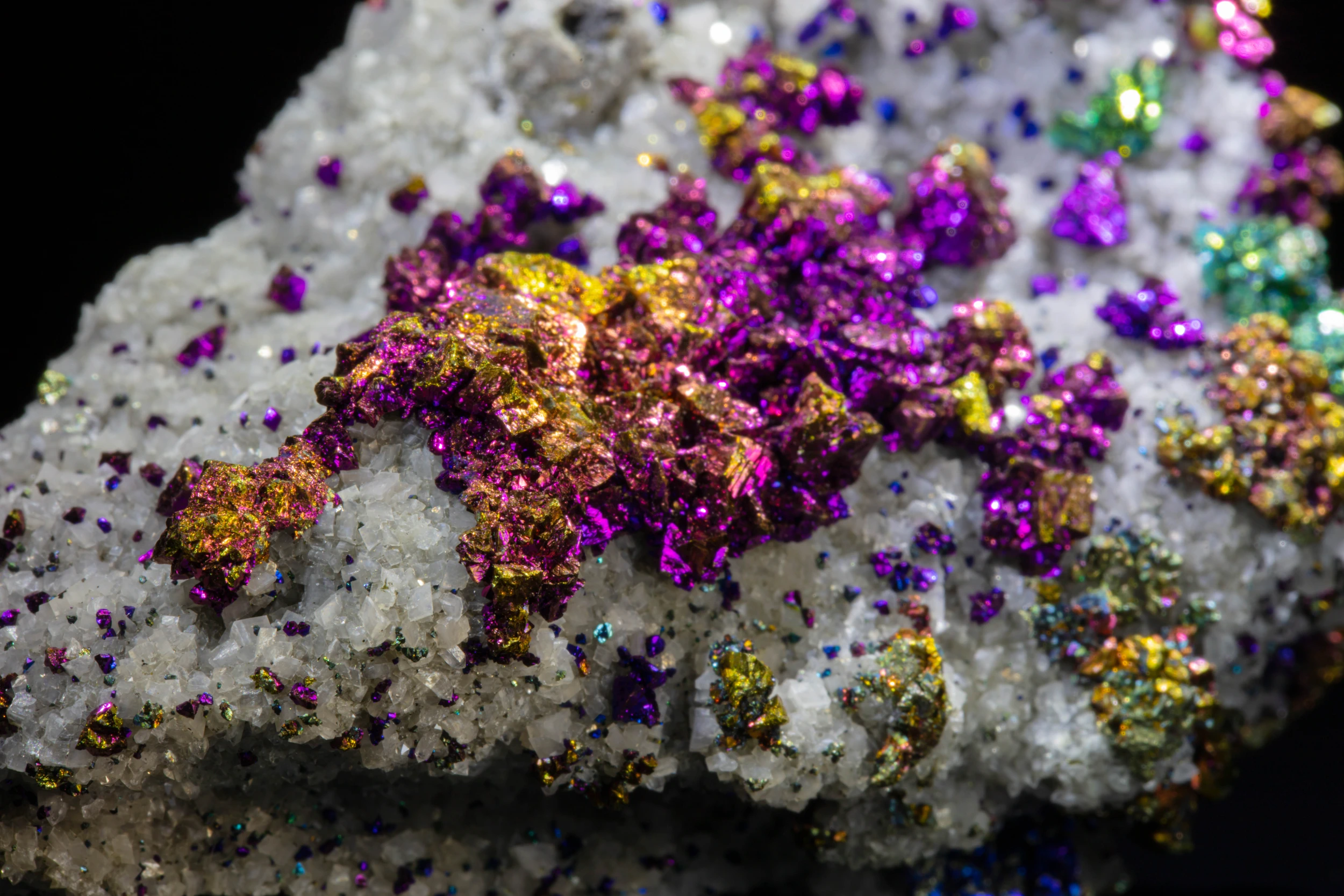
Small chalcopyrite crystals in vivid magenta, gold, blue and green are scattered across a pale, sparkling crust of tiny dolomite crystals, with the richest cluster gathered in a shallow hollow. The colors come from a very thin film on the surface of the chalcopyrite, which splits light the way a soap bubble does. The mine works one of the lead and zinc deposits of the so-called New Lead Belt, which, unlike most deposits of its type, also carries copper and iron sulfides such as chalcopyrite. Mining along the Viburnum Trend began in the mid-1960s. The Sweetwater Mine, also known as the Milliken Mine, is one of the mines of the trend still in production, operated today by the Doe Run Company.

Mineral Species

Did you know?

ChalcopyriteChalcopyrite is built almost exactly like sphalerite, the main ore of zinc. Copper and iron take turns in the places where zinc sits, and that alternation makes its basic building block twice as tall.

DolomiteDolomite builds entire mountain ranges, including the Italian range named after it, yet almost never forms in today's seas and resists easy growth in the lab. Geologists still call this the dolomite problem.