Heterogenite & Chrysocolla

The Specimen

Cabinet: Large Cabinet (10 cm+) – Size: 10.2 x 8.2 x 4.3 cm Origin: L'Etoile du Congo Mine, Lubumbashi, Haut-Katanga – Congo (DRC) History: Ex R.D. Mushlitz Collection

Notes

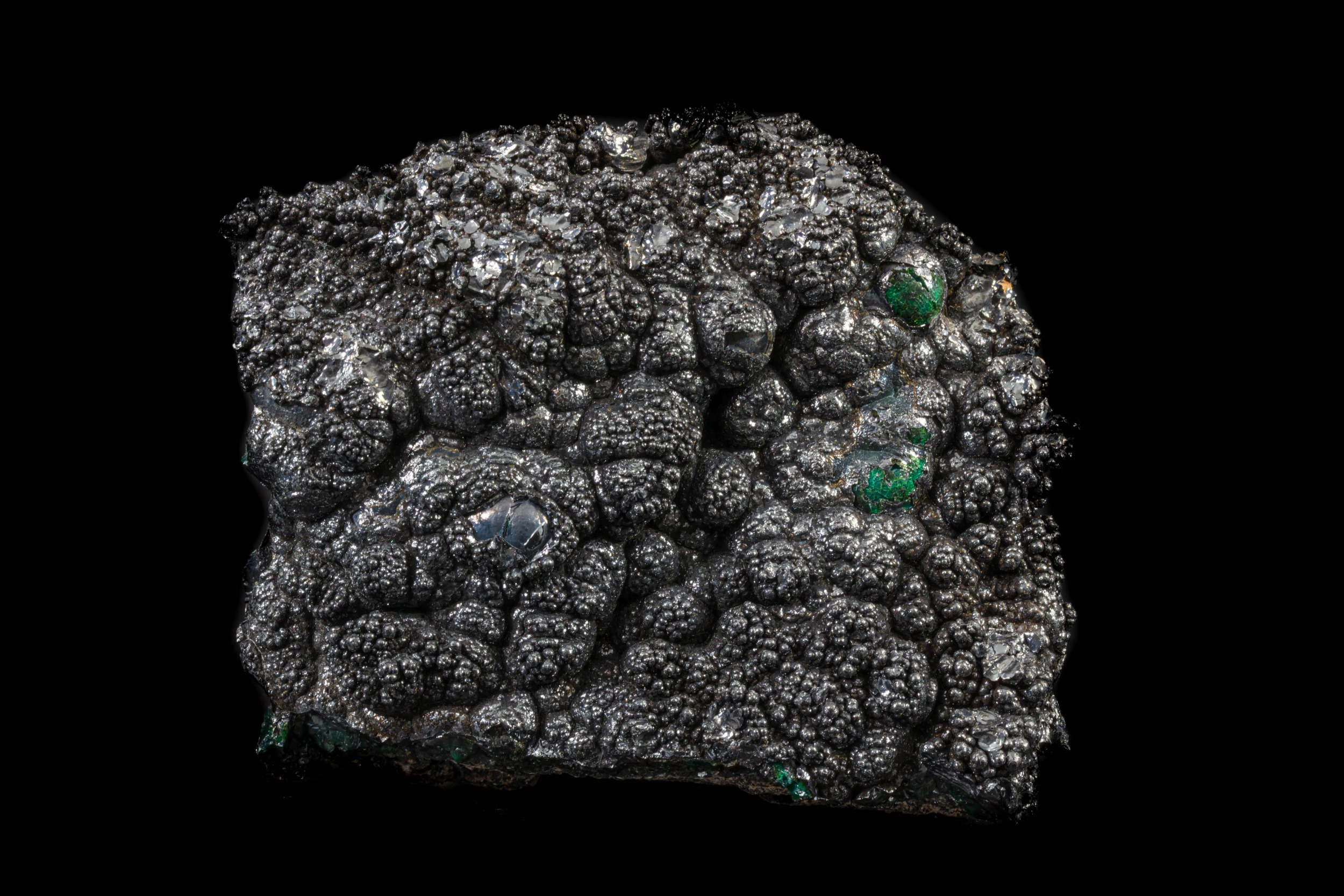
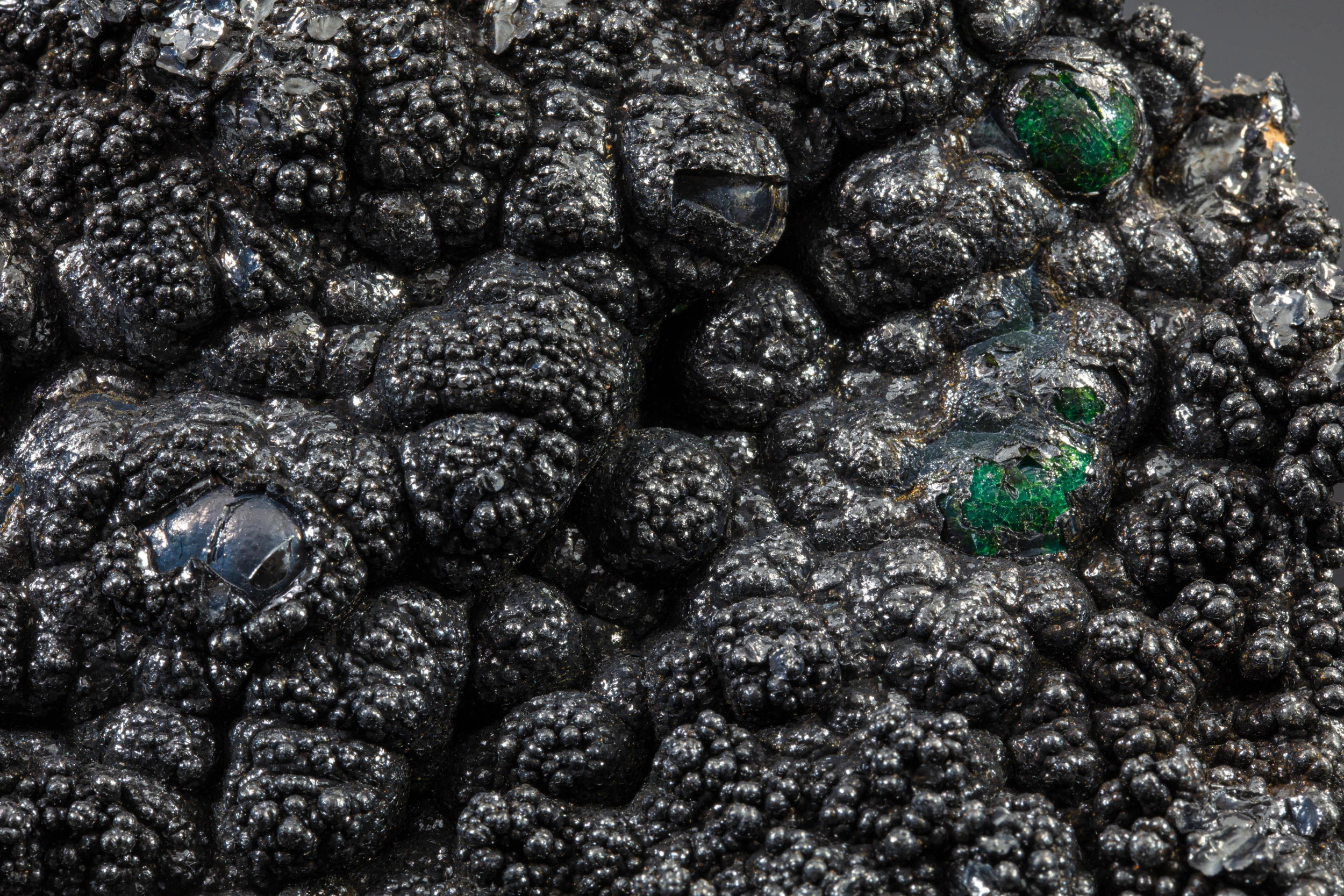
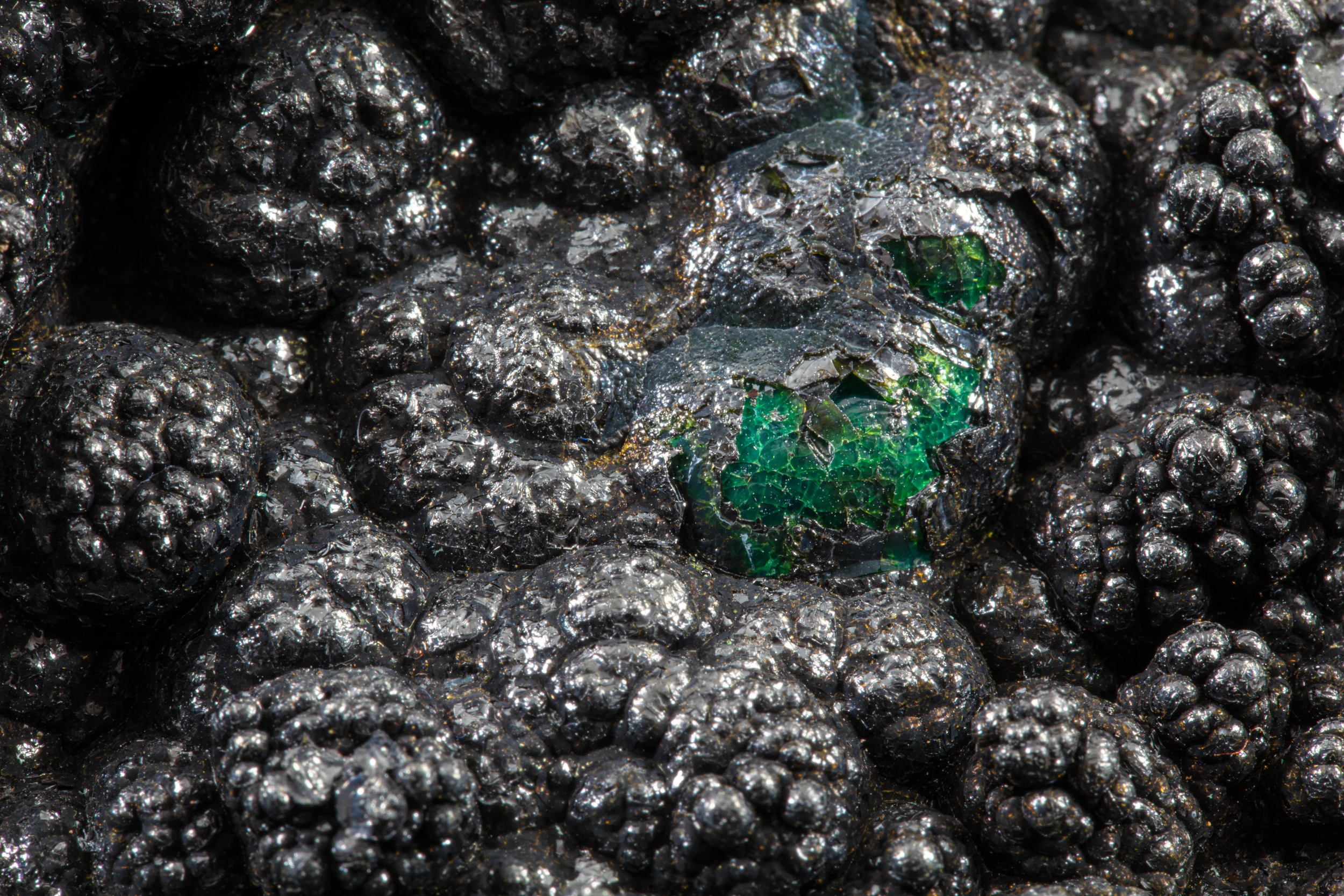
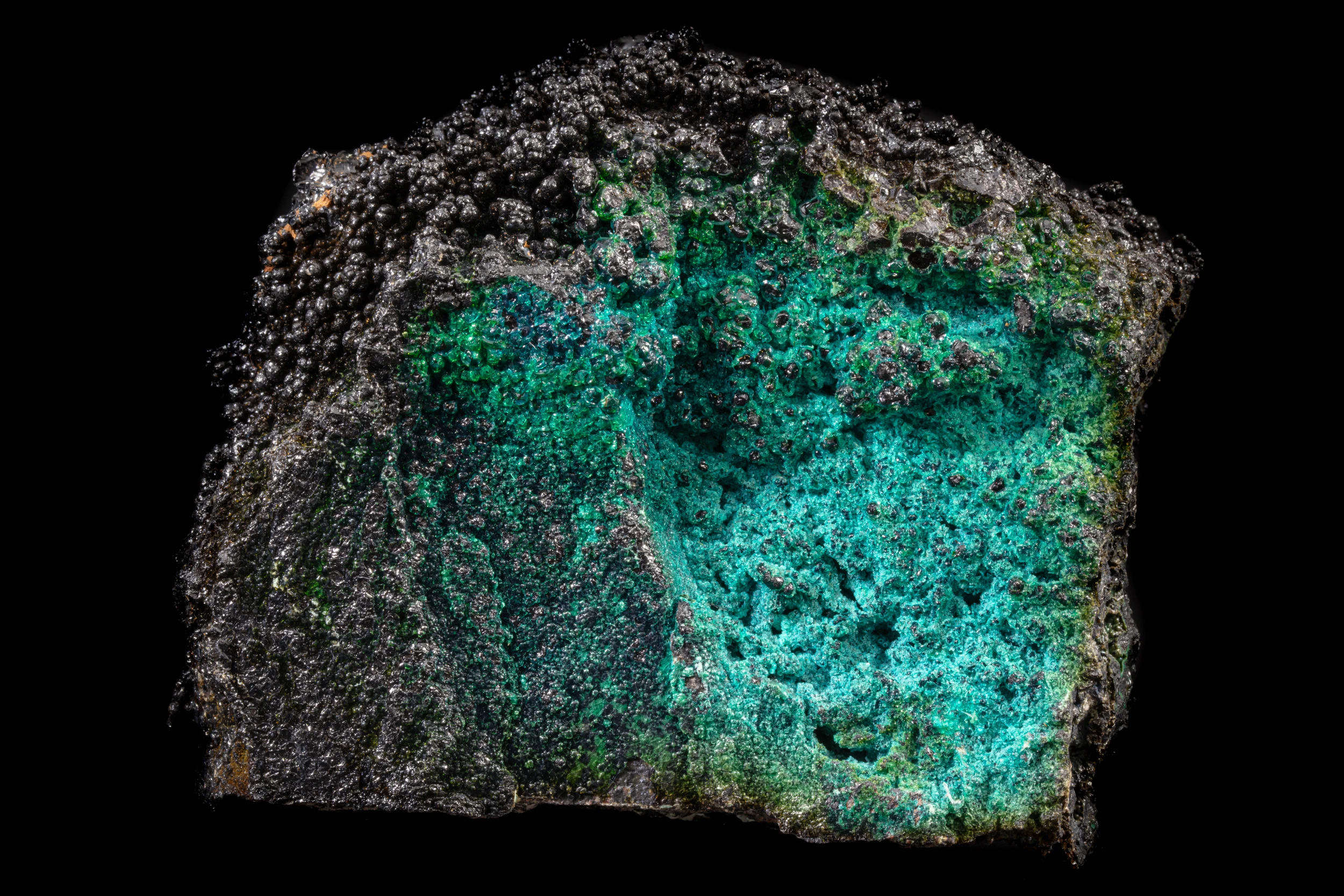
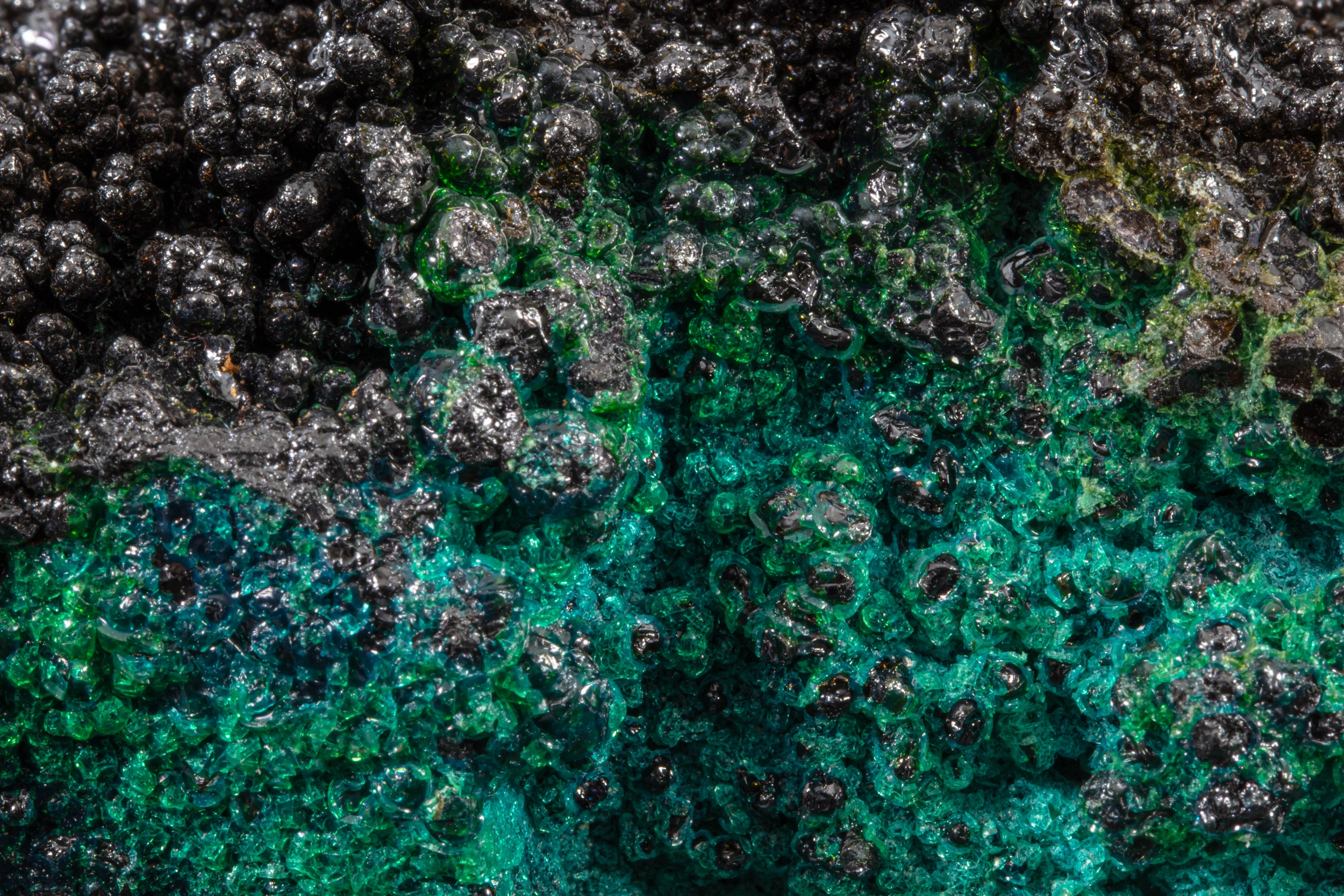
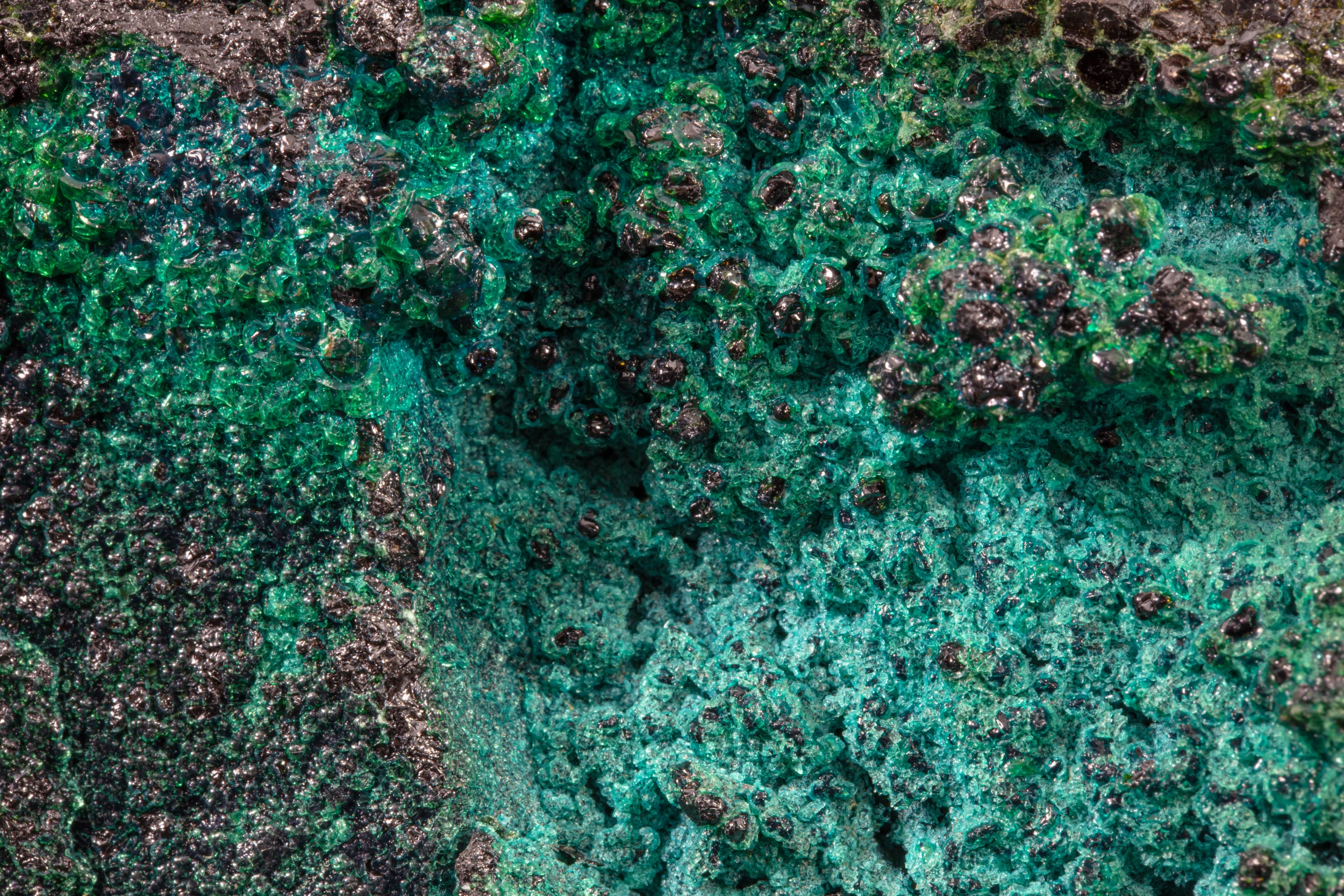
This specimen comes from L'Etoile du Congo Mine, on the outskirts of Lubumbashi in Haut-Katanga, Democratic Republic of the Congo. The Union Minière du Haut Katanga discovered the orebody in 1911. First called Kalukuluku, the mine was renamed "Star of the Congo" by the Belgians, and the city, then named Élisabethville, was founded close to it and to its copper smelter. Artisanal miners worked it until 2000, and it reopened as a modern mine in 2005. Heterogenite is a cobalt oxyhydroxide, and its name comes from the Greek for "of another kind." Here, highly lustrous black heterogenite covers the whole front in bubbly, rounded botryoids grouped like blackberries, with a few small spots of green chrysocolla tucked between them. The back carries a crust of turquoise-blue to green chrysocolla, a copper silicate, sprinkled with tiny reddish-brown specks. According to the dealer, the piece comes from the collection of R.D. Mushlitz, whose label reads "Katanga, Zaire," the country's official name from 1971 to 1997.

Mineral Species

Did you know?

HeterogeniteHeterogenite looks like dull black tar on rock, easy to overlook. It is in fact the world's main ore of cobalt, the metal at the core of modern rechargeable batteries.

ChrysocollaChrysocolla is named from the Greek for gold and glue, because ancient jewelers used it to solder gold. Despite the name it holds no gold at all, and owes its blue-green color entirely to copper.