Galena, Chalcopyrite, Sphalerite & Calcite
The Specimen

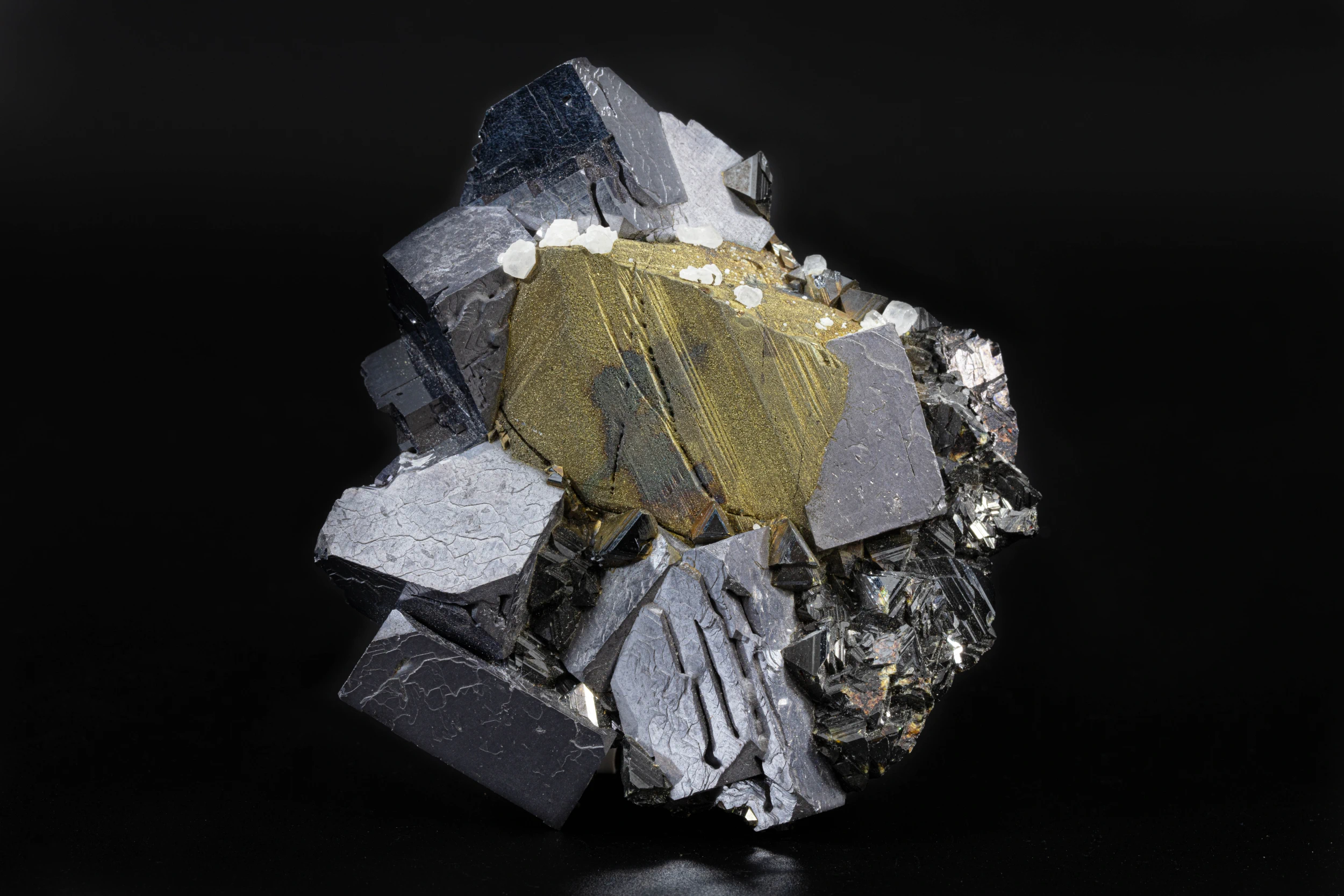
Cabinet: Small Cabinet (4.5 - 7 cm) Origin: Madan ore field, Rhodope Mountains, Smolyan Province – Bulgaria

Notes

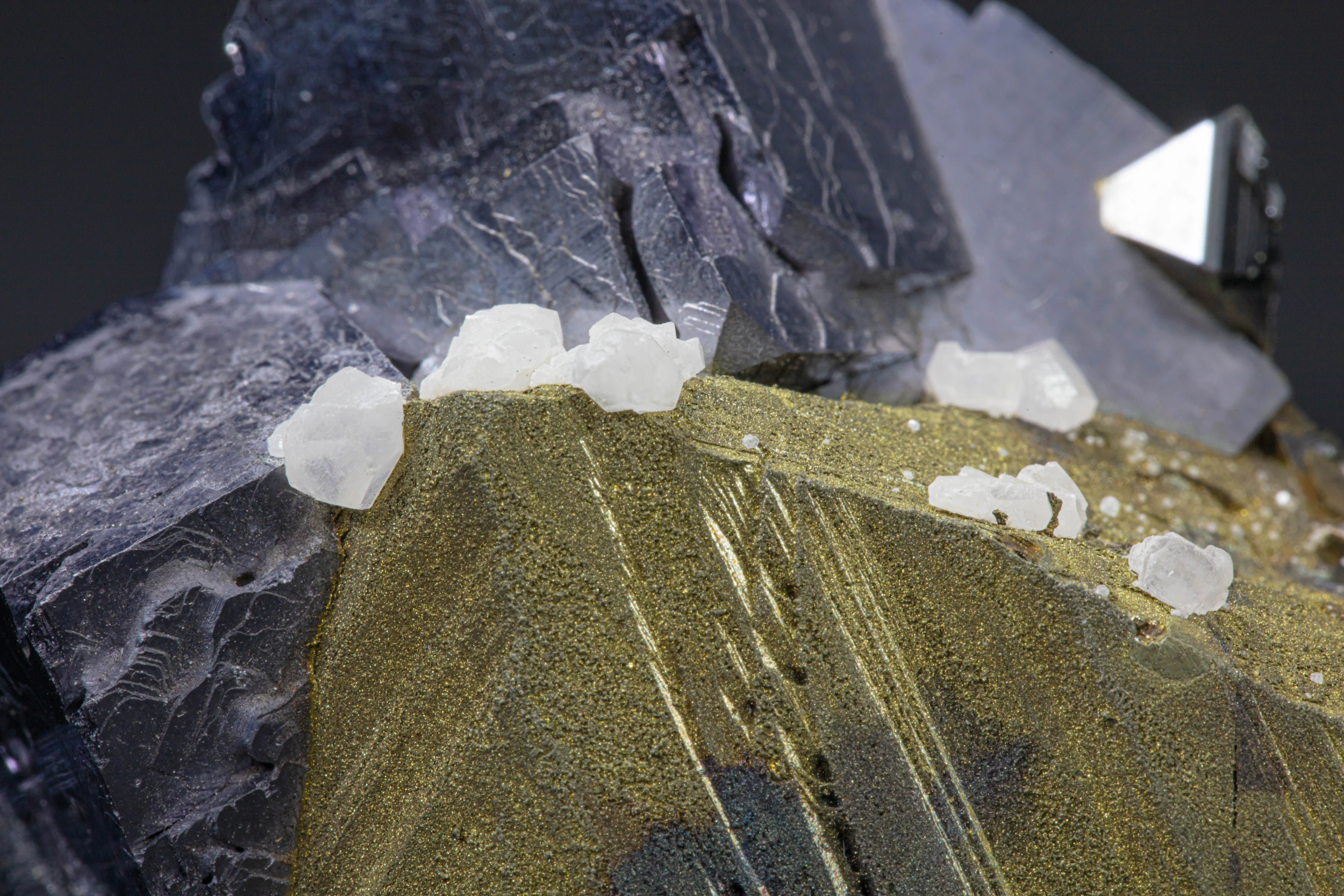
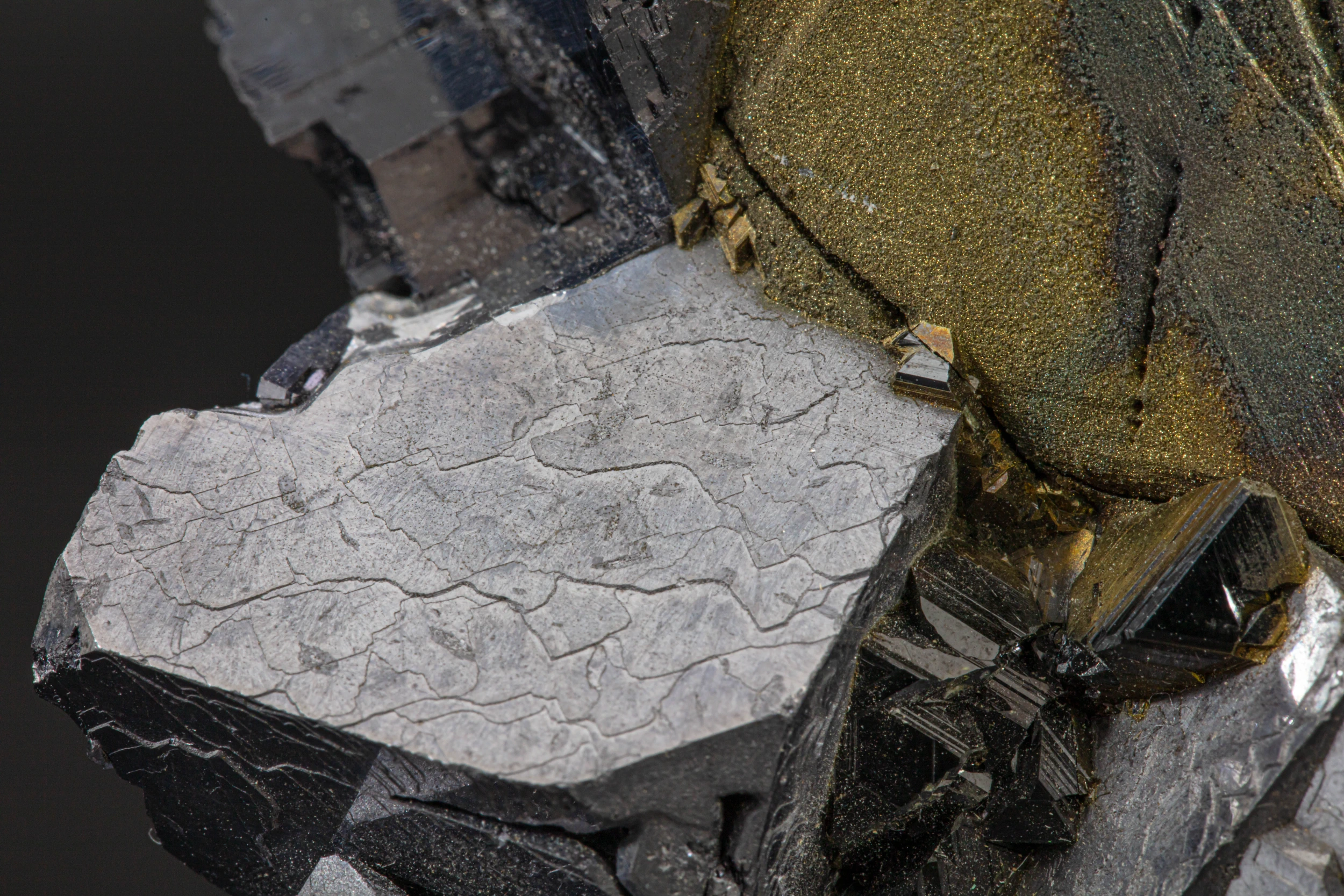
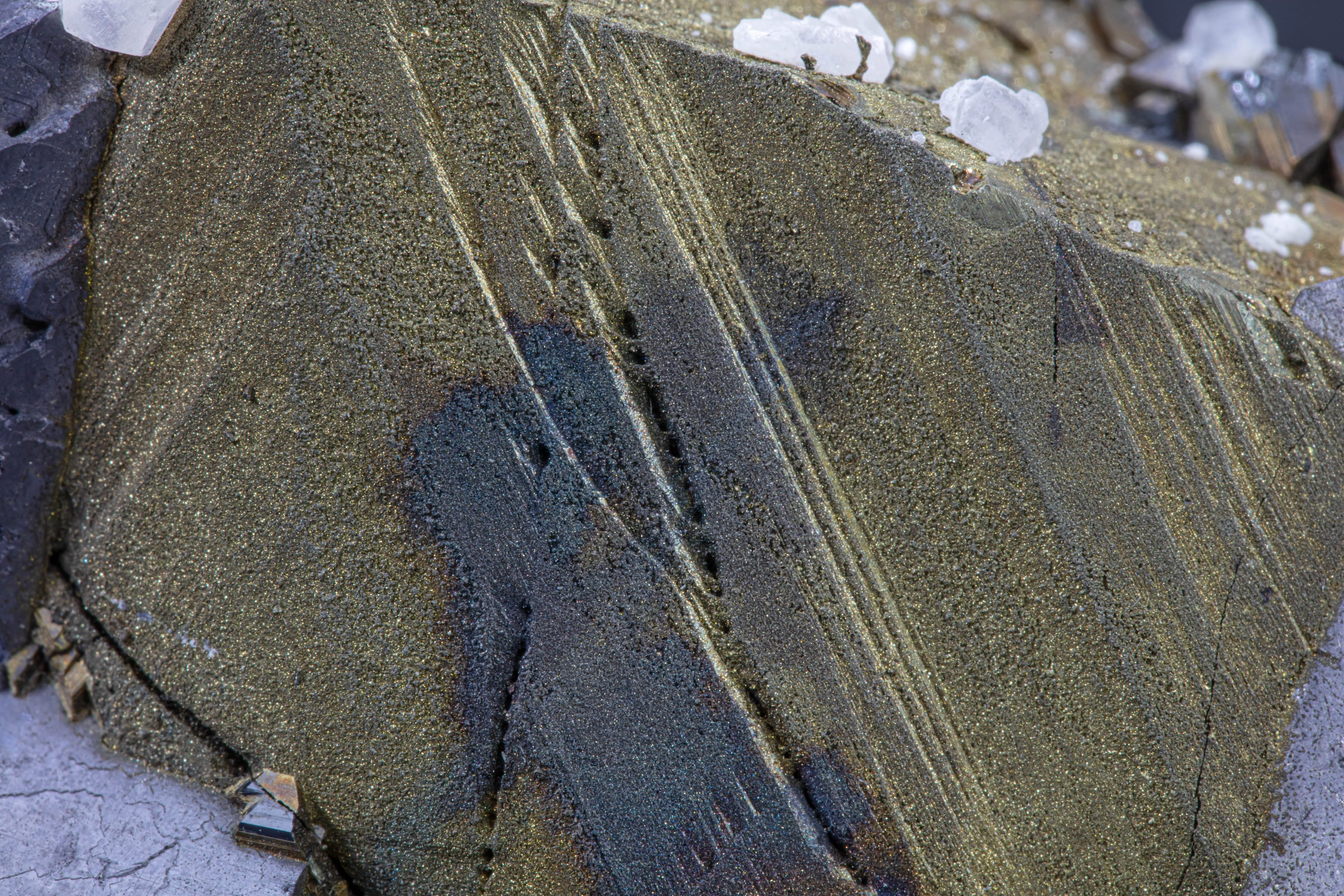
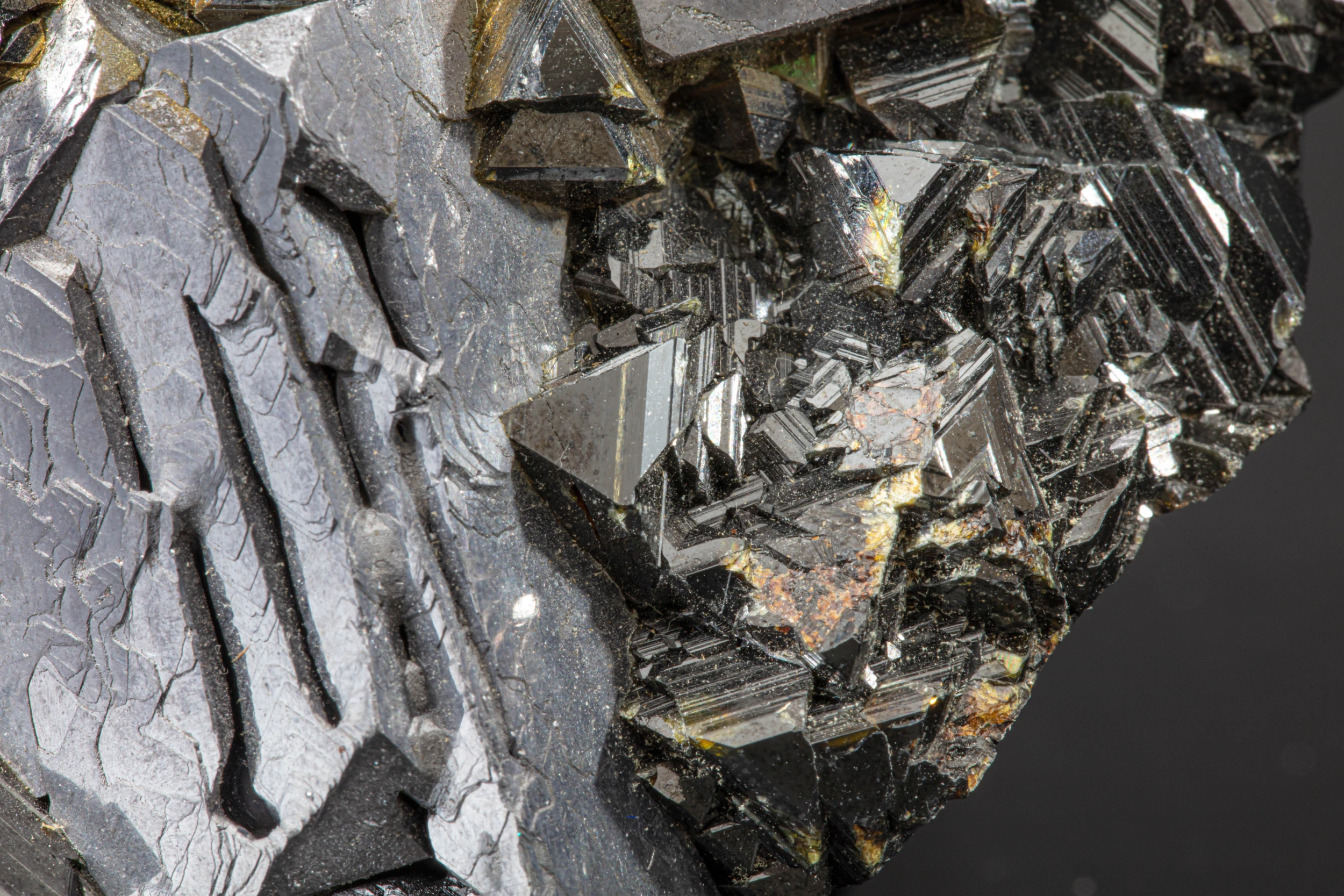
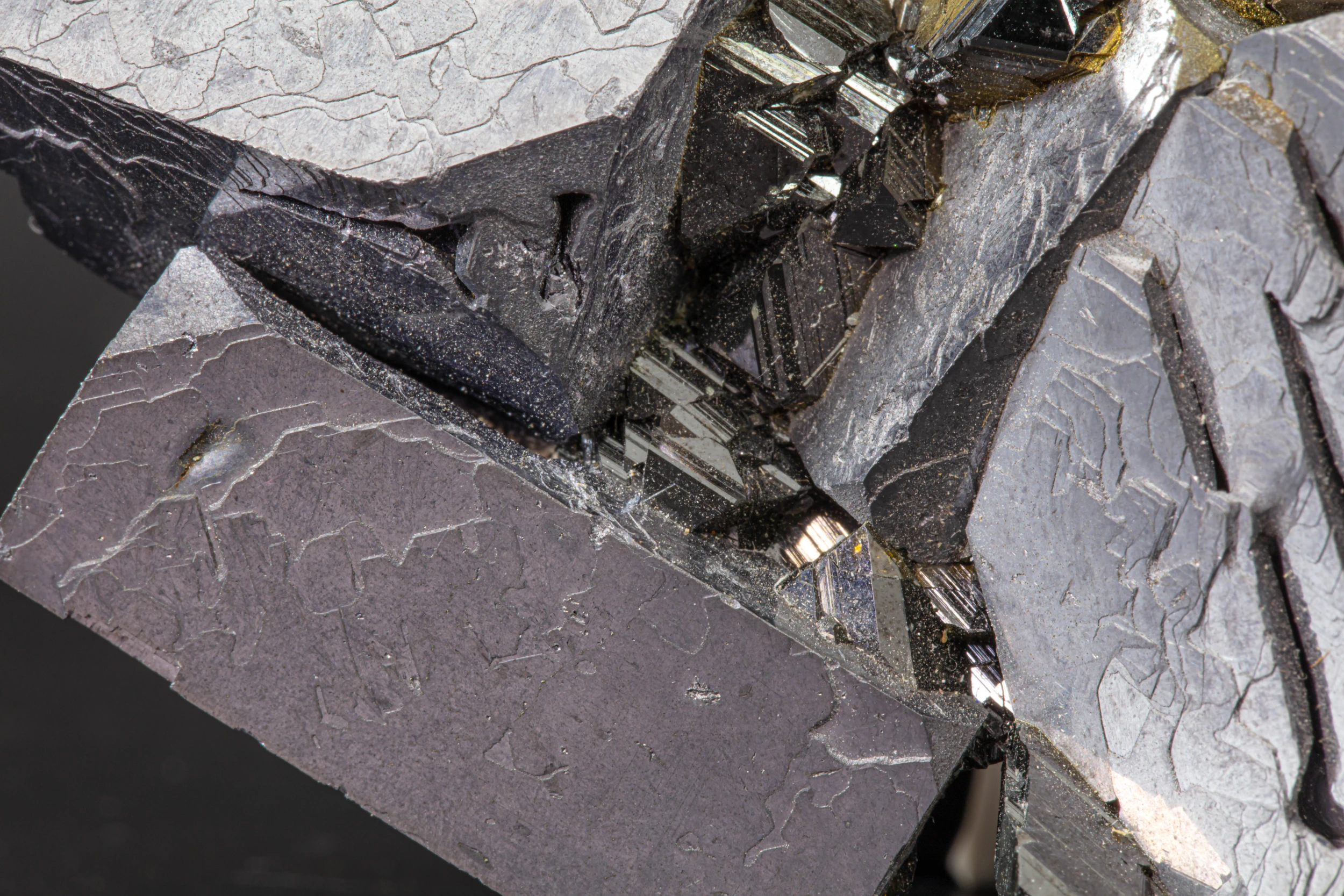
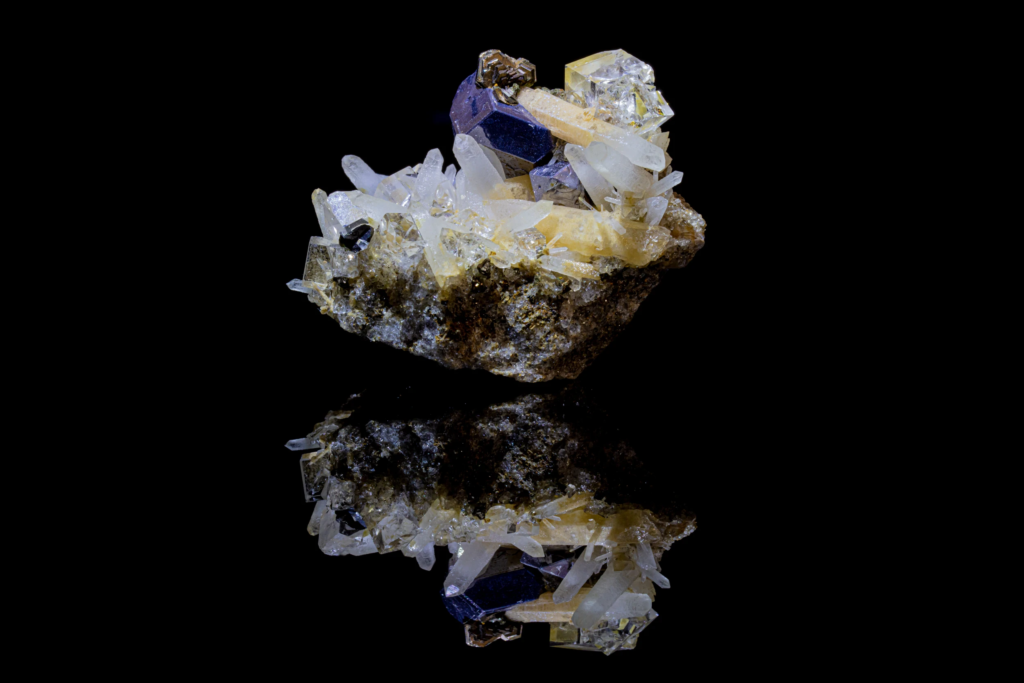
This specimen comes from the Madan ore field in the Rhodope Mountains of southern Bulgaria, one of the most important lead and zinc districts of the Balkans. Lead was already mined here in antiquity by the Thracians and the Romans, and later in the Middle Ages under Byzantium. Today the town of Madan keeps a museum, the Rhodope Crystals Hall, opened in 1984, with about 600 crystals found by its miners. Here, gray crystals of galena, the main lead ore, surround a large brassy crystal of chalcopyrite, a copper ore, whose face is crossed by fine parallel lines and patches of blue black tarnish. Small white calcite crystals sit along its top edge, and black, lustrous sphalerite, the zinc ore of the deposit, fills the spaces between the galena crystals.

Mineral Species

PbS
Elements: Lead, Sulfur
Class: Sulfides
Crystal System: Cubic
Hardness: 2.5-2.75
Calcite
Talc (1)Diamond (10)
Soft. A fingernail can scratch it.
Elements: Zinc, Sulfur
Class: Sulfides
Crystal System: Cubic
Hardness: 3.5-4
Fluorite
Talc (1)Diamond (10)
Softer than glass. A steel knife scratches it.

Did you know?

GalenaGalena was the heart of the first crystal radios. Acting as a natural semiconductor, it let a fine wire called the cat's whisker pull voices from the air with no battery at all.

ChalcopyriteChalcopyrite is built almost exactly like sphalerite, the main ore of zinc. Copper and iron take turns in the places where zinc sits, and that alternation makes its basic building block twice as tall.

SphaleriteSphalerite is named from the Greek for treacherous, because it fooled old miners hunting for lead. Gem-clear pieces hide a second surprise: they scatter light into rainbow fire more than three times stronger than a diamond.

CalciteLook through a clear rhomb of Iceland spar calcite and the world doubles, split into twin images by the crystal's double refraction. Some researchers think Norse sailors used this very effect to find the sun through cloud, the so-called sunstone, though the idea remains a debated hypothesis.