Hübnerite on Quartz

The Specimen

Cabinet: Large Cabinet (10 cm+) – Size: 11.5 x 9.2 x 7.3 cm Origin: Huayllapon Mine, Pasto Bueno, Pampas District, Pallasca Province, Ancash – Peru History: Ex Dr. Miguel Romero Collection

Notes

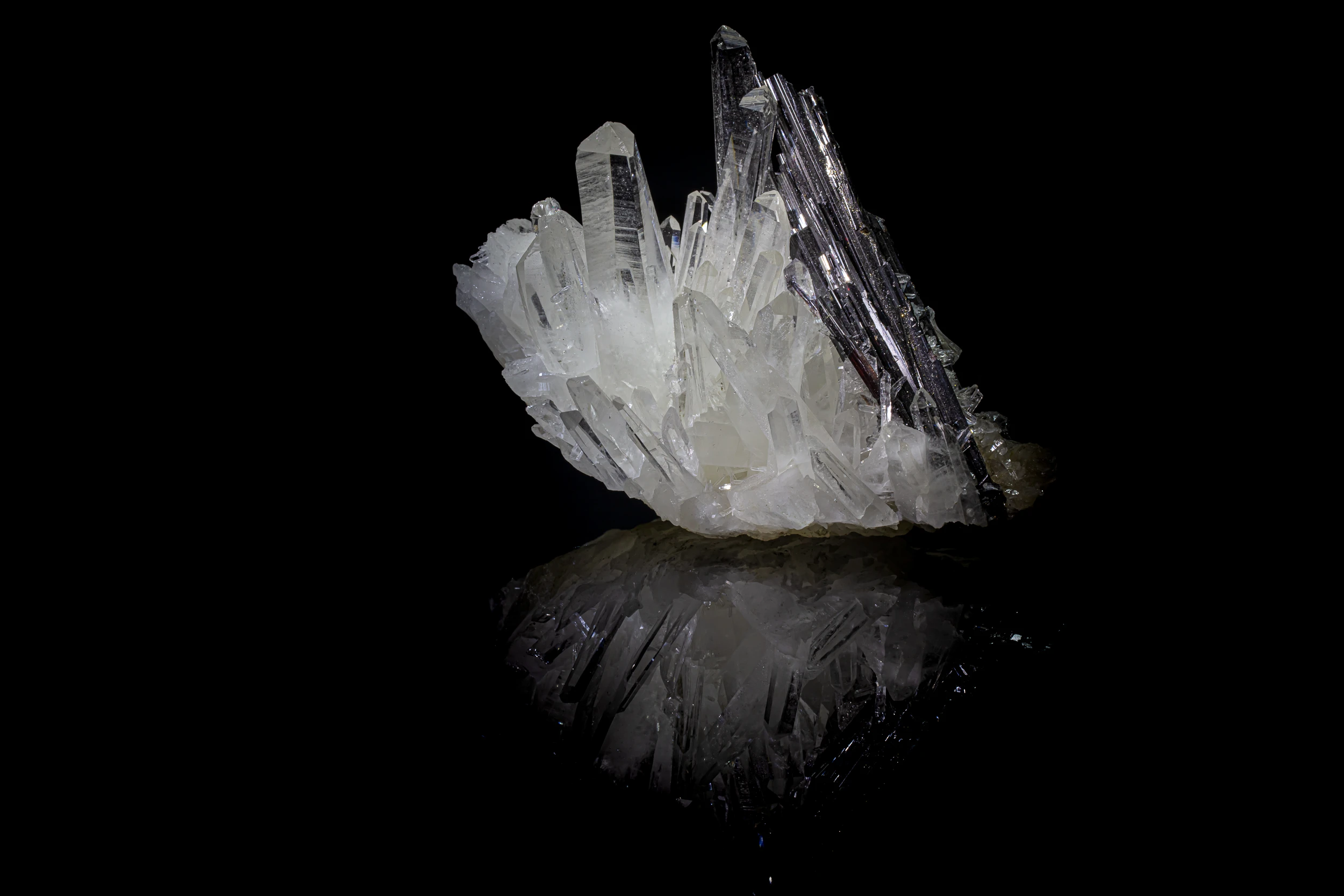
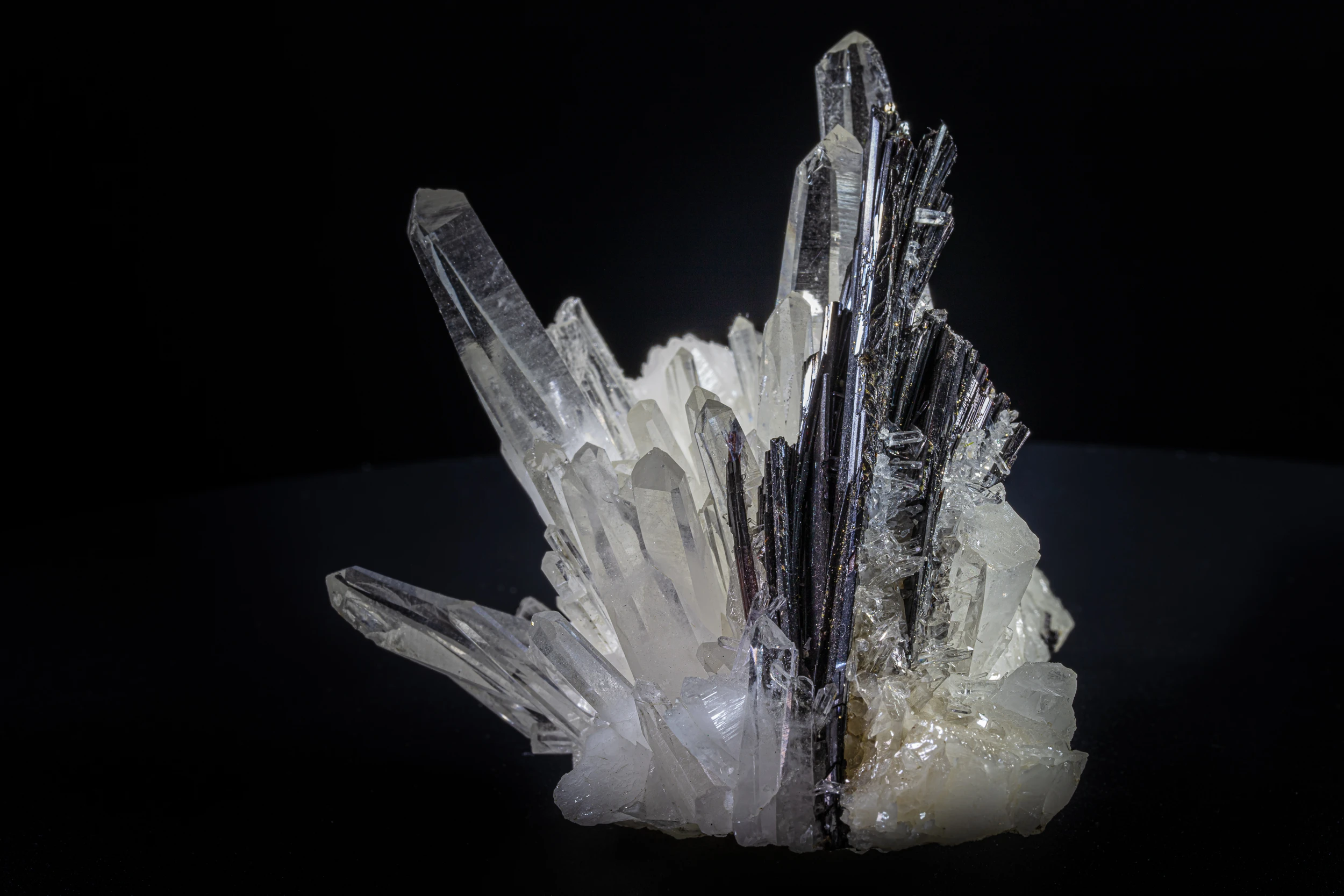
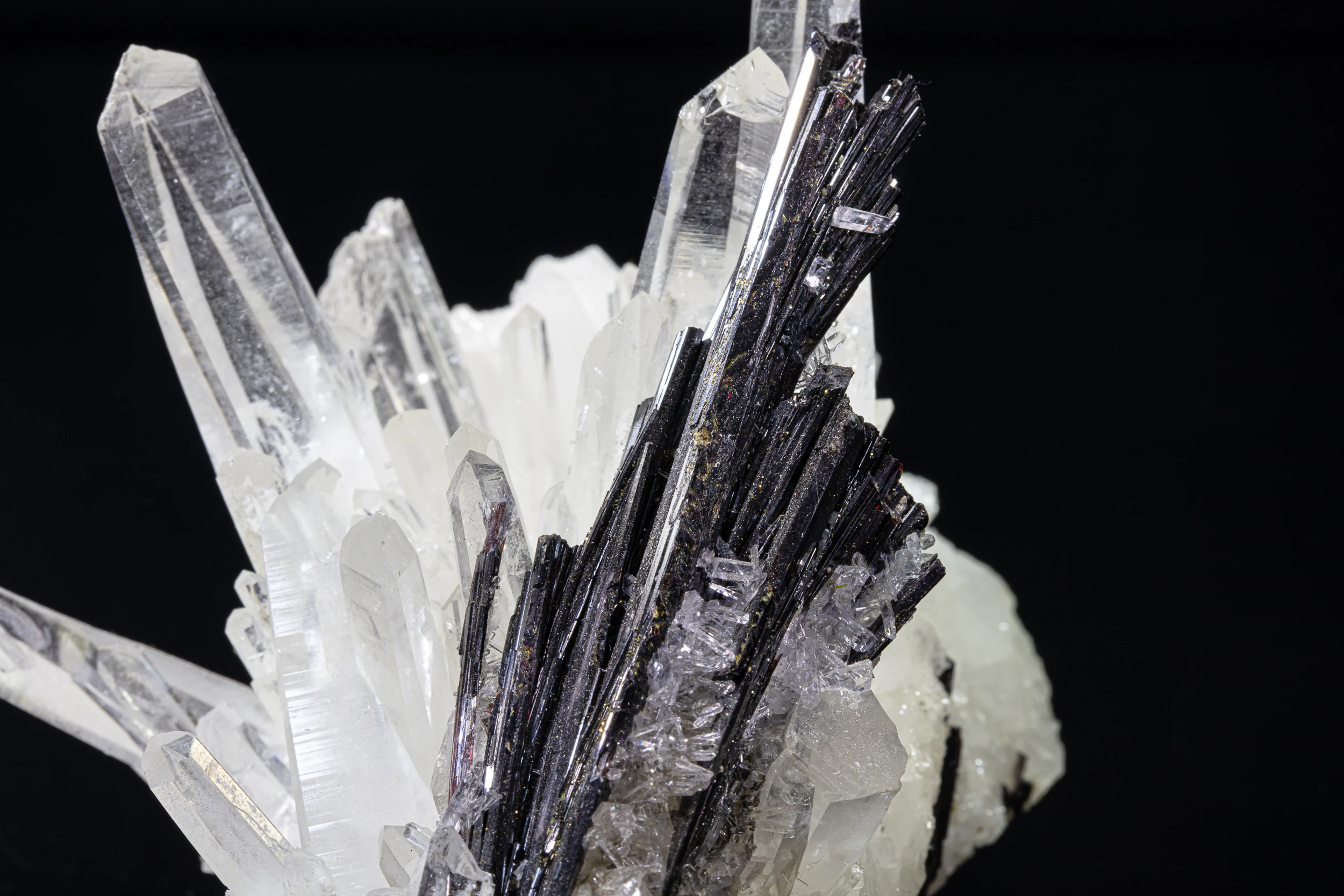
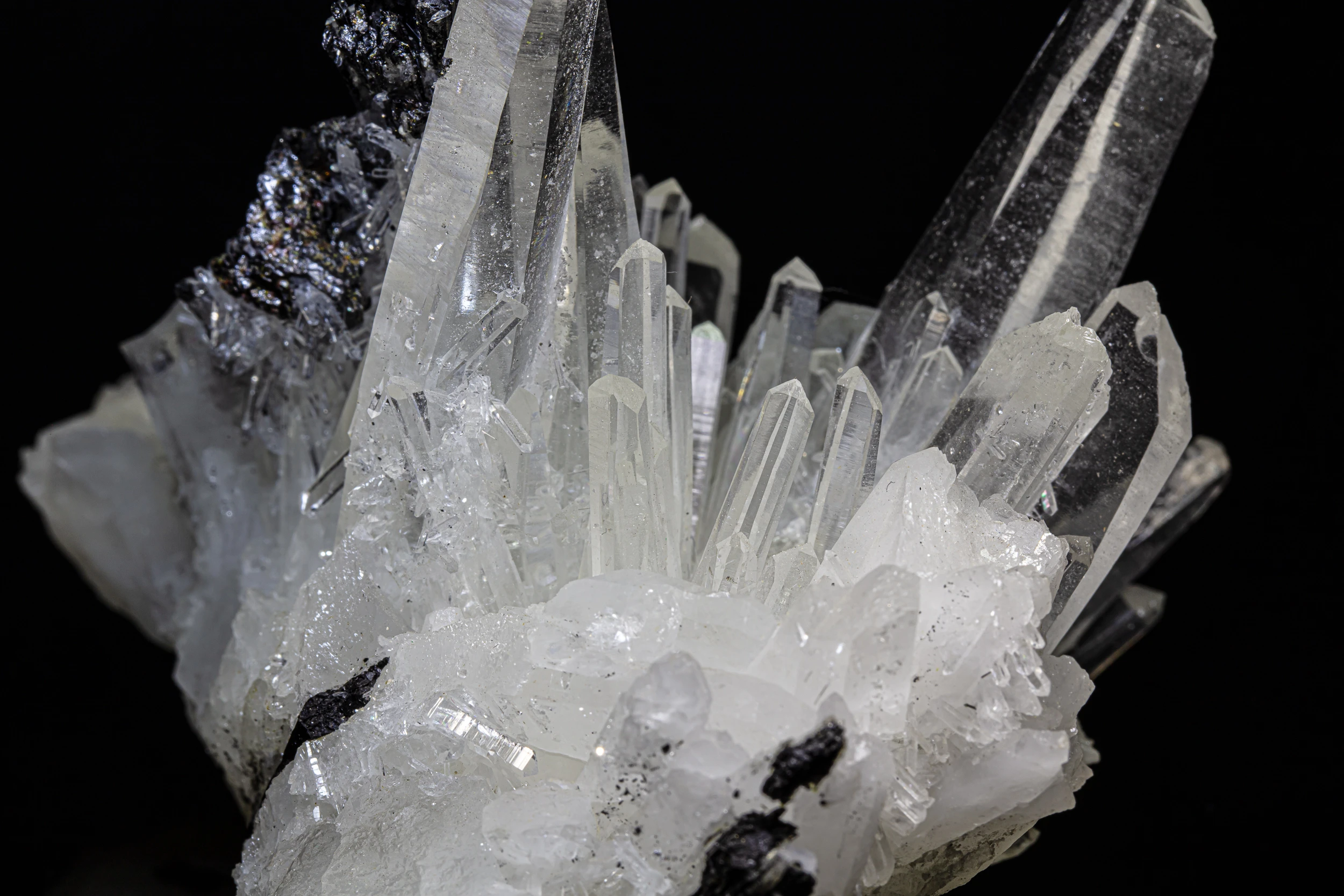
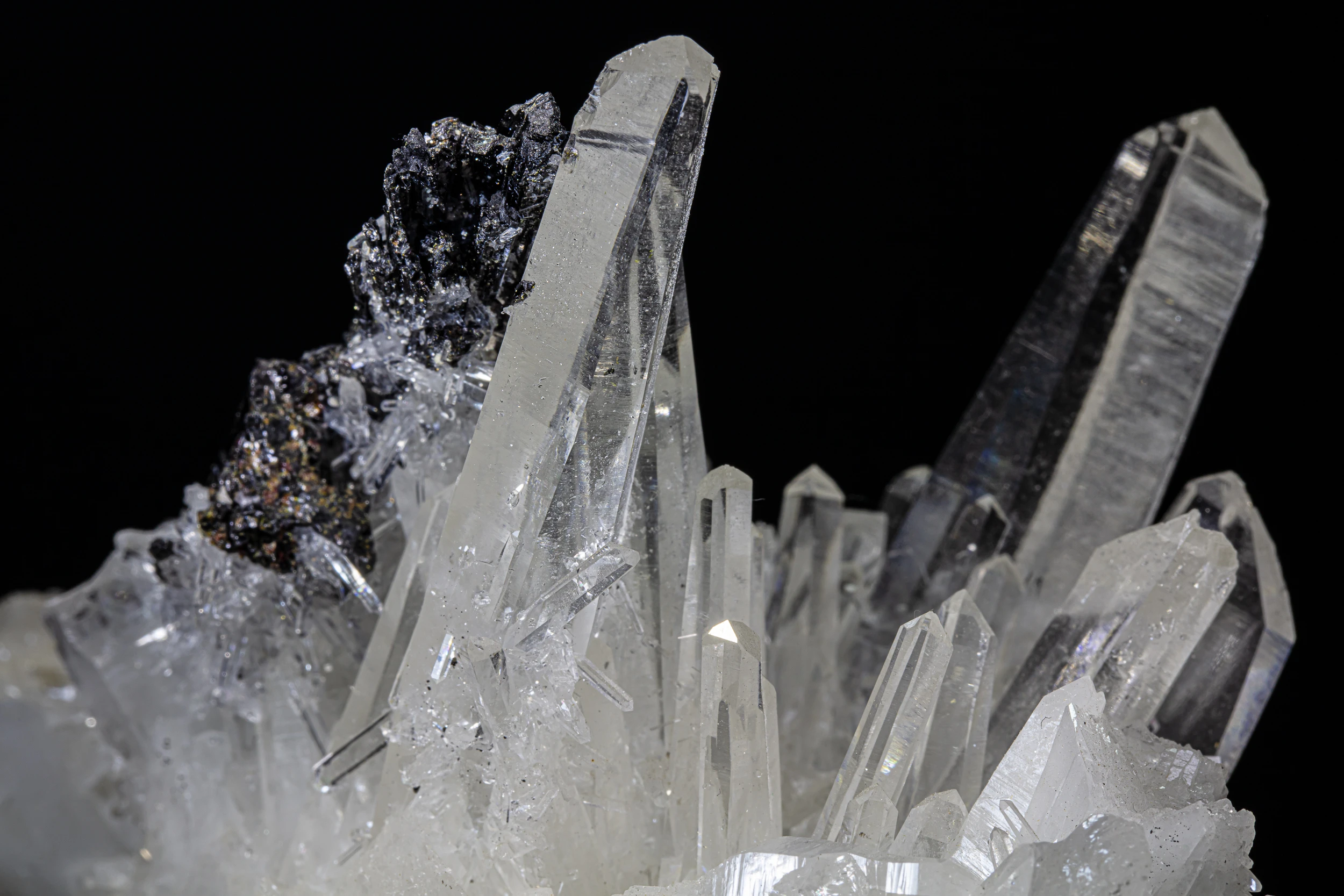
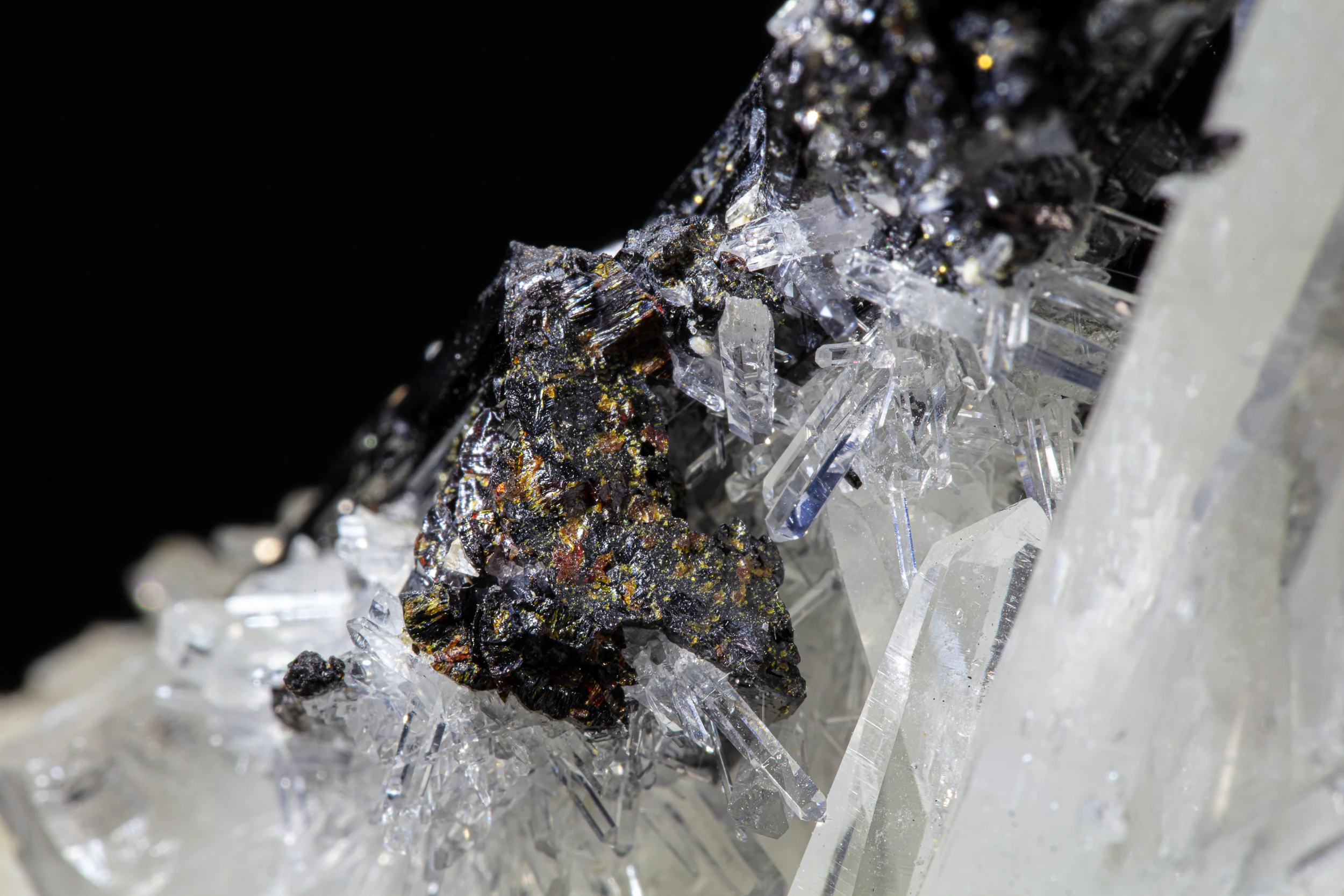
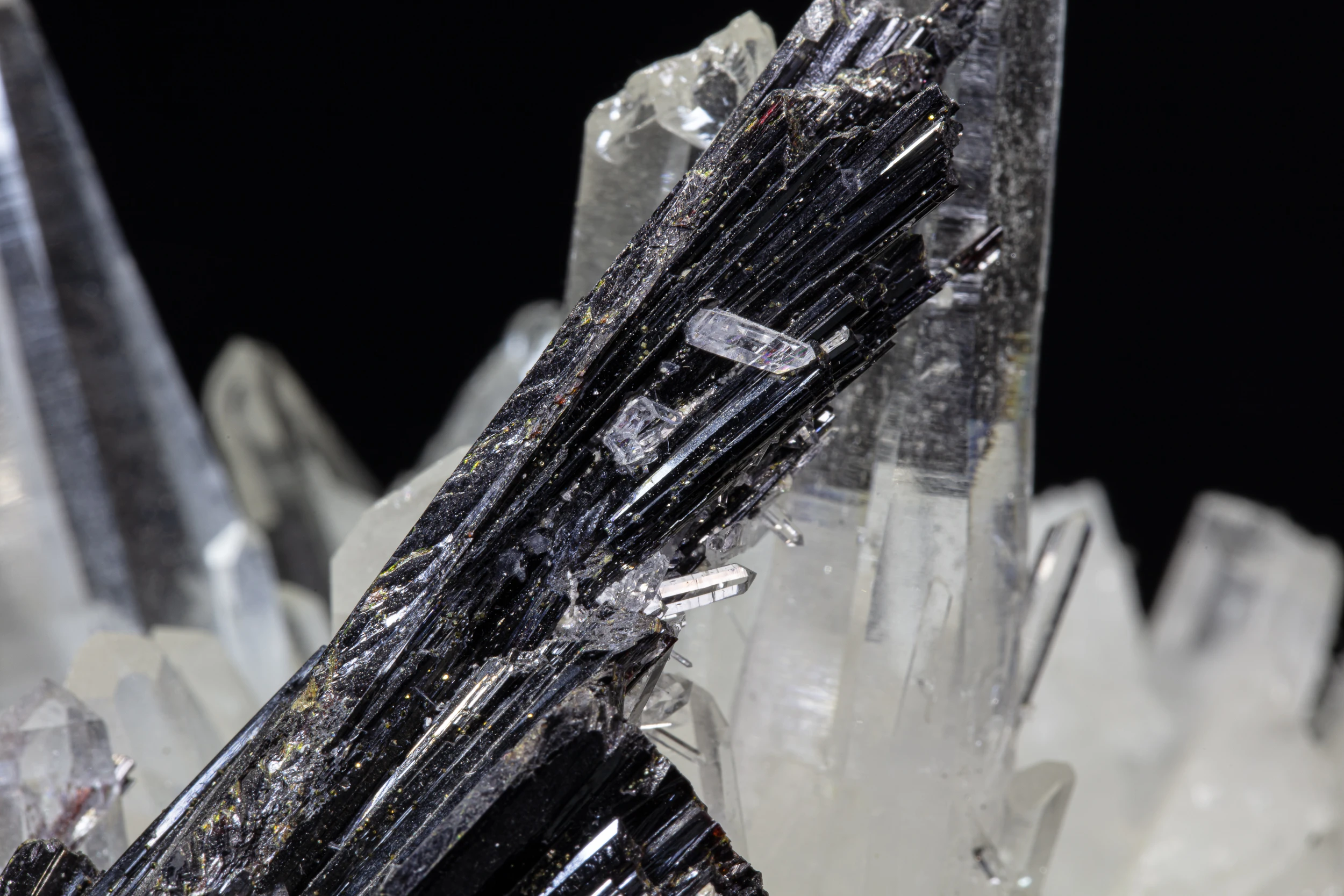
This specimen comes from the Huayllapon Mine at Pasto Bueno, in the Pallasca Province of Ancash, in the northern Andes of Peru. Pasto Bueno is a tungsten deposit at about 4,000 meters, where the ore fills near-vertical quartz veins, and wolframite was discovered there in 1910. Huayllapon is by far the most important mine of the area for collectors, known above all for its hübnerite and rhodochrosite. Hübnerite is a manganese tungstate, an ore of tungsten. Here, a layered group of sharp, lustrous black hübnerite blades, grown in parallel and striated along their length, rises from a fan of colorless to white quartz prisms, some of them gemmy and well terminated. According to the dealer, the hübnerite glows a fiery blood red when lit from behind. On one side, a dark, granular mass with reddish-brown and golden glints sits among the quartz. The dealer does not identify it. Sphalerite and minerals of the tetrahedrite group are both recorded at this mine, and it may be one of them, but this is only a supposition. This piece belonged to Miguel Romero of Tehuacán, Mexico, who served in the Mexican National Congress and opened his collection to the public as the Romero Mineral Museum. It carries his collection number 1958.

Mineral Species

Did you know?

HübneriteHübnerite is mined for tungsten, the metal with the highest melting point of any element. Its dark heavy crystals hide a softer side: backlit, they glow a translucent crimson.

QuartzPressing a quartz crystal makes it give off a precise electric beat, which is why it keeps time in nearly every watch and once tuned the radios of World War II, when good crystals were a strategic resource.