Inesite

The Specimen

Cabinet: Large Cabinet (10 cm+) – Size: 10.9 x 7.9 x 7.3 cm Origin: Hale Creek Mine, Mad River Rock, Coastal Range, Trinity County, California – USA History: Ex Josef Vajdak Collection

Notes

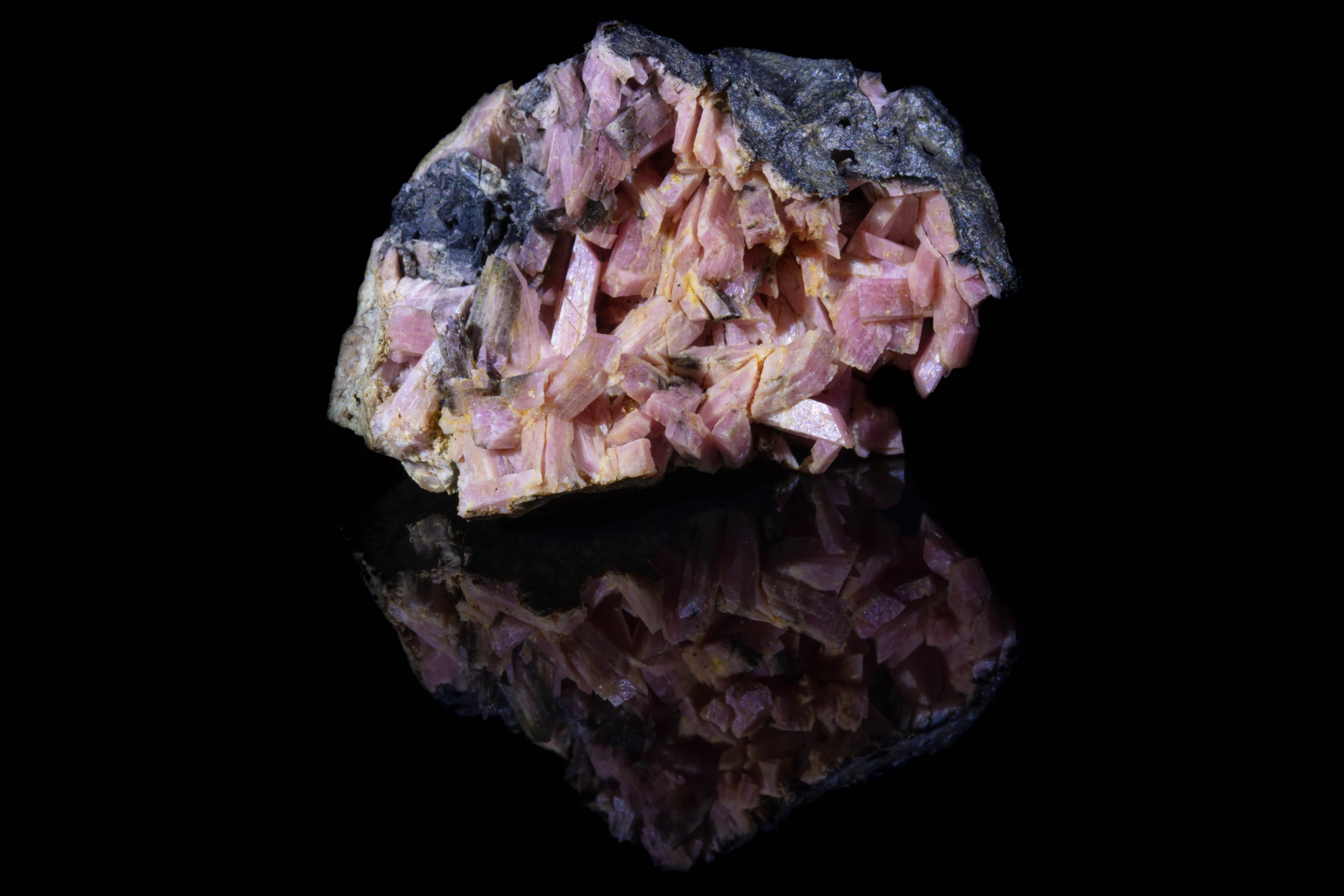
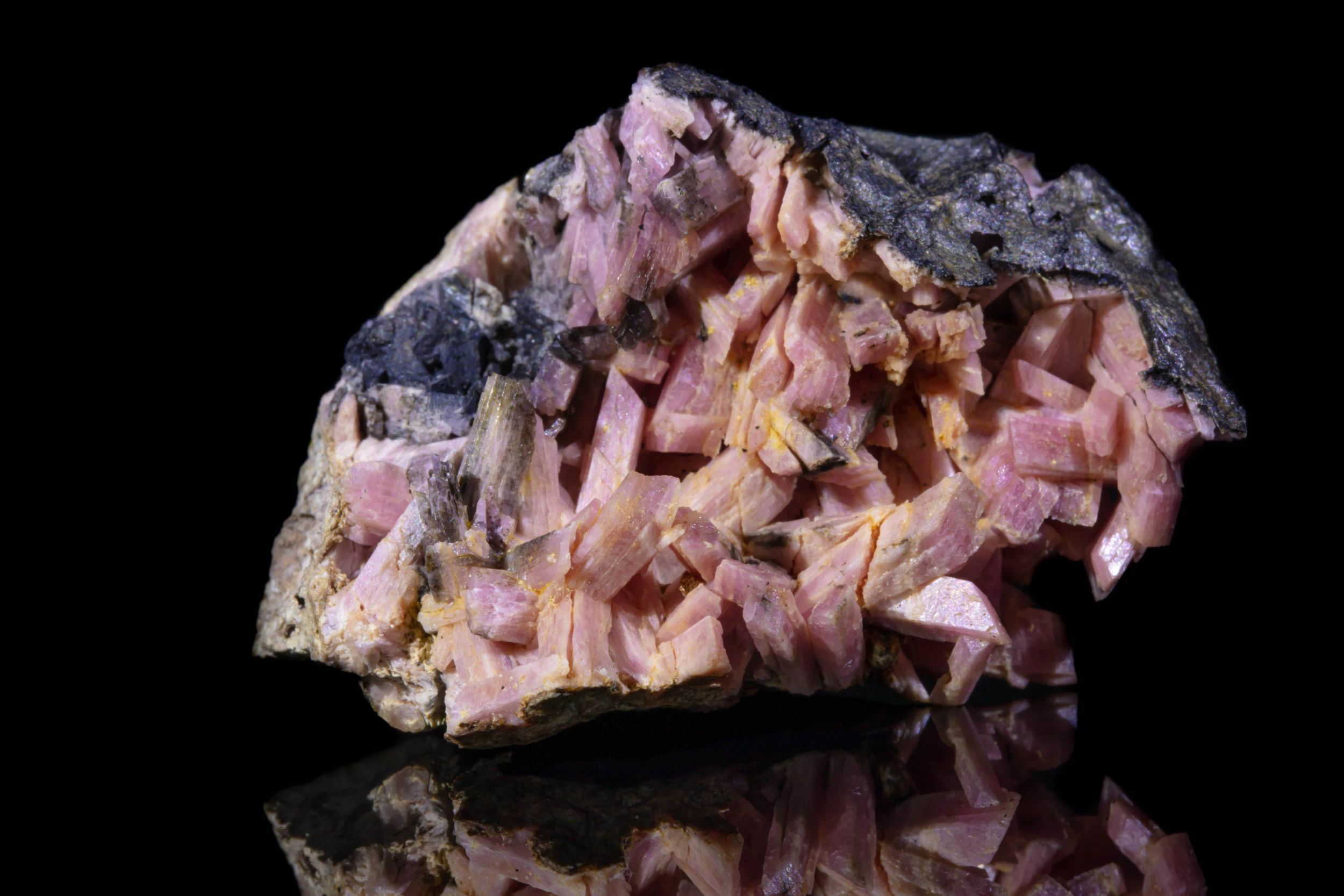
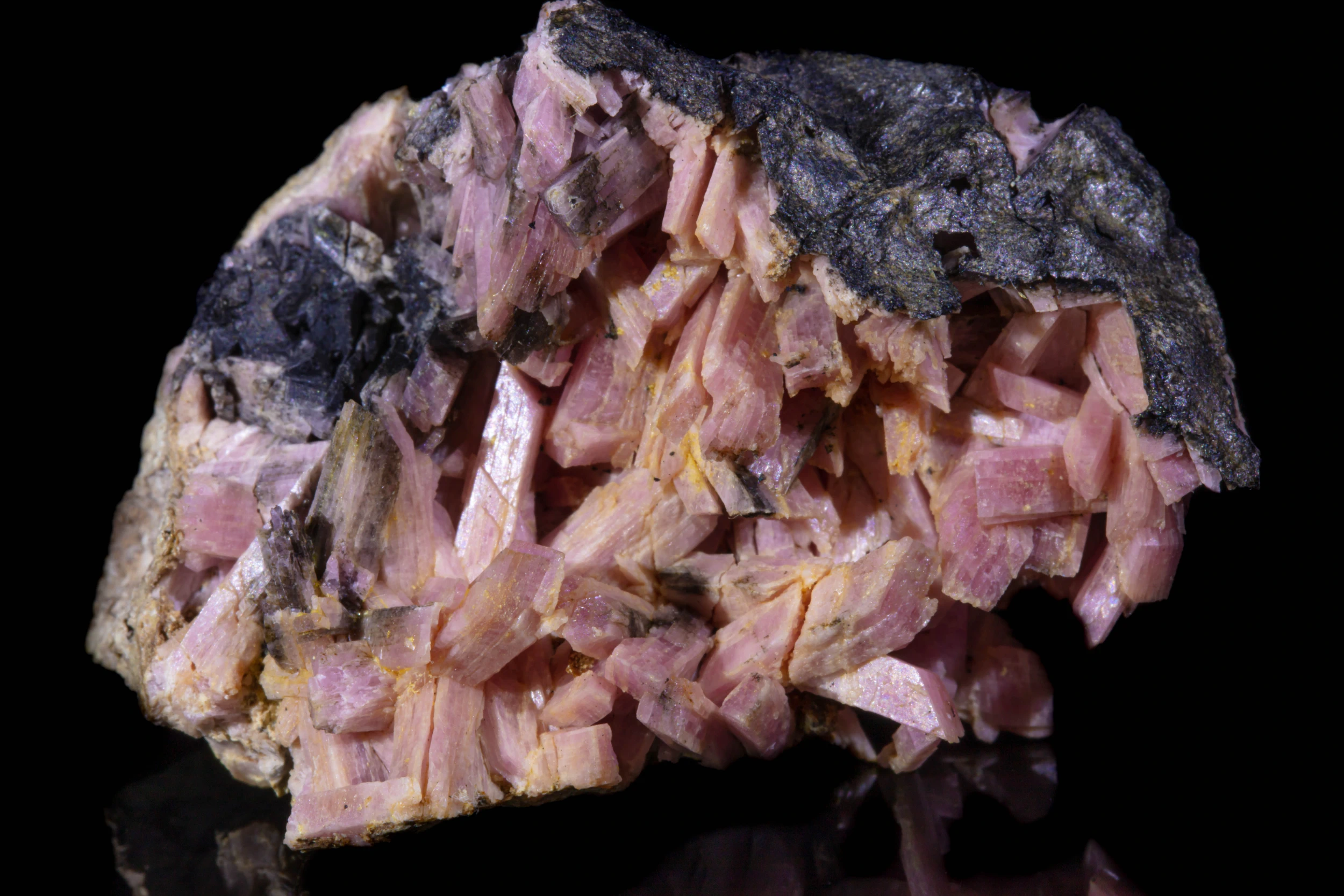
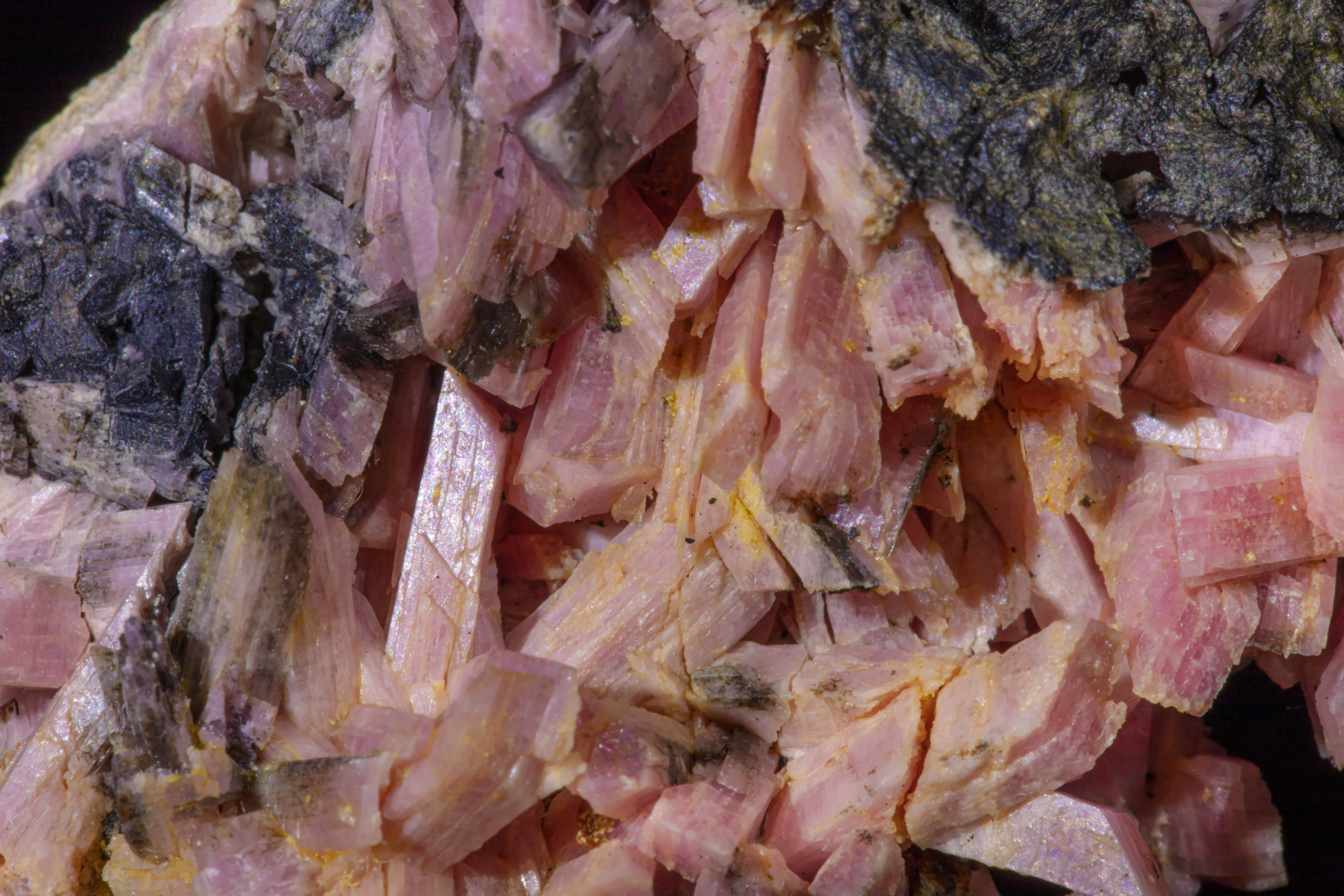
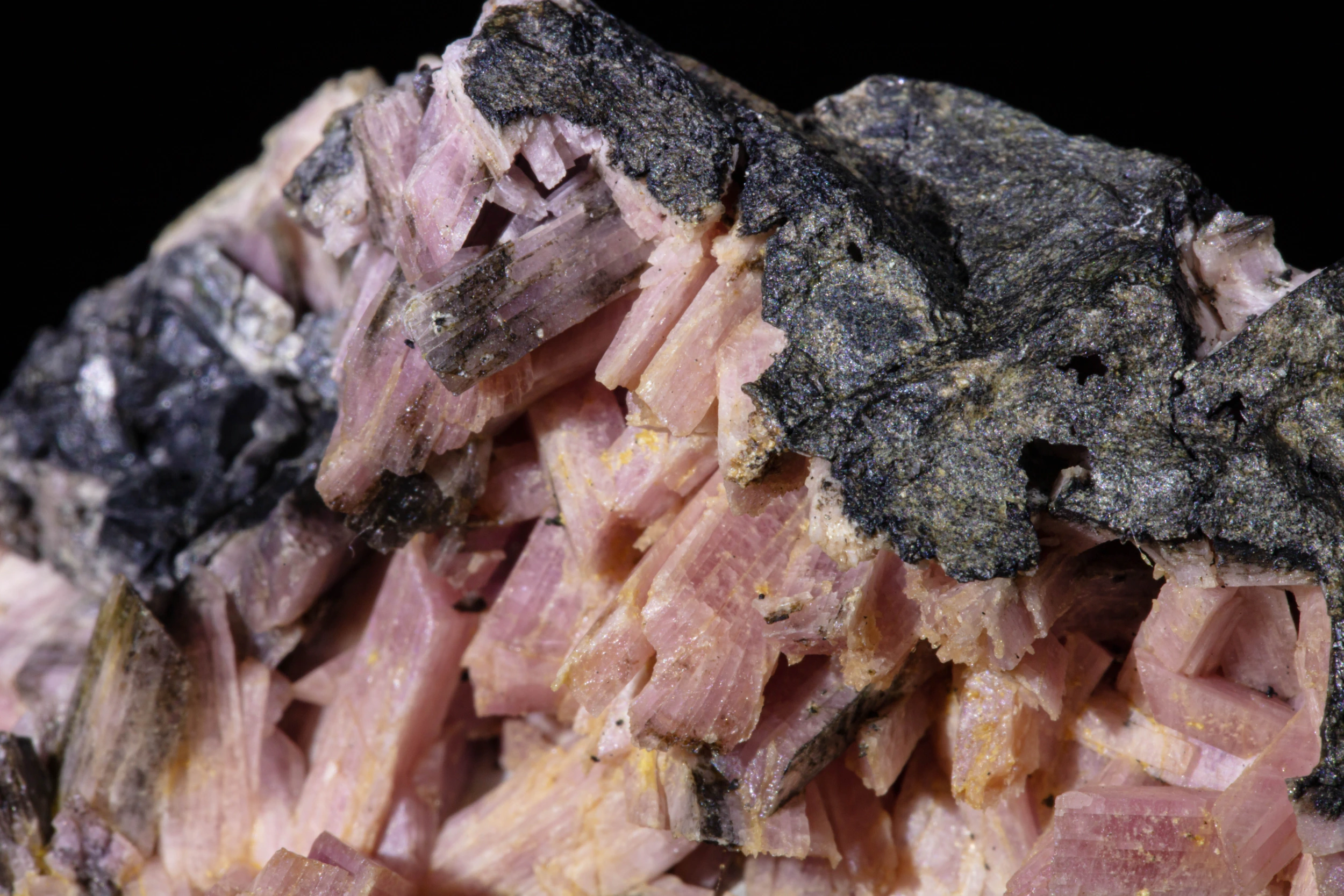
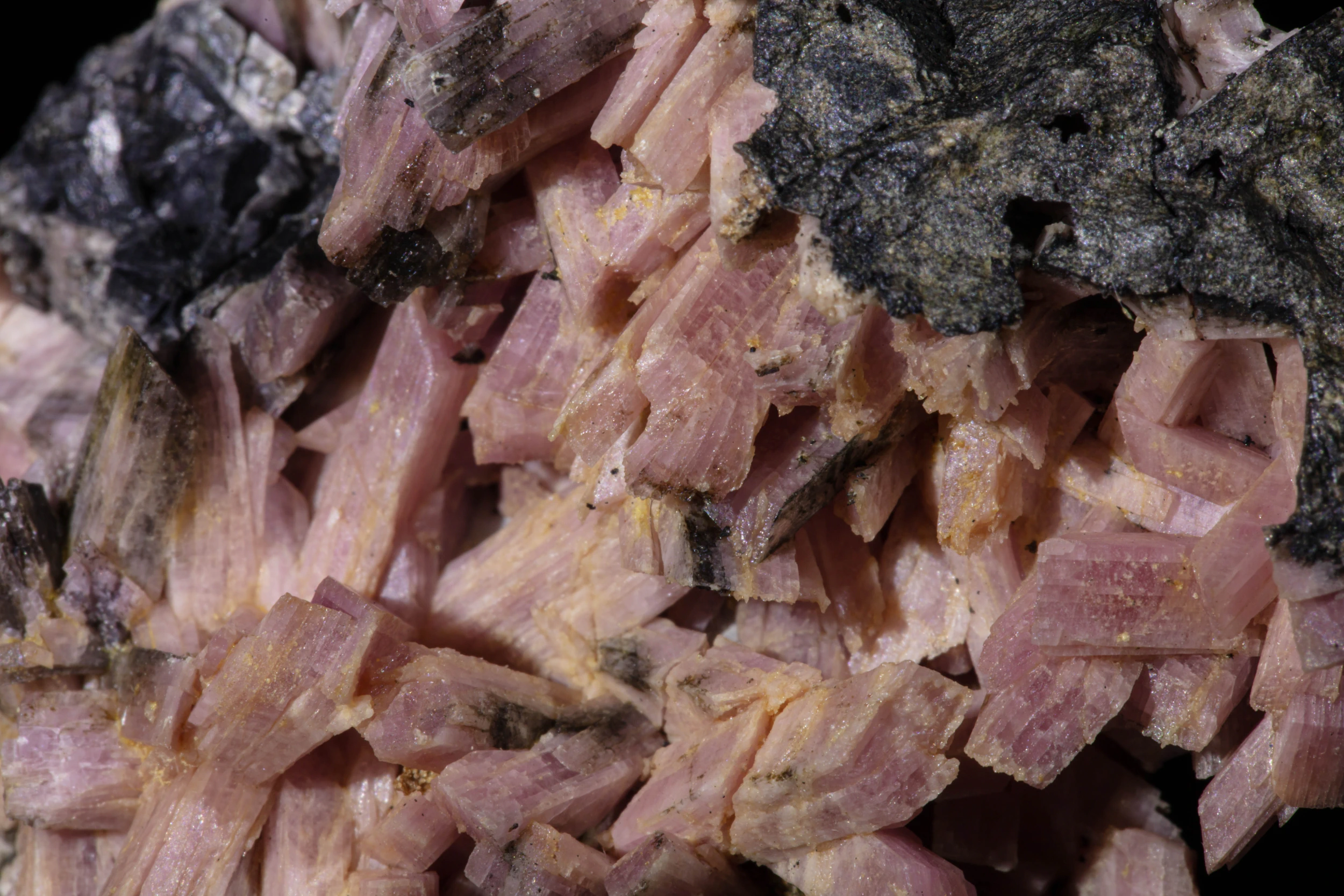
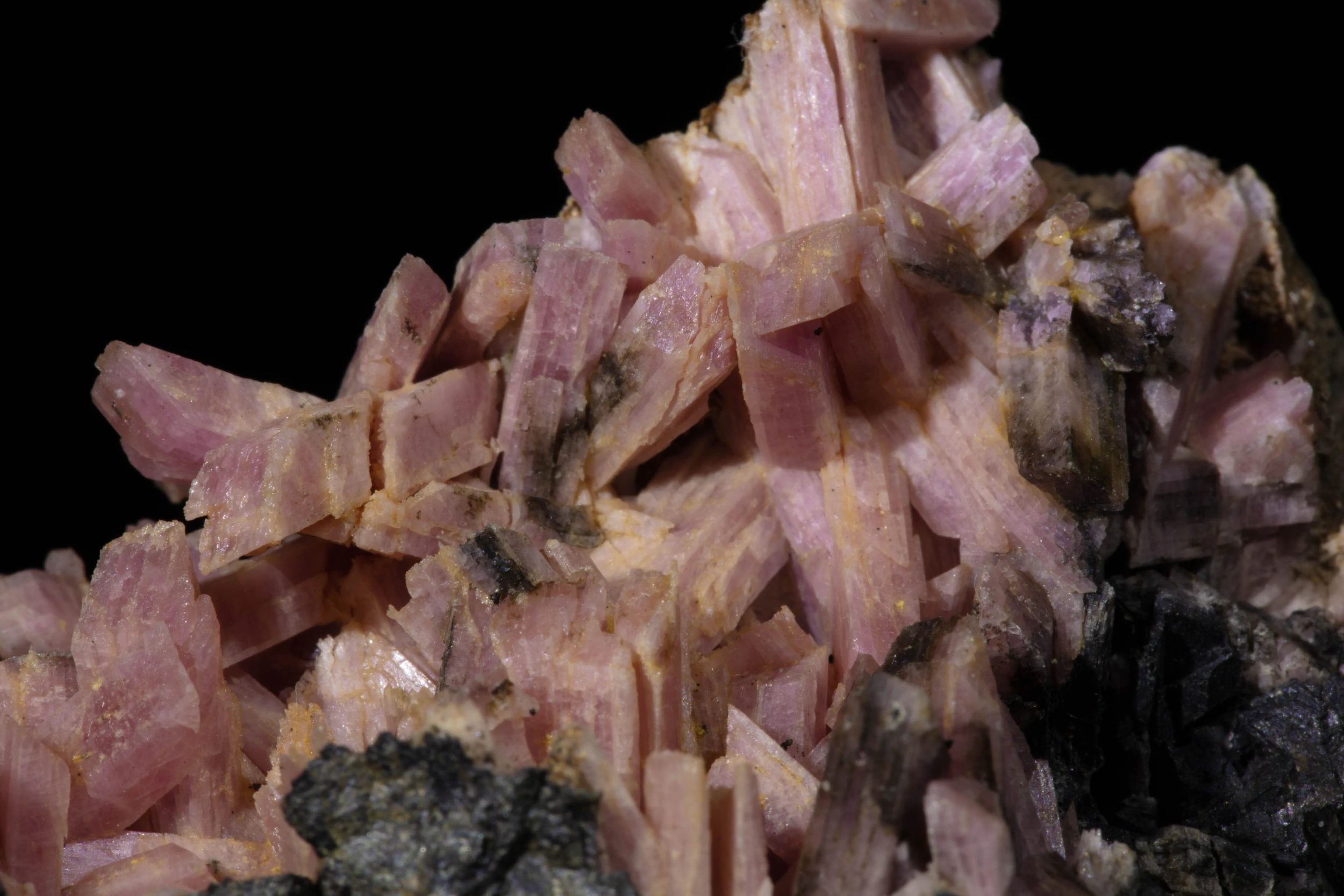
This specimen comes from the Hale Creek Mine, on Mad River Ridge in Trinity County, in the Coast Ranges of northern California. Mining began there in 1941, during World War II, when manganese was needed to make steel. The mine is a series of cuts into a solid body of manganese ore, covered by layers of chert and sandstone. The ore is mostly hausmannite, bementite, and rhodochrosite, cut by veins of calcite. According to dealer records, the inesite crystals were sealed inside that calcite, and collectors only began to free them in 1971 by dissolving it away. Specimens came out from the 1970s into the 1990s. Hale Creek is one of the few places in the world that has produced collector-quality inesite. Inesite is a hydrated calcium manganese silicate, and its name comes from the Greek word for fibers. Here, dozens of thick, blocky pink blades with sharp chisel-shaped tips crowd the front of the specimen, packed side by side at many angles. A crust of dark gray rock runs along the top, and a black mass with a bright, almost metallic luster sits on the left. Both are probably part of the manganese ore of the mine, but they have not been tested. A few darker, brownish blades are scattered among the pink crystals. They are most likely inesite crystals with an oxidized surface: at Hale Creek, the black "sticks" found with the pink crystals turned out to be oxidized inesite. According to the dealer, most crystals are pristine, with a few contacts here and there. The specimen comes from Josef Vajdak of Pequa Rare Minerals, in Massapequa, New York, a dealer known for rare species, and still has his label. The mineral vajdakite, approved in 1998, was named for him to honor his work on the minerals of Jachymov, in the Czech Republic.

Mineral Species

Did you know?

Inesite quietly punishes a sunny shelf. Its warm pink browns over years as a film of manganese oxide creeps across the surface, and nothing brings the color back.