Jouravskite on Xonotlite

The Specimen

Cabinet: Miniature (2.5 - 4.5 cm) – Size: 3.3 x 2.2 x 1.5 cm Origin: N'Chwaning III Mine, N'Chwaning Mines, Kuruman, Kalahari Manganese Field, Northern Cape – South Africa

Notes

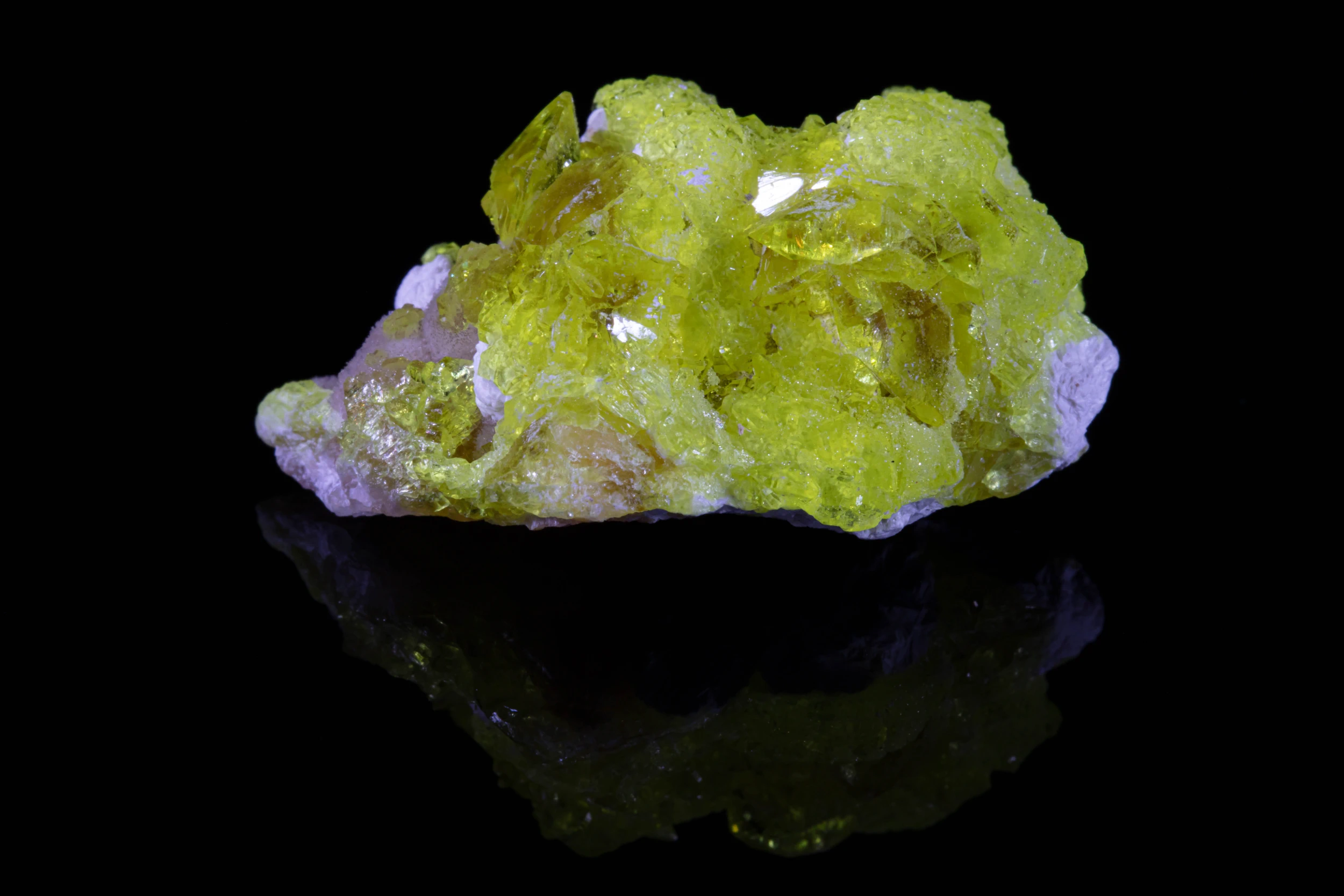
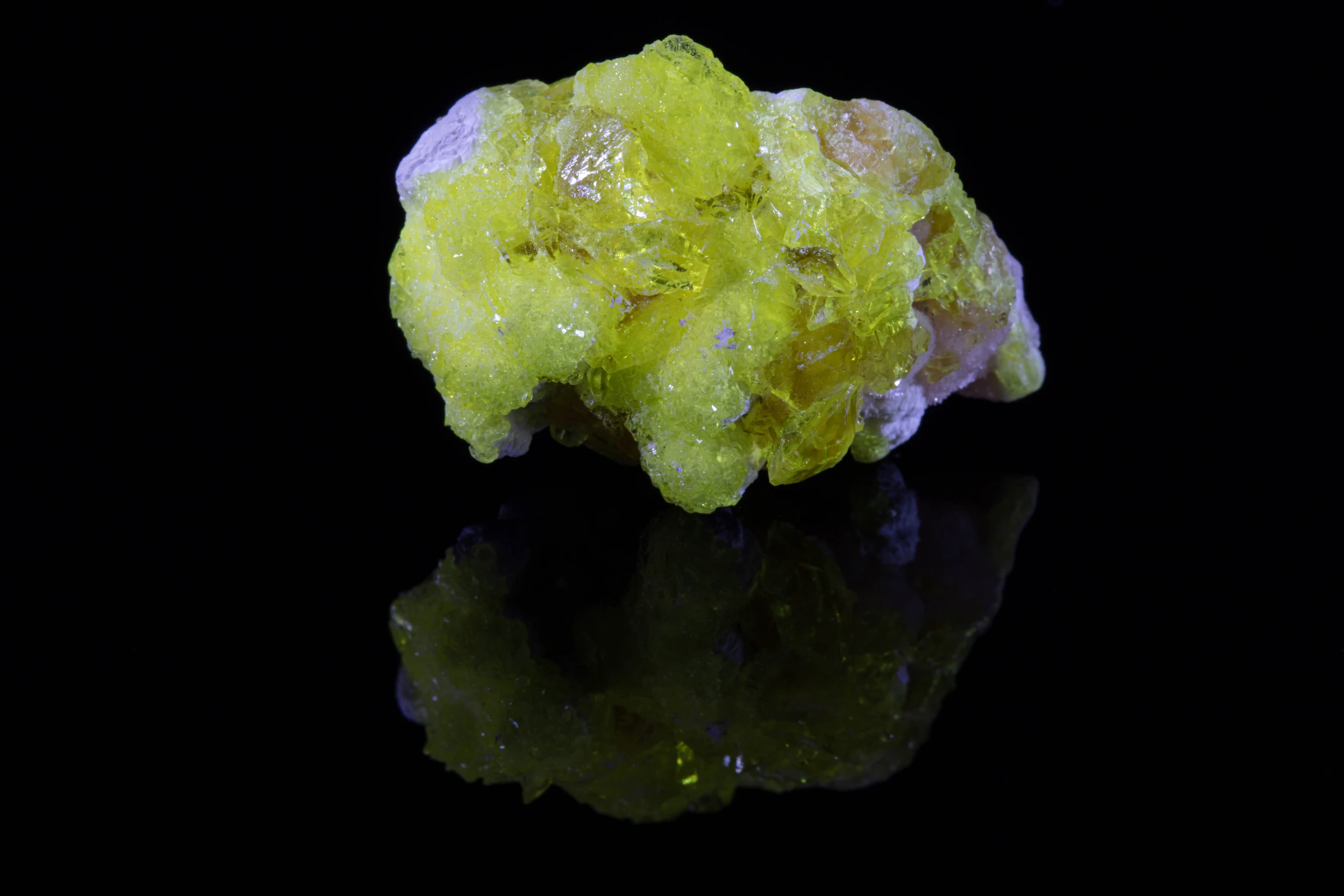
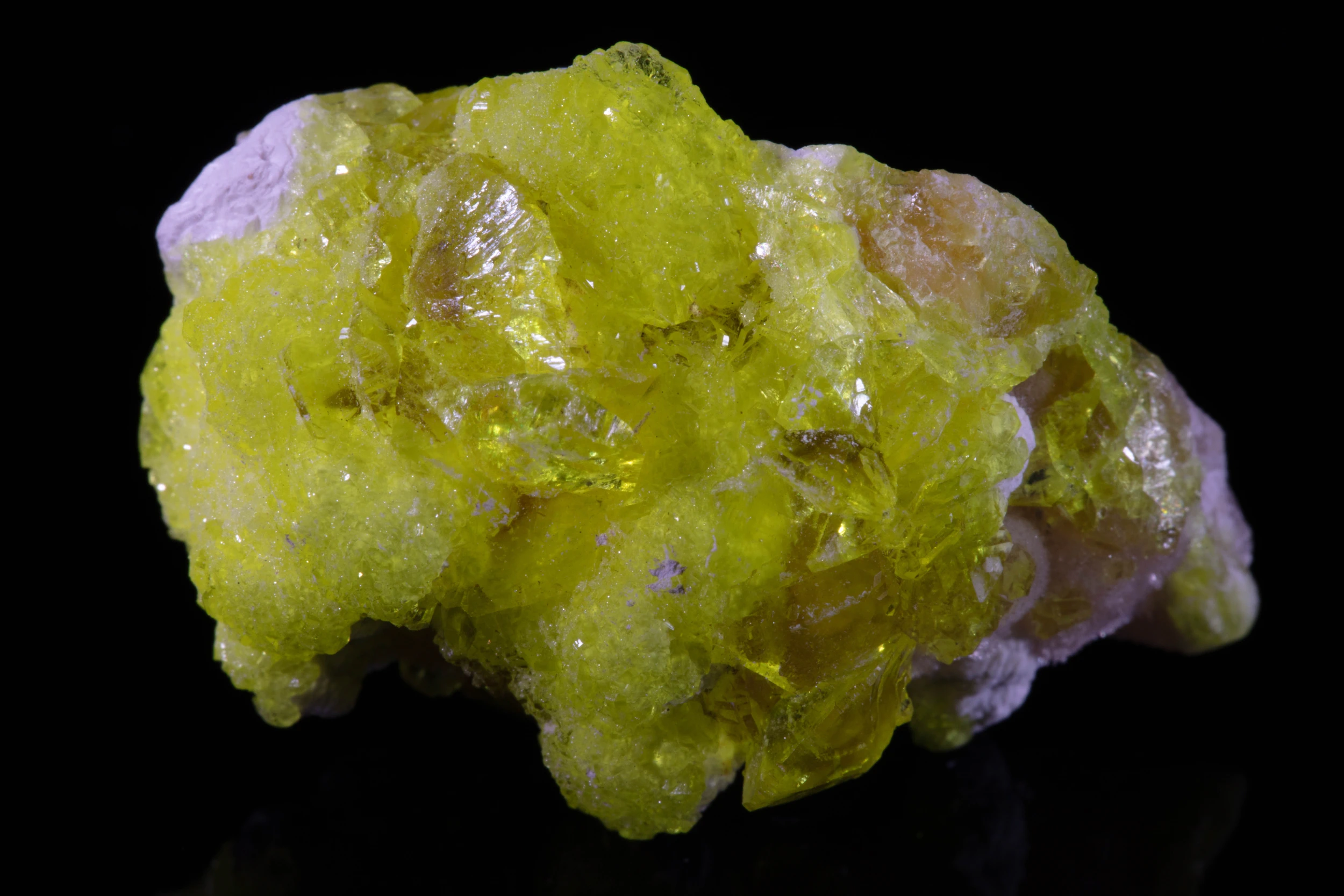
This specimen comes from the N'Chwaning III Mine, one of the three shafts of the N'Chwaning mines near Kuruman, in the Kalahari Manganese Field of South Africa's Northern Cape. The field holds about 80 percent of the world's known high-grade manganese ore, and its mines are famous among collectors for a long list of rare species that grew in cavities in the ore. Jouravskite is one of them. It is a hydrated calcium manganese sulfate carbonate, and it is unusual because its manganese is in a highly oxidized form, the same state as in the black oxide pyrolusite, yet here it builds a bright yellow mineral. This piece comes from a single small pocket found at N'Chwaning III in 2017, whose specimens were shown as a novelty at the Denver show that year. According to the dealer, who bought nearly the whole pocket, it produced by far the best jouravskite known. Lemon yellow jouravskite covers nearly the whole front of the specimen in two habits from the same pocket: a sparkling crust of tiny crystals, and larger glassy, gemmy crystals with smooth faces, the best of them along the top. White xonotlite, a fibrous calcium silicate, shows along the edges and at the base. According to the dealer, calcite is also present, but it cannot be told apart from the xonotlite on the photos.

Mineral Species

Did you know?

JouravskiteNearly half of jouravskite is water. About 42 percent of its weight is water locked inside the crystal itself, which leaves it startlingly light: a density near 1.9, where most minerals run three times that of water or more. In the hand it feels wrong, too light for a stone.

XonotliteXonotlite is one of the few minerals industry decided to make rather than mine. Grown in vessels of hot lime and water, its interlocking needles turn into board that shrugs off heat, so much of the xonotlite in use today was never underground at all.

CalciteLook through a clear rhomb of Iceland spar calcite and the world doubles, split into twin images by the crystal's double refraction. Some researchers think Norse sailors used this very effect to find the sun through cloud, the so-called sunstone, though the idea remains a debated hypothesis.