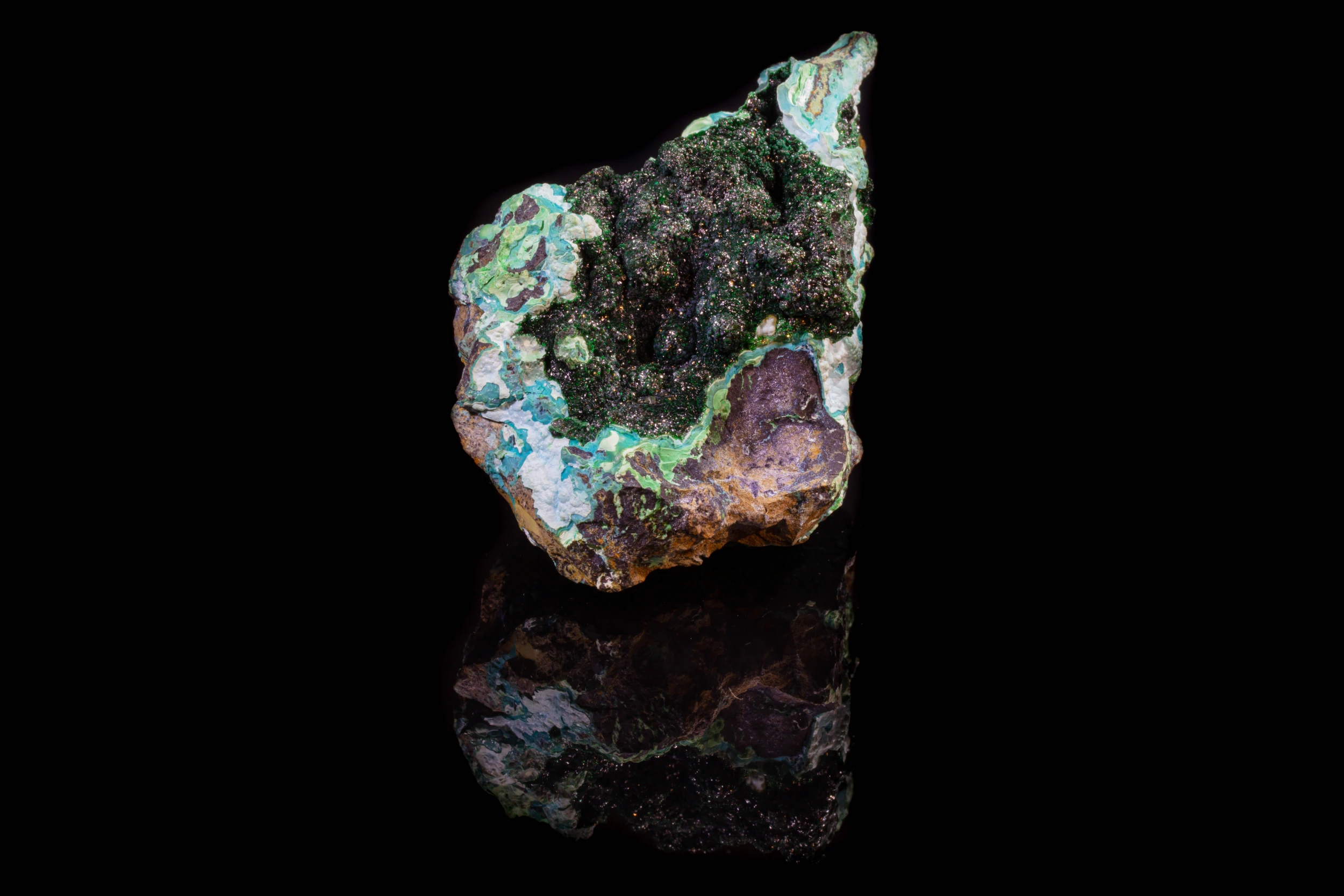
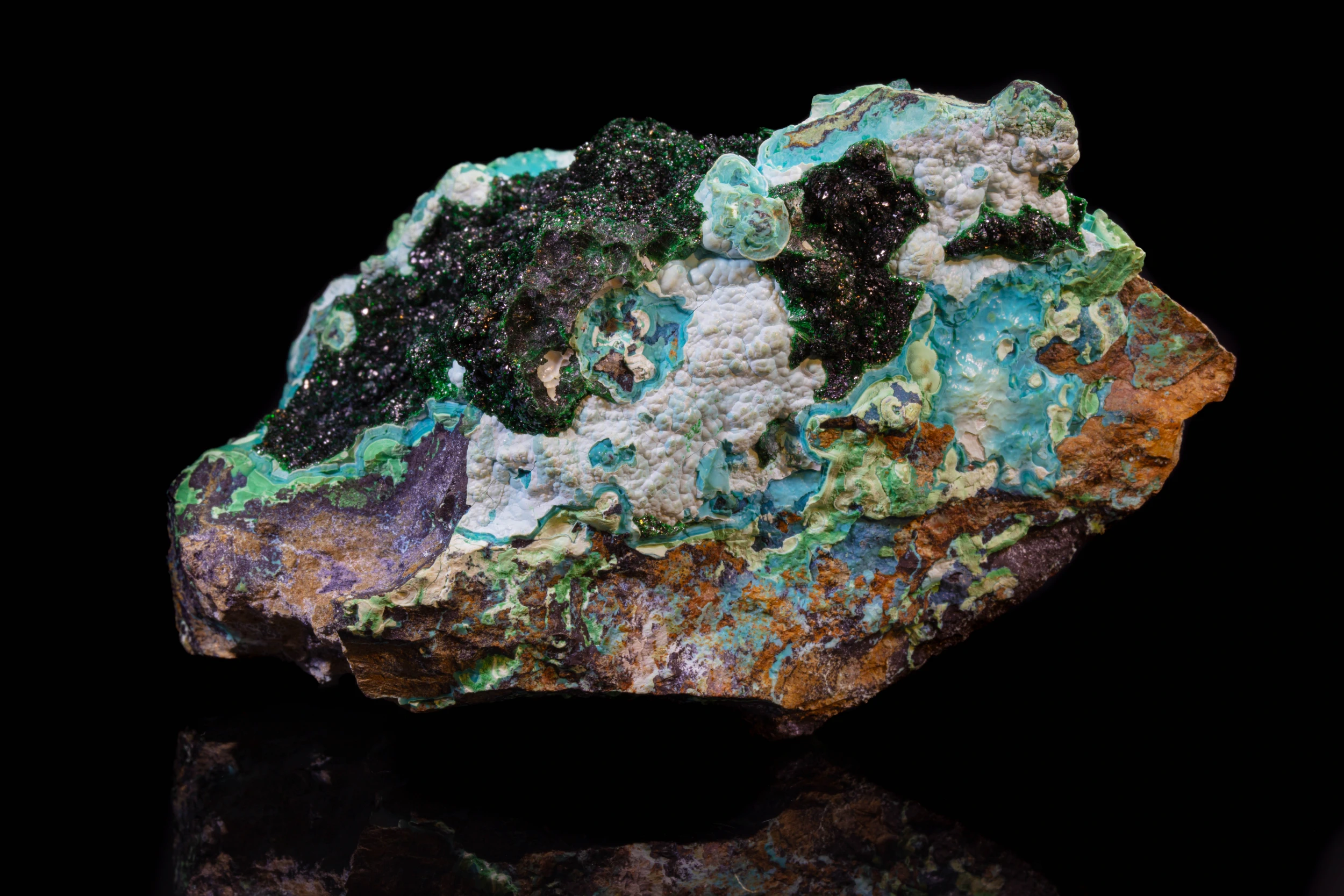
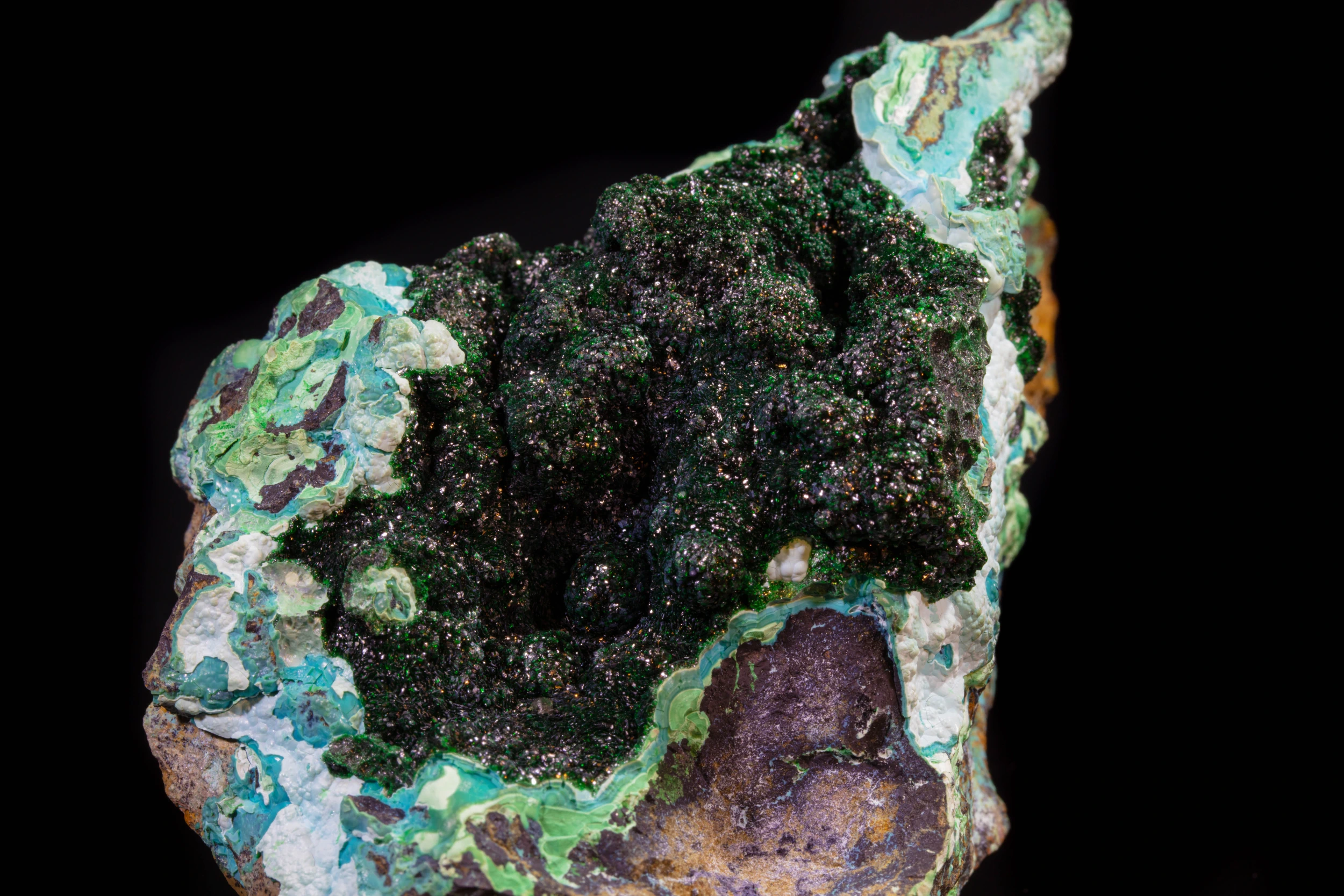
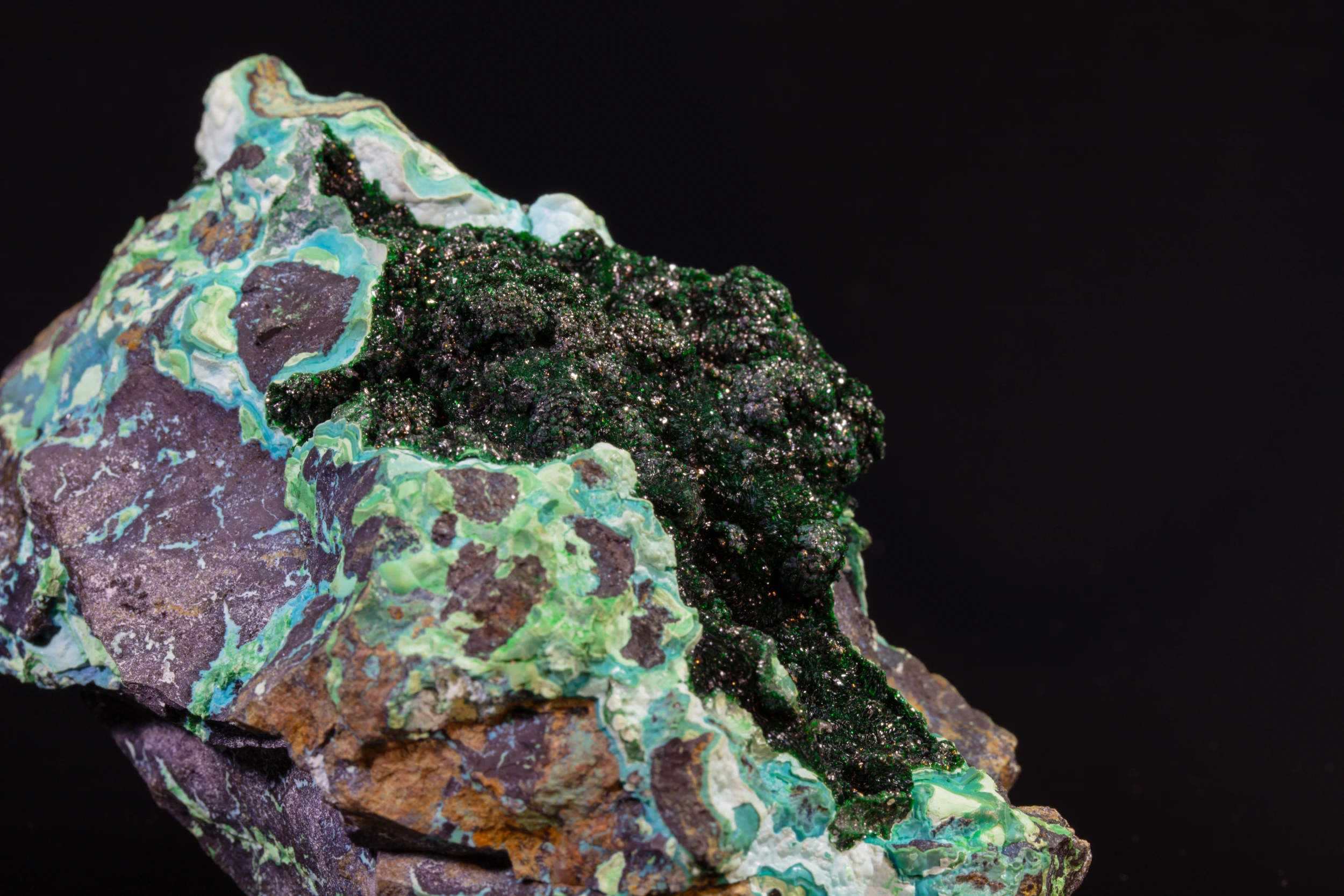
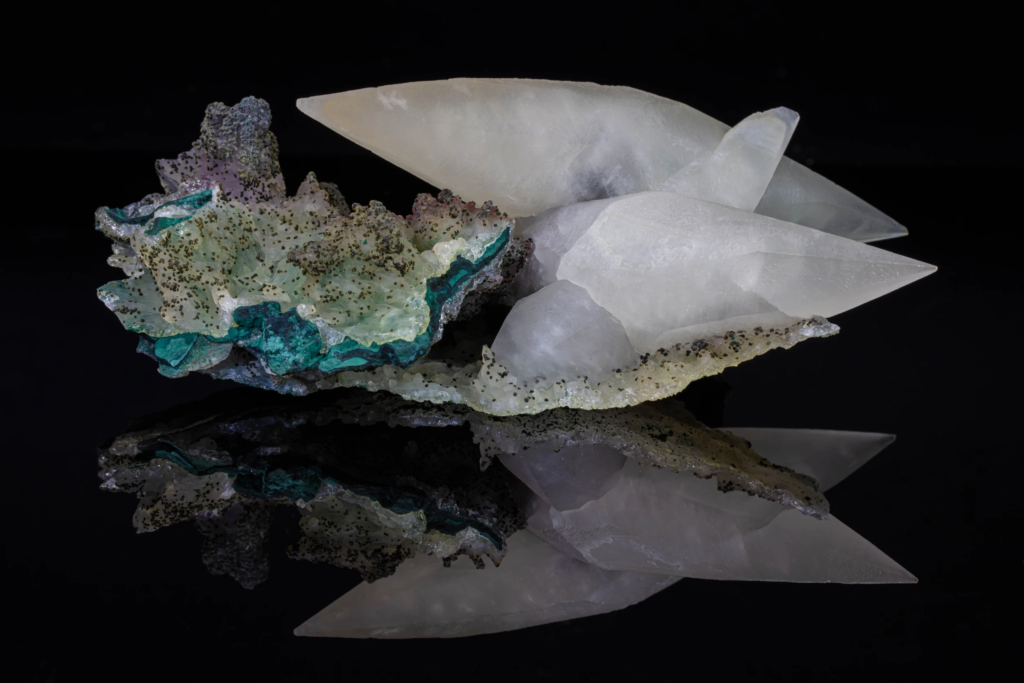
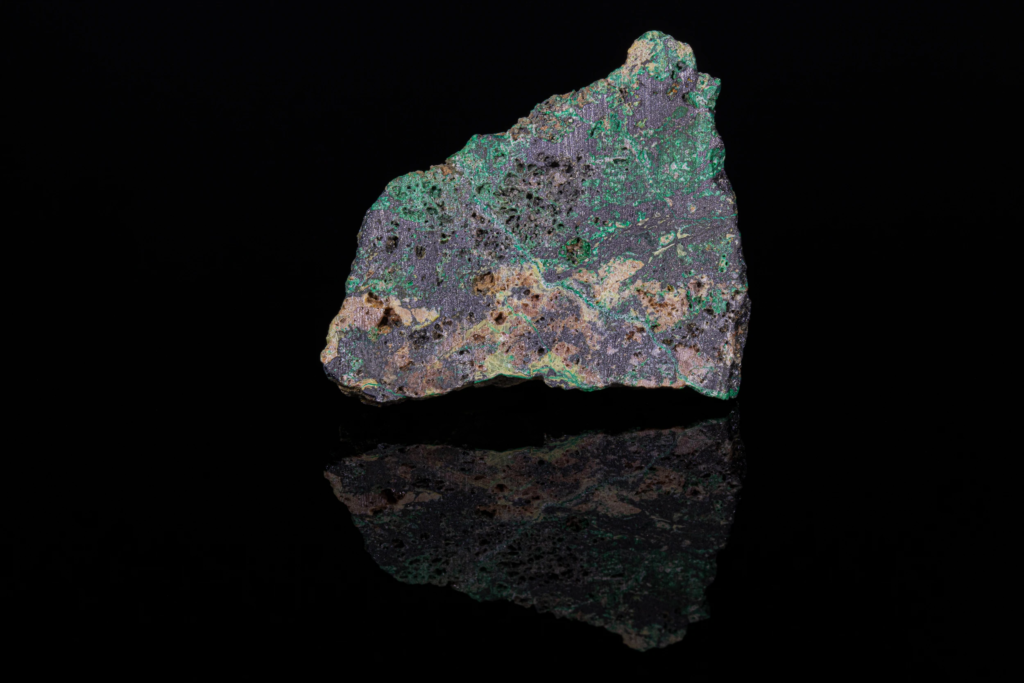
Malachite with Chrysocolla

The Specimen

Cabinet: Large Cabinet (10 cm+) – Size: 10.1 x 6.3 x 5.8 cm Origin: L'Étoile du Congo Mine, Lubumbashi, Haut-Katanga – Congo (DRC)

Notes

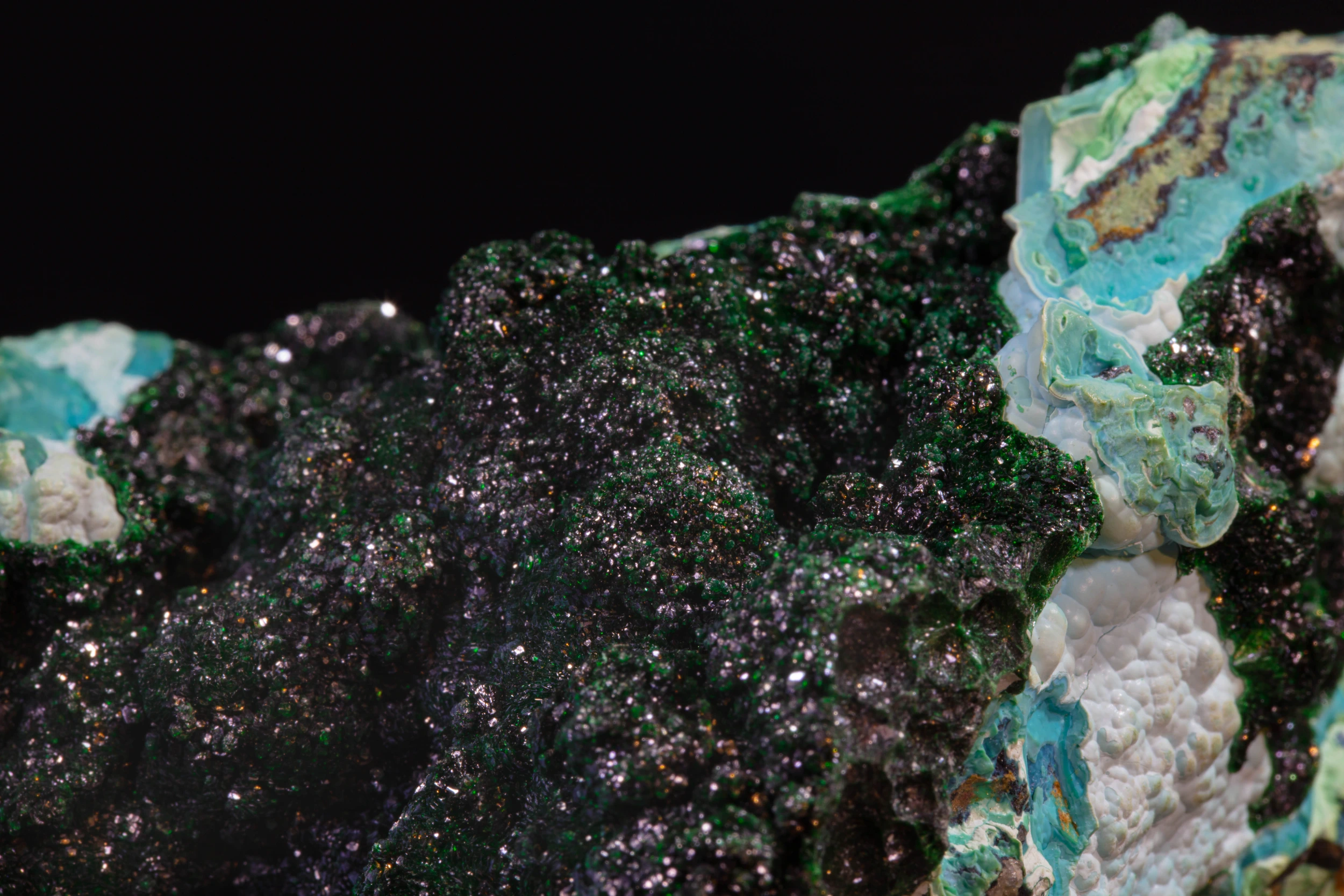
This specimen comes from L'Étoile du Congo Mine, the Star of the Congo, on the edge of Lubumbashi in the Haut-Katanga province of the Democratic Republic of Congo. First known as the Kalukuluku mine, it was the first copper mine worked in Katanga, from 1911, and the city of Lubumbashi, then called Élisabethville, was founded beside it because of the mine and the copper smelter built nearby. It was worked on and off until 1964, reopened as an open pit in the 2000s, and local miners also dig it for mineral specimens. Like the rest of the Central African Copperbelt, its ore sits in very old sedimentary rocks, roughly 650 to 880 million years old, and near the surface, weathering turned the copper into green and blue minerals. According to the dealer, this piece comes from a find made in 2002. Here, a central patch of tiny, dark forest-green malachite crystals, gathered into small rounded aggregates, sparkles with an unusually bright luster. Around it run bands and crusts of sky-blue chrysocolla, mixed with paler green and white crusts, over a purplish-brown host rock.

Mineral Species

Did you know?

MalachiteThe malachite columns and vases in Russia's imperial palaces look carved from solid blocks of green stone. They are not: each is a mosaic of paper-thin slices fitted so precisely that the banding runs unbroken, a craft known as Russian mosaic.

ChrysocollaChrysocolla is named from the Greek for gold and glue, because ancient jewelers used it to solder gold. Despite the name it holds no gold at all, and owes its blue-green color entirely to copper.