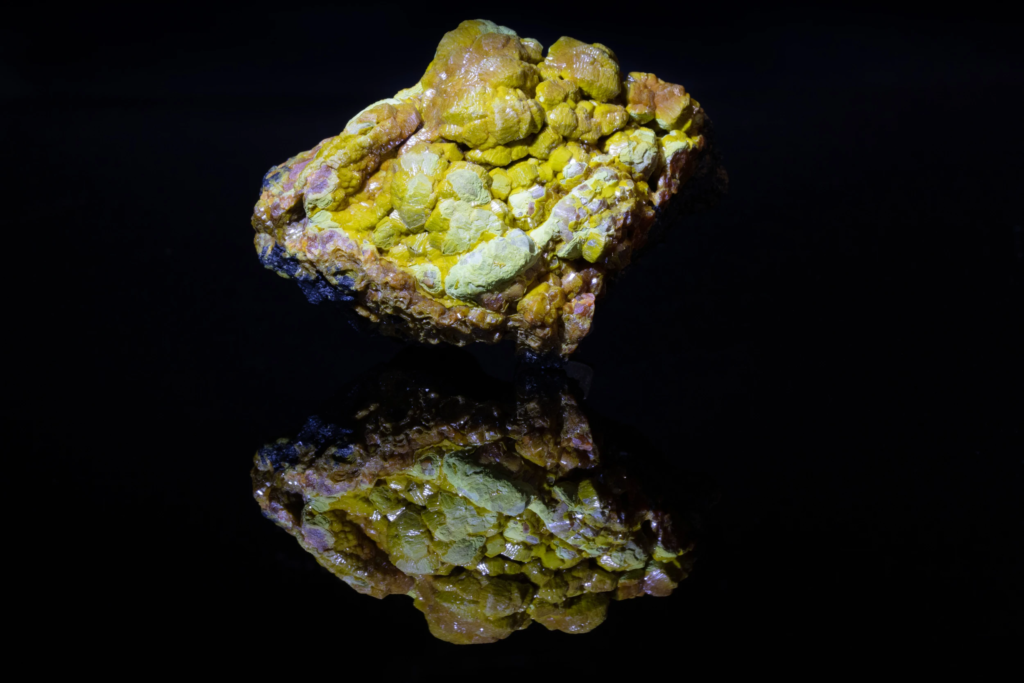
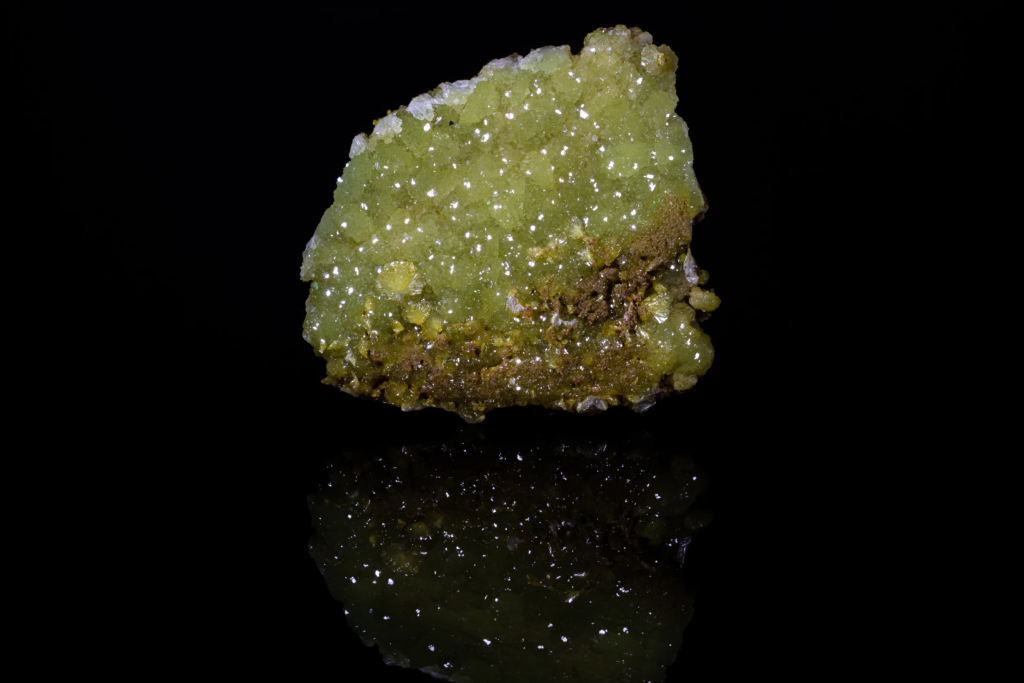
Philipsburgite on Quartz

The Specimen

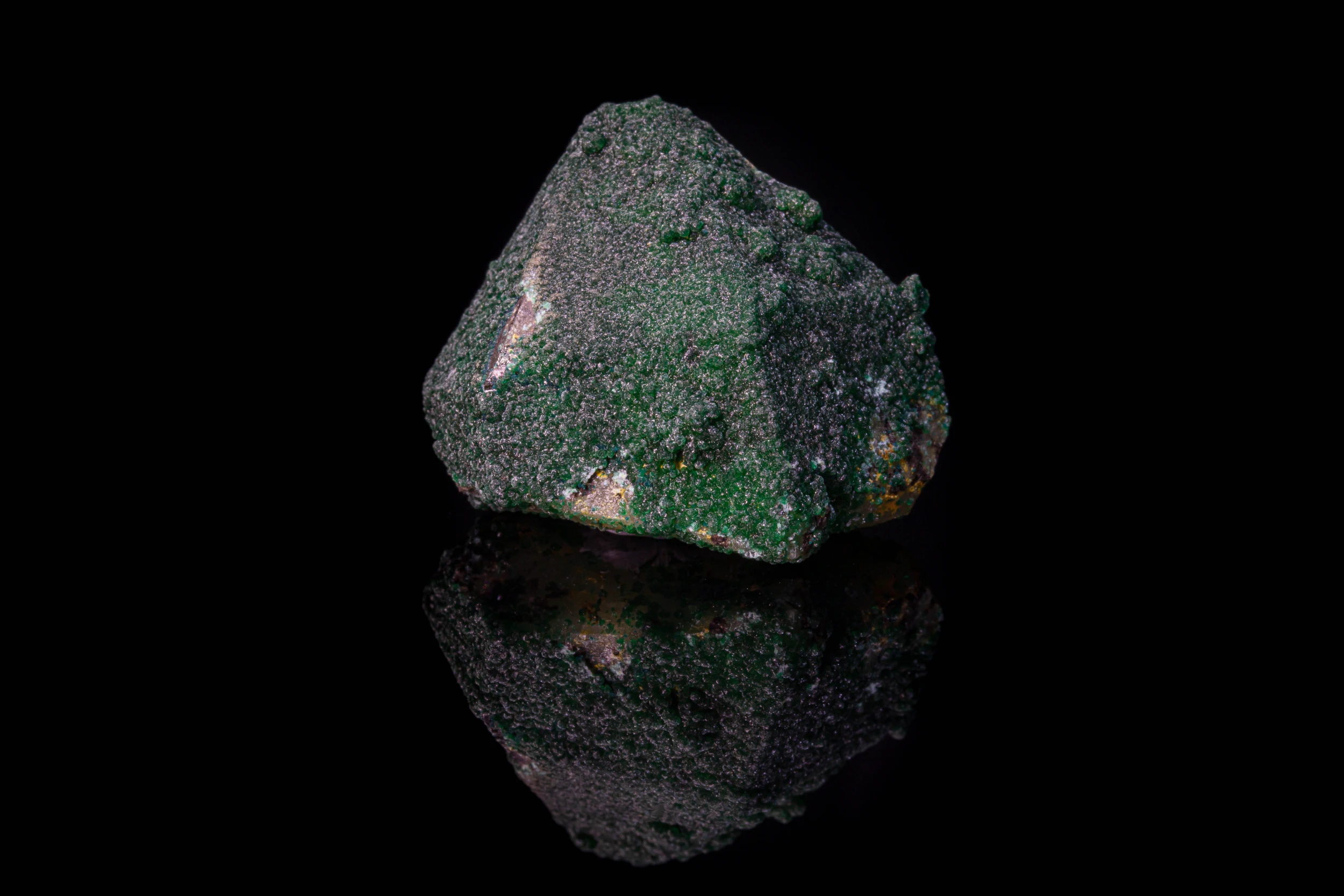
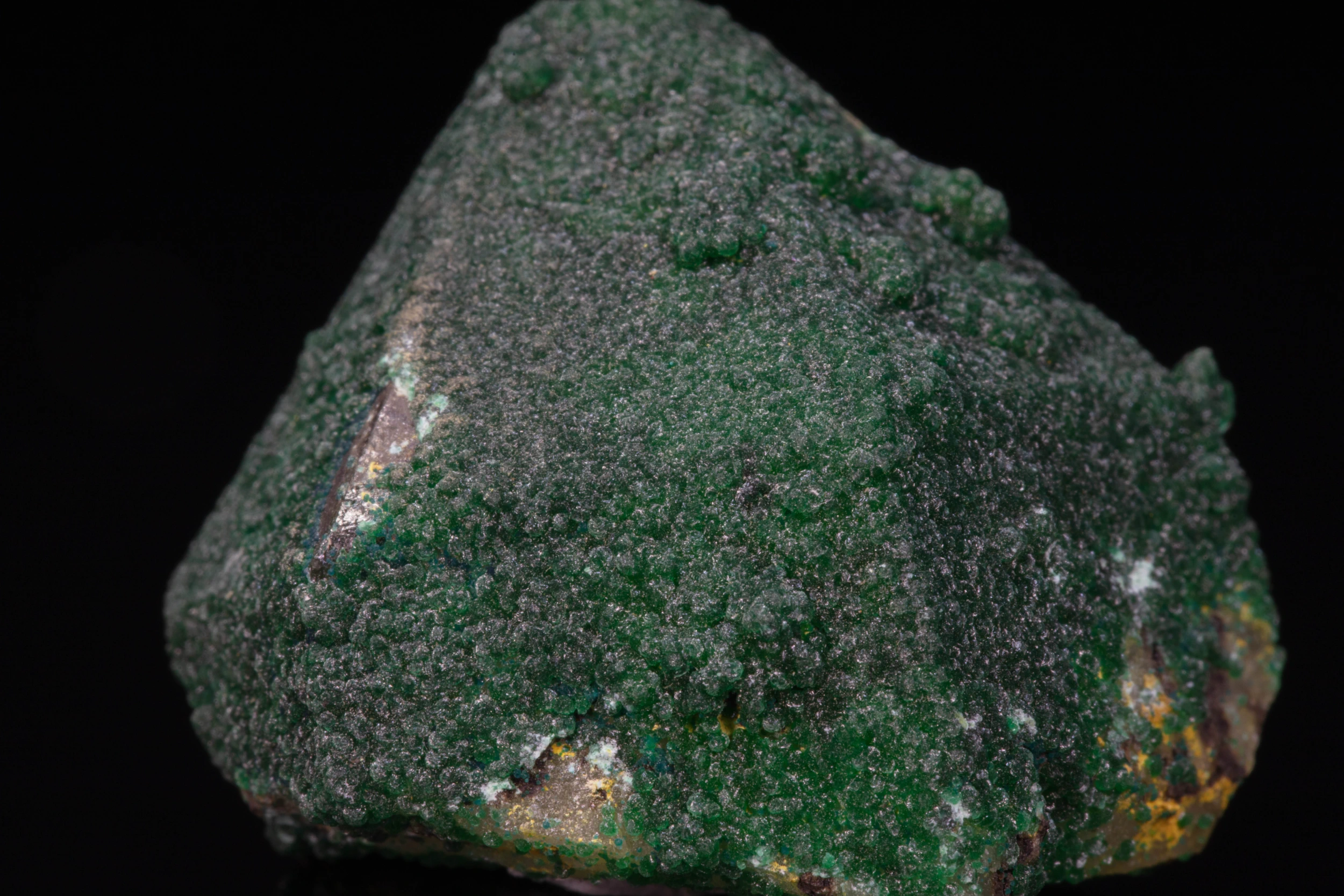
Cabinet: Miniature (2.5 - 4.5 cm) – Size: 3.0 x 2.6 x 1.9 cm Origin: Black Pine Mine, Philipsburg Mining District, Granite County, Montana – USA History: Ex Chet Lemanski Collection

Notes

This specimen comes from the Black Pine Mine, in the John Long Mountains about 14 kilometers from Philipsburg, in Granite County, western Montana. According to the dealer, this silver, gold and base-metal mine worked on and off from 1885 until 2000. Collectors know it for the finest veszelyite in the world, and it is also the type locality of philipsburgite: the place where the species was first found and described, in 1985, and named after the nearby town. Philipsburgite is a rare copper-zinc arsenate with water. It shares its structure with kipushite, and here arsenic takes the place of most of the phosphorus. At Black Pine it grew late, in a cavity, on quartz and other secondary minerals. This piece comes from the collection of Chet Lemanski, who bought it in 1985, the year the species was approved. Here, tiny, lustrous emerald-green spherules, in two generations, cover every side of a flattened, terminated quartz crystal.

Mineral Species

Did you know?

PhilipsburgitePhilipsburgite has a quiet identity problem. In 2021 it was redefined and split off a near-twin, goldhillite, so many specimens long labeled philipsburgite, especially those from outside the original Montana mine, have since turned out to be the other mineral.

QuartzPressing a quartz crystal makes it give off a precise electric beat, which is why it keeps time in nearly every watch and once tuned the radios of World War II, when good crystals were a strategic resource.